¡Acompáñanos a viajar por el mundo de los libros!
Añadir este libro a la estantería
Grey
Escribe un nuevo comentario Default profile 50px
Grey
Suscríbete para leer el libro completo o lee las primeras páginas gratis.
All characters reduced
Shikoku - Wisdom for the Wayfarer - cover

Shikoku - Wisdom for the Wayfarer

Yvonne Corpuz

Editorial: whitefox Publishing Ltd

  • 0
  • 0
  • 0

Sinopsis

Yvonne Corpuz was a global leader with a renowned firm headquartered in Japan when an unexpected turn in her career left her aspirations in disarray. Seeking respite, she embarked on the historic Shikoku pilgrimage, a 1,400-kilometre journey,with cherished companions Mayumi and Katsuji. Navigating the ancient route around the perimeter of Shikoku, Japan's most mysterious island, they visited its eighty-eight temples on a rigorous eight-day drive. As Yvonne immersed herself in exploring breathtaking landscapes, revered traditions and age-old customs, what commenced as a sojourn to escape life's disappointments blossomed into a profound journey of the heart, guiding her on the transformative path towards inner serenity and renewal.
Shikoku is a compelling account that blends the essence of pilgrimage, the beauty of self-discovery and the enduring allure of Japan's people, culture and heritage. The result is an unforgettable spiritual travelogue that captures the heart and the imagination of the seeker and traveller in us all.
Disponible desde: 25/04/2024.
Otros libros que te pueden interesar

  • The Wari Empire - Pre-Incan Conquerors and the Engineers of South America - cover

    The Wari Empire - Pre-Incan...

    Rolf Hedger

    • 0
    • 0
    • 0
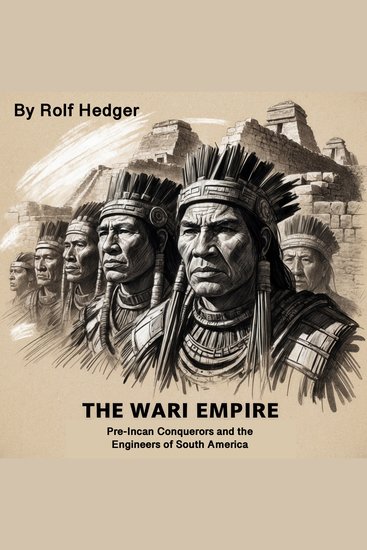
    The Wari Empire emerged as one of the most influential pre-Incan civilizations in the Andean region, setting the foundation for future Andean states, including the Inca. Its origins can be traced back to the highlands of present-day Peru, where early societies laid the groundwork for its rise. The unique combination of environmental adaptation, cultural influences, and political innovation allowed the Wari to establish a powerful state that would dominate much of the central Andes for centuries. 
    Before the Wari civilization took shape, the Andean region was home to various cultures that contributed to its development. Among these, the Chavín culture, which thrived from around 900 to 200 BCE, played a crucial role in spreading religious and artistic traditions that later influenced Wari art and iconography. The Nazca civilization, known for its intricate geoglyphs and advanced irrigation techniques, also left an imprint on Wari agricultural and engineering practices. However, it was the lesser-known Huarpa culture of the Ayacucho Valley that provided the most direct influence on early Wari society. The Huarpa people developed small-scale irrigation systems, terraced farming, and distinct ceramic styles, all of which became defining features of Wari civilization. 
    Sometime between 500 and 600 CE, the Wari began to expand beyond their heartland in the Ayacucho region. This expansion was driven by both environmental necessity and strategic ambition. The high-altitude valleys of the central Andes provided fertile land for agriculture, but they were also subject to fluctuating climatic conditions. To mitigate these challenges, Wari elites developed large-scale irrigation systems and storage facilities, ensuring food security for growing populations. This ability to manage resources effectively gave them an advantage over neighboring groups, allowing them to assert dominance through both diplomacy and military conquest.
    Ver libro
  • Mysterious Chicago - History at Its Coolest - cover

    Mysterious Chicago - History at...

    Adam Selzer

    • 0
    • 0
    • 0
    A historian shares strange-but-true stories of the city and its unsolved mysteries, from the nineteenth century to today. 


    From Chicago historian Adam Selzer, expert on all of the Windy City's quirks and oddities, comes a compelling anthology of forty unsolved mysteries from the 1800s to the modern day. Among many other topics, he explores what really started the great Chicago fire; who was the first "automobile murderer;" the identity of the Tylenol killer; and whether there was actually a vampire slaying at Rosehill Cemetery. 


    The result is both a colorful listen separating true crime from urban legend and an offbeat historical tour of this Midwestern metropolis, from the person behind the Mysterious Chicago blog, podcasts, and tours.
    Ver libro
  • Cruises - A Guide To Modern Cruising Experiences - cover

    Cruises - A Guide To Modern...

    Owen Jones

    • 0
    • 0
    • 0
    Welcome to a world of boundless exploration and endless possibilities. Let this book, ‘Cruises: A Guide to Modern Cruising Experiences’ be your guide in the realm of travel and adventure. Embark on a literary journey that transcends the ordinary and opens the doors to extraordinary experiences. In the following pages, you will navigate the diverse landscapes of cruising, uncovering the secrets of affordable luxury, the thrill of adventure, and the magic of romance on the water. From family-friendly escapades to educational odysseys, each chapter is a portal to a different facet of the cruising universe. 
    It will bring a wealth of insights and a passion for crafting unforgettable journeys. Whether you are a seasoned traveller or a curious explorer planning your first cruise, this book is your compass to navigate the seas of possibility. Join us as we set sail into a world where every horizon promises new discoveries, and each wave carries the promise of an extraordinary adventure. 
    I hope that you will find this book helpful, useful and profitable. The information in this book on various aspects cruising holidays and related subjects is organised into 21 chapters of about 500-600 words each. 
    I hope that it will interest those who have an interest in cruising vacations.
    Ver libro
  • The Ming Dynasty - Maritime Exploration and the Forbidden City - cover

    The Ming Dynasty - Maritime...

    Jun Liu

    • 0
    • 0
    • 0
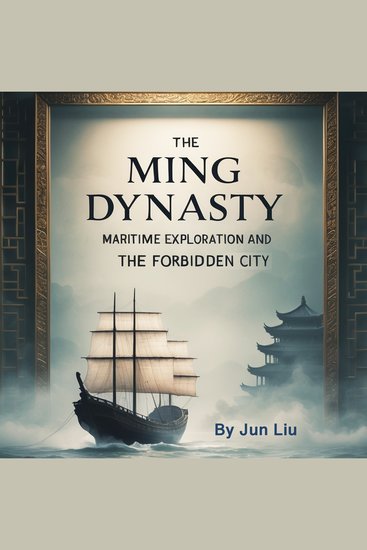
    The Ming Dynasty, one of China's most influential and enduring dynasties, emerged in the aftermath of the Mongol-led Yuan Dynasty’s decline. It was a period marked by great transformation, political consolidation, and cultural revival. The dynasty's establishment under Zhu Yuanzhang, later known as Emperor Hongwu, signified the restoration of Han Chinese rule and the reinforcement of Confucian governance. Through military conquest, administrative reforms, and strategic centralization of power, the Ming Dynasty laid the foundation for a strong and prosperous China. 
    The fall of the Yuan Dynasty was driven by internal corruption, economic mismanagement, and widespread discontent. Mongol rulers faced difficulties controlling the vast empire, and their reliance on foreign administrators alienated the native Chinese population. Heavy taxation and frequent natural disasters exacerbated social unrest, leading to a series of revolts across the country. Among these rebellions, the Red Turban Rebellion, a movement rooted in peasant uprisings and religious discontent, played a crucial role in undermining Yuan authority. It was within this turbulent period that Zhu Yuanzhang, a former Buddhist monk turned military leader, rose to prominence. His leadership and military strategies enabled him to unify rebel factions and ultimately overthrow the Mongols in 1368, marking the beginning of the Ming Dynasty. 
    Upon ascending the throne, Emperor Hongwu sought to consolidate power and rebuild a nation weakened by war and misrule. His first priority was to eliminate threats to his rule, which led to purges against those he suspected of disloyalty. To prevent a recurrence of Yuan-era administrative failures, he restructured the government, reducing the influence of court eunuchs and emphasizing Confucian ideals in governance. He also reinstated the civil service examination system, ensuring that officials were selected based on merit rather than birthright.
    Ver libro
  • Maya Civilization - Pyramids Astronomy and the Rise and Fall of Mesoamerican Power - cover

    Maya Civilization - Pyramids...

    Rolf Hedger

    • 0
    • 0
    • 0
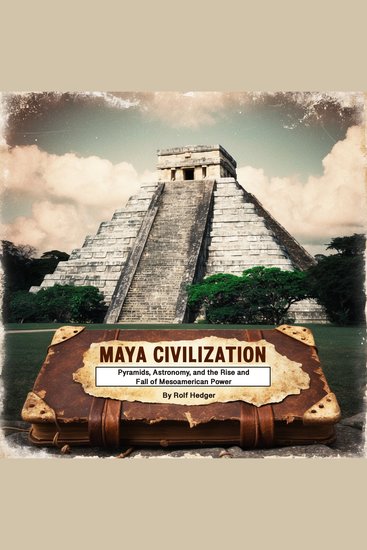
    The Maya civilization emerged from the fertile lands of Mesoamerica, where early agricultural societies gradually developed into one of the most advanced cultures of the ancient world. Long before the rise of monumental cities and towering pyramids, the ancestors of the Maya lived in small villages, relying on farming, hunting, and fishing for sustenance. Corn, or maize, became the cornerstone of their diet and played a central role in their mythology, economy, and daily life. Over time, these early settlements expanded, evolving into complex societies with trade networks, religious practices, and political hierarchies. 
    The roots of Maya civilization can be traced back to the Preclassic period, around 2000 BCE. During this time, small communities scattered across present-day southern Mexico, Guatemala, Belize, Honduras, and El Salvador began cultivating staple crops such as maize, beans, squash, and chili peppers. As agricultural techniques improved, populations grew, leading to the formation of larger settlements. Villages transitioned into regional centers, where early forms of leadership and governance emerged. These developments set the stage for the sophisticated city-states that would later define the Maya world. 
    The Maya were not isolated in their cultural development. They shared Mesoamerica with other influential civilizations, most notably the Olmecs, who thrived along the Gulf Coast of Mexico. The Olmecs, often considered the “mother culture” of Mesoamerica, left a lasting impact on the Maya through their artistic styles, religious beliefs, and ceremonial architecture. The colossal stone heads of the Olmecs, their early writing systems, and their concept of a sacred ballgame were all absorbed and adapted by the Maya. This exchange of ideas helped shape the foundations of Maya civilization, leading to the rise of the first great Maya cities.
    Ver libro
  • Two Cats on the Camino - Pilgrimage on autism-spectrum - cover

    Two Cats on the Camino -...

    Pia Lamm

    • 0
    • 0
    • 0
    I'm sitting on the bus to León and the lady next to me is taking one candy after another to suck on while she's talking on the phone at the same time. If there was even the slightest chance that she could understand me, I would scream out loud: FOR GOD'S SAKE, STOP THAT! Instead, I cover my ears and wait for the trip to be over. Of course, such hyperacusis can affect not only people with autism. However, it once again makes me aware of the challenges that neurodivergent people face when traveling. A day later, still in Spain, I grab my phone and start dictating this book to the voice recognition app. A book about how to cope on the Camino de Santiago as an autistic person.
    Ver libro