Begleiten Sie uns auf eine literarische Weltreise!
Buch zum Bücherregal hinzufügen
Grey
Einen neuen Kommentar schreiben Default profile 50px
Grey
Jetzt das ganze Buch im Abo oder die ersten Seiten gratis lesen!
All characters reduced
A Century of English Essays - Reflections in Literary Time: A Journey Through English Essayistic Brilliance - cover

A Century of English Essays - Reflections in Literary Time: A Journey Through English Essayistic Brilliance

Thomas Carlyle, Charles Dickens, Robert Louis Stevenson, William Shakespeare, Percy Bysshe Shelley, William Wordsworth, Joseph Addison, William Caxton, Hilaire Belloc, Samuel Taylor Coleridge, Jonathan Swift, William Hazlitt, Edmund Gosse, Alice Meynell, Richard Jefferies, Augustine Birrell, William Makepeace Thackeray, Edward Thomas, Geoffrey Chaucer, Alexander Pope, Austin Dobson, Francis Bacon, W. B. Yeats, G. K. Chesterton, Richard Steele, Grace Rhys

Verlag: Good Press

  • 0
  • 0
  • 0

Beschreibung

A Century of English Essays, as its title presages, captures the bustling evolution of the English essay form across several hundred years. This anthology curates an impressive array of perspectives, themes, and literary styles, encapsulating the intellectual zeitgeist of their respective eras. The collection navigates through humor, philosophy, criticism, and narrative with ease, juxtaposing luminary prose against pressing societal issues. Essays range from whimsical reflections on human folly to sophisticated discourses on philosophy and art, each evidencing the inherent capacity of the essay form to entertain, persuade, and provoke. As such, the anthology stands as a testament to the diverse intellectual landscape traversed by English essayists over time. The contributing authors of this anthology are stalwarts of English literature, whose collective backgrounds span multiple centuries of intellectual thought and creativity. Figures such as Shakespeare, Dickens, and Yeats join lesser-known but equally poignant voices like Grace Rhys and Augustine Birrell. Through alignment with Romantic, Victorian, and Modern movements, among others, these essays offer varied insights steeped in historical and cultural relevance. Each contributor adds a unique fiber to the rich tapestry of English thought, enhancing our comprehension of themes such as nature, identity, and society. This anthology is an invaluable resource for readers seeking an engaging exploration of the English essay form. The writings within act as a bridge connecting diverse epochs and ideologies, fostering an informed dialogue between eras. This collection not only educates but also invites reflection upon evolving societal norms and individual contemplation. Readers are encouraged to immerse themselves in this compendium, benefiting from its educational richness and the nuanced perspectives each essayist provides. Ultimately, A Century of English Essays enriches one'Äôs literary experience, proving indispensable for connoisseurs of English literature and new readers alike.
Verfügbar seit: 04.10.2023.
Drucklänge: 485 Seiten.

Weitere Bücher, die Sie mögen werden

  • Fur Trade in North America The: The History and Legacy of the Competition and Conflicts over Furs - cover

    Fur Trade in North America The:...

    Editors Charles River

    • 0
    • 0
    • 0
    Though the importance of hats is easy to overlook, it was deadly serious in more ways than one, impacting the beavers and birds used to make fashionable hats, the environment of the region, and the people fighting over the resources. Beaver hats put the Dutch, British, and French in conflict, and later the Americans and Canadians. Plumed women’s hats were considerably less important historically, but they had a huge ecological impact. The beaver is a crucial species that once had an immense impact on the environment around it, while the short era concerning the plume trade for women’s hats drove a number of bird species to near-extinction. Indeed, several species have never recovered their numbers. The end product was fashionable men’s and women’s hats, sold primarily in Europe and the United States, but from raw materials to finished products, these hats linked tribal peoples, traders, hunters, trappers, merchants, and soldiers. Whether it crossed their minds or not, countless men and women in London and Paris were linked to the North American wilderness and all the violence it entailed. 
    The fur trade had its tensions, but for many years, traders and natives worked out their own systems, times, and traditions, allowing many different groups to interact and even compete without issues that led to war. Though native groups sometimes found themselves in conflicts based on long-standing rivalries or relations with the Europeans, most of the fur traders, the trappers, the Indians, and Hudson’s Bay Company officials lived peaceably. The great amount of distance from one another in this land of millions of miles likely helped to alleviate tensions. When a new vision for the Hudson’s Bay Company came about, one where settlers, not itinerants, would be responsible for the colony, the rules changed.
    Zum Buch
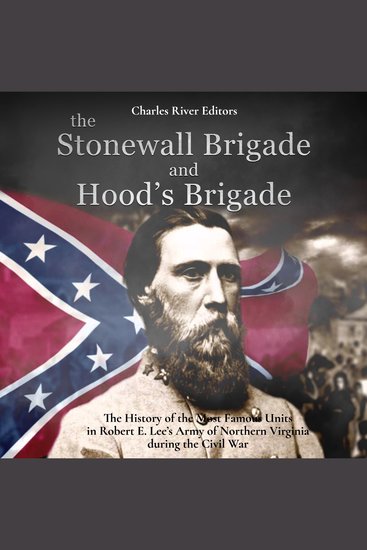
  • Stonewall Brigade and Hood’s Brigade The: The History of the Most Famous Units in Robert E Lee’s Army of Northern Virginia during the Civil War - cover

    Stonewall Brigade and Hood’s...

    Editors Charles River

    • 0
    • 0
    • 0
    The Stonewall Brigade went on to fight in every major battle in the Eastern theater of the American Civil War, to the extent that of the 6,000 men who fought with the brigade over the course of four years, less than 200 remained by the time General Robert E. Lee surrendered at Appomattox Courthouse on April 9, 1865. They were organized, trained, and mentored by one of the most revered military leaders in American history, and they made a decisive impact on battles like First Manassas, the 1862 Valley Campaign, and Chancellorsville. The brigade was virtually a spent force by the end of the Battle of Spotsylvania Courthouse in May 1864, which took place nearly a year after Stonewall Jackson himself had been mortally wounded at Chancellorsville. 
    Organized in Richmond, Virginia on October 22, 1861, Hood’s Texas Brigade was one of the most formidable fighting forces of the Confederate States during the American Civil War. At times undisciplined, the men who comprised this brigade were a group of fearless and determined volunteers-turned-soldiers. Over the course of the Civil War, the Texas Brigade engaged over 4,000 men and was comprised of the only Texans to fight with General Robert E. Lee’s Army of Northern Virginia in the Eastern Theater. With the exception of Chancellorsville, these men fought in every major battle in the East, and they also participated in significant battles in the Western Theater. Of the more than 4,000 men who fought with the brigade over the course of the war, approximately 600 remained to surrender at Appomattox. The brigade suffered a horrific casualty rate of sixty-one percent and were lauded for their courage by men such as generals Thomas “Stonewall” Jackson, James Longstreet, and Lee.
    Zum Buch
  • Speaking my Soul - Race Life and Language - cover

    Speaking my Soul - Race Life and...

    John Russell Rickford

    • 0
    • 0
    • 0
    Speaking My Soul is the honest story of linguist John R. Rickford's life from his early years as the youngest of ten children in Guyana to his status as Emeritus Professor of Linguistics at Stanford, of the transformation of his identity from colored or mixed race in Guyana to black in the USA, and of his work championing Black Talk and its speakers. 


    In this engaging memoir, Rickford recalls landmark events for his racial identity like being elected president of the Black Student Association at the U of California, Santa Cruz; learning from black expeditions to the South Carolina Sea Islands, Jamaica, Belize, and Ghana; and meeting or interviewing civil rights icons like Huey P. Newton, Rosa Parks, and South African Dennis Brutus. He worked with Rachel Jeantel, Trayvon Martin's friend and key witness in the trial of George Zimmerman for his murder. Zimmerman's exoneration sparked the Black Lives Matter movement. 


    This is the account of a former director of African and African American studies whose work has increased our understanding of the richness of African American language and our awareness of the education and criminal justice challenges facing African-Americans. It is key for students and faculty in linguistics, mixed-race studies, African American studies, and social justice.
    Zum Buch
  • The Human Psychology Bible - (2 Books in 1) The Secrets to Understanding Human Behavior and What Makes People Tick - cover

    The Human Psychology Bible - (2...

    Alan G. Fields

    • 0
    • 0
    • 0
    Dive into the depths of the mind with "The Human Psychology Bible," a comprehensive two-part series that seeks to unravel the intricate tapestry of human behavior and thought. Authored by the insightful Alan G. Fields, this definitive compilation, featuring "Human Psychology 101" and its advanced counterpart "Human Psychology 202," offers a profound look into what propels our actions, shapes our personalities, and defines our interactions. 
    "The Human Psychology Bible" is not just another academic text; it's an engaging journey into understanding the gray complexities that govern our everyday lives. Alan G. Fields draws upon extensive research, real-life anecdotes, and relatable stories, breaking down the seven core aspects of human psychology: emotions, personality, decision-making, morality, perception, behavior, and relationships. 
    In "Human Psychology 101," Fields lays the foundation, mapping the landscapes of the mind with a vibrant introduction to psychological principles. It's a guide designed to elucidate the mechanics of the mind, offering a window into why people behave the way they do — a sort of psychological sleight of hand that transforms the mystifying into the comprehensible. 
    Advancing to "Human Psychology 202," the exploration deepens. Fields skillfully addresses the complexities of human thought processes, unmasking the often irrational patterns that can lead to negativity and self-sabotage. This section delves into the power of thought and its profound impact on our actions, encouraging readers to break free from the chains of limited thinking and embrace the full spectrum of mental possibilities.
    Zum Buch
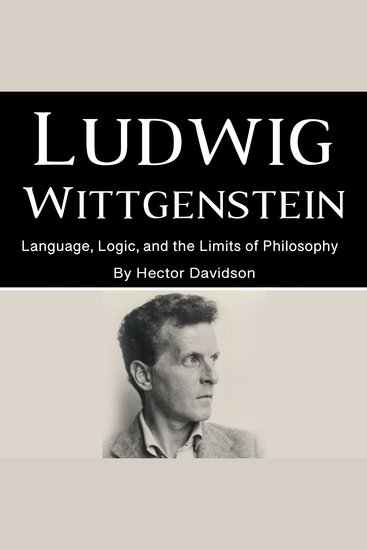
  • Ludwig Wittgenstein - Language Logic and the Limits of Philosophy - cover

    Ludwig Wittgenstein - Language...

    Hector Davidson

    • 0
    • 0
    • 0
    Ludwig Wittgenstein, one of the most influential philosophers of the 20th century, profoundly shaped modern thought, particularly in the realms of language, logic, and the philosophy of mind. His philosophy spans two distinct periods, marked by an evolution in his views on the relationship between language, meaning, and reality. Wittgenstein’s work challenges the way we think about and use language, positing that philosophical problems often arise from misunderstandings of language and its limitations. 
    Wittgenstein’s early philosophy, as presented in his landmark work Tractatus Logico-Philosophicus, was grounded in the belief that language could mirror the structure of reality. According to his "picture theory of meaning," words and sentences are pictures that represent facts in the world. He argued that the limits of language are also the limits of the world, and anything that could not be meaningfully expressed through language was simply beyond the scope of philosophy. This view led him to conclude that many traditional philosophical problems were nonsensical, arising from a misuse of language. 
    However, Wittgenstein underwent a significant philosophical transformation after his work on the Tractatus, largely due to his dissatisfaction with the results of his early approach. By the time of his later work, particularly in Philosophical Investigations, Wittgenstein had rejected the picture theory of meaning and developed the concept of "language games." He argued that meaning is not inherent in words themselves but is derived from their use in various social contexts. Language, for Wittgenstein, is a tool embedded in human practices and activities. He claimed that understanding language requires understanding the ways it functions in specific contexts, challenging the idea of a fixed, underlying structure of meaning.
    Zum Buch
  • Other People’s Colleges - The Origins of American Higher Education Reform - cover

    Other People’s Colleges - The...

    Ethan W. Ris

    • 0
    • 0
    • 0
    An illuminating history of the reform agenda in higher education. 
     
    For well over one hundred years, people have been attempting to make American colleges and universities more efficient and more accountable. Indeed, Ethan Ris argues in Other People’s Colleges, the reform impulse is baked into American higher education, the result of generations of elite reformers who have called for sweeping changes in the sector and raised existential questions about its sustainability. When that reform is beneficial, offering major rewards for minor changes, colleges and universities know how to assimilate it. When it is hostile, attacking autonomy or values, they know how to resist it. The result is a sector that has learned to accept top-down reform as part of its existence. 
      
    In the early twentieth century, the “academic engineers,” a cadre of elite, external reformers from foundations, businesses, and government, worked to reshape and reorganize the vast base of the higher education pyramid. Their reform efforts were largely directed at the lower tiers of higher education, but those efforts fell short, despite the wealth and power of their backers, leaving a legacy of successful resistance that affects every college and university in the United States. Today, another coalition of business leaders, philanthropists, and politicians is again demanding efficiency, accountability, and utility from American higher education. But, as Ris argues, top-down design is not destiny. Drawing on extensive and original archival research, Other People’s Colleges offers an account of higher education that sheds light on today’s reform agenda. 
    Zum Buch