Join us on a literary world trip!
Add this book to bookshelf
Grey
Write a new comment Default profile 50px
Grey
Subscribe to read the full book or read the first pages for free!
All characters reduced
The Symbolism of Poetry - cover

The Symbolism of Poetry

William Butler Yeats

Publisher: Edizioni Aurora Boreale

  • 0
  • 0
  • 0

Summary

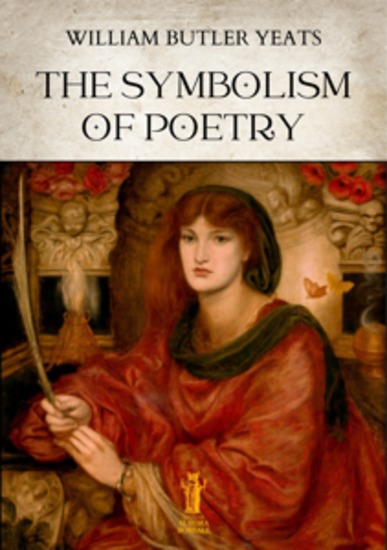
William Butler Yeats (1865-1939) was an Irish poet, dramatist, writer and initiate, and one of the foremost figures of 20th-century literature. He was a driving force behind the Irish Literary Revival, and along with Lady Gregory founded the Abbey Theatre, serving as its chief during its early years. He was awarded the 1923 Nobel Prize in Literature, and later served two terms as a Senator of the Irish Free State.Considered one of the key English-language poets, Yates was a Symbolist, using allusive imagery and symbolic structures throughout his career. He chose words and assembled them so that, in addition to a particular meaning, they suggest abstract thoughts that may seem more significant and resonant. His use of symbols is usually something physical that is both itself and a suggestion of other, perhaps immaterial, timeless qualities.The Yeats’ short essay The Symbolism of Poetry was included in 1903 in the collection of Yeats’ non-fiction works and essays Ideas of Good and Evil, published in London by A.H. Bullen.It is one of the great Irish author's masterpieces of literary criticism. In it Yeats does not limit himself to analyzing the magic, charm and philosophy of the symbolism in poetry, but also manages to read these characteristics through his profound knowledge of symbols and archetypes, derived from his lifelong membership of The Hermetic Order of the Golden Dawn, a secret society dedicated to the study and practice of occult Hermeticism and metaphysics.
Available since: 01/12/2025.
Other books that might interest you

  • Michel Foucault - The Archaeology of Knowledge - cover

    Michel Foucault - The...

    Hector Davidson

    • 0
    • 0
    • 0
    Michel Foucault, a French philosopher, historian, and social theorist, is renowned for his critical exploration of power, knowledge, and social institutions. Born in 1926, Foucault’s work spans a range of disciplines, from philosophy to sociology, psychology, and political science. His intellectual journey reflects a unique approach to understanding human societies, focusing not on abstract metaphysical systems but on the structures that shape human behavior, knowledge, and institutions. 
    Foucault’s work is marked by a critique of the traditional ways of understanding the relationship between individuals and society. He challenged the dominant historical narratives and sought to uncover the deeper structures of power that influenced the development of knowledge. One of his central ideas was that knowledge and power are intimately connected—knowledge is not neutral but shaped by power relations that determine what is considered true or false. In this sense, his work was not just theoretical but deeply political, as it explored how systems of power create the conditions for knowledge and vice versa. 
    Foucault’s philosophy is often associated with his concept of "genealogy," a method he developed to investigate historical processes and the ways in which ideas, norms, and practices evolve over time. However, it is in his "archaeology of knowledge" that he makes his most significant philosophical contributions. The archaeological method is a way of analyzing the historical layers of knowledge and uncovering the deep structures that underlie our understanding of the world. Unlike traditional historiography, which tends to focus on narratives and individuals, Foucault's archaeology examines the discourses and institutions that create and maintain knowledge, highlighting the ways they shape and limit what can be known.
    Show book
  • Is It Possible to Renew the Mind? - Amsterdam 1967 - Public Talk 3 - cover

    Is It Possible to Renew the...

    Jiddu Krishnamurti

    • 0
    • 0
    • 0
    Is it possible to renew the mind? - 24 May 1967 
    • When the mind is living through imagination and thought, it is incapable of 
    living in the complete fullness of the present. 
    • Thought has created time, not chronological time but psychological time. That 
    is, ‘I will be,’ ‘I should be.’ 
    • Is it possible for the brain to be quiet, to give an interval between the old and 
    the new? This interval is the timeless nature in which thought cannot possibly 
    enter. 
    • That which has continuity is repetitive, which is time. It’s only when time 
    comes to an end there is something new taking place. 
    • To die every day to every problem, every pleasure, and not carry over any 
    problem at all; so the mind remains tremendously attentive, active, clear. 
    • Since love is not desire or pleasure, how does one come upon it? 
    • Q: Is the feeling of responsibility a part of the order and discipline you were 
    talking about? 
    • Q: Why don’t people get angry with what you are saying?
    Show book
  • How to write your first book - You can avoid the nine classic mistakes new writers make - cover

    How to write your first book -...

    Tony Sharples

    • 0
    • 0
    • 0
    A practical guide to writing and publishing your first book, based on my real-life experience writing my first book. 
    A short, concise audio book filled with practical advice. What to do (and what not to do). How to find your personal creative time and writing space. Writing for passion, or for income. Storyline tips to make your first book easier to finish. Harnessing the power of deadlines. How the book business really works. The economics of writing and publishing. The editing and formatting process explained. Navigating the self-publishing options. Tips on writing tools. How to get feedback on your book. The practicalities of marketing and selling. 
    Learn a fast, fresh approach to writing and publishing your first epic story. I call it “write a book to learn how to write your first book”. Jumpstart your long-term career as a writer. 
    Includes access to an author’s website filled with deeper resources for new writers.
    Show book
  • Self-Promote and Succeed - The No Boring Books Way to Build Your Brand Attract Your Audience and Market Your Non-Fiction Book - cover

    Self-Promote and Succeed - The...

    Julie Broad

    • 0
    • 0
    • 0
    Every nonfiction author dreams of being a bestselling author. This dream hinges on a well-positioned book and a savvy understanding of marketing. Many authors feel like they have tried everything in the world of self-publishing—launching mass press releases, designing attractive bookmarks, and attempting to run ads on Amazon. Yet the numbers crawl, the dream stalls, and the frustration mounts. 
    Julie Broad, author of Self-Publish and Succeed and Founder of Book Launchers, brings her high-energy approach and hold-nothing-back attitude with this compelling follow-up guide to Self-Publish & Succeed. Julie champions indie authors to book marketing success, showing you the secret goes beyond the narrow focus on book sales. She presents a map to use your book to become an industry thought leader, bolster your personal brand and leverage your book as a tool for business growth. 
    You’ll discover how to: 
    ·     Architect a layered marketing strategy, optimizing every aspect of your book production and marketing, for success. 
    ·     Position your author brand to appeal directly to your target audience. 
    ·     Choose your book launch strategy from four proven methods. 
    ·     Enhance your book’s visibility with the right pricing and keywords on platforms like Kindle Direct Publishing. 
    ·     Leverage speaking engagements to personally connect with readers and boost book sales. 
    It’s time to take your authorship to the next level. Navigate the intricacies of self-publishing and book marketing using the same methods clients pay her tens of thousands of dollars for. Get Self-Promote and Succeed and let this writer’s guide to promoting, marketing, and selling your nonfiction book be the reason your journey heads toward success.
    Show book
  • Summary: Die With Zero - Getting All You Can from Your Money and Your Life by Bill Perkins: Key Takeaways Summary & Analysis - cover

    Summary: Die With Zero - Getting...

    Brooks Bryant

    • 0
    • 0
    • 0
    Disclaimer: This is not the official book, but a summary & it does not accompany the official. 
    Step into the transformative philosophy of 'Die With Zero' by Bill Perkins. This isn't your traditional finance book; it's a call to action to optimize life's experiences and ensure that your wealth aligns with life's most fulfilling moments. Through engaging anecdotes and persuasive arguments, Perkins challenges the notion of accumulating wealth for a distant future, urging readers to spend, experience, and truly live in the present. 
    This summary distills Perkins' radical approach, guiding you through the fundamental shifts in mindset necessary to enrich your life journey. Discover how to balance accumulating wealth with spending on experiences that matter, ensuring you reach the end of life with zero regrets and memories to cherish. 'Die With Zero' is more than just a financial blueprint—it's a manifesto for living a life brimming with purpose, passion, and unforgettable moments
    Show book
  • So Who is God Anyway? - An (UN)orthodox Theory for Doubters Skeptics and Recovering Fundamentalists - cover

    So Who is God Anyway? - An...

    G.S. Payne

    • 0
    • 0
    • 0
    "Boldly blows the lid off a taboo topic. If there’s one book on God to read this year, please make it ‘So Who is God Anyway?’ by G.S. Payne.” —Reader Views 
    "A well-written and convincing rumination on the divine." --Kirkus Reviews 
    GS Payne, writer, sleuth, and eternally curious ruminator, investigates 2,500 years-plus of philosophical thought on the subject of God. Using the tools of the philosopher (and a lot of humor), Payne traces the thinking of history's greatest brains to arrive initially at a conclusion on the matter of God's existence; then, a philosophical conception of God that is no less than startling, first because it is nothing like the traditional conception of God (he of the beard and sandals on his throne in the sky), and, second, because it is a conception that not only goes back to the beginning of recorded time, but is recognized by every major religion on earth, and yet has been tragically relegated to the fringes by the louder, more fundamentalist branches of mainstream religion. 
    So Who is God, Anyway? delivers splendidly-for doubters, skeptics, recovering fundamentalists, or anyone looking for a fun book to read about some damn big questions!
    Show book