¡Acompáñanos a viajar por el mundo de los libros!
Añadir este libro a la estantería
Grey
Escribe un nuevo comentario Default profile 50px
Grey
Suscríbete para leer el libro completo o lee las primeras páginas gratis.
All characters reduced
As We Are and As We May Be - Exploring Social Issues and Moral Dilemmas in the Late Victorian Era - cover

As We Are and As We May Be - Exploring Social Issues and Moral Dilemmas in the Late Victorian Era

Walter Besant

Editorial: Good Press

  • 0
  • 0
  • 0

Sinopsis

In "As We Are and As We May Be," Walter Besant explores the intricate tapestry of social reform and human potential through a blend of narrative and philosophical discourse. The book is written in a didactic style that seamlessly intertwines storytelling with critical analysis, making it a significant work in the context of late Victorian literature, which grappled with the rapid changes brought about by industrialization and urbanization. Besant presents a vision of an ideal society, emphasizing the importance of education, freedom, and moral integrity as mechanisms for social change, thereby inviting readers to consider both the harsh realities of their contemporary world and the possibilities for a more equitable future. Walter Besant, a prominent novelist and social commentator of the late 19th century, was deeply influenced by the socio-economic conditions of his time. His experiences as a pioneer in the Society of Authors and his commitment to social causes provided a rich backdrop for his writings. Besant's advocacy for the rights of the working class and his belief in the transformative power of collective action are evident throughout this work, revealing him as a visionary concerned with the plight of his fellow citizens. This book is highly recommended for readers interested in the intersections of literature, social justice, and utopian thought. Besant'Äôs compelling arguments and vivid illustrations not only provoke reflection but also inspire action, making it an essential read for anyone passionate about reforming society and envisioning a better world.
Disponible desde: 12/08/2023.
Longitud de impresión: 189 páginas.


Otros libros que te pueden interesar

  • History of Marathas EP06 - Visit to Agra - cover

    History of Marathas EP06 - Visit...

    Vikrant Pande

    • 0
    • 0
    • 0
    'I did not come here just to receive the royal honour. My son is a panch hazari Mansabdar under the Badshah. He can be made to stand wherever the Badshah wishes him to. But I am not a servant of the Badshah! I am a Raja in my own right!'
    The three of them returned, unable to convince Shivaji. They explained the situation to the Badshah when Ram Singh said, 'Alijah! It seems the hot Agra weather has not suited Raje. Please pardon him. He will present himself soon.'
    'I can understand his feelings,' said Aurangzeb.
    'Ram Singh, please sprinkle my special gulab jal on him to cool him down. Please request him to come back. We will then talk.'
    Ver libro
  • Britain’s Secret Defences - Civilian Saboteurs Spies and Assassins During the Second World War - cover

    Britain’s Secret Defences -...

    Andrew Chatterton

    • 0
    • 0
    • 0
    The first full history of the highly trained and ruthless civilian volunteers secretly trained across Britain to be deployed in the case of a German invasion.The narrative surrounding Britain’s anti-invasion forces has often centered on ‘Dad’s Army’-like characters running around with pitchforks, on unpreparedness and sense of inevitability of invasion and defeat. The truth, however, is very different.  Top-secret, highly trained and ruthless civilian volunteers were being recruited as early as the summer of 1940. Had the Germans attempted an invasion they would have been countered by saboteurs and guerrilla fighters emerging from secret bunkers, and monitored by swathes of spies and observers who would have passed details on via runners, wireless operators and ATS women in disguised bunkers.  Alongside these secret forces, the Home Guard were also setting up their own ‘guerrilla groups’, and SIS (MI6) were setting up post-occupation groups of civilians – including teenagers – to act as sabotage cells, wireless operators, and assassins had the Nazis taken control of the country.  The civilians involved in these groups understood the need for absolute secrecy and their commitment to keeping quiet meant that most went to their grave without ever telling anyone of their role, not even their closest family members. There has been no official and little public recognition of what these dedicated men and women were willing to do for their country in its hour of need, and after over 80 years of silence the time has come to highlight their remarkable role.
    Ver libro
  • The Real Queen Charlotte - Inside the Real Bridgerton Court - cover

    The Real Queen Charlotte -...

    Catherine Curzon

    • 0
    • 0
    • 0
    Known to millions as the imperious matriarch of Bridgerton's court, Charlotte of Mecklenburg-Strelitz was still a teenager when she was chosen to be the bride of King George III. Shy, innocent, and sheltered, the orphaned princess and her groom carried the hopes of a nation on their shoulders. 


    The unassuming young couple symbolized a new beginning, but soon those hopes began to sour. Charlotte and George's marriage lasted for nearly sixty years and produced more than a dozen children, but it was beset by unrest at home, war in the colonies, and the king's encroaching madness. 


    As the royal couple battled against their critics, their political opponents, and sometimes their own family, Charlotte learned what it really meant to be queen. Locked in a bitter struggle with her eldest son for the king's future and with her daughters for their freedom, the timid young girl grew into an insular and domineering woman that few dared to cross. 


    Shouldering the burden of family disputes, ambitious courtiers, and the care of the man she adored, Charlotte of Mecklenburg-Strelitz presided over one of the most tumultuous eras that the monarchy has ever seen. This is the story of her extraordinary life.
    Ver libro
  • Don't die - cover

    Don't die

    Seun Alabi

    • 0
    • 0
    • 0
    "Don't Die" is not just a title; it is a powerful call to action, a reminder that life is a journey worth fighting for, no matter the trials we face.  
    In a world filled with challenges, uncertainties, and obstacles that can sometimes feel insurmountable, the message of resilience and survival becomes more crucial than ever. 
    As we navigate through the complexities of our existence be it in our personal relationships, professional endeavors, or our internal battles with self-doubt and fear we often encounter moments that test our will to persevere. This book serves as a beacon of hope and a guide for those who find themselves at a crossroads, unsure of how to move forward. It challenges us to confront our fears, to embrace our vulnerabilities, and to discover the strength that resides within us all. 
    Through compelling stories, practical advice, and heartfelt reflections, "Don't Die" invites readers to explore the depths of their own experiences and to recognize the power of resilience. Each chapter is a step towards understanding that the journey of life is not about avoiding hardship, but about learning to thrive in spite of it. The lessons within these pages resonate with anyone who has ever felt lost, hopeless, or on the brink of giving up. 
    In a society that often glorifies success and perfection, this book acknowledges the beauty in imperfection and the importance of nurturing our mental and emotional well-being. It empowers us to seek support, to lean on one another, and to foster a community that values empathy and understanding.
    Ver libro
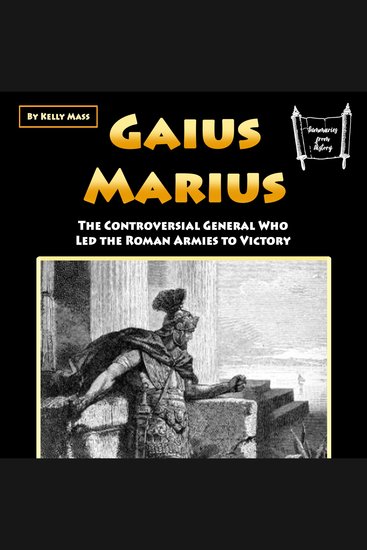
  • Gaius Marcus - The Controversial General Who Led the Roman Armies to Victory - cover

    Gaius Marcus - The Controversial...

    Kelly Mass

    • 0
    • 0
    • 0
    Gaius Marius was one of the most influential military commanders and statesmen of the late Roman Republic. Born into a well-off, provincial Italian family in Arpinum, Marius rose from relatively humble beginnings to become a key figure in Rome’s transformation from a republic to an empire. Known for his military prowess and political savvy, Marius served as consul an unprecedented seven times, a record that set him apart from other Roman leaders. 
    His career began in earnest during the Siege of Numantia in 134 BC, where he gained valuable military experience under the command of Scipio Aemilianus. Marius was not born into the traditional aristocracy of Rome but quickly ascended through the ranks of Roman politics. In 119 BC, he was elected as tribune of the plebs, where he passed significant legislation that aimed to curb the influence of the aristocracy in Roman elections. His political career continued to build momentum as he was elected praetor in 115 BC and later became the governor of Further Spain, where he fought against bandit forces. Marius’s personal life also intertwined with the leading families of Rome—he married Julia, the aunt of the future dictator Julius Caesar, cementing ties with one of Rome’s most powerful clans. 
    Marius’s most famous military achievements came in the course of the Jugurthine War in Numidia, which he brought to a successful conclusion in 107 BC. That same year, he was appointed to command Roman forces in the war against the Germanic tribes, the Cimbri and Teutones, who threatened Rome’s existence. He was elected consul for the second time in 104 BC, a post he would hold consecutively for five years. His victories at the battles of Aqua Sextiae in 102 BC and Vercellae in 101 BC cemented his reputation as one of Rome’s greatest military leaders, and he was hailed as the “third founder of Rome,” a title that reflected his role in securing the republic’s future.
    Ver libro
  • The Hymn of Jesus - cover

    The Hymn of Jesus

    G. R. S. Mead

    • 0
    • 0
    • 0
    The Hymn of Jesus, written by G.R.S. Mead, is a notable work that explores the underlying spiritual themes of early Christianity. Its poetic language offers an astute examination of a range of religious doctrines, allowing the reader to gain insight into the prevailing theological principles and metaphysical precepts associated with the first century Christian faith. Read in English, unabridged.
    Ver libro