
Begleiten Sie uns auf eine literarische Weltreise!
Buch zum Bücherregal hinzufügen
Grey
Einen neuen Kommentar schreiben Default profile 50px
Grey
Jetzt das ganze Buch im Abo oder die ersten Seiten gratis lesen!
All characters reduced
Physics and Politics - Thoughts on the application of the principles of "natural selection" and "inheritance" - cover

Physics and Politics - Thoughts on the application of the principles of "natural selection" and "inheritance"

Walter Bagehot

Verlag: Good Press

  • 0
  • 0
  • 0

Beschreibung

In "Physics and Politics," Walter Bagehot seamlessly weaves together the realms of natural science and political theory, presenting a pioneering exploration of how physical laws can serve as metaphors for societal dynamics. Bagehot's literary style is incisive yet accessible, balancing rigorous analysis with insightful observations on the interplay between science and governance. Written in the mid-19th century, this work reflects the Victorian era'Äôs burgeoning fascination with science and its implications on political thought, emphasizing ideas of evolution and progress in societal structures. Walter Bagehot, a distinguished British journalist, economist, and philosopher, was profoundly influenced by the scientific advancements of his time, particularly those proposed by Darwinian evolution. His experiences as editor of the Economist and his keen understanding of political institutions informed his perspective that societies operate under natural laws similar to those governing the physical world. This confluence of interests is pivotal in framing his arguments about the necessity of stable institutions for societal advancement. "Physics and Politics" is essential reading for anyone interested in the philosophical underpinnings of modern governance. Bagehot'Äôs nuanced analysis invites readers to reconsider the foundations of political authority and encourages a dialogue between the sciences and the humanities. Dive into this enlightening text to gain a deeper understanding of the societal constructs that shape our world.
Verfügbar seit: 12.10.2023.
Drucklänge: 141 Seiten.


Weitere Bücher, die Sie mögen werden

  • Libertarianism and Its Practices - Exploring Libertarian Policies and Their Real-World Application (2 in 1) - cover

    Libertarianism and Its Practices...

    Arlo Holders

    • 0
    • 0
    • 0
    This book contains the following two topics: 
      - The Libertarian Ideal: Libertarianism is a political philosophy that places individual liberty at its core, emphasizing the importance of personal freedom, limited government, and voluntary cooperation. Rooted in centuries of intellectual thought, libertarianism advocates for a society in which individuals are free to pursue their own goals and aspirations as long as they respect the rights of others. This emphasis on freedom and responsibility makes libertarianism distinct from other political ideologies, which often prioritize collective goals or centralized authority. 
      - Libertarian Policies: Rooted in the principles of classical liberalism, libertarianism advocates for a limited government whose primary role is to protect individual rights and maintain peace. It emphasizes personal responsibility, free markets, and the belief that voluntary exchange is the foundation of a prosperous society. At its core, libertarianism seeks to protect the rights of individuals to live as they see fit, free from the coercive power of the state. The history of libertarian thought can be traced back to influential philosophers such as John Locke, who argued for the natural rights of individuals to life, liberty, and property. His ideas formed the intellectual groundwork for the concept of limited government, which would later be expanded by thinkers like Adam Smith, who promoted the idea of free markets. The Enlightenment era, with its focus on reason, individualism, and skepticism of authority, provided a fertile ground for the development of libertarian ideas. In the 20th century, libertarianism gained further prominence through the works of economists such as Friedrich Hayek and Milton Friedman, who critiqued the expansion of government power and emphasized the importance of individual liberty in economic affairs.
    Zum Buch
  • Anarchism: The Basics - An Introduction to the Philosophy and Principles of Anarchy - cover

    Anarchism: The Basics - An...

    Arlo Holders

    • 0
    • 0
    • 0
    Anarchism is often misunderstood as simply chaos or disorder, but it is, in fact, a political and philosophical ideology that seeks the abolition of unjust systems of power, particularly the state and hierarchical structures. At its core, anarchism advocates for a society based on voluntary cooperation, mutual aid, and the dismantling of coercive institutions. It emphasizes individual freedom, collective responsibility, and the rejection of authority in all its forms, whether governmental, economic, or social. 
    The roots of anarchist thought can be traced back to the early 19th century, with thinkers like Pierre-Joseph Proudhon, who famously declared that "property is theft," and later, figures like Mikhail Bakunin and Peter Kropotkin. These early anarchists critiqued the existing state, capitalism, and organized religion, arguing that they were inherently oppressive and exploitative. Anarchism, for these thinkers, was not just about rejecting government, but also about challenging societal norms that perpetuate inequality and injustice. 
    One of the most important aspects of anarchism is its emphasis on direct action and the creation of alternative systems of organization. Anarchists believe that meaningful change does not come from traditional political structures like elections or parliamentary processes, but through grassroots action and community-based solutions. This can involve protests, strikes, and other forms of resistance, but also the establishment of cooperative enterprises, mutual aid networks, and non-hierarchical communities.
    Zum Buch
  • Bullsh*t Comparisons - A Field Guide to Thinking Critically in a World of Difference - cover

    Bullsh*t Comparisons - A Field...

    Andrew Brooks

    • 0
    • 0
    • 0
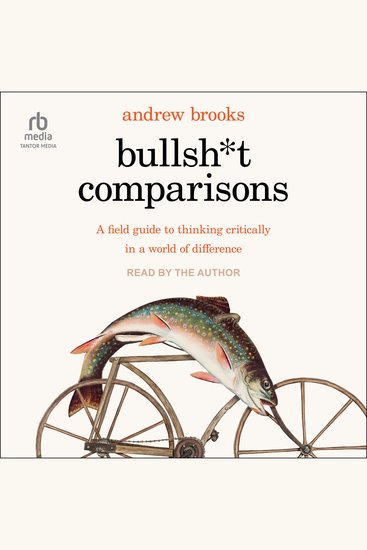
    Bullshit Comparisons will challenge the way you think about rankings, charts, and other marketing and political tools designed to create odious and dangerous comparisons. 


    Is Boris Johnson really like Winston Churchill? Are electric cars actually greener than petrol ones? Which is the world's most successful university? Is Lisbon the new Barcelona? Should we compare the achievements of younger and older siblings even when we know it damages their self-worth? We make comparisons every day, but how helpful are they? 


    Looking across a dazzling range of situations both familiar and unfamiliar, Bullshit Comparisons is a groundbreaking examination of the role of comparison in modern society, illuminated by examples spanning from the FIFA World Footballer of the year, to wine-tasting in London, hospital care in Sierra Leone, and avocado farming in Colombia. 


    Challenging us to think critically about the use of comparison through accessible, personal, and often amusing research, Andrew Brooks reveals the uses and abuses of comparisons in a book that isn't like anything else.
    Zum Buch
  • A Man of Letters - cover

    A Man of Letters

    Thomas Sowell

    • 0
    • 0
    • 0
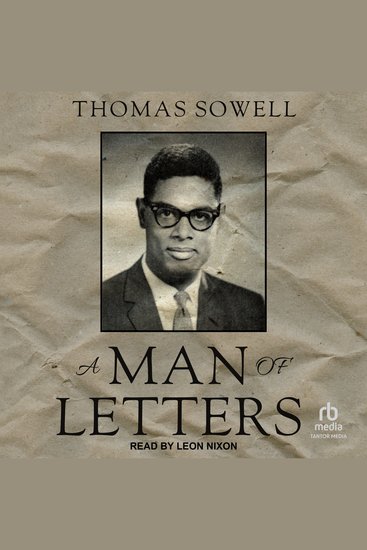
    A Man of Letters traces the life, career, and commentaries on controversial issues of Thomas Sowell over a period of more than four decades through his letters to and from family, friends, and public figures ranging from Milton Friedman to Clarence Thomas, David Riesman, Arthur Ashe, William Proxmire, Vernon Jordan, Charles Murray, Shelby Steele, and Condoleezza Rice. These letters begin with Sowell as a graduate student at the University of Chicago in 1960 and conclude with a reflective letter to his fellow economist and longtime friend Walter Williams in 2005.
    Zum Buch
  • The Black Boom - cover

    The Black Boom

    Jason L Riley

    • 0
    • 0
    • 0
    Economic inequality continues to be one of the most hotly debated topics in America, but there has been relatively little discussion of the fact that black-white gaps in joblessness, income, poverty, and other measures were shrinking prior to the pandemic. Why was it happening, and why did this phenomenon go unacknowledged by so much of the media? 


    In The Black Boom, Jason L. Riley—acclaimed Wall Street Journal columnist and senior fellow at the Manhattan Institute—digs into the data and concludes that the economic lives of black people improved significantly under policies put into place during the Trump administration. 


    Less inequality is something that everyone wants, but disapproval of Trump's personality and methods too often skewed the media's appraisal of effective policies advocated by his administration. If we want to make real progress in improving the lives of low-income minorities, says Riley, we must look beyond our partisan differences at what works and keep doing it. Unfortunately, many press outlets were unable or unwilling to do that.
    Zum Buch
  • Disciples of White Jesus - The Radicalization of American Boyhood - cover

    Disciples of White Jesus - The...

    Angela Denker

    • 0
    • 0
    • 0
    White boys and men are dangerous. 
    White boys and men are struggling. 
    Both of these statements are staggeringly true in America today. By far, most large-scale mass shooters are white men. White men also die by suicide more often than any other demographic. In this sensitive, searing, and unsparing look at American boyhood, journalist, mother, and pastor Angela Denker investigates the sometimes-tragic stories of boyhood across the United States. 
    Disciples of White Jesus is a comprehensive look at the rise in radicalization among young white men in America, especially focused on the role of right-wing Christianity in the increase of religious-based hatred and violence. Denker goes deep into the online rabbit holes of right-wing Christian influencers and conservative Christian ideology to understand how the preaching of "traditional gender roles" and "submission of women" has led to anger, outrage, loneliness, depression, and limiting identities for young white Christian men across America. 
    Casting her journalist's eye across the US, Denker retraces the steps of a racist South Carolina mass shooter and a Phoenix skinhead turned Evangelical pastor, interviews middle school teachers and coaches in the Midwest, and introduces us to young men across the country who will both confirm and confound our ideas about American boyhood--stories about boys and men who are forging new identities grounded in kindness, grace, respect, and even joy. A must-read for parents, grandparents, educators, coaches, faith leaders, researchers, and all who care about the state of American families, boys themselves, and the safety of American society at large.
    Zum Buch