
Join us on a literary world trip!
Add this book to bookshelf
Grey
Write a new comment Default profile 50px
Grey
Subscribe to read the full book or read the first pages for free!
All characters reduced
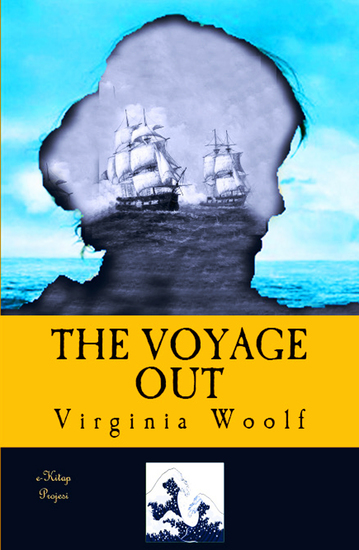
The Voyage Out - cover

The Voyage Out

Virginia Woolf

Publisher: E-Kitap Projesi & Cheapest Books

  • 0
  • 0
  • 0

Summary

As the streets that lead from the Strand to the Embankment are very narrow, it is better not to walk down them arm-in-arm. If you persist, lawyers' clerks will have to make flying leaps into the mud; young lady typists will have to fidget behind you. In the streets of London where beauty goes unregarded, eccentricity must pay the penalty, and it is better not to be very tall, to wear a long blue cloak, or to beat the air with your left hand.

One afternoon in the beginning of October when the traffic was becoming brisk a tall man strode along the edge of the pavement with a lady on his arm. Angry glances struck upon their backs. The small, agitated figures—for in comparison with this couple most people looked small—decorated with fountain pens, and burdened with despatch-boxes, had appointments to keep, and drew a weekly salary, so that there was some reason for the unfriendly stare which was bestowed upon Mr. Ambrose's height and upon Mrs. Ambrose's cloak. But some enchantment had put both man and woman beyond the reach of malice and unpopularity. In his guess one might guess from the moving lips that it was thought; and in hers from the eyes fixed stonily straight in front of her at a level above the eyes of most that it was sorrow. It was only by scorning all she met that she kept herself from tears, and the friction of people brushing past her was evidently painful.

After watching the traffic on the Embankment for a minute or two with a stoical gaze she twitched her husband's sleeve, and they crossed between the swift discharge of motor cars. When they were safe on the further side, she gently withdrew her arm from his, allowing her mouth at the same time to relax, to tremble; then tears rolled down, and leaning her elbows on the balustrade, she shielded her face from the curious. Mr. Ambrose attempted consolation; he patted her shoulder; but she showed no signs of admitting him, and feeling it awkward to stand beside a grief that was greater than his, he crossed his arms behind him, and took a turn along the pavement.
Available since: 02/04/2024.
Print length: 500 pages.

Other books that might interest you

  • Jam For The Enemy - Former soldier and journalist that became a revered author and screenwriter - cover

    Jam For The Enemy - Former...

    Edgar Wallace

    • 0
    • 0
    • 0
    Richard Horatio Edgar Wallace was born on the 1st April 1875 in Greenwich, London.  Leaving school at 12 because of truancy, by the age of fifteen he had experience; selling newspapers, as a worker in a rubber factory, as a shoe shop assistant, as a milk delivery boy and as a ship’s cook.  
     
    By 1894 he was engaged but broke it off to join the Infantry being posted to South Africa. He also changed his name to Edgar Wallace which he took from Lew Wallace, the author of Ben-Hur.  
     
    In Cape Town in 1898 he met Rudyard Kipling and was inspired to begin writing. His first collection of ballads, The Mission that Failed! was enough of a success that in 1899 he paid his way out of the armed forces in order to turn to writing full time.  
     
    By 1904 he had completed his first thriller, The Four Just Men. Since nobody would publish it he resorted to setting up his own publishing company which he called Tallis Press. 
      
    In 1911 his Congolese stories were published in a collection called Sanders of the River, which became a bestseller. He also started his own racing papers, Bibury’s and R. E. Walton’s Weekly, eventually buying his own racehorses and losing thousands gambling.  A life of exceptionally high income was also mirrored with exceptionally large spending and debts.  
     
    Wallace now began to take his career as a fiction writer more seriously, signing with Hodder and Stoughton in 1921. He was marketed as the ‘King of Thrillers’ and they gave him the trademark image of a trilby, a cigarette holder and a yellow Rolls Royce. He was truly prolific, capable not only of producing a 70,000 word novel in three days but of doing three novels in a row in such a manner. It was estimated that by 1928 one in four books being read was written by Wallace, for alongside his famous thrillers he wrote variously in other genres, including science fiction, non-fiction accounts of WWI which amounted to ten volumes and screen plays. Eventually he would reach the remarkable total of 170 novels, 18 stage plays and 957 short stories. 
     
    Wallace became chairman of the Press Club which to this day holds an annual Edgar Wallace Award, rewarding ‘excellence in writing’.  
     
    Diagnosed with diabetes his health deteriorated and he soon entered a coma and died of his condition and double pneumonia on the 7th of February 1932 in North Maple Drive, Beverly Hills. He was buried near his home in England at Chalklands, Bourne End, in Buckinghamshire.
    Show book
  • 25+ The World's Greatest Short Stories Vol 2 - Roger Malvin's Burial Notes From The Underground The Mark On The Wall Heart Of Darkness and other - cover

    25+ The World's Greatest Short...

    Washington Irving, Edgar Allan...

    • 0
    • 0
    • 0
    Contents:
     • Washington Irving: Rip Van Winkle
    • Edgar Allan Poe: The Murders In The Rue Morgue
    • Fyodor Dostoevsky: Notes From The Underground
    • Franz Kafka: The Metamorphosis
    • Charles Dickens: The Chimes
    • Ivan Turgenev: Mumu
    • Francis Scott Fitzgerald: The Curious Case Of Benjamin Button
    • Joseph Conrad: Heart Of Darkness
    • Ambrose Bierce: Chickamauga
    • Arthur Conan Doyle: A Study In Scarlet
    • H. P. Lovecraft: At the Mountains of Madness
    • Nathaniel Hawthorne: Roger Malvin's Burial
    • Guy de Maupassant: Necklace
    • Leo Tolstoy: God Sees The Truth, But Waits
    • Anton Chekhov: The Lottery Ticket
    • Virginia Woolf: The Mark On The Wall
    • Katherine Mansfield: The Garden Party
    • H.G. Wells: The Star
    • Stendhal: Vanina Vanini
    • Honoré De Balzac: The Unknown Masterpiece
    • Mark Twain: The Celebrated Jumping Frog of Calaveras County
    • Aldous Huxley: Crome Yellow
    • Ernest Hemingway: Up In Michigan
    • Nikolay Gogol: A May Night
    • O. Henry: The Ransom Of Red Chief
    • Jack London: To Build a Fire
    Show book
  • The Temple - cover

    The Temple

    H. P. Lovecraft

    • 0
    • 0
    • 0
    A German U-boat embarks on a horrifying journey after one of its crew claims a strange souvenir in this tale by the author of “The Call of Cthulhu”.During World War I, a German U-boat sinks a British freighter. Karl Heinrich, Graf von Altberg-Ehrenstein, a lieutenant-commander in the Imperial German Navy, orders the ship to fire on the British survivors and their lifeboats before submerging. After the U-boat surfaces again, a dead sailor is found clinging to the deck with a mysterious ivory talisman in his pocket. Heinrich’s second-in-command pockets the charm just before the body is thrown overboard. And thus begins the ship’s journey into madness . . .
    Show book
  • It Can't Happen Here - cover

    It Can't Happen Here

    Briefly Summaries

    • 0
    • 0
    • 0
    This is a concise summary and analysis of It Can’t Happen Here, by Sinclair Lewis. It is not the original book and is not affiliated with or endorsed by Sinclair Lewis. Ideal for those seeking a quick and insightful overview
     
    It Can’t Happen Here is a 1935 dystopian political novel. The story is set in a fictionalized version of 1930s United States and follows an American politician, Berzelius “Buzz” Windrip, who quickly rises to power to become the country’s first outright dictator. The novel describes the rise of Windrip, a demagogue who is elected President of the United States, after fomenting fear and promising drastic economic and social reforms while promoting a return to patriotism and “traditional” values.
    Show book
  • Oz: The Complete Collection - cover

    Oz: The Complete Collection

    L. Frank Baum

    • 0
    • 0
    • 0
    Here you will find the complete OZ Collection:1. The Wonderful Wizard of Oz Starts at Chapter 1 2. The Marvelous Land of Oz Starts at Chapter 253. Ozma of Oz Starts at Chapter 494. Dorothy and the Wizard in Oz Starts at Chapter 705. The Road to Oz Starts at Chapter 906. The Emerald City of Oz Starts at Chapter 1147. The Patchwork Girl of Oz Starts at Chapter 1448. Tik-Tok of Oz Starts at Chapter 1729. The Scarecrow of Oz Starts at Chapter 19710. Rinkitink in Oz Starts at Chapter 22111. The Lost Princess of Oz Starts at Chapter 24512. The Tin Woodman of Oz Starts at Chapter 27113. The Magic of Oz Starts at Chapter 29514. Glinda of Oz Starts at Chapter 318
    Show book
  • Essential Science Fiction - cover

    Essential Science Fiction

    Jules Verne

    • 0
    • 0
    • 0
    The essential novels of Jules Verne include the classics such as 20,000 Leagues Under the Sea, Journey to the Center of the Earth, and Around the World in Eighty Days. Enjoy all three novels in this enthralling science-fiction collection.
    Show book