Join us on a literary world trip!
Add this book to bookshelf
Grey
Write a new comment Default profile 50px
Grey
Subscribe to read the full book or read the first pages for free!
All characters reduced
The Abolition of the African Slave-Trade - cover

The Abolition of the African Slave-Trade

Thomas Clarkson

Publisher: DigiCat

  • 0
  • 0
  • 0

Summary

In his seminal work, "The Abolition of the African Slave-Trade," Thomas Clarkson meticulously documents the harrowing realities of the transatlantic slave trade, revealing its moral depravity through rigorous research and firsthand accounts. Clarkson employs a deeply persuasive literary style, combining empirical data with impassioned rhetoric to evoke empathy and foment public outrage. His historical account is situated within the broader context of Enlightenment values championing liberty and human rights, making his arguments not merely a call to action but a philosophical plea for justice. Thomas Clarkson, a staunch abolitionist and social reformer, drew upon his extensive travels and interactions with erstwhile slaves and abolitionist sympathizers to craft this pivotal text. His experiences witnessing the inhuman conditions of the slave ships galvanized his commitment to the abolitionist cause. Clarkson's background as a Quaker, entrenched in the values of equality and moral responsibility, further fueled his lifelong dedication to ending the slave trade, making him a key figure in the movement. This book is not only a critical historical document but a profound moral appeal that resonates today. Readers interested in social justice, human rights, and the historical context of abolition will find Clarkson's passionate argumentation and thorough research both enlightening and inspiring. It is an essential read for anyone seeking to understand the roots of one of humanity's greatest moral crises.
Available since: 11/13/2022.
Print length: 517 pages.
Other books that might interest you

  • History of Space Race The - First part - cover

    History of Space Race The -...

    Onofre Quezada

    • 0
    • 0
    • 0
    This audiobook is narrated by an AI Voice.   
    The History of Space Race is a fascinating journey through one of the most exciting and decisive competitions of the 20th century: the space race. This book tells how the United States and the Soviet Union, during the Cold War, took their rivalry beyond Earth to conquer the cosmos. From the launch of Sputnik in 1957 to man's landing on the moon in 1969, you'll discover the technological advances, scientific achievements, and historic moments that changed humanity's perception of the universe. 
    A story filled with challenges, triumphs, and risks that shows how ambition, politics, and science came together to open the doors of space to humanity.
    Show book
  • Active Empathy for Kids - Building Compassion in Your Child Through Mindful Communication: A Compact Activity Guide for Parents - cover

    Active Empathy for Kids -...

    Morgan Bravo

    • 0
    • 0
    • 0
    "Active Empathy for Kids" is an essential guide for parents who want to instill the values of compassion and understanding in their children. Empathy is an essential skill that helps children connect with others, build stronger relationships, and navigate the world with kindness and understanding. 
    This compact activity guide offers valuable insights into the meaning of empathy, its causes, and the reasons behind a lack of empathy. Using mindful communication techniques and strategies, parents will learn how to foster their child's ability to empathize and show compassion towards others. 
    The book includes "Conversation Starters" that enable parents to communicate and explore the concept of empathy with their child in an engaging and accessible way. The activities in the book are designed to help children build empathy and understanding through interactive and fun exercises that encourage them to think about how others feel and how they can make a difference in the world. 
    "Active Empathy for Kids" is an invaluable resource for parents who want to nurture their child's emotional intelligence and cultivate the values of kindness and compassion. With this book as your guide, you'll be able to raise children who are empathetic, understanding, and capable of making a positive impact on the world.
    Show book
  • Vasco da Gama - The First Person to Sail from Europe to India around the African Continent - cover

    Vasco da Gama - The First Person...

    Kelly Mass

    • 0
    • 0
    • 0
    Vasco da Gama, the 1st Count of Vidigueira, is widely celebrated as the first European to reach India by sea. His landmark journey, which took place from 1497 to 1499, was groundbreaking in that it provided the first direct oceanic connection between Europe and Asia. By navigating around the Cape of Good Hope, located at the southern tip of Africa, da Gama linked the Atlantic and Indian Oceans for the first time, thereby bridging the Western world and the Eastern world. This achievement is considered a pivotal moment in history, marking the beginning of an era of global exploration and the rise of maritime multiculturalism. 
    Da Gama’s successful voyage opened up new trade routes, changing the course of history and shaping the future of global commerce and cultural exchange. His discovery of a sea route to India was not just a geographical milestone but a transformative event that spurred the age of global imperialism. By connecting Europe directly to the wealth of the Indian subcontinent, da Gama paved the way for the Portuguese to establish a vast colonial empire that spanned from Africa to Asia. The Portuguese empire, founded on these maritime routes, would become a powerful force in global trade, controlling key trade routes and regions for centuries. 
    However, the Portuguese expansion under Vasco da Gama and his successors was not without controversy. The methods employed by the Portuguese in their expansion were often violent and ruthless. Da Gama and his crew used extreme brutality, including kidnapping and violence against local populations, which created a lasting legacy of fear and animosity between the Portuguese and India’s indigenous rulers. This harsh approach to colonization set a precedent for the broader patterns of Western colonialism that would dominate the Age of Exploration.
    Show book
  • The Fortunate Child - cover

    The Fortunate Child

    MAXINE SUE FELLER

    • 0
    • 0
    • 0
    It was a long, sometimes devastating, journey Maxine was forced to undertake through the depths of despair as a preschooler, and then on through a tumultuous adolescence during which she was ignored yet at the same time abused by a uncaring mother who daily left her with a malevolent grandmother who similarly mistreated her. 
    		Instructed by her divorced mother to no longer call her Mama, in an effort to enhance her own marketability as a perspective wife to some unsuspecting man. 
    		Fortunately, Maxine was endowed with the guiles and street smarts that allowed her to survive. The pain of her youth was converted, of necessity, into the toughness and unwillingness to accept what appeared to be inevitable. As the result of her own perseverance and courage she was accepted and graduated from Brooklyn College. 
    		Separating herself from her horrendous past, she resurrected her life by achieving success as a school teacher, a wife and, ultimately, a mother and grandmother. Along the way, she became proficient as a stock trader, thus providing herself and her family the additional financial and emotional security she was deprived of in her early years. 
    		Maxine reflects on her life as an independent success story.
    Show book
  • Confessions of a Southern Beauty Queen - cover

    Confessions of a Southern Beauty...

    Julie Hines Mabus

    • 0
    • 0
    • 0
    In the late 1960s, Patsy Channing, a stunningly beautiful young woman, was suspended from the venerable Mississippi State College for Women for breach of conduct. The resulting scandal reached all the way to the Columbus courthouse, and the press ate it up. 


    But Patsy's story starts long before that, living with a preoccupied and troubled mother in Memphis, Tennessee. Music becomes her ticket out and a vehicle for the one thing she covets most—a chance to be crowned Miss America. 


    In Confessions of a Southern Beauty Queen, Julie Hines Mabus provides a peek into that world—a world struggling through the civil rights movement, reeling from the death of JFK, and cutting loose with the musical innovations from Memphis and Detroit. Patsy develops a close friendship with a guitarist at Stax Recording Studio, giving her firsthand exposure to the early Memphis Soul Sound. 


    Confessions of a Southern Beauty Queen opens and closes with the end of Patsy's time at Mississippi State College for Women on that fateful spring morning in 1968 when she entered the Columbus courthouse. Patsy's story, marked with tragedy and triumph, mirrors that of a growing and evolving South, where change never comes easy.
    Show book
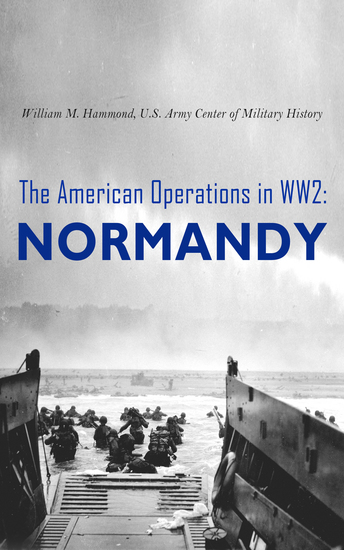
  • The American Operations in WW2: Normandy - 6 June–24 July 1944 - cover

    The American Operations in WW2:...

    U.S. Army Center of Military...

    • 0
    • 0
    • 0
    World War II was the largest and most violent armed conflict in the history of mankind. Highly relevant today, World War II has much to teach us, not only about the profession of arms, but also about military preparedness, global strategy, and combined operations in the coalition war against fascism. This book follows military operations of the US Army in Normandy from 6 June to 24 July 1944. 
    A great invasion force stood off the Normandy coast of France as dawn broke on 6 June 1944: 9 battleships, 23 cruisers, 104 destroyers, and 71 large landing craft of various descriptions as well as troop transports, minesweepers, and merchantmen—in all, nearly 5,000 ships of every type. The naval bombardment that began at 0550 that morning detonated large minefields along the shoreline and destroyed a number of the enemy's defensive positions. To one correspondent, reporting from the deck of the cruiser HMS Hillary, it sounded like "the rhythmic beating of a gigantic drum" all along the coast. In the hours following the bombardment, more than 100,000 fighting men swept ashore to begin one of the epic assaults of history, a "mighty endeavor," as President Franklin D. Roosevelt described it to the American people, "to preserve . . . our civilization and to set free a suffering humanity."
    The attack had been long in coming. From the moment British forces had been forced to withdraw from France in 1940 in the face of an overwhelming German onslaught, planners had plotted a return to the Continent. Only in that way would the Allies be able to confront the enemy's power on the ground, liberate northwestern Europe, and put an end to the Nazi regime...
    Show book