Rejoignez-nous pour un voyage dans le monde des livres!
Ajouter ce livre à l'électronique
Grey
Ecrivez un nouveau commentaire Default profile 50px
Grey
Abonnez-vous pour lire le livre complet ou lisez les premières pages gratuitement!
All characters reduced
Little Visits with Great Americans - The True Stories and Life Lessons by Famous and Most Influential People of the Time (Vol 1&2) - cover

Little Visits with Great Americans - The True Stories and Life Lessons by Famous and Most Influential People of the Time (Vol 1&2)

Jacob Gould Schurman, Theodore Roosevelt, Ella Wheeler Wilcox, Helen Keller, William Dean Howells, Goldwin Smith, James Whitcomb Riley, John Burroughs, Andrew Carnegie, John Philip Sousa, Russell H. Conwell, Mrs. Burton Harrison, Frederic Remington, Edwin Markham, Chauncey M. Depew, John Wanamaker, Samuel Gompers, Charles Dana Gibson, Homer Davenport, Marshall P. Wilder, Thomas Alva Edison, Hiram Stevens Maxim, Hazen S. Pingree, Marshall Field, Sir Thomas Lipton, Darius Ogden Mills, Russell Sage, Lyman Judson Gage, Cornelius Vanderbilt, Robert C. Clowry, Herbert H. Vreeland, Nelson A. Miles, Joseph H. Choate, Jonathan P. Dolliver, Thomas C. Platt, Tom L. Johnson, General Lew Wallace, Edwin Austin Abbey, Alice Barber Stephens, Frederick Burr Opper, F. Wellington Ruckstuhl, Henry Merwin Shrady, Helen Miller Gould, Nathan Strauss, Frank W. Gunsaulus, Robert Collyer, Robert Laird Borden, S. N. Parent, Andrew G. Blair, James Loudon, Sir William C. Van Horne, Samuel Jones, Philip D. Armour, John B. Herreshoff, Lillian Nordica

Maison d'édition: Good Press

  • 0
  • 0
  • 0

Synopsis

Little Visits with Great Americans presents a fascinating tapestry of influential voices that have shaped the cultural, intellectual, and social spheres of their time. This collection intricately weaves together essays, anecdotes, and reflections spanning diverse literary forms. It encompasses captivating pieces marked by eloquence and insight, capturing the spirit of an era marked by innovation and contemplation. The anthology stands as a testament to the breadth of human experience and the manifold expressions of thought, with standout works that navigate the intersections of art, industry, and reform in America's vibrant narrative. Curated from the contributions of renowned figures like Helen Keller, Theodore Roosevelt, and Ella Wheeler Wilcox, this volume assembles a remarkable consortium of visionaries from varied backgrounds. These authors belong to an era defined by rapid progress in both technological advancement and social reform, reflecting movements like industrialization and suffrage. Their collective narratives delve into themes of perseverance, creativity, and leadership, culminating in a comprehensive and variegated discourse that captures the zeitgeist. By converging such robust and influential perspectives, the anthology provides a rich tableau that enhances one's grasp of how these stalwarts have indelibly impacted their respective fields. For readers eager to embark on a journey through a period of dynamic growth and intellectual exploration, Little Visits with Great Americans offers unparalleled insights. It is a portal into the minds of those who have paved paths in culture, science, and governance, inviting readers to engage with a wealth of perspectives and ideas. Promoting an understanding of varied approaches and ideologies, this collection is an invaluable resource for anyone seeking to appreciate the confluence of history, personal experiences, and aspirational endeavors championed by some of the most prominent figures in history. Dive into this anthology to uncover the dialogue that continues to inform and inspire subsequent generations.
Disponible depuis: 16/12/2023.
Longueur d'impression: 600 pages.

D'autres livres qui pourraient vous intéresser

  • Navigating Difficult Family Gatherings - cover

    Navigating Difficult Family...

    Rick Gregory

    • 0
    • 0
    • 0
    Do you feel like you're walking on eggshells at family gatherings Are you tired of leaving family events feeling drained and misunderstood 'Navigating Difficult Family Gatherings' is the compass you need to chart a course through your family's emotional landscape. 
    Family gatherings can be a crucible of emotions, where past hurts and present tensions collide. With over seven decades of experience, the author provides a nuanced understanding of family dynamics and offers practical solutions to common challenges. This book delves into the psychology of family roles, from the peacemaker to the jokester, helping you understand and manage these complex interactions. You'll learn how to prepare for gatherings, set healthy boundaries, and engage in meaningful conversations that foster connection rather than conflict. The author's insights into generational patterns and family histories will help you see your family in a new light, enabling you to approach gatherings with empathy and understanding. This isn't just about surviving the next reunion; it's about cultivating resilience and nurturing relationships that will enrich your life for years to come. 
    'Navigating Difficult Family Gatherings' is your roadmap to more fulfilling family relationships. This book empowers you to approach family events with confidence, set healthy boundaries, and create meaningful connections that last beyond the gathering. 
    Grab your copy of 'Navigating Difficult Family Gatherings' now and start your journey towards more harmonious family relationships today!
    Voir livre
  • Roman Architecture - Building the Empire's Legacy - cover

    Roman Architecture - Building...

    Rogan Fish

    • 0
    • 0
    • 0
    Roman architecture emerged as a distinctive style that blended elements from earlier civilizations, primarily Greek and Etruscan influences. As Rome expanded from a small settlement into a powerful empire, its architectural identity evolved, incorporating new techniques and materials that allowed for grander and more functional structures. The early foundations of Roman architecture set the stage for innovations that would shape the empire’s urban landscape for centuries. 
    One of the most significant influences on Roman architecture came from the Etruscans, a civilization that dominated central Italy before Rome’s rise. The Etruscans were skilled builders who introduced techniques such as the use of the arch and vault, both of which would later become hallmarks of Roman engineering. Etruscan temples, with their high podiums and deep porches, also served as models for early Roman religious structures. Another major influence was Greek architecture, which Romans admired and adapted to suit their needs. The Greeks provided inspiration in the use of columns, decorative friezes, and symmetrical design, elements that were later integrated into Roman temples, public buildings, and monuments. 
    Roman architectural development was also shaped by advancements in building materials and construction techniques. The early Romans initially built using wood and mudbrick, but as they refined their skills, they transitioned to more durable materials like stone and concrete. The introduction of concrete was a groundbreaking innovation, allowing for stronger and more flexible structures. Unlike the Greeks, who relied heavily on marble, the Romans preferred concrete for its affordability and adaptability, enabling them to construct larger and more complex buildings, such as amphitheaters, aqueducts, and domes.
    Voir livre
  • Housing and Urban Policy - Issues and Solutions - cover

    Housing and Urban Policy -...

    Lyric Vale

    • 0
    • 0
    • 0
    Housing and urban policy play a crucial role in shaping the development and functioning of cities. These policies not only determine how housing is distributed, financed, and regulated but also have a profound impact on the quality of life for urban residents. As urban populations grow at unprecedented rates, particularly in developing regions, the need for comprehensive housing policies that address affordability, accessibility, and sustainability becomes increasingly urgent. 
    At its core, housing policy refers to the set of laws, regulations, and strategies designed to ensure that all residents have access to safe, affordable, and adequate housing. Urban policy, meanwhile, extends beyond housing to include broader strategies for city planning, infrastructure, and public services. Together, housing and urban policy aim to create cities that are not only livable but also resilient, inclusive, and sustainable. 
    Historically, housing policies have evolved in response to changing economic, social, and political circumstances. From post-war housing booms to modern challenges like urban sprawl and rising inequality, policies have adapted in varying ways. However, many cities still struggle with issues like the shortage of affordable housing, homelessness, and housing inequality. Rapid urbanization, exacerbated by global migration and population growth, has put further strain on already limited housing resources. As a result, addressing housing needs has become one of the foremost concerns for urban policymakers around the world.
    Voir livre
  • Colossians - The World English Bible Book 51 (Unabridged) - cover

    Colossians - The World English...

    Various Authors

    • 0
    • 0
    • 0
    The Epistle to the Colossians is the twelfth book of the New Testament. It was written, according to the text, by Paul the Apostle and Timothy, and addressed to the church in Colossae, a small Phrygian city near Laodicea and approximately 100 miles from Ephesus in Asia Minor. Some scholars have increasingly questioned Paul's authorship and attributed the letter to an early follower instead, but others still defend it as authentic. If Paul was the author, he probably used an amanuensis, or secretary, in writing the letter possibly Timothy.
    Voir livre
  • Empower Your Kids: The Secret to Raising Confident Independent Minds - Transform your parenting style with powerful audio lessons for nurturing confident independent children - cover

    Empower Your Kids: The Secret to...

    Gideon Hawkes

    • 0
    • 0
    • 0
    Empower Your Kids: The Secret to Raising Confident, Independent Minds 
    ⭐⭐ Simplified Guide & Explanations Included ⭐⭐ 
    Are you aiming to boost your career by nurturing resilient minds and cultivating independence in your children? 
    Looking for a comprehensive resource that equips you with all the essential techniques to empower your kids? 
    Your search ends here! 
    This audiobook is your ultimate guide for deepening your understanding, applying effective parenting strategies, and engaging in practical exercises. With this, you're set for success. 
    Updated for the latest parenting insights. 
    Key features of this comprehensive guide: 
    - Profound insights on cultivating independence and nurturing resilient minds 
    - Detailed explanations on unlocking your child’s potential 
    - Effective strategies for empowering your kids and building their confidence 
    Our guide stands out through its extensive and thorough coverage, essential for your parenting journey. Concepts are explored deeply and with precision. 
    Please note that this guide is an independent resource designed for your benefit and is not affiliated with any official parenting organizations. 
    Structured clearly and written in easy-to-understand language, our audiobook ensures smooth transitions between topics. Say goodbye to confusing jargon and welcome clear, accurate, and actionable content. 
    So, why wait? Click the BUY NOW button, secure your guide, and start your journey to raising confident, independent minds!
    Voir livre
  • Greenbrier Bunker The: The History of the Emergency Cold War Bunker Designed for Congress during a Nuclear War - cover

    Greenbrier Bunker The: The...

    Charles River Editors

    • 0
    • 0
    • 0
    In October 1962, American spy planes discovered the Soviets were building nuclear missile sites in Cuba, and intelligence officials informed President John F. Kennedy of this on October 16th. It went without saying that nuclear missile sites located just miles off the coast of the American mainland posed a grave threat to the country, especially because missiles launched from Cuba would reach their targets in mere minutes. That would throw off important military balances in nuclear arms and locations that had previously ensured the Cold War stayed cold. Almost all senior American political figures agreed that the sites were offensive and needed to be removed, but how? Ultimately, Kennedy's administration crafted an eventual plan that sought to avoid all-out war: a blockade of Cuba. 
    In the weeks and months following the crisis, Kennedy sought to ease nuclear tensions. By 1963, the first agreement was signed to limit the testing of nuclear devices, and the habit of secretly taping all meetings, phone calls, and other communications continued, due to the great assistance the practice had provided throughout the crisis.  
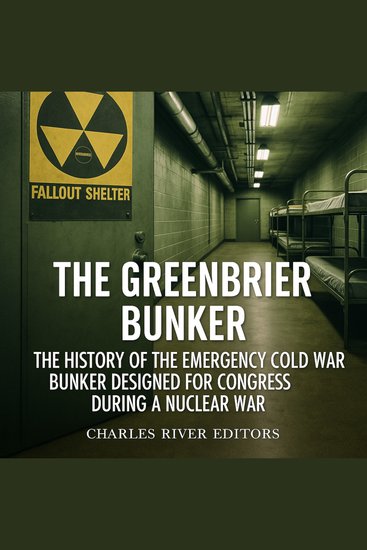
    As it turned out, October 1962 was probably the closest the Soviet Union and United States came to formally engaging in a war against each other, but of course, the possibility of a destructive nuclear war had been contemplated years before the Cuban Missile Crisis. That doomsday scenario is precisely why the federal government was working on a secret nuclear fallout bunker underneath the Greenbrier Hotel in West Virginia in the years preceding the crisis. Its existence would remain a secret for decades until being declassified shortly after the collapse of the Soviet Union, and to this day the bunker remains both a source of curiosity and mystery. 
    Voir livre