Join us on a literary world trip!
Add this book to bookshelf
Grey
Write a new comment Default profile 50px
Grey
Subscribe to read the full book or read the first pages for free!
All characters reduced
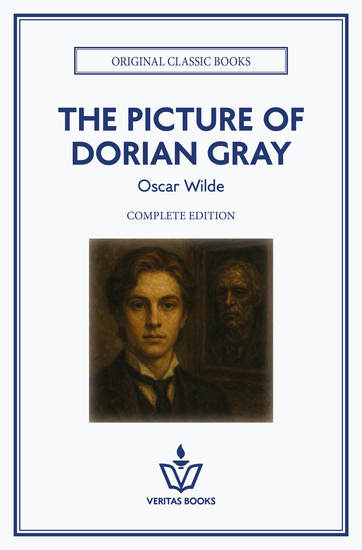
The Picture of Dorian Gray - cover

The Picture of Dorian Gray

Oscar Wilde

Publisher: Veritas Books

  • 0
  • 0
  • 0

Summary

The Picture of Dorian Gray (1890) is Oscar Wilde's provocative and mesmerizing novel that explores the boundaries of desire, beauty, and morality. When the young and handsome Dorian makes a fateful pact to have his portrait age instead of him, he plunges into a life of indulgence without visible consequence. But while his face remains untouched by time, the painting bears the weight of his corruption. A tale of decadence, art, and double lives, written with Wilde's signature irony and dazzling wit that made him a literary icon.
Available since: 05/14/2025.
Print length: 240 pages.

Other books that might interest you

  • Boiled Beef of New England The (Unabridged) - cover

    Boiled Beef of New England The...

    Charles Dickens

    • 0
    • 0
    • 0
    Charles Dickens was a writer and social critic who created some of the world's best-known fictional characters and is regarded as the greatest novelist of the Victorian era. His works enjoyed unprecedented popularity during his lifetime, and by the twentieth century critics and scholars had recognised him as a literary genius. His novels and short stories enjoy lasting popularity.
    THE BOILED BEEF OF NEW ENGLAND: The shabbiness of our English capital, as compared with Paris, Bordeaux, Frankfort, Milan, Geneva almost any important town on the continent of Europe I find very striking after an absence of any duration in foreign parts.
    Show book
  • The Hound of the Baskervilles - cover

    The Hound of the Baskervilles

    Arthur Conan Doyle

    • 0
    • 0
    • 0
    The Hound of the Baskervilles is the third of the four crime novels written by Sir Arthur Conan Doyle featuring the detective Sherlock Holmes. Originally serialised in The Strand Magazine from August 1901 to April 1902, it is set largely on Dartmoor in Devon in England's West Country and tells the story of an attempted murder inspired by the legend of a fearsome, diabolical hound of supernatural origin. Sherlock Holmes and his companion Dr. Watson investigate the case. This was the first appearance of Holmes since his apparent death in "The Final Problem", and the success of The Hound of the Baskervilles led to the character's eventual revival.According to an old legend, a curse runs in the Baskerville family since the time of the English Civil War, when a Sir Hugo Baskerville abducted and murdered a woman in the mires of Dartmoor, only to be killed in turn by a huge demonic hound. Allegedly the same creature has been haunting the place ever since, causing the premature death of many Baskerville heirs. Sir Charles believed in the plague of the hound and so does Mortimer, who now fears for the next in line, Sir Henry Baskerville.Even though he dismisses the whole curse story as nonsense, Holmes agrees to meet Sir Henry in London as soon as Sir Henry arrives from Canada, where his branch of the family had moved in the past. He is a young and jovial good-looking fellow, sceptical toward the grim legend and eager to take possession of Baskerville Hall, even though he has just found an anonymous note in the mail, warning him to stay away from the moor. When someone tries to shoot Sir Henry while he is walking down a street, however, Holmes asks Watson to go with the young man and Mortimer to Dartmoor, in order to protect Sir Henry and search for any clue about who is menacing his life.Among the most significant works Arthur Conan Doyle: A Study in Scarlet, The Sign of the Four, The Hound of the Baskervilles, The Valley of Fear, The Adventures of Sherlock Holmes, The Memoirs of Sherlock Holmes, The Return of Sherlock Holmes, His Last Bow, The Case-Book of Sherlock Holmes, The Field Bazaar, The Story of the Lost Special, How Watson Learned the Trick and many more.
    Show book
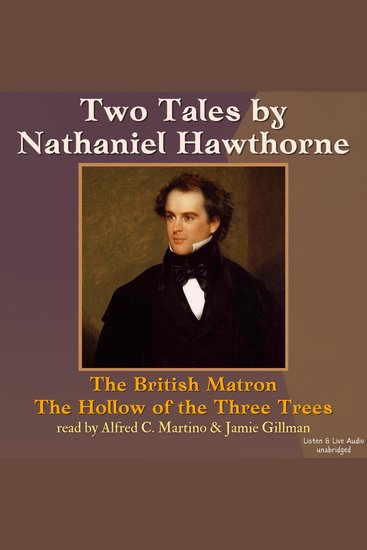
  • Two Tales From Nathaniel Hawthorne - The British Matron The Hollow of the Three Trees - cover

    Two Tales From Nathaniel...

    Nathaniel Hawthorne

    • 0
    • 0
    • 0
    Two Tales From Nathaniel Hawthorne includes, "The British Matron," a satirical essay, and the short story, "The Hollow of the Three Trees. Hawthorne (1804–1864) was born in Salem, Massachusetts. His ancestors include John Hathorne, the only judge involved in the Salem witch trials who never repented of his actions. Nathaniel later added a "w" to make his name "Hawthorne" in order to hide this relation. The Scarlet Letter, his most famous novel, was published in 1850, followed by a succession of other novels, including The House of the Seven Gables, and various other writings, including the two here. 
    Show book
  • Shunned House The (Unabridged) - cover

    Shunned House The (Unabridged)

    H. P. Lovecraft

    • 0
    • 0
    • 0
    "The Shunned House" is a horror fiction novelette by American author H. P. Lovecraft, written on October 16-19, 1924. It was first published in the October 1937 issue of Weird Tales.
    Show book
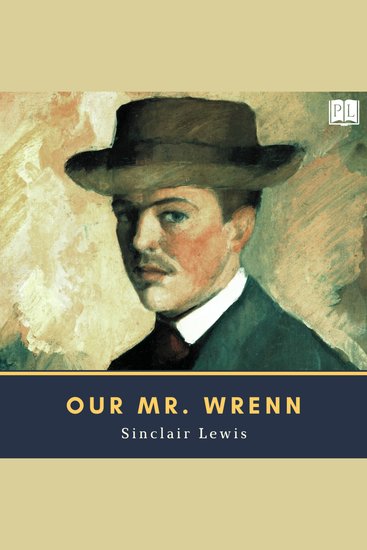
  • Our Mr Wrenn - The Romantic Adventures of a Gentle Man - cover

    Our Mr Wrenn - The Romantic...

    Sinclair Lewis

    • 0
    • 0
    • 0
    Our Mr. Wrenn: The Romantic Adventures of a Gentle Man is a 1914 novel by Sinclair Lewis and the first to be published under his real name.
    Mr. Wrenn, an employee of a novelty company, quits his job after inheriting a fortune from his father. He decides to go traveling.
    Show book
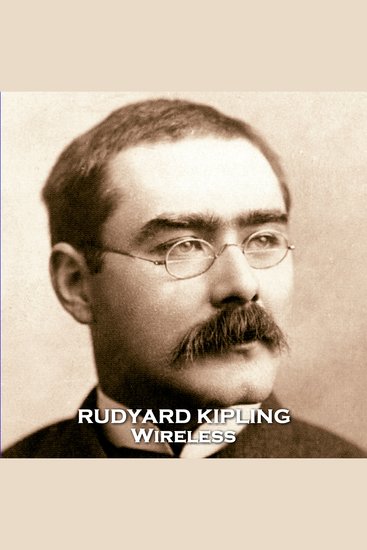
  • Wireless - A rare Kipling venture into sci fi about a technological leap - cover

    Wireless - A rare Kipling...

    Rudyard Kipling

    • 0
    • 0
    • 0
    Joseph Rudyard Kipling was born in Mumbai, India on 30th December 1865.   
     
    As was the custom in those days, he and his sister were sent back to England when he was 5.  The ill-treatment and cruelty by the Portsmouth couple they boarded with Kipling said contributed to the onset of his literary life.  
     
    At 16 he returned to India to work on a local paper where he was soon contributing and writing.  It also exposed him to the issues of identity and national allegiance which pervade much of his work.  
     
    In 1886, his ‘Departmental Ditties’, collection of verse appeared in print followed by 39 short stories for his newspaper over only 8 months.  These were then published as ‘Plain Tales from the Hills’, shortly after his 22nd birthday.  
     
    He continued his prolific pace of writing before being dismissed in a dispute and, taking his pay-off and the profits from the sale of some publishing rights, decided to return to London, travelling via Rangoon, Hong Kong, Japan and the United States, all the while writing articles, and arriving at Liverpool in October 1889. 
     
    Over the next two years he saw further works published as books and in magazines, as well as a nervous breakdown for which he was prescribed a sea voyage, to South Africa, Australia, New Zealand and India.  
     
    Happier times came with marriage to Caroline Starr Balestier in January 1892.  The honeymoon began in Vermont and ended in Yokahama where they heard their bank had failed.  They returned to Vermont and settled.  Caroline was now pregnant and he was planning the ‘Jungle Books’.  
     
    A failed arbitration between the US and England resulted in an argument between Caroline’s brother and Kipling, and then his arrest.  At the hearing he was mortified by the exposure of his private life and after settling the matter they returned to England and life in Torquay.  ‘Kim’ was published in 1902, and ‘Just So Stories for Little Children’, a year later.  
     
    In 1907 he was awarded the Nobel Prize for Literature with the citation “in consideration of the power of observation, originality of imagination, virility of ideas and remarkable talent for narration which characterise the creations of this world-famous author”.   
     
    When the Great War erupted, he scorned those who refused conscription.  His son enlisted and was killed at the Battle of Loos in September 1915, at 18, an exploding shell had ripped his face apart.  This death inspired Kipling’s writing thereafter, but the tragedy broke his life and by 1930 his prolific pen had almost ceased. 
     
    Rudyard Kipling died on 18th January 1936 from a perforated duodenal ulcer.  He was 70.  His ashes are buried at Poets’ Corner in Westminster Abbey.
    Show book