

Join us on a literary world trip!
Add this book to bookshelf
Grey
Write a new comment Default profile 50px
Grey
Subscribe to read the full book or read the first pages for free!
All characters reduced
Reproductive Health - cover

Reproductive Health

Tessa Kwan

Translator A AI

Publisher: Publifye

  • 0
  • 0
  • 0

Summary

Reproductive Health provides a comprehensive overview of the biological, hormonal, and preventative aspects of reproductive well-being. It emphasizes the importance of understanding fertility, hormonal regulation, and preventative healthcare for making informed decisions about family planning and overall health. The book uniquely blends scientific rigor with accessible language, making it valuable for students, healthcare professionals, and anyone interested in optimizing their reproductive health. Did you know that reproductive health significantly impacts not only individual lives but also broader societal structures and future generations? The book also explores the social, emotional, and ethical dimensions of reproductive choices.

 
The book progresses logically, beginning with the basic principles of reproductive biology. It then examines hormonal changes throughout the lifespan, focusing on puberty, adulthood, and aging, and how these changes impact reproductive function. Next, it delves into factors affecting conception, pregnancy, and childbirth. Finally, it concludes with preventative measures, including lifestyle modifications, screening guidelines, and contraception options. This approach empowers readers to take a proactive stance toward their reproductive wellness, promoting a lifetime of improved health outcomes.
Available since: 03/17/2025.
Print length: 129 pages.
Other books that might interest you

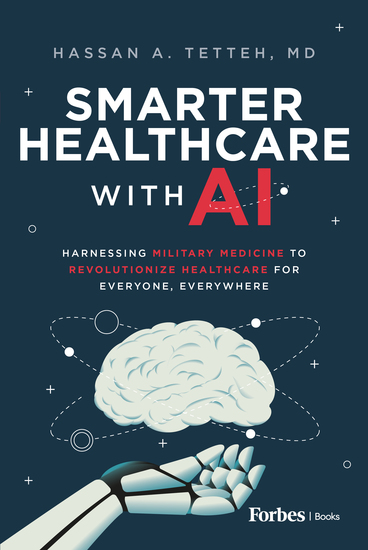
  • Smarter Healthcare with AI - Harnessing Military Medicine to Revolutionize Healthcare for Everyone Everywhere - cover

    Smarter Healthcare with AI -...

    Hassan A. Tetteh

    • 0
    • 1
    • 0
    Smarter Healthcare with AI takes readers on an insightful journey into the future of medicine. Drawing from his extensive experience in military medicine, Dr. Tetteh explores how artificial intelligence can revolutionize healthcare through medical imaging, health records analysis, and suicide prevention.
    Show book
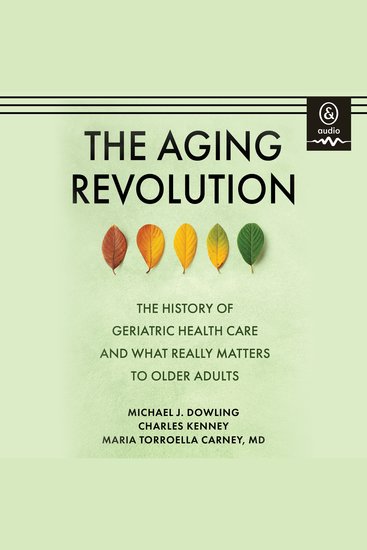
  • The Aging Revolution - The History of Geriatric Health Care and What Really Matters to Older Adults - cover

    The Aging Revolution - The...

    Michael J. Dowling, Charles...

    • 0
    • 0
    • 0
    A history of aging in the United States and an innovative blueprint for revolutionizing care for older adults from Northwell Health, New York’s largest health care system. The New York Times described Dr. Robert Butler as “the man who saw old age anew.” In his 1975 book Why Survive: Being Old in America, Butler argued that for far too many people old age was “a period of quiet despair . . . and muted rage” and he set out to mitigate it. Nearly five decades since he penned his book, a devoted band of brilliant physicians and others in the healthcare field have realized at least a portion of Butler’s dream: to recognize and alleviate suffering among the aging. 
    The Aging Revolution is the story of Butler and his disciples: women and men who saw older distressed adults in hospitals and homes, and worse: being ignored by most of the medical establishment. These revolutionaries could not ignore the suffering, and they set out—individually and collectively—to create entirely new ways of caring for aging adults to ease their suffering and improve their quality and length of life. 
    This revelatory book tells a story never-before told in its entirety, recounting the one of the most significant periods of improvement in American medical history. Readers will learn about pioneering individuals, concepts, and ideas that have improved the lives of millions, including: the women who placed the spotlight on delirium and falls—major issues for older adults; the campaign to build and spread Geriatric and Palliative Care; the small bands of doctors who worked the halls of Congress to create a new program that provides primary care along with home visits from healthcare professionals; and the New York-based foundation that has devoted its mission and millions exclusively to improving care and quality of life for aging adults. 
    Today, as a result, chronic conditions that almost always accompany old age are far more manageable. Older people enjoy more options for work and professional development, for education, for leisure and travel, for sports and maintaining physical strength and mobility. For increasing numbers of Americans, life is healthier and richer in the experiences that matter most. 
    Yet, aging in America can still be a challenge and, too often, particularly for the poor, a painful struggle. The range of mental and physical well-being has almost infinite variations: ninety-year-olds running marathons; sixty-five-year-olds incapacitated by stroke. While this book celebrates the incredible progress and strides made in this field, it also highlights areas that need improvement. The authors lay out specific steps that, if implemented, could ignite the aging revolution and diminish the total volume of older adults suffering in America.
    Show book
  • The Role of Technology in Business - Tools and Strategies - cover

    The Role of Technology in...

    Craig Dames

    • 0
    • 0
    • 0
    Technology has played a crucial role in shaping business operations throughout history. From the earliest tools used in trade to the sophisticated digital solutions of today, technological advancements have continually transformed how businesses operate, compete, and innovate. Understanding this evolution provides insight into how businesses can adapt to ongoing technological changes and leverage them for growth and efficiency. 
    In the earliest days of commerce, businesses relied on manual processes, basic tools, and rudimentary systems to conduct trade. The invention of writing and accounting methods, such as the use of clay tablets in Mesopotamia, marked the first major technological leap in business operations. These early records enabled merchants to track transactions and manage resources more effectively. Over time, the development of paper money, banking systems, and mechanical tools further revolutionized trade and commerce, laying the foundation for more complex economic structures. 
    The Industrial Revolution in the 18th and 19th centuries marked another significant turning point in business technology. The introduction of steam engines, mechanized production, and telecommunication systems drastically increased efficiency and productivity. Factories replaced traditional handcrafting methods, allowing mass production and global trade expansion. The telegraph and telephone revolutionized communication, enabling businesses to operate over long distances and conduct transactions more quickly than ever before.
    Show book
  • Omnivore’s Dilemma The: Book Summary & Analysis - cover

    Omnivore’s Dilemma The: Book...

    Briefly Summaries

    • 0
    • 0
    • 0
    This is a concise summary and analysis of The Omnivore’s Dilemma, by Michael Pollan. It is not the original book and is not affiliated with or endorsed by Michael Pollan. Ideal for those seeking a quick and insightful overview.
     
    In this eye-opening exploration of the modern food system, the author investigates where our food comes from and how our choices impact our health, the environment, and society. Following four different food chains—industrial, organic, alternative, and foraged—this book examines the hidden costs of what we eat, from factory farms to sustainable agriculture. Blending investigative journalism with engaging storytelling, it challenges readers to rethink their relationship with food and make more informed dietary decisions.
    Show book
  • Just Following Orders - Atrocities and the Brain Science of Obedience - cover

    Just Following Orders -...

    Emilie A. Caspar

    • 0
    • 0
    • 0
    How can obedience and carrying out orders lead to horrific acts such as the Holocaust or the genocides in Rwanda, Cambodia, or Bosnia? For the most part, it is a mystery why obeying instructions from an authority can convince people to kill other human beings, sometimes without hesitation and with incredible cruelty. Combining social and cognitive neuroscience with real-life accounts from genocide perpetrators, this book sheds light on the process through which obedience influences cognition and behavior. Emilie Caspar, a leading expert in the field, translates this neuroscientific approach into a clear, uncomplicated explanation, even for those with no background in psychology or neuroscience. By better understanding humanity's propensity for direct orders to short-circuit our own independent decision-making, we can edge closer to effective prevention processes.
    Show book
  • US Military WWII Interrogation Training - cover

    US Military WWII Interrogation...

    US Military

    • 0
    • 0
    • 0
    With the United States’ entry into World War II, President Franklin D. Roosevelt created the first peacetime civilian intelligence agency in 1941–the Office of the Coordinator of Information. This office was designed to organize the activities of several agencies. In 1942, a larger and more diversified agency, the Office of Strategic Services, the forerunner of today’s Central Intelligence Agency was created. This recording includes a short lecture on methods of interrogation, treatment of prisoners, understanding German and Japanese culture, procedures for ground forces that capture prisoners, and the use of practice interrogations.
    Show book