
¡Acompáñanos a viajar por el mundo de los libros!
Añadir este libro a la estantería
Grey
Escribe un nuevo comentario Default profile 50px
Grey
Suscríbete para leer el libro completo o lee las primeras páginas gratis.
All characters reduced
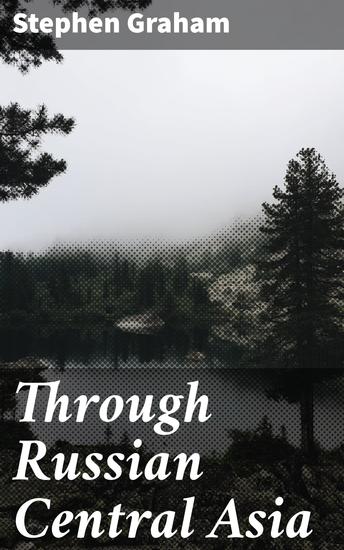
Through Russian Central Asia - A Literary Journey Through Central Asia - cover

Through Russian Central Asia - A Literary Journey Through Central Asia

Stephen Graham

Editorial: Good Press

  • 0
  • 0
  • 0

Sinopsis

In "Through Russian Central Asia," Stephen Graham embarks on a profound exploration of vast landscapes and intricate cultural tapestries, providing a unique glimpse into the heart of Central Asia during the early 20th century. Written in an eloquent, reflective style, Graham's narrative combines vivid descriptions of the region's geography with insightful observations about the peoples and their customs, positioning the work within the broader context of travel literature influenced by imperial curiosity and geopolitical tensions of the time. His prose not only captures the beauty of the region but also serves as a lens through which the complexities of Russian expansionism and local identities are examined. Stephen Graham (1884-1975) was a British writer and travel journalist whose extensive journeys in Russia and Central Asia profoundly shaped his worldview. His experiences as a war correspondent and an observer of political upheaval contributed to his understanding of the social metamorphosis impacting these regions. Graham's engagement with local cultures and languages highlights a deep respect for the societies he encountered, often contrasting the romantic allure of travel with the stark realities of colonialism and cultural confrontation. For readers interested in a multifaceted exploration of Central Asia, Graham's "Through Russian Central Asia" is invaluable. It offers not only an engaging narrative that artfully blends personal experience with observation, but also a rich historical context that remains relevant today. This book will enlighten those eager to understand the complex interplay between landscape, culture, and history in this enigmatic part of the world.
Disponible desde: 21/08/2022.
Longitud de impresión: 200 páginas.
Otros libros que te pueden interesar

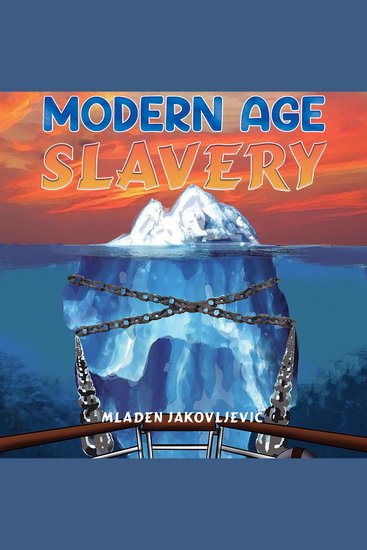
  • Modern Age Slavery - cover

    Modern Age Slavery

    Mladen Jakovljevic

    • 0
    • 0
    • 0
    Modern Age Slavery is a marvellous opportunity for people to find out some of the most hidden, uncensored truths about a seaman’s life on board cruise ships. This poignant memoir will open a sensational perspective about the cruel operational standards of cruise line companies globally. It is an excellent chance to sneak “behind the curtain” and taste the actual bitterness of the seaman’s life, understand the big picture, and realise what the cruise liners are hiding under those glorious, sensational sailing lights. This inspiring book will also help you overcome your most significant life obstacles personally; it will motivate you to become more resilient and search deeper for your inner strengths and undiscovered potentials. After reading some eye-opening chapters, you will be motivated to keep pushing your limits in life to the next level, regardless of any difficult circumstances or adversity. Modern Age Slavery breaks the silence about many irregularities in the cruise ship industry. Behind those glorious and shiny lights of the guest area at the cruise ship, a dark part of the slavery regime still goes unnoticed and is kept away from the public. This book will give you an opportunity to discover the deviant daily life at sea.
    Ver libro
  • On the Narrow Road to the Deep North - Journey into a Lost Japan - cover

    On the Narrow Road to the Deep...

    Lesley Chan Downer

    • 0
    • 0
    • 0
    After eight years working in Japan, immersing herself in its language and literature, Lesley Chan Downer set off in the footsteps of Matsuo Basho, Japan's most cherished poet, to explore the country's remote northern provinces. Basho's pilgrimage to find the landscapes that had inspired the great medieval poets gave birth to Japan's most famous travel book, rich in strange imagery and sometimes comic encounters along the road. In this intriguing cross-threading of journeys, perceptions and exquisite haiku, Lesley creates her own funny, loving and honest portrayal of contemporary Japan. As she walks, she finds at one and the same time a drab, post-industrial landscape of concrete and cables, but also a land still full of the old enchantments. Nights in thatched highland villages and saké-drenched poetry sessions encourage her to see for herself if any of the legendary hermit-priests still survive in the sacred mountains of the north.
    Ver libro
  • Norse Mythology - Epic Viking Tales of Viking Gods and Ragnarok - cover

    Norse Mythology - Epic Viking...

    History Retold

    • 0
    • 0
    • 0
    Are you ready to explore the incredible and captivating world of Norse mythology? 
    With Epic Viking Tales this book is here to bring you on an unforgettable journey through the myths of Vikings gods and Ragnarok. 
    This book is an essential guide for anyone looking to learn about one of the oldest and most fascinating mythologies in history. From the creation story of Ymir, the legendary battle between Thor and Jörmungandr, and the apocalyptic event known as Ragnarok, this book brings these tales to life with vivid descriptions and entertaining stories. 
    For those who are already familiar with these stories, this book offers an unprecedented look at some lesser-known tales from Norse mythology that will thrill readers of all ages. With exciting characters, epic stories, and far-reaching consequences, this book is sure to provide hours of entertainment. 
    This book is a must-have for any fan of Norse mythology. So what are you waiting for? Let’s go on an adventure together!
    Ver libro
  • A Quest for the Hidden Lands - Synchronicity Serendipity Spirituality - cover

    A Quest for the Hidden Lands -...

    Norman Levine

    • 0
    • 0
    • 0
    My budding career as a literary scholar was suddenly hijacked by a singular seemingly random event. It was 1976 when I tiptoed into a tiny Buddhist shrine room in a farmhouse nestled into the Black Mountains of Wales and there beheld a Tibetan master, the 16th Karmapa, sitting on a throne performing a ceremony known as The Black Hat. My mind came to an immediate stop, suspended. It felt familiar, like the secret garden of childhood.I can still remember every detail like it was yesterday:Karmapa occupies the throne completely. He has a spiritual dignity that makes it his rightful seat, just as the lion proclaims his natural dominion. The force of his presence alone brings a hushed silence to the room. It feels like it has expanded into a cathedral. Two monks blow long Tibetan horns in a haunting wail so loud and long it startles thought patterns, blowing them away like clouds. The Karmapa slowly opens the Black Hat-box, takes the black silk crown in his hand, and puts it on his head holding it down with one hand. With the other hand he fingers a crystal rosary moving it deftly, twirling the beads around three times. The horns continue while he gazes with eyes that seem to dissolve the fiction of time and the boundaries of space. Time is standing still.That glimpse into enlightened mind became embedded like a seed and grew into a quest over the next decades to find the key places on our planet called the Hidden Lands.The legend came alive while I was living in a Tibetan Buddhist monastery in the Himalayas. I met Tibetans who had been to the supreme Hidden Land of Pemako while escaping from the Chinese invasion of Tibet. They made it sound like the ‘promised land’ with streams flowing with milky water. There were certain plants that could induce enlightenment.Why did it take decades to get there? What made the right ingredients emerge to penetrate this sacred sanctuary?  And the big question: Who hid it and why?
    Ver libro
  • Ancient Egyptian Law and Governance - Systems of Order and Justice - cover

    Ancient Egyptian Law and...

    Omar Khalil

    • 0
    • 0
    • 0
    Ancient Egyptian law was deeply rooted in the concept of Ma’at, the divine order that governed the universe and ensured balance, truth, and justice. This principle was not just a philosophical ideal but a practical guide for governance and social conduct. The legal system in Egypt was designed to maintain harmony within society, regulate disputes, and uphold the authority of the ruling elite. Unlike modern legal frameworks based on written statutes, Egyptian law was a combination of tradition, royal decrees, and religious doctrines. It was adaptable, relying on the wisdom of judges and officials rather than rigid legal codes. 
    The origins of legal traditions in ancient Egypt can be traced back to the early dynastic period when the first centralized state emerged. As society became more complex, a structured system of governance was necessary to manage resources, trade, and interpersonal conflicts. The earliest evidence of legal practice comes from administrative records, tomb inscriptions, and temple documents, which indicate that law was an integral part of daily life. While no single codified legal text has survived, references to decrees issued by pharaohs suggest that laws were issued and enforced at the highest levels of authority. 
    At the heart of Egyptian governance was the role of Ma’at, which extended beyond ethical conduct to legal proceedings. Ma’at represented a cosmic balance that rulers were duty-bound to uphold. The pharaoh, as the earthly representative of the gods, was seen as the ultimate source of justice. His decrees and judgments set legal precedents, shaping the administration of law across the kingdom. This divine connection made Egyptian law unique, as it blended religious principles with practical governance, ensuring that justice was not only a human responsibility but also a sacred duty.
    Ver libro
  • Wayfarer: Love loss and life on Britain’s ancient paths - cover

    Wayfarer: Love loss and life on...

    Phoebe Smith

    • 0
    • 0
    • 0
    Shortlisted for the Edward Stanford Travel Book of the Year 2025A Financial Times best summer travel book of 2024Travel Book of the Year at the Inspire Global Media Awards 
    'A powerfully delicate book of love, loss and discovery, along paths of emotional understanding and physical wonder.' Raynor Winn 
    On an assignment to walk the most famous pilgrimage in the world – the Camino de Santiago, in northern Spain – Phoebe Smith somehow lost her way. 
    Having spent a lifetime exploring unfamiliar places, she quit her dream job, ended her long-term relationship and headed home to North Wales to discover the point to… everything. 
    In her search for answers she found herself – quite by accident – walking some of Britain’s oldest pilgrim paths. And by following these old ways, she ended up confronting past traumas that she thought she had laid to rest. 
    But while it follows holy trails, this is not a book about religion. From losing her mother as a teenager to surviving toxic relationships, Phoebe offers an unflinchingly honest look at her battle with an eating disorder, depression, and the pitfalls of newfound singledom. 
    Skilfully weaving together Phoebe’s own story with those of countless travellers past and present, Wayfarer reveals how nature and place can heal past wounds, offering a pathway to salvation she’d never thought existed. 
    In this award-winning autobiography, Smith takes us on a journey through Europe, her words painting vivid images of the walks and hikes she undertakes. Her memoirs are not just travelogues, but essays of self-discovery and healing. 
    For fans of Raynor Winn (Landlines), Stephen Neale (The South West Coast Path), Will Millard (The Way of the Hermit), Steve Davison (15 Short Walks on Dartmoor North), and Daniel Start (Wild Guide Lake District and Yorkshire Dales). 
    HarperCollins 2024
    Ver libro