Rejoignez-nous pour un voyage dans le monde des livres!
Ajouter ce livre à l'électronique
Grey
Ecrivez un nouveau commentaire Default profile 50px
Grey
Abonnez-vous pour lire le livre complet ou lisez les premières pages gratuitement!
All characters reduced
Areopagitica - cover

Areopagitica

Sheba Blake, John Milton

Maison d'édition: Sheba Blake Publishing

  • 0
  • 0
  • 0

Synopsis

Areopagitica is John Milton's famous tract against censorship. Published in 1644, Areopagitica is named after a speech by Isocrates, a fifth century BC Athenian orator. The work is counted as one of the most influential and inspired defenses of the right to freedom of expression in history. It is also a personal issue for Milton who was submitted to censorship himself when he tried to publish...
Disponible depuis: 13/12/2021.
Longueur d'impression: 29 pages.

D'autres livres qui pourraient vous intéresser

  • Little Dorrit - cover

    Little Dorrit

    Charles Dickens

    • 0
    • 0
    • 0
    Little Dorrit is a novel by Charles Dickens, originally published in serial form between 1855 and 1857. The story features Amy Dorrit, youngest child of her family, born and raised in the Marshalsea prison for debtors in London. Arthur Clennam encounters her after returning home from a 20-year absence, ready to begin his life anew.
    The novel satirises some shortcomings of both government and society, including the institution of debtors' prisons, where debtors were imprisoned, unable to work and yet incarcerated until they had repaid their debts. The prison in this case is the Marshalsea, where Dickens's own father had been imprisoned. Dickens is also critical of the impotent bureaucracy of the British government, in this novel in the form of the fictional Circumlocution Office. Dickens satirises the stratification of society that results from the British class system, too.
    Voir livre
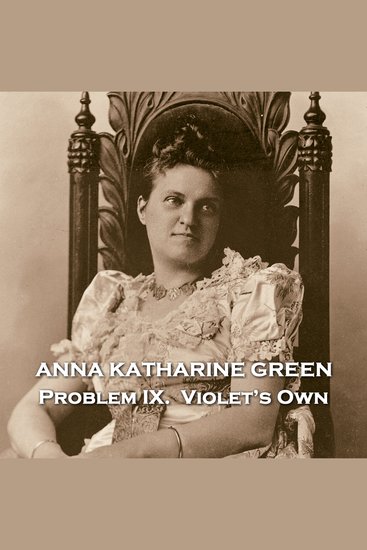
  • Problem IX Violet’s Own - A girl helps her sister rise from poverty to achieve her dreams - cover

    Problem IX Violet’s Own - A girl...

    Anna Katharine Green

    • 0
    • 0
    • 0
    Anna Katharine Green was born in Brooklyn, New York on November 11th, 1846. 
     
    Anna’s initial ambition was to be a poet. However that path failed to ignite any significant interest and she turned to fiction writing. She published her first―and most famous work in 1878―‘The Leavenworth Case’. Wilkie Collins praised it and it sold extremely well. 
     
    It led to Anna writing 40 novels and to becoming known as ‘the mother of the detective novel.’ 
     
    In helping to shape the genre she brought many other innovations including a series detective: her main character was detective Ebenezer Gryce of the New York Metropolitan Police Force, but in three novels he is assisted by the nosy society spinster Amelia Butterworth, another innovation and a prototype for Miss Marple, Miss Silver and others.  
     
    She also invented the 'girl detective': in the character of Violet Strange, a debutante with a secret life as a sleuth. Anna’s other innovations included the now familiar dead bodies in libraries, newspaper clippings as "clews," the coroner's inquest, and expert witnesses. Yale Law School once used her books to demonstrate how damaging it can be to rely on circumstantial evidence. 
     
    Her career was now well advanced and she was much admired.  
      
    On November 25, 1884, Green married the actor and stove designer, and later noted furniture maker, Charles Rohlfs, who was seven years her junior. They had three children; Rosamund, Roland and Sterling. 
     
    Although Anna was a progressive she did not approve of many of her feminist contemporaries, and was opposed to women's suffrage. 
     
    On November 25, 1884, Anna married the actor and noted furniture maker, Charles Rohlfs, who was seven years her junior. They had three children; Rosamund, Roland and Sterling. 
     
    Anna Katharine Green died on April 11, 1935 in Buffalo, New York, at the age of 88.
    Voir livre
  • Never Bet the Devil Your Head - cover

    Never Bet the Devil Your Head

    SAMPI Books, Edgar Allan Poe

    • 0
    • 0
    • 0
    "Never Bet the Devil Your Head", by Edgar Allan Poe, is a satire aimed at literary critics. It tells the story of Toby Dammit, a man who frequently bets his head against the devil, defying fate. Eventually, he loses his bet in a macabre way, satirizing moral and literary conventions.
    Voir livre
  • Tales Of Unrest - The Original Manuscript - cover

    Tales Of Unrest - The Original...

    Joseph Conrad

    • 0
    • 0
    • 0
    Joseph Conrad was a Polish-British writer regarded as one of the greatest novelists to write in the English language. He came to be regarded a master prose stylist who brought a non-English sensibility into English literature. He wrote stories and novels, many with a nautical setting, that depict trials of the human spirit in the midst of what he saw as an impassive, inscrutable universe. 
     
    Conrad is considered a literary impressionist by some and an early modernist by others, though his works also contain elements of 19th-century realism. His narrative style and anti-heroic characters, as in Lord Jim, for example, have influenced numerous authors. Many dramatic films have been adapted from and inspired by his works. Numerous writers and critics have commented that his fictional works, written largely in the first two decades of the 20th century, seem to have anticipated later world events. 
     
    Writing near the peak of the British Empire, Conrad drew on the national experiences of his native Poland—during nearly all his life, parceled out among three occupying empires—and on his own experiences in the French and British merchant navies, to create short stories and novels that reflect aspects of a European-dominated world—including imperialism and colonialism—and that profoundly explore the human psyche.
    Voir livre
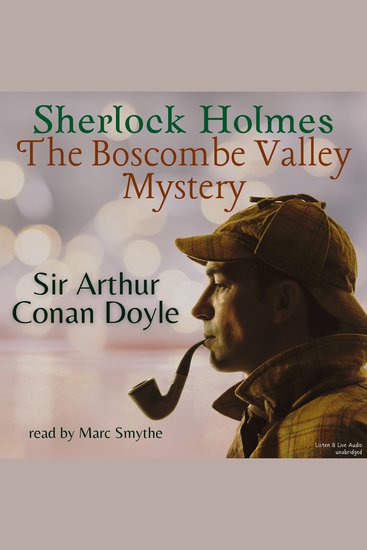
  • Sherlock Holmes: The Boscombe Valley Mystery - cover

    Sherlock Holmes: The Boscombe...

    Sir Arthur Conan Doyle

    • 0
    • 0
    • 0
    The Boscombe Valley Mystery is the fourth of the 12 stories in The Adventures of Sherlock Holmes. It was first published in Strand Magazine in 1891. 
    Holmes is summoned to a community in Herefordshire where a local landowner has been murdered outdoors. The deceased's estranged son is strongly implicated. Holmes quickly determines that a mysterious third man may be responsible for the crime, unraveling a thread involving a secret criminal past, thwarted love, and blackmail. 
    Public Domain (P)2016 Listen & Live Audio
    Voir livre
  • The Raven - cover

    The Raven

    Edgar Allan Poe

    • 0
    • 0
    • 0
    "And the Raven, never flitting, still is sitting, still is sitting ..."
    
    Written by Edgar Allan Poe and published in 1845, The Raven is one of the most famous poems in American literature. This gothic narrative poem follows a grieving scholar's descent into madness after a mysterious raven enters his study and answers his tormenting questions with the single, haunting word, "Nevermore".
    Edgar Allan Poe (1809–1849) was an American writer, poet, editor and literary critic known for his dark, atmospheric tales and haunting poetry. Widely regarded as one of the most influential figures in American literature, Poe helped shape the horror and science-fiction genres and is widely credited with inventing detective fiction in his 1841 short story, Murders in the Rue Morgue. Despite a life marked by personal tragedy and financial hardship, Poe produced a number of enduring classics such as TheRaven, The Tell-Tale Heart, and The Fall of the House of Usher, and since his somewhat mysterious death, he and his writings have had a wide-ranging influence in popular culture. In 1946, the Mystery Writers of America established the annual Edgar award, which honour the best in mystery fiction, non-fiction and film
    Voir livre