Junte-se a nós em uma viagem ao mundo dos livros!
Adicionar este livro à prateleira
Grey
Deixe um novo comentário Default profile 50px
Grey
Assine para ler o livro completo ou leia as primeiras páginas de graça!
All characters reduced
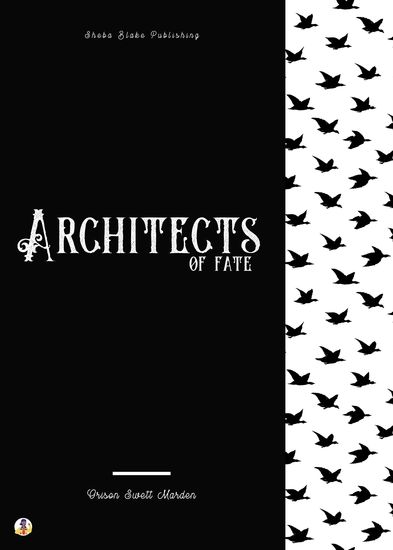
Architects of Fate - cover
LER

Architects of Fate

Sheba Blake, Orison Swett Marden

Editora: Sheba Blake Publishing

  • 0
  • 0
  • 0

Sinopse

Architects of Fate, or, Steps to Success and Power, by Orison Swett Marden, is a book of inspiration to character-building, self-culture, to a full and rich manhood and womanhood, by most invigorating examples of noble achievement. It is characterized by the same remarkable qualities as its companion volume "Pushing to the Front."
Disponível desde: 13/12/2021.
Comprimento de impressão: 181 páginas.

Outros livros que poderiam interessá-lo

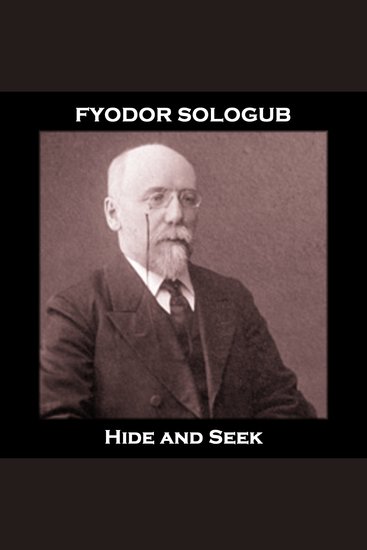
  • Hide And Seek - From their pens to your ears genius in every story - cover

    Hide And Seek - From their pens...

    Fyodor Sologub

    • 0
    • 0
    • 0
    Fyodor Kuzmich Teternikov was born on 1st March 1863 in St. Petersburg into the family of a poor tailor.  When his father died of tuberculosis in 1867, his illiterate mother was forced to become a servant in the home of an aristocrat, where Sologub and his younger sister grew up.  
    Seeing how difficult his mother's life was, Sologub was determined to rescue her from it, and after graduating from the St. Petersburg Teachers' Institute in 1882 he took his mother and sister with him to his first teaching post in Kresttsy.  It was here he began his literary career in 1884 with his poem ‘The Fox and the Hedgehog’ under the name Te-rnikov. 
    It would be another decade before he could escape his various jobs to move to Moscow and begin his literary career on what would be his most famous novel, ‘The Petty Demon’.  It was now suggested that he use a pseudonym and so Sologub became his new identity. 
    In 1896 he published a book of poems, a collection of short stories, and his first novel, ‘Bad Dreams’, which is considered one of the first decadent Russian novels. 
    In 1905 ‘The Petty Demon’, was published, initially in serial form. But life was still difficult unrewarding jobs, little time to write and a small, cramped apartment lightened only by gatherings of friends, poets and writers. 
    By the October Revolution his work was becoming popular and with the novel of ‘The Petty Demon’, finally published as a book, he now had a growing income. 
    His sister's tuberculosis could now be more easily treated with treatments in proper sanitoria, even as far away as Finland, but in June 1907 she passed. 
    He returned to St. Petersburg and retired.  The following year he married the translator Anastasia Chebotarevskaya who reordered his life.  A big new apartment was rented, small gilt chairs were bought, and the walls of the large cold office were decorated with paintings. 
    Sologub continued to write and publish poems, plays, and translations and in 1914 he started a magazine, Writers' Journals, but the outbreak of World War I put an end to it.  
    The October Revolution, with publishing under Bolshevik control, ensured he now had no outlets for his writing and could only lecture. 
    His wife’s suicide in September 1921, mainly due to deprivation and uncertainty, as they prepared for a new life abroad, grieved him for the rest of his life. 
    In May 1927 Sologub became seriously ill, and by summer he could leave his bed only rarely.  
    After a long struggle, Fyodor Sologub died on 5th December 1927 in Leningrad.  He was 64.
    Ver livro
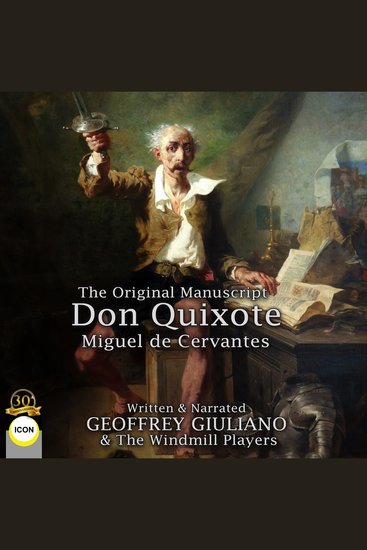
  • Don Quixote The Original Manuscript - cover

    Don Quixote The Original Manuscript

    Miguel de Cervantes

    • 0
    • 0
    • 0
    Don Quixote is a Spanish novel by Miguel de Cervantes. It was originally published in two parts, in 1605 and 1615. A founding work of Western literature, it is often labeled as the first modern novel and is considered one of the greatest works ever written Don Quixote also holds the distinction of being one of the most-translated books in the world. 
     
    The plot revolves around the adventures of a noble from La Mancha named Alonso Quixano, who reads so many chivalric romances that he loses his mind and decides to become a knight-errant (caballero andante) to revive chivalry and serve his nation, under the name Don Quixote de la Mancha. He recruits a simple farmer, Sancho Panza, as his squire, who often employs a unique, earthy wit in dealing with Don Quixote's rhetorical monologues on knighthood, already considered old-fashioned at the time. Don Quixote, in the first part of the book, does not see the world for what it is and prefers to imagine that he is living out a knightly story.
    Ver livro
  • Mutiny - A womans quest for social advancement meets a reporter investigating the truth aboard a ship - cover

    Mutiny - A womans quest for...

    Dorothy Edwards

    • 0
    • 0
    • 0
    Dorothy Edwards, an only child, was born on the 18th August 1902 at Ogmore Vale in Glamorgan. 
     
    Her father was a headmaster and an early activist in the Independent Labour Party.  At age 9 Dorothy, dressed in red, welcomed Keir Hardy on to the stage at Tonypandy during the national coal strike of 1912. She was taught that revolution was at hand, that class barriers would be a thing of the past. 
      
    Dorothy won a scholarship and boarded at Howell's School for Girls in Llandaff before moving to University College of South Wales and Monmouthshire where she read Greek and philosophy. 
     
    Her early hopes to be an opera singer were set to one side after graduating and the death of her father. Instead she took on part-time work to supplement her mother’s pension with whom she now lived. 
     
    Dorothy managed to write a number of short stories which appeared in the literary journals of the day.  She spent several months with her mother in Vienna, all the time revising or writing before embarking on ‘Winter Sonata’, a short novel published in 1928. 
     
    Introductions to several members of the Bloomsbury Group meant a move to London and a division of her time between child-care for the family of Bloomsbury author David Garnett and the promise of an advance payment for her work on a new volume of stories. 
     
    However, Dorothy’s life was starting to spiral out of control; she was attracted to the Welsh nationalist movement but felt that her Welsh provincialism made her, in London at least, feel socially inferior. Leaving her mother dependent on a hired companion consumed her with guilt as did the end of an affair with a married musician. 
     
    On the 5th January 1934, having spent the morning burning her papers, Dorothy Edwards threw herself in front of a train near Caerphilly railway station.  
     
    Her suicide note read: "I am killing myself because I have never sincerely loved any human being all my life. I have accepted kindness and friendship and even love without gratitude, and given nothing in return."
    Ver livro
  • La Grande Bretèche - The Great Breach - cover

    La Grande Bretèche - The Great...

    Honoré de Balzac

    • 0
    • 0
    • 0
    In a quiet French town, a crumbling, locked-up manor stirs the curiosity of all who pass it. No one enters. No one speaks of what happened inside. But behind the overgrown garden and shuttered windows lies a story of love, betrayal, and a chilling act of vengeance. 
    When a visiting doctor presses for answers, he uncovers a tale that was meant to stay buried. A jealous husband. A secret lover. A sealed fate. The mystery of La Grande Bretèche reveals itself slowly, with devastating clarity. 
    Told through layers of memory and local legend, Balzac’s short story delivers a compact, suspenseful narrative with a deeply haunting payoff. 
    Perfect for fans of dark romantic suspense, gothic tales, and French literature with a sharp psychological edge. 
    Audio edited by Mike Toda
    Ver livro
  • After the Funeral - From their pens to your ears genius in every story - cover

    After the Funeral - From their...

    Mary Butts

    • 0
    • 0
    • 0
    Mary Frances Butts was born on 13th December 1890 in Poole, Dorset. 
    Her early years were spent at Salterns, an 18th-century house overlooking Poole Harbour.  Sadly in 1905 her father died, and she was sent for boarding at St Leonard's school for girls in St Andrews. 
    Her mother remarried and, from 1909, Mary studied at Westfield College in London, and here, first became aware of her bisexual feelings.  She was sent down for organising a trip to Epsom races and only completed her degree in 1914 when she graduated from the London School of Economics.  By then Mary had become an admirer of the occultist Aleister Crowley and she was given a co-authorship credit on his ‘Magick (Book 4)’. 
    In 1916, she began the diary which would now detail her future life and be a constant reference point for her observations and her absorbing experiences. 
    During World War I, she was doing social work for the London County Council in Hackney Wick, and involved in a lesbian relationship.  Life changed after meeting the modernist poet, John Rodker and they married in 1918. 
    In 1921 she spent 3 months at Aleister Crowley's Abbey of Thelema in Sicily; she found the practices dreadful and also acquired a drug habit.  Mary now spent time writing in Dorset, including her celebrated book of short stories ‘Speed the Plough’ which saw fully develop her unique Modernist prose style. 
    Europe now beckoned and several years were spent in Paris befriending many artists and writing further extraordinary stories.   
    She was continually sought after by literary magazines and also published several short story collections as books. Although a Modernist writer she worked in other genres but is essentially only known for her short stories.  Mary was deeply committed to nature conservation and wrote several pamphlets attacking the growing pollution of the countryside. 
    In 1927, she divorced and the following year her novel ‘Armed with Madness’ was published.  A further marriage followed in 1930 and time was spent attempting to settle in London and Newcastle before setting up home on the western tip of Cornwall.  By 1934 the marriage had failed. 
    Mary Butts died on 5th March 1937, at the West Cornwall Hospital, Penzance, after an operation for a perforated gastric ulcer. She was 46.
    Ver livro
  • The Lovely Lady - cover

    The Lovely Lady

    D. H. Lawrence

    • 1
    • 1
    • 0
    David Herbert Richards Lawrence (1885 – 1930) was one of England's greatest novelists, poets, playwrights, and writers of short stories. His works often explore are emotional health, vitality, spontaneity and instinct."The Lovely Lady" is a short story which tells of an unnervingly dysfunctional family. The elderly mother and aunt, the lovely lady, who looks much younger than her 72 years. Her son Robert and niece Ciss are dominated by the charming but manipulative old lady. But one day Ciss discovers her aunt's terrible secret... and soon after this, Ciss commits an act which changes everything in the household...and changes her aunt beyond recognition.
    Ver livro