Junte-se a nós em uma viagem ao mundo dos livros!
Adicionar este livro à prateleira
Grey
Deixe um novo comentário Default profile 50px
Grey
Assine para ler o livro completo ou leia as primeiras páginas de graça!
All characters reduced
Saki - Timeless Tales for the Modern Reader - cover
LER

Saki - Timeless Tales for the Modern Reader

Saki Saki, Zenith Crescent Moon Press

Editora: Zenith Crescent Moon Press

  • 0
  • 0
  • 0

Sinopse

🌟 Step into a world of sharp wit, playful irony, and unforgettable characters! This eBook collects the most celebrated short stories and novels by Saki (H.H. Munro), offering a treasure trove of literary brilliance for lovers of clever storytelling.
📖 Rediscover the timeless humor and satirical edge of Saki's writing, from his mischievous narratives like The Open Window to the hilarious escapades in The Chronicles of Clovis. Through his vibrant imagination, Saki masterfully captures the quirks of Edwardian society, making these tales as relevant and entertaining today as they were in his time.
🗣 With every page, enjoy Saki's signature blend of wit, absurdity, and profound observations on human nature. His stories are not only laugh-out-loud funny but also deeply insightful, exploring themes of social norms, relationships, and the bizarre twists of fate.
🏆 Renowned as one of the greatest short story writers of all time, Saki's works have delighted generations of readers and earned a place among literary classics.
📚 Perfect for book lovers, literature enthusiasts, and fans of witty satire, this collection celebrates the genius of Saki with tales that are sure to leave you smiling, pondering, and utterly charmed.
➡️ Don't wait! Dive into Saki's wonderfully whimsical world today—click "Buy Now" and experience storytelling like never before!
Disponível desde: 27/03/2025.
Comprimento de impressão: 928 páginas.

Outros livros que poderiam interessá-lo

  • Russian Short Story The - Volume 5 - Anton Chekhov to Alexander Kuprin - cover

    Russian Short Story The - Volume...

    Maxim Gorky, Ivan Bunin,...

    • 0
    • 0
    • 0
    The Russian novel has a reputation that is immense, both in narrative and in length.  Unquestionably though the ideas, themes and characters make many novels rightly revered as world class, as icons of literature. 
     
    Perhaps an easier way to enjoy a wider selection of the Russian heritage, with its varied and glorious literary talents, is with the short story.  These gems sparkle and beguile the mind with their characters and narrative, exploring facets of society and the human condition that more Western authors somehow find more difficult to navigate, or to explore, explain and relate to.   
     
    The Russian short story is, in many respects, in a genre of its own.  It is at its captivating best whether it’s an exploration of real-life experiences, through fantasy and fables and on to total absurdity. 
     
    In a land so vast it is unsurprising that it is a world almost unto itself. Cultures and landscapes of differing hues are packed together bound only by the wilful bonds and force of Empire. 
     
    The stories in this collection traverse the decades where one might be a serf under an absolute monarch, and the reality of that was pretty near to slavery, into an emancipation of sorts in the fields, or towns under the despotic will of landowners and the rich into the upheavals of Empire and then the overthrow of the ruling class and its replacement by the communists, who promised equality for all and delivered a society where the down-trodden remained the lowest yet vital cog of the state machine and its will.  
     
    Whilst Tolstoy, Gogol, Dostoevsky, Pushkin and Chekhov are a given in any Russian collection we also explore and include Andreyev, Korolenko, Turgenev, Blavatsky and many others to create a world rich and dense across a sprawling landscape of diverse people, riddled with the class and unfairness in perhaps some of the most turbulent times that Russia has ever experienced. 
     
    01 - The Russian Short Story - Volume 5 - An Introduction 
    02 - About Love by Anton Chekhov 
    03 - Vanka by Anton Chekhov 
    04 - Hide And Seek or Pliatki by Fyodor Sologub 
    05 - In The Steppe by Maxim Gorky 
    06 - Chelkash - Part 1 by Maxim Gorky 
    07 - Chelkash - Part 2 by Maxim Gorky 
    08 - Chelkash - Part 3 by Maxim Gorky 
    09 - Twenty-Six Men and a Girl by Maxim Gorky 
    10 - One Autumn Night by Maxim Gorky 
    11 - Her Lover by Maxim Gorky 
    12 - The Servant by S T Semyonov 
    13 - Son by Ivan Bunin 
    14 - Kasimir Stanislavovitch by Ivan Bunin 
    15 - Gentle Breathing by Ivan Bunin 
    16 - The Outrage by Alexander Kuprin 
    17 - The Park of Kings by Alexander Kuprin
    Ver livro
  • Shades A Phantasy - Ukranian born Korolenko creates a fictional dialogue of Socrates to examine lifes biggest questions - cover

    Shades A Phantasy - Ukranian...

    Vladimir Korolenko

    • 0
    • 0
    • 0
    Vladimir Galaktionovich Korolenko was born in Zhytomyr, Ukraine, then part of the Russian Empire on 27th July 1853. 
     
    His father died when he was 13 and life was then often struck with bouts of poverty, which resulted in his education being somewhat erratic.   A spell in exile at 23 was followed by another as the politics of the times opposed his volatile but heart-felt passions. 
     
    Writing was also coming to the fore and in 1879 his debut short story telling of a young Narodnik searching for social and spiritual identity, was published. 
     
    In 1881, Korolenko refused to swear allegiance to the new Russian Tsar and was again exiled, this time much farther afield.  He spent the next three years doing manual work, but took time to study local customs and history.  These impressions in exile provided rich material for his writings. 
     
    In 1885 he was allowed to settle in Nizhny, where again he repeatedly questioned the authorities.  That same year ‘Makar's Dream’ established his literary reputation and was part of his first collection ‘Sketches and Stories’, the following year. 
     
    In the early 1890’s when famine struck Central Russia, he went to work on relief missions, collecting donations, supervising the delivery and distribution of food, opening 45 free canteens, all this while writing the graphic reports that would later be published as ‘In the Year of Famine’ in 1893. 
     
    By 1896 despite some psychological disorders, he was well regarded amongst Russian writers and was even a member of the Russian Academy of Sciences.  Throughout his writing career Korolenko was a staunch advocate of human rights, putting that sacred activity above what he called his 'part-time-writing'. 
     
    In the Revolutionary year of 1905, under his editorship, Russkoye Bogatstvo published the Manifest by the Petersburg Soviet of the Workers' deputies. Korolenko was now repeatedly harassed by the authorities, had his flat raided many times and materials confiscated. 
     
    As a lifetime opponent of Tsarism, he guardedly welcomed the Revolution of 1917.  Once the nature of Bolshevism was established, he soon started to criticize it. During the Russian Civil War that ensued, he condemned both the Red Terror and the White Terror.  
     
    Despite suffering from a progressive heart disorder, he collected food packages for children in famine-stricken Moscow and Petrograd as well as organised orphanages and shelters for the homeless.  
     
    Vladimir Korolenko died in Poltava, Ukraine, of the complications of pneumonia on 25th December 1921.  He was 68. 
     
    In this story Korolenko invokes the characters of Socrates and Elpidias who, after their deaths, involve themselves in a debate on God.  This is a tour-de-force of conception and execution.
    Ver livro
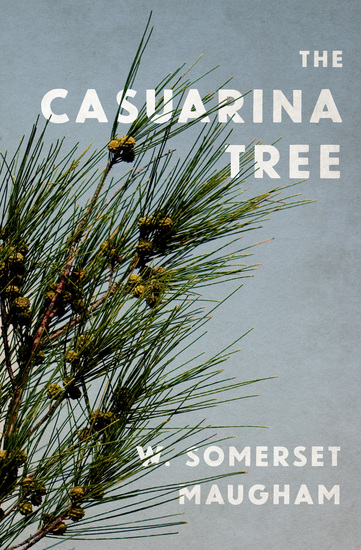
  • The Casuarina Tree - cover

    The Casuarina Tree

    W. Somerset Maugham

    • 0
    • 0
    • 0
    A collection of six stories—including the acclaimed “The Outstation”—by the renowned twentieth-century author of the classic Of Human Bondage.   Set in the Federated Malay States during the 1920s, these stories portray the lives of the English living abroad and the clashes that occur with the native Malaysians—and among themselves.   In “Before the Party,” a widow who lies about the cause of her husband’s death in Borneo is confronted by her family and blithely reveals the truth of his untimely death. “P. & O.” follows a woman sailing home to England to seek a divorce; struggling with fears of aging and loneliness, she finds a way to be at peace with herself after a fellow passenger succumbs to a mysterious illness. Though in Borneo for decades, a British Resident Officer holds tightly to English customs and traditions, but his snobbery and classism come under attack when he is saddled with a boorish new assistant in “The Outstation.”   In “The Force of Circumstance,” the new marriage of a British official and his wife reaches a breaking point when she learns of his not-so-secret past in Sembulu. “The Yellow Streak” follows two British men who are swept away by a tidal bore on a river in Borneo; though they both survive, one is nearly driven to madness by his suspicions that his companion knows he left him to drown. “The Letter” opens in Singapore with a British woman accused of murder in an act of self-defense; when evidence comes to light that proves she is lying, her lawyer and her husband must face their convictions—and the woman they thought they knew . . .
    Ver livro
  • Po' Sandy - cover

    Po' Sandy

    Charles W. Chesnutt

    • 0
    • 0
    • 0
    "Po' Sandy" is a second short story from The Conjure Woman, was published in The Atlantic in 1888.  It follows the same frame narrative as the previous one with Julius McAdoo advising John against following through with his plans of demolishing a schoolhouse to build a kitchen. In this short story, Sandy is an enslaved man owned by Mars Marrabo McSwayne, who sends Sandy to travel to help friends and families. During one of Sandy's trips, McSwayne sells Sandy's wife and replaces her for another woman named Tenie. Over time, Sandy and Tenie develop a relationship, at which point Tenie reveals to Sandy that she was a conjure woman for some time in her life. With this information, the couple decides that they will turn Sandy into a tree so that he no longer has to travel and turn him back into a person from time to time. However, as McAdoo relates, one day McSwayne decides to have the tree cut down to build floorboards in his kitchen, ending the life of Sandy. Afterwards, other enslaved people claimed that they heard groans and moans coming from the floor, resulting in the belief that the building was haunted. This led to the kitchen being demolished, of which lumber was used to build the schoolhouse that John wishes to dismantle to build a kitchen in its place. After hearing the haunted story from McAdoo, Annie dissuades John from dismantling the schoolhouse to build the kitchen and leaves it alone.
    Ver livro
  • A Lickpenny Lover - From their pens to your ears genius in every story - cover

    A Lickpenny Lover - From their...

    O Henry

    • 0
    • 0
    • 0
    William Sydney Porter was born on 11th September 1862 in Greensboro, North Carolina. At age 3 his mother died from tuberculosis. From an early age it was clear Porter had a large appetite for reading as he absorbed the world around him. 
    He first attended at a school run by his aunt before enrolling at the Lindsey Street High School and then worked at his uncle’s drugstore and gained a pharmacists’ license in 1881.  
    A persistent cough took him to Texas in the hope that a change of climate would help his symptoms. He took on various types of work, initially from ranch hand and cook and then as varied as pharmacist, draftsman, bank teller and journalist. He also began to write, though for now, purely as a hobby. 
    He was a member of several singing and dramatic groups when he met 17 year old Athol Estes, daughter of a wealthy Austin family. Despite her mother’s objection owing to Athol’s tuberculosis, they began courting and in July 1887, they eloped and soon married. 
    Athol, impressed by his writing, encouraged him to get them published. A job as a draftsman at the Texas General Land Office paid a healthy $100 dollars per month and life was good. 
    But then life turned cruel. His son died a few hours after birth although a daughter, Margaret, came the following year.  His job had to be vacated but another was found at the First National Bank of Austin. The bank operated informally and Porter was careless in keeping the books. He lost that job but began writing for the humourous weekly The Rolling Stone and the Houston Post. Some time later the federal Bank auditors went through his former accounts and he was arrested on charges of embezzlement. 
    Porter fled the day before his trial to Honduras. Holed up for several months he began to write.  Athol had become too ill to travel to meet him and learning that her health was deteriorating he surrendered to the court in February 1897.  Bail was obtained so that he could stay with Athol during her final days.  
    Porter was sentenced to five years at the Ohio Penitentiary in Columbus. His pharmacy qualifications got him the job of night druggist.  His sentence also gave him time to write and publish fourteen short stories. In December 1899 in McClure’s Magazine he published a short story as O Henry.  
    He was released two years early in July 1901, and reunited with Margaret, now 11, in Pittsburgh.  He now began his most prolific period of writing; a short story per week for the New York World, while also publishing works in other magazines.  Eventually over 600 of his short stories were published. 
    Porter was a heavy drinker and in 1908 his health, which had deteriorated for several years, took a dramatic turn for the worse, as did his writing.  
    O Henry died of cirrhosis of the liver complicated by diabetes and an enlarged heart on 5th June 1910.
    Ver livro
  • The Top 10 Short Stories – The 20th Century – The British & Irish Men - The top ten Short Stories of the 20th Century written by British and Irish male authors - cover

    The Top 10 Short Stories – The...

    James Joyce, D H Lawrence,...

    • 0
    • 0
    • 0
    Short stories have always been a sort of instant access into an author’s brain, their soul and heart.  A few pages can lift our lives into locations, people and experiences with a sweep of landscape, narration, feelings and emotions that is difficult to achieve elsewhere. 
     
    In this series we try to offer up tried and trusted ‘Top Tens’ across many different themes and authors. But any anthology will immediately throw up the questions – Why that story? Why that author?  
     
    The theme itself will form the boundaries for our stories which range from well-known classics, newly told, to stories that modern times have overlooked but perfectly exemplify the theme.  Throughout the volume our authors whether of instant recognition or new to you are all leviathans of literature. 
     
    Some you may disagree with but they will get you thinking; about our choices and about those you would have made.  If this volume takes you on a path to discover more of these miniature masterpieces then we have all gained something. 
     
    In this tumultuous century world wars will shatter all of Europe and Britain will finally be forcible divorced from Catholic Ireland.  Revolution and economic disaster are followed by a society that appears more equal, growing in confidence and its authors use every morsel of debate to create excellent literary works.  
     
    1 - The Top 10 - The British & Irish Men - The 20th Century - An Introduction 
    2 - The Dead - Part 1 by James Joyce 
    3 - The Dead - Part 2 by James Joyce 
    4 - The Rocking Horse Winner by D H Lawrence 
    5 - The Interlopers by Saki the pseudonym for H H Munro 
    6 - The Informer by Joseph Conrad 
    7 - Oh Whistle and I'll Come to You My Lad by M R James 
    8 - The Salvation of a Forsythe - Part 1 by John Galsworthy 
    9 - The Salvation of a Forsythe - Part 2 by John Galsworthy 
    10 - August Heat by W F Harvey 
    11 - The Matador of the Five Towns by Arnold Bennett 
    12 - The Kit Bag by Algernon Blackwood 
    13 - The Burial of the Rats by Bram Stoker
    Ver livro