Join us on a literary world trip!
Add this book to bookshelf
Grey
Write a new comment Default profile 50px
Grey
Subscribe to read the full book or read the first pages for free!
All characters reduced
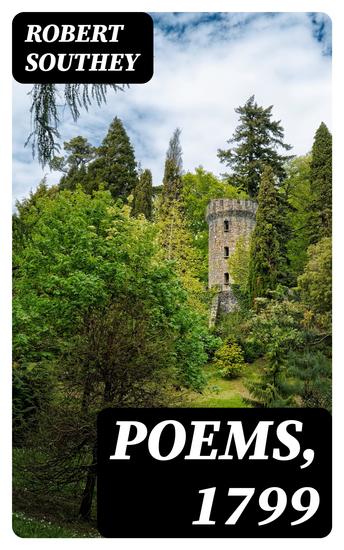
Poems 1799 - cover

Poems 1799

Robert Southey

Publisher: DigiCat

  • 0
  • 0
  • 0

Summary

In "Poems, 1799," Robert Southey presents a rich tapestry of themes that traverse nature, love, and the human experience, all intricately woven with his signature Romantic style. Southey's use of vivid imagery and emotional depth elevates his poetry, showcasing a keen sensitivity to the interplay of personal feelings and societal issues. The collection embodies the characteristics of the early Romantic movement, aligning with contemporaries like Wordsworth and Coleridge, while also revealing Southey's unique voice and perspective. With profound meditations on life and a deliberate attention to meter and form, this collection stands as a remarkable contribution to the literary canon of its time. Robert Southey was not only a prominent poet but also a noted historian and biographer, which enriched his poetic endeavor with a wealth of knowledge and life experiences. Growing up within a politically charged environment, Southey was deeply influenced by revolutionary ideals and the transformative power of nature, themes he often explored in his works. His friendships with other Romantic poets, as well as his role as Poet Laureate, further shaped his poetic trajectory, culminating in the creation of this poignant collection. Readers seeking to immerse themselves in the early Romantic ethos will find "Poems, 1799" an enlightening experience. Southey's exploration of emotional depth and societal awareness invites readers to reflect on both personal and universal themes. This collection is a testament to the power of poetry as a means of grappling with the complexities of life, making it an essential read for admirers of Romantic literature.
Available since: 09/16/2022.
Print length: 62 pages.

Other books that might interest you

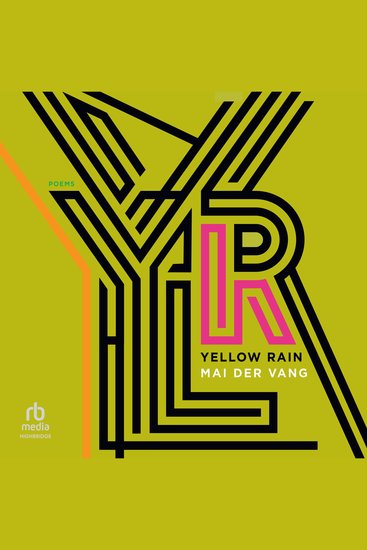
  • Yellow Rain - Poems - cover

    Yellow Rain - Poems

    Mai Der Vang

    • 0
    • 0
    • 0
    In this staggering work of documentary and poetry, Mai Der Vang reopens a wrongdoing that deserves a new reckoning. As the US abandoned them at the end of the Vietnam War, many Hmong refugees recounted stories of a mysterious substance that fell from planes during their escape from Laos in the mid-1970s. This substance, known as "yellow rain," caused severe illnesses and thousands of deaths. These reports prompted an investigation into allegations that a chemical biological weapon had been used against the Hmong in breach of international treaties. A Cold War scandal erupted, wrapped in partisan debate around chemical arms development versus control. American scientists argued that yellow rain was the feces of honeybees defecating en masse—still held as the widely accepted explanation. The truth of what happened to the Hmong, to those who experienced and suffered yellow rain, has been ignored and discredited. 


    Integrating archival research and declassified documents, Vang calls out the erasure of a history, the silencing of a people who at the time lacked the capacity and resources to defend and represent themselves. In poems that sing and lament, that contend and question, Vang restores a vital narrative in danger of being lost, and brilliantly explores what it means to have access to the truth and how marginalized groups are often forbidden that access.
    Show book
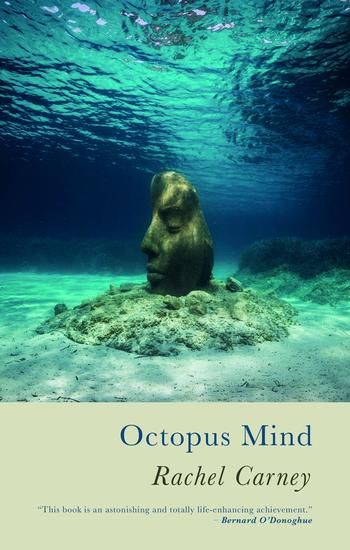
  • Octopus Mind - cover

    Octopus Mind

    Rachel Carney

    • 0
    • 0
    • 0
    Octopus Mind plays with an array of rich and original metaphors to explore the intricacies of neurodiversity, perception and the human mind. These poems articulate the desire to understand and be understood by oneself and others in a complex world. They observe the nuances of creativity, art, relationships, and self-expression through the lens of neurodiversity, reflecting on the poet's experience of being diagnosed with dyspraxia as an adult. They delve into the challenges of neurodiversity, but also reveal its gifts.
    Poems respond to visual artists like Gwen John, whose paintings break new ground for women representing their own visions of themselves. Other poems suggest that this can be a struggle however, as Pablo Picasso paints not a woman but his own despair in 'Blue Nude', while Elizabeth Siddal reflects on her own image, fetishized by the Pre-Raphaelite painters, and Henri Rousseau's painting becomes an outlet for self-deception and frustration. 
    Some of the most stunning poems in this collection perform a kind of magic or sleight of hand, as dyspraxia is explored through unique and remarkable metaphors, including a series of artefacts in a museum, a walk along the seashore, and a swaying tree. The 'Octopus Mind' evokes the possibilities of what it means to be human, through obsession, self-deception, realisation, and acceptance.
    The speaker in Octopus Mind is endearingly humble and we journey with them beyond self-criticism to reclaiming the self. In 'Growing', the narrator declares 'I will grow // into myself, climbing, steady, / grip by grip, leaf by leaf'. In 'Understood' the narrator describes the complex process of re-imagining one's place in the world, armed with new knowledge: 'Slowly, we adjust / our own soft ignorance / unroll our prejudice / in gentle waves.' 
    "A poet of multiple uncanny self-portraits, of the 'octopus mind', who explores the gaps between mind and body, and body and world, with deft, diverse diagnoses."Damian Walford Davies
    "Extraordinary poems of self-encounter, of divergence, of bruised bodies out of balance with themselves, laid bare – and of new-found identities, and joyous release." Richard Marggraf Turley 
    "Rachel Carney's debut collection delights in its curiosity and surrealism. This is a collection that 'swims out into deep ocean currents' to explore the workings of the mind and the impacts of this on the self." Katherine Stansfield
    Show book
  • Hating To Love My Life - The Fighter in Me Would Not Let Me Die - cover

    Hating To Love My Life - The...

    Courtlin D. Fields

    • 0
    • 0
    • 0
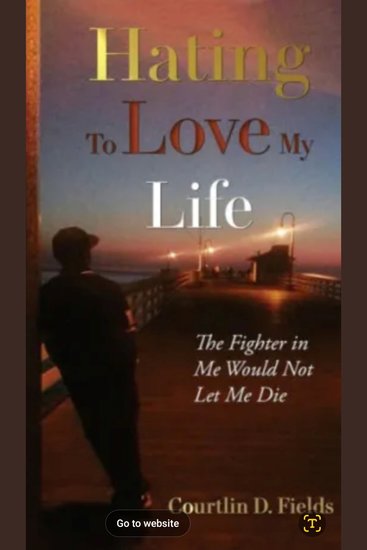
    The first of five planned volumes of poetry, The Chapbook 1 speaks of suicide, love, breakups, the loss of a child, and the loss of a parent. However, Courtlin found a way to turn these darkest memories and feelings into something positive. 
    As a man, it is hard to express your feelings. Then, to be a Black man adds another layer. To be a light-skinned Black man, there is trouble in those waters too. 
    This is not a book to tell you how to live your life. This is not a book to tell you how to make millions. This is a book of poetry to let you know that you are not alone. Every expressed emotion is real. Every poem means something personal. Hopefully, sharing my poems with you will inspire some degree in knowing no matter your skin color.
    Show book
  • Desperate Living - A Screenplay - cover

    Desperate Living - A Screenplay

    John Waters

    • 0
    • 0
    • 0
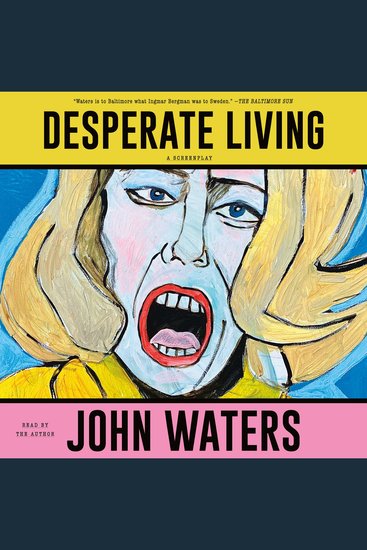
    A grotesque and hilarious satire about the American dream, suburban living, and the corrupting influence of power, set in a world that could only have sprung from the unhinged and brilliant mind of John Waters. Listen as Waters himself acts out each role!On the verge of a suburban mental health crisis, frazzled and wildly unstable housewife Peggy (immortalized by Mink Stole on-screen) runs away from home with her maid and partner in crime, Grizelda (played with spectacular gumption by the sizzling Jean Hill), only to end up in Mortville, a shantytown filled with society’s rejects. Mortville is run by the evil Queen Carlotta, who parades through the cardboard streets taunting and terrorizing her subjects.John Waters’s wild and visionary fable lampoons everything from the staid conservatism of the American dream to race and class relations. The New York Times ranked Desperate Living at “the highest peak atop [John Waters’] trash heap of a filmography.” High praise indeed!A Macmillan Audio production from Farrar, Straus and Giroux
    Show book
  • The Poetry of Thomas Chatterton - Despite tragically committing suicide at only 17 Chattertons influence would stretch far beyond his years being a huge spark to poets such as Shelley Keats Wordsworth and Coleridge - cover

    The Poetry of Thomas Chatterton...

    Thomas Chatterton

    • 0
    • 0
    • 0
    Thomas Chatterton was born in Bristol on 20th November 1752 some 15 weeks after the death of his father. For a time he was admitted to Edward Colston's Bristol charity school, on a limited curriculum of reading, writing, arithmetic and the catechism. 
      
    Although fascinated by the church of St Mary Redcliffe where his uncle was sexton, he was liable to fits of abstraction, sitting for hours in a trance or crying for no reason. When Chatterton was 8 he was so eager for books that he would read and write all day long and by 11 he had become a contributor to Felix Farley's Bristol Journal. He lived in thought with his 15th-century heroes and heroines. 
      
    The first of his literary mysteries, the dialogue of "Elinoure and Juga," was written before he was 12, and he showed it to the usher at the boarding school Colston's Hospital where he was a pupil, pretending it was the work of a 15th-century poet. Chatterton remained a boarder at Colston's Hospital for more than six years. His little pocket-money was spent borrowing books from a circulating library and always attempting to ingratiate himself with book collectors. 
      
    His holidays were mostly spent at his mother's house, and much of that in the attic study living for the most part in an ideal world of his own, centered on his mid-15th century imaginary world. 
      
    Chatterton soon conceived the romance of Thomas Rowley, an imaginary monk of the 15th century, and adopted for himself the pseudonym Thomas Rowley for poetry and history. He imagined he would become a famous poet who by his talents would be able to rescue his mother from poverty. 
      
    Chatterton needed a patron. Many were not interested. Horace Walpole was but discovering that the poems were most probably fake and Chatterton himself only 16 scornfully sent him away. 


    Badly hurt by Walpole's snub, Chatterton wrote very little for a summer. Then he turned his attention to periodical literature and politics, and the London periodicals. He was frequently published but received little reward for his startling efforts. 
      
    Chatterton wrote at Easter 1770, ‘‘Last Will and Testament,’’ a satirical mix in jest and seriousness. The will was possibly prepared so that John Lambert, the attorney to whom he was apprenticed, cancelled his indentures. His friends and acquaintances, having donated money, Chatterton proceeded to London. 
      
    He continued to write and publish in various styles and was paid little for his efforts. He wrote hopefully to his mother and sister, and spent his first earnings in buying gifts for them. 
      
    In June 1770, after nine weeks in London, he moved from a shared room in Shoreditch to an attic in Brook Street, Holborn. He now enjoyed uninterrupted solitude and now could write all night. The romance of his earlier years revived, and he transcribed from an imaginary parchment of the old priest Rowley his "Excelente Balade of Charitie." This poem, disguised in archaic language, he sent to the editor of the Town and Country Magazine, where it was rejected. 
      
    A neighbouring apothecary, repeatedly invited him to come for dinner or supper; but he refused. His landlady also, suspecting his necessity, pressed him to share her dinner, but in vain. "She knew," as she afterwards said, "that he had not eaten anything for two or three days." But he assured her that he was not hungry. 
      
    In August 1770, while walking in St Pancras Churchyard, Chatterton was much absorbed in thought, and did not notice a newly dug open grave in his path, and subsequently tumbled into it. His walking companion helped Chatterton out of the grave, and told him that he was happy in assisting at the resurrection of a genius. Chatterton replied, "My dear friend, I have been at war with the grave for some time now." 
     
    On 24th August 1770, Thomas Ch
    Show book
  • Domesticated Volume Two - cover

    Domesticated Volume Two

    James Domestic

    • 0
    • 0
    • 0
    In the second Domesticated instalment, East Anglian punk poet, James Domestic, is once again taking potshots at work, so-called-punk-rock, outdoor and indoor pursuits, aging, right wing lunatics, politics, feet, and himself. As if that wasn’t enough, you’ll also find his trademark surrealism, sarcasm, and quintessentially British whimsy applied to animals, emails, food, and the power of music, alongside his idiosyncratic illustrations, and photographs from his murky past. 
      
    A man in too many bands to count, a solo artist, a vocalist, a songwriter, a DJ, a poet, a painter, and a punk. James Domestic failed miserably at school through the distractions of music, alcohol, and girls, spent his early post-school life between the chemical factory and the dole, and somehow now has a PhD. A square peg in life’s round hole. A face that never fitted. He couldn’t care less. Come along for the ride. 
      
    “A sardonic, sarcastic wit, a penchant for the surreal, and a dynamic pace” (Nathan Brown, Louder Than War) 
      
    “Words that bite, belch, and bleed in their brilliance” (Mark Grist, multi-award-winning poet and battle rapper) 
      
    “A unique collection of poetic ventures into the human condition, with humour, anger, and a canny use of language: inspired and inspiring!” (Dick Lucas, Subhumans, Culture Shock etc.) 
      
    “Relentless” (Attila the Stockbroker, social surrealist poet and songwriter).
    Show book