
Join us on a literary world trip!
Add this book to bookshelf
Grey
Write a new comment Default profile 50px
Grey
Subscribe to read the full book or read the first pages for free!
All characters reduced
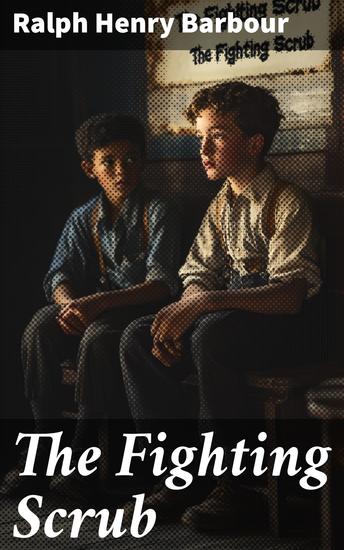
The Fighting Scrub - cover

The Fighting Scrub

Ralph Henry Barbour

Publisher: Good Press

  • 0
  • 0
  • 0

Summary

Ralph Henry Barbour's "The Fighting Scrub" is a compelling tale woven into the rich tapestry of early 20th-century American youth literature, emphasizing themes of friendship, courage, and sportsmanship. The narrative unfolds in a boarding school setting, where young athletes confront physical and moral challenges, encapsulating the burgeoning spirit of competition inherent in American culture. Barbour employs a straightforward yet vivid prose style, utilizing dialogue and action to create an engaging atmosphere that resonates with the reader, while reflecting the values of perseverance and teamwork. Barbour, an influential figure in juvenile fiction, drew upon his own experiences as a passionate sportsman and educator, which profoundly shaped his understanding of youth dynamics and the critical importance of character development. His works often emphasize integrity, athleticism, and the trials of adolescence, mirroring the societal expectations of his time. Barbour's insight into the struggles and triumphs of young people underpins his work, making it both a reflection and an exploration of American identity. For readers seeking an engaging narrative that inspires resilience and camaraderie, "The Fighting Scrub" offers an enriching experience. Barbour's expertise in capturing the essence of youth and the thrill of competition ensures that this book is not only an enjoyable read but also a timeless source of motivation for young athletes and dreamers alike.
Available since: 03/02/2025.
Print length: 200 pages.
Other books that might interest you

  • The Picture of Dorian Gray - cover

    The Picture of Dorian Gray

    Oscar Wilde

    • 0
    • 0
    • 0
    Step into a world of dazzling beauty, dark secrets, and moral ambiguity with The Picture of Dorian Gray, a timeless classic by Oscar Wilde. This haunting tale weaves the story of a young, strikingly handsome man who falls under the influence of two powerful forces: an enchanting portrait that mysteriously reflects the decay of his soul, and the corrupting philosophy of a hedonistic mentor.
     
    As Dorian Gray embarks on a reckless pursuit of pleasure, his decisions reveal the chilling consequences of vanity, indulgence, and the price of living without accountability. The novel’s themes of art, morality, and the nature of influence are as relevant today as when Wilde penned them, challenging listeners to question the boundaries of ethics and the essence of beauty.
     
    This audiobook, narrated with precision and passion, captures Wilde's sharp wit, poetic language, and profound exploration of human flaws. Perfect for lovers of Gothic fiction and philosophical drama, The Picture of Dorian Gray invites you to explore the shadows of the human psyche in a story that is as mesmerizing as it is unsettling.
     
    Prepare to be captivated by a tale where every word is a brushstroke, painting a vivid picture of a man who dares to defy time, consequence, and conscience.
    Show book
  • Bulldog Drummond - cover

    Bulldog Drummond

    H.C. McNeile

    • 0
    • 0
    • 0
    In the swirling mists of post-World War I England, a character emerged from the pen of "Sapper", (H.C.McNeile) whose adventures would captivate readers and endure through the ages. Bulldog Drummond, the invincible hero, burst onto the literary scene with a resounding force that echoed the sentiments of a society grappling with the aftermath of conflict and the winds of change. 
    Readers found themselves immersed in a world where espionage and intrigue stretched across a Europe still reeling from the Great War and "Bulldog Drummond" embodied the resilience and resourcefulness of a generation seeking purpose in the midst of societal upheaval. 
    It's clear that the adventures of Drummond, the intrepid ex-soldier looking for excitement, influenced Ian Flemming's James Bond of some 30 years later. 
    Welcome to a world where the villains are easy to spot, grey areas are few, women are to be rescued and the hero never loses his sense of humour! 
    Head Stories Audio presents the first instalment of its "Bulldog Drummond" series, wonderfully performed by Simon Hester. With original music.
    Show book
  • The Call of the Wild - cover

    The Call of the Wild

    Jack London

    • 0
    • 0
    • 0
    Set in Yukon, Canada, during the 1890s Klondike Gold Rush, when strong sled dogs were in high demand. The central character of the novel is a dog named Buck. 
    Show book
  • Great Gatsby The (Annotated) - cover

    Great Gatsby The (Annotated)

    F. Scott Fitzgerald

    • 0
    • 0
    • 0
    The Great Gatsby is a 1925 novel by American writer F. Scott Fitzgerald. Set in the Jazz Age on Long Island, near New York City, the novel depicts first-person narrator Nick Carraway's interactions with mysterious millionaire Jay Gatsby and Gatsby's obsession to reunite with his former lover, Daisy Buchanan. 
    The novel was inspired by a youthful romance Fitzgerald had with socialite Ginevra King, and the riotous parties he attended on Long Island's North Shore in 1922. Following a move to the French Riviera, Fitzgerald completed a rough draft of the novel in 1924. He submitted it to editor Maxwell Perkins, who persuaded Fitzgerald to revise the work over the following winter. After making revisions, Fitzgerald was satisfied with the text, but remained ambivalent about the book's title and considered several alternatives. Painter Francis Cugat's cover art greatly impressed Fitzgerald, and he incorporated aspects of it into the novel. 
    After its publication by Scribner's in April 1925, The Great Gatsby received generally favorable reviews, though some literary critics believed it did not equal Fitzgerald's previous efforts. Compared to his earlier novels, Gatsby was a commercial disappointment, selling fewer than 20,000 copies by October, and Fitzgerald's hopes of a monetary windfall from the novel were unrealized.  
    Gatsby continues to attract popular and scholarly attention. Contemporary scholars emphasize the novel's treatment of social class, inherited versus self-made wealth, race, and environmentalism, and its cynical attitude towards the American dream. One persistent item of criticism is an allegation of antisemitic stereotyping. The Great Gatsby is widely considered to be a literary masterwork and a contender for the title of the Great American Novel. 
    -Wikipedia
    Show book
  • Mansfield Park - Full Cast Drama - cover

    Mansfield Park - Full Cast Drama

    Jane Austen

    • 0
    • 0
    • 0
    Jane Austen's novel "Mansfield Park" is a rich tapestry of characters, relationships, and societal norms. Published in 1814, it stands as one of Austen's most intricate and morally complex works. At its heart, the novel is a nuanced exploration of morality, social class, and the individual's place within a rigidly stratified society. 
     
    The story revolves around the character of Fanny Price, a poor young girl who is sent to live with her wealthy relatives, the Bertrams, at Mansfield Park. Fanny's humble background sharply contrasts with the opulence of her new home, and she occupies a unique position within the Bertram family. As an outsider, Fanny serves as a keen observer of the behaviors, attitudes, and moral values of those around her. 
    Central to the novel is the idea of morality and virtue. Fanny is portrayed as a paragon of moral integrity, while other characters, like her cousin Maria Bertram and her brother Henry Crawford, reveal moral shortcomings. The contrast between Fanny's unwavering moral compass and the moral lapses of those around her highlights Austen's examination of the consequences of one's actions and the moral decay that can occur within a society obsessed with appearances and social status. 
     
    The novel also delves into the rigid social hierarchy of early 19th-century England. The Bertrams, as members of the landed gentry, occupy the highest rungs of the social ladder, while Fanny, a poor relation, occupies the lowest. Through Fanny's eyes, readers witness the subtle but significant ways in which social class impacts every aspect of life, from marriage prospects to personal worth. This social commentary forces readers to confront the inherent inequalities of the era and consider the moral implications of a society that values wealth and social standing over character and virtue.
    Show book
  • What Will Pay? (Unabridged) - cover

    What Will Pay? (Unabridged)

    Booker T. Washington

    • 0
    • 0
    • 0
    Booker Taliaferro Washington (April 5, 1856 - November 14, 1915) was an American educator, author, orator, and adviser to several presidents of the United States. Between 1890 and 1915, Washington was the dominant leader in the African American community and of the contemporary black elite. Washington was from the last generation of black American leaders born into slavery and became the leading voice of the former slaves and their descendants. They were newly oppressed in the South by disenfranchisement and the Jim Crow discriminatory laws enacted in the post-Reconstruction Southern states in the late 19th and early 20th centuries.
    WHAT WILL PAY: I wish to talk with you for a few minutes upon a subject that is much discussed, especially by young people-What things pay in life? There is no question, perhaps, which is asked oftener by a person entering upon a career than this-What will pay? Will this course of action, or that, pay?
    Show book