Begleiten Sie uns auf eine literarische Weltreise!
Buch zum Bücherregal hinzufügen
Grey
Einen neuen Kommentar schreiben Default profile 50px
Grey
Jetzt das ganze Buch im Abo oder die ersten Seiten gratis lesen!
All characters reduced
The Greatest Works of Roman Classical Literature - cover

The Greatest Works of Roman Classical Literature

Lucius Annaeus Seneca, Julius Caesar, Boethius, Horace, Plutarch Plutarch, Apuleius, Virgil Virgil, Persius, Terence, Ammianus Marcellinus, Sallust, Juvenal, Lucan, Suetonius, Tibullus Tibullus, Tacitus Tacitus, Petronius, Cornelius Nepos, Lucretius Lucretius, Martial, Catullus, Cicero Cicero, Claudian, Pliny the Younger, Saint Augustine of Hippo, Plautus, Ennius, The Metamorphoses, Augustus, Quintilian

Übersetzer Alfred John Church, Paul Nixon, J. S. J.S.Watson, Christopher Smart, William Rose, James Rhodes, Lewis Evans, John William Mackail, William Jackson Brodribb, W. A. McDevitte, W. S. Bohn, Richard Mott Gummere, Henry Thomas Riley, William Ellery Leonard, Frederick Charles Tindal Bosanquet, E. Jones, Robinson Ellis, Harold Edgeworth Butler, Theodore Chickering Williams, John Selby Watson, Frederick W. Shipley, Edward Ridley, William Charles Firebaugh, Maurice Platnauer

Verlag: DigiCat

  • 0
  • 0
  • 0

Beschreibung

Dive into the rich and varied literary landscape of ancient Rome with *The Greatest Works of Roman Classical Literature*. This anthology encapsulates the essence of Roman thought and culture through an extensively curated selection of writings. Featuring a wide array of genres, from the precise political oratory of Cicero to the poetic grandeur of Virgil, the collection embodies the full spirit of Roman innovation and eloquence. Readers will encounter philosophical musings alongside historical narratives, poetic depictions of gods and heroes, and satirical social commentary, providing a comprehensive snapshot of Roman literary prowess. The collection brings together an illustrious roster of authors whose works continue to shape literary and cultural discourse. From the philosophical meditations of Seneca to the incisive satires of Juvenal, each contributor leaves an indelible mark on Roman literature. The anthology offers insights into the literary movements and historical contexts of the time, weaving together voices from the late Republic, through the zenith of the Roman Empire, and into the early Christian era of Augustine. Collectively, these influential figures crafted the vast tapestry of Roman literature, imparting a legacy of intellectual and artistic brilliance. This anthology invites readers to explore a multiverse of Roman perspectives, uniting disparate genres and themes into one compelling volume. It serves not only as an academic resource but also as a portal into the ancient world's diverse dialogues on morality, politics, and human nature. Embrace the opportunity to immerse yourself in this meticulously assembled anthology, appreciating the breadth of context, cultural reflection, and timeless wisdom that each work offers to the modern reader.
Verfügbar seit: 21.11.2023.
Drucklänge: 7732 Seiten.

Weitere Bücher, die Sie mögen werden

  • Diaries of a Distant Affair - cover

    Diaries of a Distant Affair

    Brittani Malonson

    • 0
    • 0
    • 0
    In life, we all go through experiences that are simple, but become complicated with time. When I got my dream job, all I wanted was to aspire to be the best worker bee, I didn't expect a mutual infatuation with someone who was in a relationship as a life experience; but it happened. I ended up becoming the other woman to witness the relationship come apart the way it came together, but from distance. Listen to explore my diary of emotional rollercoasters with dark euphoric highs and hard to swallow realizations while journaling my self discovery and working within a love triangle.
    Zum Buch
  • Independent Thinking on Nature-Based Learning - Improving learning and well-being by teaching with nature in mind - cover

    Independent Thinking on...

    Alexia Barrable

    • 0
    • 0
    • 0
    Foreword by Ian Gilbert.
    At a time of unprecedented challenges in relation not only to the climate crisis but also to children's and adolescents' mental health, connecting to nature offers an accessible and desirable way forward for today's learners - especially those living in urban surroundings.
    Bringing together evidence from psychology, environmental science and education, Alexia aims to support teachers as they provide meaningful experiences rooted in learning about and through nature. The book can be used in two ways: to inspire individual sessions in nature, or to support teachers in building a cohesive outdoor-learning curriculum throughout the school.
    Featuring practical advice, case studies and discussion of original theory, the book aims to inspire, motivate and stimulate educators to engage with alternative approaches to teaching in the outdoors and with nature in mind - and in such a way that promotes students' learning and fosters a long-lasting relationship with nature.
    Independent Thinking on Nature-Based Learningshares case studies and examples of good practice from a variety of settings - ranging from kindergarten to secondary. Detailing the physical and psychological benefits of being outdoors, the book suggests ways to help build young people's connection with nature and support their autonomy in naturalspaces. Alexia offersideas on how to weave nature and the outdoors into the very fabric of the curriculum - for example, in relation to art, literature and technology.
    Suitable for teachers and outdoor-learning leaders in early years through to secondary schools.
    Independent Thinking on Nature-Based Learningis one of a number of books in the Independent Thinking On seriesfrom the award-winning Independent Thinking Press.
    Zum Buch
  • Count With Me - cover

    Count With Me

    Kim Mitzo Thompson, Karen Mitzo...

    • 0
    • 0
    • 0
    Kids will love this playful story as they learn counting from 1-10 by visiting animals at the zoo. Simple sentence structures and repetitive words will encourage young children to fall in love with learning to read.  Kids will enjoy following along word-for-word with the recorded story that features sound effects and professional voices to help children develop vocabulary and improve listening skills.  This reader features adorable art to engage young learners.
    Zum Buch
  • Good God - Suffering faith reason and science - cover

    Good God - Suffering faith...

    Michael Brooks

    • 0
    • 0
    • 0
    How can Christians believe in an all-powerful, all-knowing and loving God whilst there is so much suffering in the world? Contemporary theology books refer to the problem of theodicy as a significant and unresolved problem. Engaging with theology, biblical study, physics and biology, and philosophy and producing a cohesive synthesis of these subjects, Good God offers an answer that has the potential to re-integrate Christian theology with science and philosophy for the first time since the Enlightenment.
    
     
    Michael Brooks writes with both academic rigour and pastoral sensitivity. As a science and medicine graduate who is also an ordained minister, he makes science and theology comprehensible to those not trained in either discipline.
    
     
    The book opens the reader to the notion of a wonderful creation that is so full of the miraculous that this is taken for granted. Good God provides an answer to a very important question in a way that edifies faith and offers eternal hope.
    Zum Buch
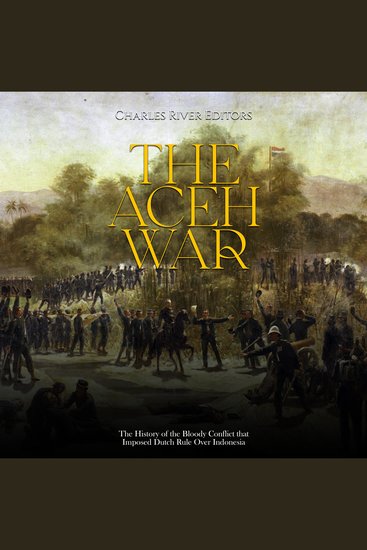
  • Aceh War The: The History of the Bloody Conflict that Imposed Dutch Rule Over Indonesia - cover

    Aceh War The: The History of the...

    Editors Charles River

    • 0
    • 0
    • 0
    During the 17th century, the Netherlands, despite having only 1.5 million people in 1600, became a global maritime and trading power. By contrast, France at the time had 20 million people, Spain had 8 million, and England had 5 million. Nevertheless, Amsterdam became one of the most important urban centers in the world and the location of the world’s first stock market, and Dutch merchant ships and pirates plied the Atlantic Ocean, the Indian Ocean, and the Pacific Ocean. The Dutch acquired colonies in the East Indies, where they seized control of the spice trade from the Portuguese, and in the West Indies, they acquired a number of islands from the Spanish (several of which are still Dutch today). They became the only Westerners who were allowed to trade with Shogunate Japan from a small island next to Nagasaki, and they settled the town that ultimately became New York City. Naturally, all of this imperialism generated enormous amounts of wealth that flowed into the Netherlands. 
    	Naturally, not everybody welcomed the Europeans, and some of the fiercest opposition came from the Sultanate of Aceh. Aceh is now a part of Indonesia, but the people have stubbornly maintained a unique sense of self-identity based on a quite distinct and separate history. Once a major political and military power in the Indian Ocean, its power gradually declined over a period of several centuries, but Aceh successfully maintained its independence until 1873, when the Dutch invaded. The war between the Dutch and the Acehnese was the longest and bloodiest of the many Dutch military campaigns in Indonesia. Even after the Dutch technically subdued them, insurgency campaigns would last well into the 20th century, and sporadic fighting was still ongoing as the Japanese pushed across the Pacific in the 1930s and 1940s. 
    Zum Buch
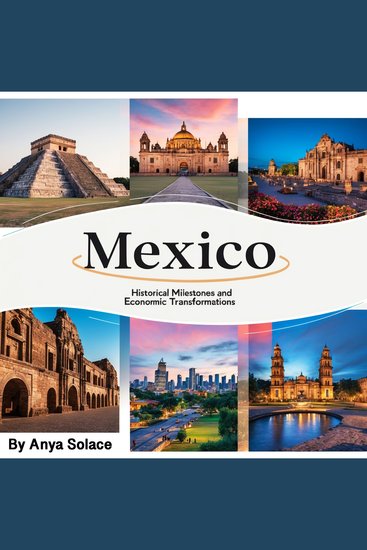
  • Mexico - Historical Milestones and Economic Transformations - cover

    Mexico - Historical Milestones...

    Anya Solace

    • 0
    • 0
    • 0
    Mexico’s history is a fascinating blend of ancient civilizations, colonial rule, and modern economic evolution. Situated at the crossroads of North and Central America, the country has played a crucial role in shaping regional and global events. From the sophisticated societies of the Mayans and Aztecs to the dramatic upheavals brought by Spanish colonization, each era has left an indelible mark on Mexico’s cultural and economic landscape. This book explores key milestones that have defined Mexico’s development and the economic transformations that continue to shape its future.  
    The origins of Mexico’s rich history begin with its diverse geography, which has influenced the rise of powerful civilizations. The Aztecs, with their vast empire and advanced societal structures, left behind a legacy of engineering, agriculture, and governance that still resonates today. Similarly, the Mayans developed sophisticated mathematical and astronomical systems, highlighting the intellectual achievements of pre-Columbian Mexico. These civilizations thrived for centuries before encountering the seismic changes that came with European arrival.  
    The Spanish conquest in the early 16th century marked a profound turning point. Hernán Cortés and his forces, aided by superior weaponry and alliances with indigenous groups, dismantled the Aztec Empire and imposed colonial rule. Spain’s domination reshaped Mexico’s social, economic, and political structures. The encomienda system placed indigenous populations under harsh labor conditions, while the introduction of Catholicism and European traditions altered local customs and belief systems. Despite the oppression, Mexico’s indigenous and mestizo populations adapted, creating a unique cultural fusion that remains a defining aspect of the country’s identity. 
    Zum Buch