Join us on a literary world trip!
Add this book to bookshelf
Grey
Write a new comment Default profile 50px
Grey
Subscribe to read the full book or read the first pages for free!
All characters reduced
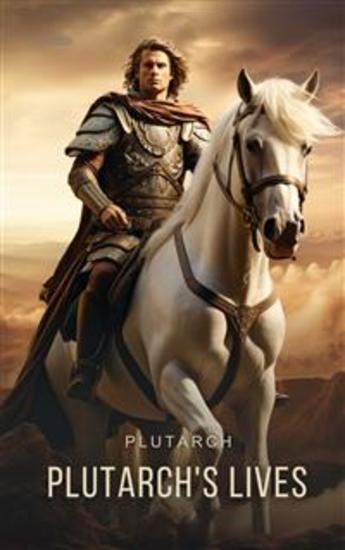
Plutarch's Lives - cover

Plutarch's Lives

Plutarch Plutarch

Publisher: Interactive Media

  • 0
  • 0
  • 0

Summary

"Plutarch's Lives" by Plutarch offers dual biographies of eminent Greeks and Romans, exploring their deeds, virtues, and impact. Through vivid narratives, it delves into character, leadership, and ethics, providing profound insights into human nature. The parallel structure highlights shared traits, fostering contemplation on history's echoes. A timeless treasure, this work connects us with the past, unraveling lessons and inspirations for present and future generations.
Available since: 08/20/2023.
Print length: 564 pages.

Other books that might interest you

  • Irvin D Yalom: On Psychotherapy and the Human Condition - cover

    Irvin D Yalom: On Psychotherapy...

    Ruthellen Josselson Ph.D.

    • 0
    • 0
    • 0
    Irvin Yalom is one of the best known, most widely read and Through his many books, which are accessible to ordinary readers as well as illuminating for psychotherapists, he has provided a guide for living in a perplexing world. A recent poll of American psychotherapists voted him to be one of the three most important living therapists, but the worldwide success of his books suggests that his prominence is international.
    
    Rather than positioning himself as a representative of one of the hundreds of "schools" or approaches to psychotherapy. Yalom offers a message that goes to the heart of psychotherapy. Taking up the central existential concerns of human life, Yalom's work engages the problems of finding meaning in life and confronting death, concerns that had lain beyond the scope of psychiatry.
    
    Writing in a literary style that reviewers have compared to Freud, Yalom details what actually happens in the intimate human encounter that is psychotherapy. Yalom does not shrink from exposing his own thoughts and feelings about what occurs; he, too is a vulnerable and searching human being. He makes his thinking about his patients, and his efforts to treat them, transparent, exposing his doubts, reservations and struggles as well as his insights.
    He has written two textbook, two volumes of case history stories, three novels about therapy, a guide for therapists and one book of counsel for the masses confronting death. Across all of this work, he explores the limitless and complex possibilities of the healing inherent in genuine human connection and authentic awareness of the dilemmas of human existence.
    
    Irvin D. Yalom: On Psychotherapy and the Human Condition traces the genesis and evolution of his thinking and presents some of the seminal ideas of his writings.
    Show book
  • The Funny Stuff - The Official P J O’Rourke Quotationary and Riffapedia - cover

    The Funny Stuff - The Official P...

    P. J. O'Rourke

    • 0
    • 0
    • 0
    A compendium of quotes and riffs by P.J. O'Rourke on subjects ranging from government to fishing to apps, to be published on what would have been his seventy-fifth birthday. 


    When The Penguin Dictionary of Modern Humorous Quotations was published in 1994, P. J. O'Rourke had more entries than any living writer. And he kept writing funny stuff for another twenty-eight years. Now, for the first time, the best material is collected in  one volume. Edited by Terry McDonell, The Funny Stuff is arranged in six sections, organized by subject in alphabetical order from Agriculture to Xenophobia. From his earliest days at the National Lampoon in the 1970s, through his classic reporting for Rolling Stone in the '80s and '90s to his post-Trump, pandemic, new media observations of recent years, P. J. produced incisive, amusing copy. Not only did P. J. write memorable one-liners, he also meticulously constructed riffs that are still being quoted years later. His prose has the electric verbal energy of Tom Wolfe or Hunter Thompson, but P. J. is more flat out funny. And through it all comes his clear-eyed take on politics, economics, human nature—and fun. The Funny Stuff is a book for P. J. fans to devour but also a book that will bring new audiences and stand as testament to one of the truly original American writers of the last fifty years.
    Show book
  • Educated: Book Summary and Analysis - cover

    Educated: Book Summary and Analysis

    Briefly Summaries

    • 0
    • 0
    • 0
    This is a concise summary and analysis of Educated, by Tara Westover.
     
    It is not the original book and is not affiliated with or endorsed by Tara Westover.
     
    Ideal those seeking a quick and insightful overview.


    Educated is a powerful memoir that chronicles one woman’s journey from a secluded and survivalist upbringing in rural Idaho to earning a PhD from Cambridge University. Born into a family that rejects mainstream society, government, and formal education, the author grew up without a birth certificate, medical care, or schooling. Through remarkable perseverance, she embarks on a transformative journey, teaching herself enough to gain entry into college, where her life—and her mind—begin to open.
     
    As she encounters a world filled with history, philosophy, and scientific thought, she is forced to confront her family's values and the psychological grip they hold on her. Through profound resilience and self-discovery, the author forges a path of her own, embracing education as a vehicle for personal empowerment. Her story is not only an exploration of family and identity but also a testament to the liberating power of knowledge.
     
    This audiobook is perfect for listeners drawn to narratives of inner strength, those who have battled self-doubt, or anyone who has faced the need to break free from limiting beliefs. With a dynamic, motivational tone, Educated speaks to the transformative potential within all of us—the power to shape our destiny and pursue a life defined by our own values.
    Show book
  • Uncomfortable Bed An - From their pens to your ears genius in every story - cover

    Uncomfortable Bed An - From...

    Guy de Maupassant

    • 0
    • 0
    • 0
    Henri René Albert Guy de Maupassant was born on August 5th, 1850 near Dieppe in France.  
    Maupassant’s early life was badly torn when at age 11 (his younger brother Hervé was then five) his mother, Laure, a headstrong and independent-minded woman, risked social disgrace in order to obtain a legal separation from her husband. 
    After the separation, Laure kept custody of her two boys. With the father now forcibly absent, Laure became the most influential and important figure in the young boy's life.   
    Maupassant’s education was such that he rebelled against religion and other societal norms but a developing friendship with Gustave Flaubert began to turn his mind towards creativity and writing. 
    After graduation he volunteered for the Franco-Prussian war. With its end he moved to Paris to work as a clerk in the Navy Department.  Gustave Flaubert now took him under his wing.  Acting as a literary guardian to him, he guided the eager Maupassant to debuts in journalism and literature.  For Maupassant these were exciting times and the awakening of his creative talents and ambitions. 
    In 1880 he published what is considered his first great work, ‘Boule de Suif’, (translated as ‘Dumpling’, ‘Butterball’, ‘Ball of Fat’, or ‘Ball of Lard’) which met with a success that was both instant and overwhelming.  Flaubert at once acknowledged that it was ‘a masterpiece that will endure.’ Maupassant had used his talents and experiences in the war to create something unique.  
    This decade from 1880 to 1891 was to be the most pivotal of his career.  With an audience now made available by the success of ‘Boule de Suif’ Maupassant organised himself to work methodically and relentlessly to produce between two and four volumes of work a year.  The melding of his talents and business sense and the continual hunger of sources for his works made him wealthy. 
    In his later years he developed a desire for solitude, an obsession for self-preservation, and a fear of death as well as a paranoia of persecution caused by the syphilis he had contracted in his youth.  
    On January 2nd, 1892, Maupassant tried to commit suicide by cutting his throat.  Unsuccessful he was committed to the private asylum of Esprit Blanche at Passy, in Paris.  It was here on July 6th, 1893 that Henri René Albert Guy de Maupassant died at the age of only 42.
    Show book
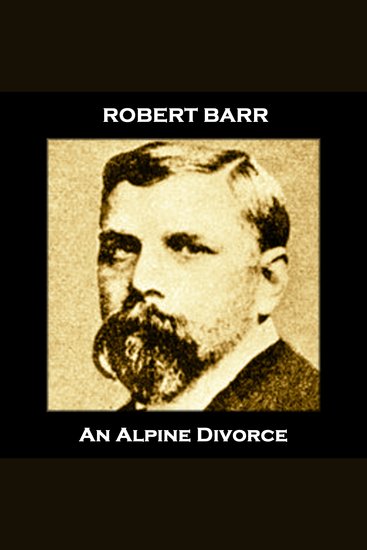
  • Alpine Divorce An - From their pens to your ears genius in every story - cover

    Alpine Divorce An - From their...

    Robert Barr

    • 0
    • 0
    • 0
    Robert Barr was born in Glasgow, Scotland on the 16th September 1849.  Five years later the family emigrated to a farm near Muirkirk in Upper Canada.  
    His early years were uneventful as the family settled into their new lives and Barr began his education. 
    A career path as a teacher opened up for him and, by 1874, he had been appointed as headmaster at the Central School at Windsor.  Concurrently he also wrote travel and humourous articles for magazines.  Within two years their success in the regional periodicals encouraged him to change careers to become a reporter and columnist. 
    In August 1876, at age 27, he married Eva Bennett and they began a family. 
    A half decade later he was the exchange editor of the ‘Free Press’ but decided to relocate to London to establish an English edition and to write fiction, which both met with much success. 
    Over the years he was a prolific writer and in 1892, along with Jerome K Jerome, he established ‘The Idler’ magazine and, just after the turn of the century, became its sole proprietor. 
    Although a number of his crime novels and short stories are parodies on Sherlock Holmes and other best-selling detectives of the time, he also wrote short stories across a whole range of subjects and genres usually with intriguing ideas and many laced with wit and humour. 
    Robert Barr died at his home in Woldingham, Surrey of heart disease on the 21st October 1912.  He was 63.
    Show book
  • A Middle-Sized Artist - From their pens to your ears genius in every story - cover

    A Middle-Sized Artist - From...

    Charlotte Perkins Gilman

    • 0
    • 0
    • 0
    Charlotte Perkins Gilman was born on 3rd July 1860 in Hartford, Connecticut, to an unaffectionate mother and a father who abandoned her and her older brother to a life of poverty. 
    Inevitably her schooling was limited and by 15 she had attended seven different schools but received only four years education.  However Charlotte was resourceful and did spend time with her father’s aunts – the suffragist Isabella Beecher Hooker and the ‘Uncle Tom Cabin’s’ author, Harriet Beecher Stowe as well as many hours at the public library studying ancient civilisations. 
    In 1878, she enrolled in classes at the Rhode Island School of Design where she met Martha Luther and they developed a close relationship until Luther married in 1881. Charlotte was devastated and detested romance and love until she met and married the artist Charles Walter Stetson.  
    Their only child, Katharine Beecher Stetson, was born in 1885 but left Charlotte with post-natal depression, then often dismissed as a case of hysteria or nerves.  Unsuited to domestic life she ruptured her life and moved to California with Katherine.  She divorced in 1894 and then sent Katharine east to live with her father and his second wife confirming that his paternal rights be acknowledged and that Katherine establish a relationship with her father. 
    After her mother died in 1893, Charlotte moved back east and became involved with her first cousin, Wall Street attorney, Houghton Gilman who she married in 1900. After his death she moved back to California, where Katherine now lived.   
    Her most popular story is ‘The Yellow Wallpaper’ which touched on her own post-partum depression and underlined the need for women to be responsible for their mental and physical well-being, as the narrator is ordered by her husband/doctor to take compete rest in her room where she is isolated and becomes obsessed with the revolting yellow wallpaper.   
    She wrote other notable short stories the best of which we also include.   
    Charlotte lectured widely for social reform, wrote important non-fiction works that questioned our patriarchal system and left a legacy as a leading and positive spokesperson for feminism.  
    She was diagnosed with incurable breast cancer in 1932 and, as she wrote in her suicide note and autobiography, she ‘chose chloroform over cancer’    
    Charlotte Perkins Gilman took her own life on 17th August 1935, aged 75, in Pasadena, California.
    Show book