Join us on a literary world trip!
Add this book to bookshelf
Grey
Write a new comment Default profile 50px
Grey
Subscribe to read the full book or read the first pages for free!
All characters reduced
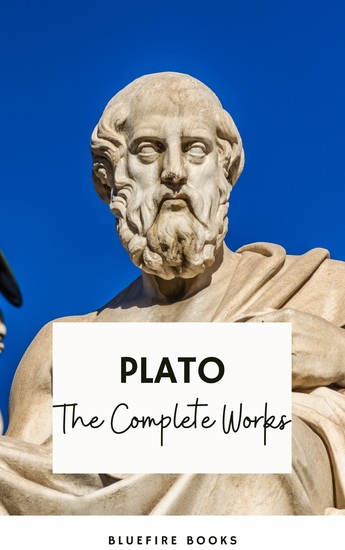
Plato: The Complete Works (31 Books) - The Definitive Collection of Philosophical Classics - cover

Plato: The Complete Works (31 Books) - The Definitive Collection of Philosophical Classics

Plato, Bluefire Books

Translator Benjamin Jowett

Publisher: Bluefire Books

  • 0
  • 0
  • 0

Summary

Embark on a profound intellectual journey with "Plato: The Complete Works," a comprehensive collection of the timeless philosophical inquiries by one of the founding figures in Western philosophy. This e-book edition provides a window into the mind of a genius whose dialogues have shaped our understanding of reality, ethics, and knowledge for over two millennia.

Delve into the depths of the human condition, exploring concepts from the nature of justice in 'The Republic,' to the dichotomy of love in 'The Symposium,' to the realms of rhetoric in 'Gorgias.' This anthology includes all of Plato's celebrated dialogues, each serving as a testament to his remarkable capacity to question and understand the world and our place within it.

Whether you're a philosophy enthusiast, a student of ancient wisdom, or someone seeking a deeper understanding of life's biggest questions, "Plato: The Complete Works" offers a treasure trove of thought-provoking insights. Uncover the enduring wisdom of Plato and let it guide you on your path of intellectual exploration.

This collection contains the following works by Plato:

Early Works
•Apology
•Charmides, or Temperance
•Crito
•Euthyphro
•Gorgias
•Hippias, Lesser
•Hippias, Greater
•Ion
•Laches
•Lysis
•Protagoras

Transitional Works
•Cratylus
•Euthydemus
•Meno
•Parmenides
•Phaedo
•Phaedrus
•Symposium
•The Republic

Middle Works
•Theaetetus

Late Works
•Critias
•Laws
•Philebus
•Sophist
•Statesman
•Timaeus

Works of Disputed Authorship
•Alcibiades I & II
•Eryxias
•Menexenus
•Theages
Available since: 05/22/2023.
Print length: 3000 pages.

Other books that might interest you

  • Trip to Russia - cover

    Trip to Russia

    Stefan Zweig

    • 0
    • 0
    • 0
    "What journey within our immediate world today would be remotely as interesting, enchanting, instructive and exciting as that to Russia? While our Europe, and especially the capitals, are subject to the inexorably contemporary process of mutual assimilation and resemblance, Russia remains utterly unparalleled." Stephen Zweig, 1928. After Stefan Zweig's bourgeois world collapsed with the First World War, he went searching for alternative forms of society, which culminated in a journey through the at that time still young Soviet Union. His perceptions and impressions during the trip remained ambivalent and moved between the generally prevailing glorification of the USSR by parts of the Western European intelligentsia and the harsh reality of life among the population. Stefan Zweig's non-political trip to the USSR is probably one of the most extraordinary travelogues of the 1920s and appears today almost 90 years later as a kaleidoscope into a past that is once again up-to-date.
    Show book
  • Liquid Sunshine - Where Words Beam To Flow Through You - cover

    Liquid Sunshine - Where Words...

    Kwantum Peakz

    • 0
    • 0
    • 0
    Liquid Sunshine bursts at the seams with emotional and passionate wit. The content is unapologetically ‘vintage’ slam poetry mixed with some mature flair and an intellectual dynamic touch peppered with gritty verses, spirituality, and raw imagery. All in all, this work will make you connect with a part of yourself you didn't know existed or have perhaps neglected to grow along with. Prepare to think and feel as you listen to recall every magical tone that brought you there. 
    The initiative represents the first poetry anthology from the author, Kwantum Peakz, in which he covers themes stemming from everyday life as well as love & relationships, social issues, spirituality, and more. In true form, as on stage as in the book, the experience will infuse your mind with steady and timely new ways of viewing life through a different lens. Ultimately, the dimension poetic words are given will help you to support, confront, beautify, question, love, defeat, or tame your own deepest thoughts in admirable fashion. This is, in part, how one's spoken words become written to flow through you.
    Show book
  • Mexico - Emiliano Zapata the Santa Muerte and Quetzalcoatl - cover

    Mexico - Emiliano Zapata the...

    Kelly Mass

    • 0
    • 0
    • 0
    This is a combo book with three different topics, all related to the beliefs, history, and culture of Mexico. The topics are the following: 
    1: Emiliano Zapata Salazar was a revolutionary in Mexico. He was a key figure in the Mexican Revolt of the years 1910 until 1920, and also the primary leader of the people's revolution in the Mexican state of Morelos and the creator of the Zapatismo agrarian movement. 
    2: Quetzalcoatl is an Aztec divine being whose name originates from the Nahuatl language and meaning "valuable snake" or "Quetzal-feathered Snake." "Quetzalcoatl, in its actual sense, means 'snake of valuable plumes,' but in the allegorical sense, 'best of men,'" said Ixtlilxóchitl, a descendant of Aztec royalty and history expert of the Nahua people, in the 17th century. 
    3: The cult image, female divine being, and folk saint Nuestra Seora de la Santa Muerte (Spanish meaning: Our Woman of the Holy Death) is a cult image, female divine being, and folk saint in Mexican Neopaganism and folk Catholicism. Her worshippers relate her with healing, security, and safe delivery to the afterlife simply because she's a personification of death. In spite of condemnation from Catholic Church leaders and, more just recently, evangelical movements, her following has grown substantially since the start of the twenty-first century.
    Show book
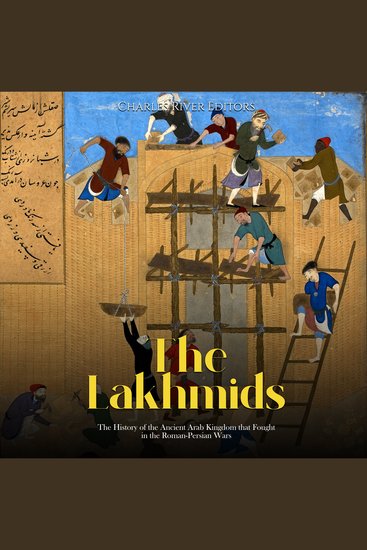
  • Lakhmids The: The History of the Ancient Arab Kingdom that Fought in the Roman-Persian Wars - cover

    Lakhmids The: The History of the...

    Editors Charles River

    • 0
    • 0
    • 0
    During the first half of the 1st millennium CE, an empire arose in Persia that extended its power and influence to Mesopotamia in the east, Arabia in the south, the Caucasus Mountains in the north, and as far east as India. This empire, known alternatively as the Sasanian Empire or Sassanid Empire, was the last of three great dynasties in Persia—the Achaemenid and the Parthian being the first two dynasties—before the rise of Islam. In fact, many scholars consider the Sasanian Empire to be the last great empire of the ancient Near East because once it had been obliterated, Islam became the standard religion of the region, ushering in the Middle Ages.  
    	The Sasanian Empire was important for a number of reasons. Besides being the last of three great Persian dynasties, they carried on many Persian cultural traditions relating to religion and kingship. The Sasanians fostered and promoted the native religion of Zoroastrianism to the point of persecuting other religions from time to time. It was during the Sasanian period that the numerous Zoroastrian hymns, prayers, and rituals were collected under one book, known as the Avesta.  
    	However, as the Eastern Roman Empire and Sasanian Empire began to expand in the region through a combination of warfare, trade, and diplomacy, a number of Arab tribes caught in the middle coalesced to form their own powerful dynasties and states, one of which was the Lakhmid Dynasty. The Lakhmid Dynasty formed in the Mesopotamian city of al-Hira in the late 3rd century or 4th century from an Arab tribe that was searching for a home, yet within 100 years, the Lakhmids had carved out a sizable state in southern Arabia that included parts of the modern nation-states of Iraq, Saudi Arabia, Kuwait, Bahrain, and Oman. The Lakhmids were able to build this dynasty through a combination of brute force and skillful diplomacy, walking a political tightrope.
    Show book
  • Pearl Harbor - The Attack That Brought America into the Global Conflict - cover

    Pearl Harbor - The Attack That...

    Sage Winters

    • 0
    • 0
    • 0
    The path to the attack on Pearl Harbor was paved by years of escalating tension between Japan, the United States, and other global powers. By the 1930s, Japan had increasingly pursued aggressive territorial expansion in Asia. The country sought to secure resources to fuel its growing industrial machine, leading to its invasion of China and the creation of the Greater East Asia Co-Prosperity Sphere. This expansionist ideology put Japan on a collision course with Western powers, particularly the United States, who had significant economic interests in the Pacific region. 
      
    As Japan moved to solidify its dominance in Asia, the United States responded with growing concern and diplomatic opposition. American policymakers viewed Japan’s actions as a direct threat to regional stability and their own economic interests, especially in China and the Philippines. By the late 1930s, the United States had placed significant economic sanctions on Japan, including an oil embargo that severely limited Japan’s access to vital resources. The embargo further strained relations between the two nations, as Japan’s need for oil and raw materials became critical to its war machine. 
      
    In response, Japan’s leadership became more determined to secure access to Southeast Asia’s oil reserves. The Japanese government began to focus on expanding its influence over the Dutch East Indies, British Malaya, and other territories rich in natural resources. Japan’s growing militarism and its desire for expansion were met with an increasingly isolationist stance from the United States. The U.S. saw Japan’s actions as imperialistic, but its leaders were hesitant to directly intervene, largely due to the isolationist sentiments that permeated American politics following World War I.
    Show book
  • To the Lighthouse by Virginia Woolf (Book Analysis) - Detailed Summary Analysis and Reading Guide - cover

    To the Lighthouse by Virginia...

    Bright Summaries

    • 0
    • 0
    • 0
    Unlock the more straightforward side of To the Lighthouse with this concise and insightful summary and analysis!This engaging summary presents an analysis of To the Lighthouse by Virginia Woolf, which centres around an ordinary family and their experiences at their holiday home. It unfolds over two days, which are set ten years apart and separated by the First World War, resulting in a profound meditation on the passage of time and the nature of memory. The novel draws heavily on Woolf's own experiences, and a number of its characters are based on members of her family. To the Lighthouse's use of stream of consciousness and constantly shifting perspectives make it a crucial work of modernism and helped to cement Woolf's position as one of the most influential members of this literary movement.Find out everything you need to know about To the Lighthouse in a fraction of the time!This in-depth and informative reading guide brings you:• A complete plot summary• Character studies• Key themes and symbols• Questions for further reflectionWhy choose BrightSummaries.com?Available in print and digital format, our publications are designed to accompany you on your reading journey. The clear and concise style makes for easy understanding, providing the perfect opportunity to improve your literary knowledge in no time.See the very best of literature in a whole new light with BrightSummaries.com!
    Show book