Join us on a literary world trip!
Add this book to bookshelf
Grey
Write a new comment Default profile 50px
Grey
Subscribe to read the full book or read the first pages for free!
All characters reduced
Plato: The Complete Works - cover

Plato: The Complete Works

Plato Plato, Classics HQ

Translator Benjamin Jowett

Publisher: Classics HQ

  • 0
  • 0
  • 0

Summary

Plato (428/427–348/347 BCE) was a Greek philosopher and mathematician of the Classic Age who founded the Academy of Athens. Noted as a student of Socrates, Plato has distinguished himself as one of the founders of Western philosophy by recording the teachings of his master and his own philosophies in 35 dialogues and 13 letters (some are disputed as spurious).

This collection contains the following works by Plato:

All books translated by Benjamin Jowett
Part 1: Early Dialogues
The Apology
Crito
Charmides
Laches
Lysis
Euthyphro
Menexenus
Ion
Gorgias
Protagoras
Meno
Part 2: Middle Dialogues
Euthydemus
Cratylus
Phaedo
Phaedrus
The Symposium
Theaetetus
Parmenides
Part 3: Late Dialogues
Sophist
Statesman
Philebus
Timaeus
Critias
Part 4: The Republic
I: Of Wealth, Justice, Moderation, and their Opposites
II: The Individual, the State, and Education
III: The Arts in Education
IV: Wealth, Poverty, and Virtue
V: On Matrimony and Philosophy
VI: The Philosophy of Government
VII: On Shadows and Realities in Education
VIII: Four Forms of Government
IX: On Wrong or Right Government, and the Pleasures of Each
X: The Recompense of Life
Part 5: The Laws
Books I–XII
Available since: 12/01/2021.
Print length: 3000 pages.

Other books that might interest you

  • The Voice of Math - Unlock Your Imagination With the Narrative of Numbers - cover

    The Voice of Math - Unlock Your...

    Dave Kester

    • 0
    • 1
    • 0
    A journey through math.Have you always wondered about the mysteries of the universe? The patterns we see in life aren’t a coincidence, and it’s taken thousands of years for us to see it.Take a dive into a book where we analyze what you think you know then turn it on its head. Did we always know that the patterns we see in seashells also exist in galaxies? Did ancient societies unlock the key to coding, and can we use principles thousands of years old to create innovations that were once just science fiction?Journey into The Voice of Math, a fascinating dive into understanding numbers, where they came from, and where they can take us, not only in laboratories, but in our daily lives.
    Show book
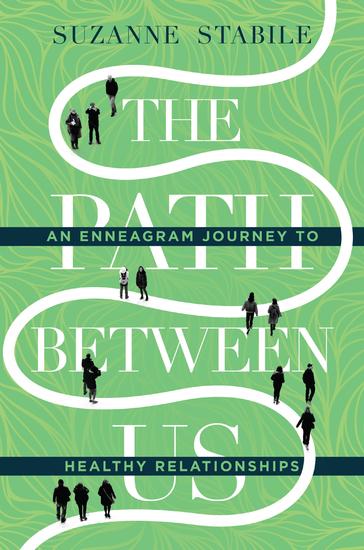
  • The Path Between Us - An Enneagram Journey to Healthy Relationships - cover

    The Path Between Us - An...

    Suzanne Stabile

    • 0
    • 0
    • 0
    Strengthen Your Relationships with the Enneagram's Wisdom
    Most of us have no idea how others see or process their experiences. And that can make relationships hard, whether with intimate partners, with friends, or in the workplace. Understanding the motivations and dynamics of these different personality types can be the key that unlocks sometimes mystifying behavior in others—and in ourselves.
    In The Path Between Us, Suzanne Stabile, coauthor, with Ian Morgan Cron, of The Road Back to You
    
    - explains the nine Enneagram types and how they behave and experience relationships
    - guides you into deeper insights about yourself, your type, and others' personalities, and
    - invites you to have healthier, more life-giving relationships through the wisdom of the Enneagram.
    The Path Between Us explores questions like:
    
    - Why do Sixes seem so intimidated and put off by Eights, who only wish the Sixes would stop mulling things over and take action?
    - Why do Fives seem so unavailable, even to their closest family and friends, while Twos seem to feel everybody else's feelings but their own and end up irritating people who don't want their help?
    - How in the world can Fours be so open and loving to you one day and restrained and distant other times?
    The Enneagram not only answers these questions but gives a way out of the usual finger pointing and judging of other people—and finding them wanting, perplexing, or impossible. Suzanne's generous, sometimes humorous, and always insightful approach reveals why all the types behave as they do. This book will help you foster more loving, mature, and compassionate relationships with everyone in your life.
    Show book
  • MIDLIFE - Humanity's Secret Weapon - cover

    MIDLIFE - Humanity's Secret Weapon

    Andrew Jamieson

    • 0
    • 0
    • 0
    Only two species of mammal have a post-reproductive life that lasts longer than their reproductive life: the killer whale, whose elders are able to sniff out food supplies over vast oceanic distances to keep their pods fed, and Homo sapiens. While the evolutionary purpose of the killer whale's extensive life seems clear, what is the point of ours?
    
    This was a question that intrigued psychoanalyst Carl Jung, who observed that if a culture is to maintain its deepest, profoundest roots while moving forward to embrace the challenges of historical and technological change, it needs to find an equilibrium between the energy, vigour and creativity of those in the ego-driven first half of life and the experience, dignity and wisdom of those in the second. But to make it to that second half of life, we need to traverse the dreaded 'middle years', when so many of us find ourselves discontent with our jobs, unhappy in our relationships and lamenting our fetishized youths.
    
    Drawing on history, psychology, science and literature, Jamieson shows just how ubiquitous, and crucial, the 'midlife crisis' is, and the devastating consequences for society at large if we continue to regard it as something we can, and should, avoid.
    Show book
  • The Making of Modern New Zealand - From Colonization to Sovereignty - cover

    The Making of Modern New Zealand...

    Lillian Brooks

    • 0
    • 0
    • 0
    Before the arrival of Europeans, New Zealand, or Aotearoa, was inhabited solely by the Māori people, who had arrived from Polynesia over a thousand years earlier. Their ancestors navigated vast distances across the Pacific Ocean, using their advanced knowledge of stars, winds, and ocean currents. They eventually settled in Aotearoa, forming distinct tribal communities known as iwi, each with its own territory, social structures, and traditions. 
    The Māori society was organized around iwi (tribes), hapū (sub-tribes), and whānau (families). Each iwi had a paramount chief, or rangatira, who was responsible for making decisions that affected the entire tribe. The rangatira was supported by a council of elders, or kaumatua, who provided guidance based on wisdom and experience. The hapū, made up of extended families, was the primary unit of Māori society, with a strong emphasis on kinship and collective responsibility. 
    Māori were deeply connected to the land, or whenua, and believed that their ancestors, the atua, or gods, imbued the earth, sea, and sky with sacred energy. This connection formed the foundation of Māori spiritual beliefs, which revolved around whakapapa (genealogy), mana (spiritual power or authority), and tapu (sacredness). Their spiritual worldview tied their identity to the land and natural resources, and they saw themselves as stewards, responsible for the care and preservation of the environment.
    Show book
  • Songhai Empire - The Largest Empire in African History - cover

    Songhai Empire - The Largest...

    Rolf Hedger

    • 0
    • 0
    • 0
    The Songhai people trace their origins to the fertile banks of the Niger River, an area that has supported human settlement and civilization for thousands of years. Their early history is closely tied to the region of Gao, which would later become the heart of one of Africa’s most powerful empires. The Niger River provided the necessary resources for agriculture, fishing, and trade, enabling the growth of organized communities that would form the foundation of Songhai society. 
    The earliest known inhabitants of the region were the proto-Songhai, who are believed to have settled along the Niger River as early as the first millennium CE. These people were primarily farmers, herders, and fishermen, utilizing the rich floodplains of the river to cultivate crops and sustain livestock. Over time, they developed a distinct cultural identity, characterized by their language, traditions, and spiritual beliefs. Their society was structured around small communities led by local chieftains, who governed based on kinship ties and communal customs. 
    Gao, the most significant early settlement of the Songhai people, emerged as a crucial trading hub by the eighth century. Arab and Berber merchants, who traveled along the trans-Saharan trade routes, recognized its strategic importance as a commercial center. The exchange of goods such as gold, salt, ivory, and kola nuts attracted traders from North Africa and beyond, integrating Gao into the wider economic networks of the region. As commerce flourished, the settlement expanded, and its rulers gained influence by controlling trade and forming alliances with neighboring peoples.
    Show book
  • Meditations (meditations marcus aurelius) - cover

    Meditations (meditations marcus...

    Marcus Aurelius

    • 0
    • 0
    • 0
    “Meditations” by Marcus Aurelius is a timeless collection of philosophical reflections written by the Roman Emperor during moments of solitude and self-examination. Rooted in Stoic philosophy, the work explores themes such as self-discipline, mortality, resilience, and the pursuit of virtue amidst the burdens of leadership. This edition features the classic English translation by Meric Casaubon, whose 17th-century prose preserves the gravity, elegance, and moral clarity of the original text. Casaubon’s translation offers readers a dignified and reflective tone that mirrors the emperor’s own austere worldview, making it ideal for those seeking both philosophical insight and a literary experience steeped in historical character. 
    Ask ChatGPT
    Show book