Join us on a literary world trip!
Add this book to bookshelf
Grey
Write a new comment Default profile 50px
Grey
Subscribe to read the full book or read the first pages for free!
All characters reduced
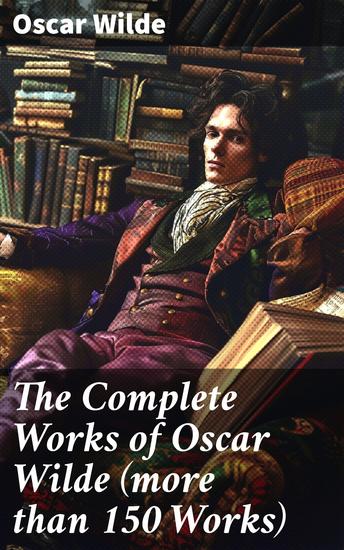
The Complete Works of Oscar Wilde (more than 150 Works) - Captivating Wit and Social Commentary: A Literary Collection by a Victorian Icon - cover

The Complete Works of Oscar Wilde (more than 150 Works) - Captivating Wit and Social Commentary: A Literary Collection by a Victorian Icon

Oscar Wilde

Publisher: Good Press

  • 0
  • 0
  • 0

Summary

The Complete Works of Oscar Wilde is a compendium that showcases the multifaceted genius of one of the most celebrated playwrights and literary figures of the late 19th century. This extensive compilation encompasses Wilde's poetry, plays, tales, and critical essays, crafted with his quintessential wit and poignant social commentary. The distinctive style of Wilde's writing, marked by his epigrammatic brilliance and engaging prose, invites readers to explore themes of aestheticism, identity, and morality against the backdrop of Victorian societal norms, revealing the paradoxes and contradictions of human nature. Oscar Wilde, an Irish novelist, poet, and playwright, emerged from the aesthetic movement which valued art for art's sake. Known for his flamboyant personality and keen insights into society, Wilde's experiences with love, loss, and scandal permeate his works. His own life of defiance against societal conventions informs the spirited critiques found within his writings, making his works not only a reflection of his time but also a timeless exploration of the human experience. Readers are encouraged to immerse themselves in The Complete Works of Oscar Wilde for a profound literary experience that exemplifies both the brilliance and the tragedy of one of literature'Äôs most iconic figures. This collection promises to enrich your understanding of the complexities of contemporary society and the enduring nature of art and individualism.
Available since: 12/18/2023.
Print length: 2121 pages.
Other books that might interest you

  • Anne Boleyn - Her Execution for Treason and Her Political and Religious Upheaval - cover

    Anne Boleyn - Her Execution for...

    Kelly Mass

    • 0
    • 0
    • 0
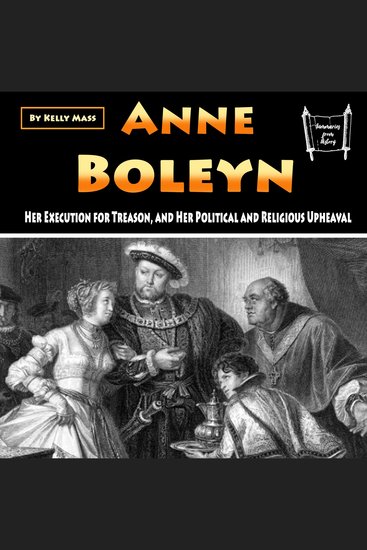
    As King Henry VIII's 2nd marriage partner, Anne Boleyn ruled as Queen of England from 1533 till 1536. Her marriage and execution by beheading for treason and other criminal offenses made her an essential player in the political and religious chaos that identified the start of the English Reformation. Anne was the daughter of Thomas Boleyn, first Earl of Wiltshire, and his marriage partner, Girl Elizabeth Howard. She got her education in Holland and France, mainly as a housemaid of honor to Queen Claude of France. Anne went to England in early 1522, meaning to wed her Irish cousin James Butler, 9th Earl of Ormond; nevertheless, the marriage failed, and she found work as a housemaid of honor to Henry VIII's partner, Catherine of Aragon.Anne was secretly betrothed to Henry Percy, child of Henry Percy, fifth Earl of Northumberland, in early 1523, but their engagement was aborted when the Earl refused to support them. In January 1524, Cardinal Thomas Wolsey opposed the match, and Anne was returned to Hever Castle. Henry VIII started his courtship of Anne in the month of February or March 1526. She withstood his efforts to charm her, declining to follow in her sister Mary's steps and become his girlfriend. Henry quickly focused his exertions on having his marriage to Catherine annulled so that he may wed Anne. Wolsey could not encourage Pope Clement VII to annul Henry's marriage, and Anne played a part in his failure and death in the year 1529-- 30. When it ended up being apparent that Clement wouldn't cancel the marriage, Henry and his therapists, and that includes Thomas Cromwell, started the process of deteriorating the Catholic Church in England by shutting abbeys and nunneries. Henry made Anne the Marquess of Pembroke in the year 1532.There is more, way more, to Anne Boleyn. In this book, we won’t leave you in the dark.
    Show book
  • George Washington Carver - A Biography of a Scientist Botanist and Former Slave - cover

    George Washington Carver - A...

    John Perry

    • 0
    • 0
    • 0
    Christian Encounters, a series of biographies from Thomas Nelson Publishers, highlights important lives from all ages and areas of the Church. Some are familiar faces. Others are unexpected guests. But all, through their relationships, struggles, prayers, and desires, uniquely illuminate our shared experience. 
    A generation of 20th-century Americans knew him as a gentle, stoop-shouldered old black man who loved plants and discovered more than a hundred uses for the humble peanut. George Washington Carver goes beyond the public image to chronicle the adventures of one of history's most inspiring and remarkable men. 
    George Washington Carver was born a slave. After his mother was kidnapped during the Civil War, his former owners raised him as their own child. He was the first black graduate of Iowa State, and turned down a salary from Thomas Edison higher than the U.S. President to stay at the struggling Tuskegee Institute, where he taught and encouraged poor black students for nearly half a century. 
    Carver was an award-winning painter and acclaimed botanist who saw God the Creator in all of nature. The more he learned about the world, the more convinced he was that everything in it was a gift from the Almighty, that all people were equal in His sight, and that the way to gain respect from his fellow man was not to demand it, but to earn it.
    Show book
  • Guy Gibson: The Life and Legacy of the Royal Air Force’s Most Distinguished Bomber Pilot during World War II - cover

    Guy Gibson: The Life and Legacy...

    Editors Charles River

    • 0
    • 0
    • 0
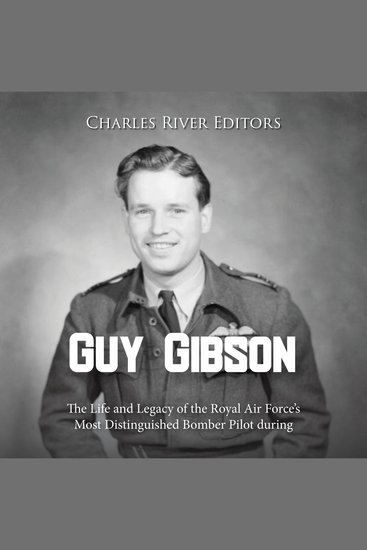
    Given the RAF’s importance, it should come as no surprise that some of the pilots ranked among Britain’s most recognized war heroes, and Guy Gibson remains one of the most famous and highly decorated British soldiers in World War II. His exploits in the RAF as the leader of the audacious raid to blow up German dams in May 1943 remain renowned, and for generations of British boys after the war, he served as the benchmark of a legendary hero. His tragic death at the young age of 26 only served to deepen his mythology, but his war record was impressive even before his most famous missions, with three operational tours of duty under his belt. 
    The mythmaking aside, Gibson was a complex and controversial character, probably caused, in part, by a turbulent and disrupted upbringing. Although his bravery, self-sacrifice, and leadership in battle were undeniable and highly impressive, he could be demanding and difficult to get along with. It is probably fair to say he was not universally loved by the crews and service personnel who served alongside him, and he after the Dam Busters raid, he embarked on a months-long tour of the United States and Canada that many (including Air Officer Commanding Bomber Commander Arthur “Bomber” Harris) felt had gone to his head slightly. After the raid and the fame, he drifted somewhat, having been forbidden from flying in further operations (which he bypassed in the end). He wrote a book about his exploits as a bomber pilot, Enemy Coast Ahead, and was interviewed on radio programs. He flirted with politics, applying for and succeeding in becoming the Conservative Party’s prospective candidate for Macclesfield in 1944 before withdrawing, claiming the war still required his attention. After D-Day on June 6, 1944, Gibson seemed to feel an urgent need to get back into operations for fear of missing out.
    Show book
  • Escape from Appalachia - Who Will Rescue Me - cover

    Escape from Appalachia - Who...

    Mary Frances Barron

    • 0
    • 0
    • 0
    Told through the eyes of a witty, outgoing, and curious little girl, Francie beautifully weaves together personal narratives and historical information about the ever-present American tragedy known as Appalachia. She peels back layers of her early life while walking us through the patches where coal miners and their families once lived, the impact of surviving in a contaminated environment, and the everyday threat of pollution, addiction, toothlessness, chronic depression, and abuse. An area where drugs and alcohol numb the pain of reality. Francie portrays the mindset and brokenness of the people and the hopelessness that can come from living in isolation and poverty. Her mother would daily herald this mantra, "One day you kids will get out of here."A delightful story that brings the reader to laughter and tears. It showcases an irrepressible drive to escape the grip of Appalachia on its sons and daughters.This book shows how a resilient spirit, undervalued, broken hearted, abandoned, and betrayed, can be restored.
    Show book
  • The Serpent's Tooth - A Memoir - cover

    The Serpent's Tooth - A Memoir

    Nancy Marston

    • 0
    • 0
    • 0
    The Serpent's Tooth takes the listener on a hurriedly-paced, true journey through Hollywood, addiction, lottery jackpots, and courtroom drama—that ultimately rips a family apart. 


    The Serpent's Tooth is the memoir of a courageous mother who fights tirelessly for the life of her daughter—a successful young film actress led criminally astray by a controlling older man—and her husband—a highly-decorated fire captain who falls prey to drugs. This riveting tale of betrayal, addiction, and a lottery jackpot which leads to a dramatic courtroom trial. The story unfolds with famous attorneys battling over millions in legal fees, when greed rears its ugly head and becomes the primary motive. Through all the deceit and lies, a hard-edged judge is left to make the final decision as to who the rightful owner of the $5.2 million-dollar lottery prize is. Filled with emotions from anger and hate to grief and loss, the listener is wondering how this all could have ever happened. In the end, who is left standing, who falls, and who was ultimately to blame?
    Show book
  • God Sees the Truth But Waits - From their pens to your ears genius in every story - cover

    God Sees the Truth But Waits -...

    Leo Tolstoy

    • 0
    • 0
    • 0
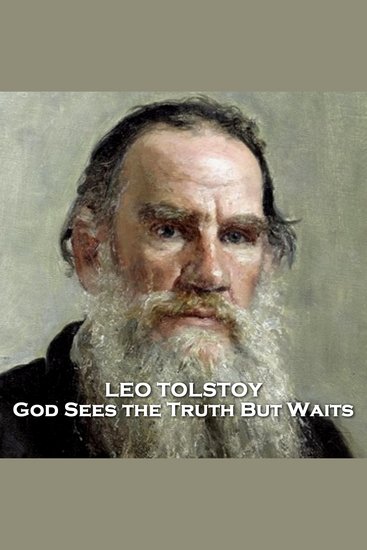
    Leo Tolstoy was born in 1828 in the Russian province of Tula to a wealthy noble family. As a child, he had private tutors but he showed little interest in any formal education. When he went to the University of Kazan in 1843 to study oriental languages and law, he left without completing his courses.  Life now was relaxed and idle but with some writing also taking place.  Gambling debts forced an abrupt change of path and he joined the army to fight in the Crimean War.  He was commended for his bravery and promoted but was appalled at the brutality and loss of life.  He recorded these and other earlier experiences in his diaries which formed the basis of several of his works. 
    In 1852 ‘Childhood’ was published to immediate success and was followed by ‘Boyhood’ and ‘Youth’. 
    His experience in the army and the horrors he witnessed resulted in ‘The Cossacks’ in 1862 and the trilogy ‘Sevastopol Tales’. After the war he travelled around Europe, visiting London and Paris and meeting such luminaries as Victor Hugo and Charles Darwin.  
    It was now that Tolstoy began his masterpiece, ‘War and Peace’. Published in 1869 it was an epic work that changed literature. He quickly followed this with ‘Anna Karenina’.  
    These successes made Tolstoy rich and helped him accomplish many of his dreams but also brought problems as he grappled with his faith and the lot of the oppressed poor. These revolutionary views became so popular that the authorities now kept him under surveillance.  
    He led a life of asceticism and vegetarianism and put his socialist ideals into practice by establishing numerous schools for the poor and food programmes. He also believed in giving away his wealth, which caused much discord with his wife.  
    His writing continued to bring forth classics such as ‘The Death of Ivan Ilyich’ and many brilliant and incisive short stories such as ‘How Much Land Does A Man Need’.  
    In 1901 Tolstoy was excommunicated from the Church and controversially deselected for the Nobel Prize for Literature. 
    Whilst undertaking a pilgrimage by train in October 1910 with his daughter Aleksandra he caught pneumonia in the nearby town of Astapovo.  Leo Tolstoy died on November 9th, 1910, he was 82.
    Show book