Join us on a literary world trip!
Add this book to bookshelf
Grey
Write a new comment Default profile 50px
Grey
Subscribe to read the full book or read the first pages for free!
All characters reduced
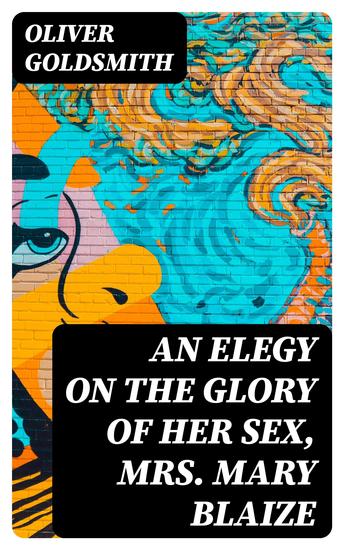
An Elegy on the Glory of Her Sex Mrs Mary Blaize - cover

An Elegy on the Glory of Her Sex Mrs Mary Blaize

Oliver Goldsmith

Publisher: DigiCat

  • 0
  • 0
  • 0

Summary

Oliver Goldsmith's "An Elegy on the Glory of Her Sex, Mrs. Mary Blaize," is a poignant and satirical tribute to a fictional character that reflects the author's distinctive blend of wit, sentiment, and reflective observation. Set against the backdrop of 18th-century societal norms, Goldsmith employs a playful yet elegiac tone to navigate themes of love, loss, and the ephemeral nature of human glory. The poem's rich, lyrical quality is punctuated by Goldsmith's trademark irony, as he juxtaposes the idealized virtues of Mrs. Blaize with the harsh realities of her life, inviting readers to contemplate the struggles faced by women of his time. Goldsmith, a key figure in the 18th-century literary landscape, often drew inspiration from his biographical experiences and observations of contemporary society. His diverse background, which included roles as a physician, playwright, and poet, lent him a unique perspective on the gender dynamics and social commentary prevalent in his era. The creation of Mrs. Blaize serves as a medium through which Goldsmith articulates a subtle critique of societal expectations surrounding women, revealing both his empathy and sharp insight into human relationships. Readers seeking a rich exploration of gender and society, tempered with Goldsmith's characteristic humor and elegance, will find "An Elegy on the Glory of Her Sex, Mrs. Mary Blaize" not only an engaging literary experience but also a thoughtful reflection on the persistent complexities of identity and honor in the face of societal constraints.
Available since: 09/16/2022.
Print length: 14 pages.
Other books that might interest you

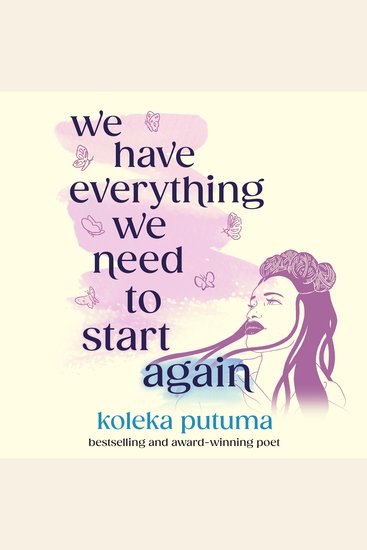
  • We Have Everything We Need To Start Again - Empowering poems to bring you hope - cover

    We Have Everything We Need To...

    Koleka Putuma

    • 0
    • 0
    • 0
    Press both feet to the ground.  Place your hand on your heart. You are brave and capable. It will always be your time.  An empowering and uplifting collection of poems from groundbreaking and award-winning poet Koleka Putuma, about figuring out who you are and embracing it.  With words to affirm, this is the ideal companion to hold your hand while you navigate all the big questions, discoveries and transitions of young adulthood. Perfect for fans of Rupi Kaur, Nikita Gill and Elizabeth Acevedo.
    Show book
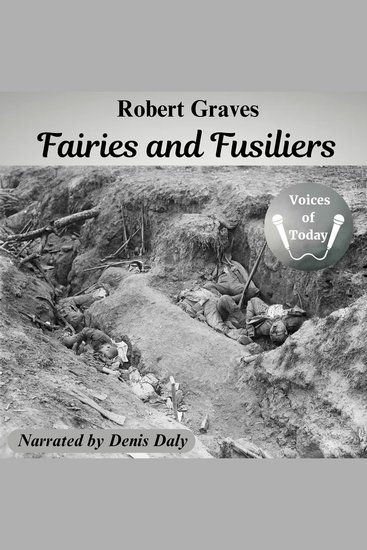
  • Fairies and Fusiliers - cover

    Fairies and Fusiliers

    Robert Graves

    • 0
    • 0
    • 0
    Fairies and FusiliersBy Robert GravesNarrated by Denis DalyPoet, soldier, novelist, translator and critic Robert Graves (1895 - 1985) was deeply familiar with both war and death.  Three times during his life Graves was considered to be on the point of death due to serious illness.  One of these was after his participation in the Battle of the Somme, after which he had been actually pronounced dead due to severe wounding.Graves enlisted as soon as the First World War was declared, and was rapidly promoted to lieutenant and later to captain.  Among his fellow soldiers was another poet, Siegfried Sassoon.  Together with Wilfred Owen, who did not survive, Graves and Sassoon represented the new generation of war poets - perceptive critical surveyors of the horrific and wasteful futility of modern warfare, drawing their judgements from bitter personal experience. Fairies and Fusiliers is a collection of 47 short poems and was dedicated to Graves' former regiment, the Royal Fusiliers.Production copyright 2024 Voices of Today
    Show book
  • Gentle Dew - cover

    Gentle Dew

    Kingsley D. Amooh

    • 0
    • 0
    • 0
    This is a 24-poem collection that provides solace, comfort, and inspiration. This collection was designed to serve as balm to the heart, anchor for the soul and food for the mind. You will be teleported to deeper places of your own self. Your reviews will help send this special package to many more and will help me in my upcoming full poetry collection. Thank you. LuvzyUrPoet.
    Show book
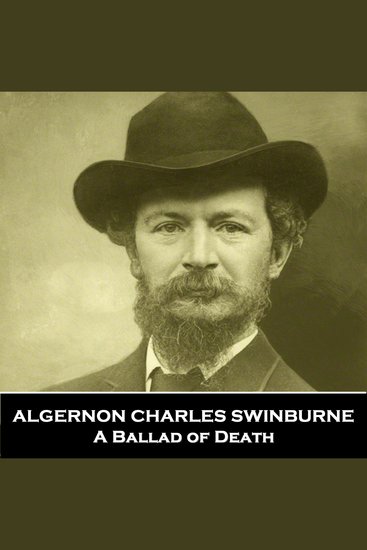
  • A Ballad of Death - A poetic examination of grief and lost love - cover

    A Ballad of Death - A poetic...

    Algernon Charles Swinburne

    • 0
    • 0
    • 0
    Algernon Charles Swinburne was born on April 5th, 1837, in London, into a wealthy Northumbrian family.  He was educated at Eton and at Balliol College, Oxford, but did not complete a degree.  
    In 1860 Swinburne published two verse dramas but achieved his first literary success in 1865 with Atalanta in Calydon, written in the form of classical Greek tragedy. The following year "Poems and Ballads" brought him instant notoriety. He was now identified with "indecent" themes and the precept of art for art's sake.  
    Although he produced much after this success in general his popularity and critical reputation declined. The most important qualities of Swinburne's work are an intense lyricism, his intricately extended and evocative imagery, metrical virtuosity, rich use of assonance and alliteration, and bold, complex rhythms.  
    Swinburne's physical appearance was small, frail, and plagued by several other oddities of physique and temperament. Throughout the 1860s and 1870s he drank excessively and was prone to accidents that often left him bruised, bloody, or unconscious. Until his forties he suffered intermittent physical collapses that necessitated removal to his parents' home while he recovered.  
    Throughout his career Swinburne also published literary criticism of great worth. His deep knowledge of world literatures contributed to a critical style rich in quotation, allusion, and comparison. He is particularly noted for discerning studies of Elizabethan dramatists and of many English and French poets and novelists. As well he was a noted essayist and wrote two novels. 
    In 1879, Swinburne's friend and literary agent, Theodore Watts-Dunton, intervened during a time when Swinburne was dangerously ill. Watts-Dunton isolated Swinburne at a suburban home in Putney and gradually weaned him from alcohol, former companions and many other habits as well.  
    Much of his poetry in this period may be inferior but some individual poems are exceptional; "By the North Sea," "Evening on the Broads," "A Nympholept," "The Lake of Gaube," and "Neap-Tide."  
    Swinburne lived another thirty years with Watts-Dunton. He denied Swinburne's friends access to him, controlled the poet's money, and restricted his activities. It is often quoted that 'he saved the man but killed the poet'.  
    Swinburne died on April 10th, 1909 at the age of seventy-two.
    Show book
  • Poets on Poetry - The most artistic and creative form of writing we have a selection of poems from those artistic and creative minds about poetry itself - cover

    Poets on Poetry - The most...

    Matthew Arnold, Sarojini Naidu,...

    • 0
    • 0
    • 0
    Who has not tried to write a poem?  The poetic form of words seems to be rather easy.  In its basic form, which we learn as children, the rhyming couplet is, in a child’s written and spoken words, pure joy - success!  In the hands of a Shakespeare it is magnificent with a reach and understanding that the rest of us enjoy but are far from even attempting.    
     
    As we listen to various poetic forms, schools and movements we can only react with wonder at how these innocent words are assembled to create symphonies of ideas, wonder and revelation.  The emotions they seek to invoke can be anything from happiness to sadness, from love to revulsion. 
     
    Arnold, Stevens, Keats, Akhmatova, Browning, Herrick, Hood, Killigrew are but a few of the roll-call of wordsmiths who with mere words create ravenous beauty that reveals tender lines and sensitive verse on how and why they are who they are. 
     
    01 - Poets on Poetry - An Introduction 
    02 - When I Write Poems by Anna Akhmatova 
    03 - Of My Poems by Thomas MacDonagh 
    04 - An Apology For Her Poetry by Duchess of Newcastle, Margaret Cavendish 
    05 - Sonnet 76 - Why is My Verse So Barren of New Pride by William Shakespeare 
    06 - The Austerity of Poetry by Matthew Arnold 
    07 - Of Modern Poetry by Wallace Stevens 
    08 - Poetry by Claude McKay 
    09 - The Poetry of Keats by George Meredith 
    10 - Future Poetry by Alice Meynell 
    11 - Sonnet 17 - Who Will Believe My Verse in Time to Come by William Shakespeare 
    12 - Poetic Eggs by Ezra Pound 
    13 - Poem by William Carlos Williams 
    14 - On the Grasshopper and Cricket by John Keats 
    15 - Ode on the Poetical Character by William Collins 
    16 - Introduction and Conclusion of a Long Poem by Alan Seeger 
    17 - A True Account of the Birth and Conception of a Late Famous Poem by Charles Sackville, Earl Of Dorset 
    18 - The Poem That Took the Place of a Mountain by Wallace Stevens 
    19 - The Poet and the Poem by Elizabeth Stuart Phelps 
    20 - Of English Verse by Edmund Waller 
    21 - Love, The Soul of Poetry by Anne Killigrew 
    22 - Why, If All Poets Crown Their Love with Verse by Emily Hickey 
    23 - Verse Making Was the Least of My Virtues by Robert Browning 
    24 - The Poet's Love-Song by Sarojini Naidu 
    25 - A Letter to a Brother of the Pen in Tribulation by Aphra Behn 
    26 - Not Every Day Fit for Verse by Robert Herrick 
    27 - On the Poetic Muse by George Moses Horton 
    28 - Sonnet - Written in Keats by Thomas Hood 
    29 - Sonnet 86 -Was It the Proud Full Sail of His Great Verse by William Shakespeare 
    30 - Song in Imitation of Shakespeare by James Beattie 
    31 - The High-toned Old Christian Woman by Wallace Stevens 
    32 - Poetry is a Destructive Force by Wallace Stevens 
    33 - To My Most Dearly Loved Friend Henry Reynolds Esquire of Poets and Poesie by Michael Drayton 
    34 - His Poetry His Pillar by Robert Herrick 
    35 - To Live Merrily and to Trust to Good Verses by Robert Herrick 
    36 - Poem for the End by Ivor Gurney
    Show book
  • All My Sons - cover

    All My Sons

    Arthur Miller

    • 0
    • 0
    • 0
    World War II is over and a family, mourning a son missing in action, plants a memorial tree and tries to go on with their lives. A storm blows down the tree and a devastating family secret is uprooted, setting the characters on a terrifying journey towards truth. Based upon a true story, All My Son is a classic drama by one of America’s greatest playwrights. 
     
    At the heart of All My Sons lies a scathing criticism of the American Dream. After its publication Arthur Miller was called to appear before the House Un-American Activities Committee, where he famously refused to give evidence against others. 
     
    Tony Award Winner for Best Author (1947) 
     
    AudioFile Magazine review: “One of the strengths of L.A. Theatre Works is their skill at selecting quality plays previously unavailable on audio. Arthur Miller’s 1947 breakthrough play is at once a postwar family drama, an indictment of false societal values and a searing tragedy. James Farentino plays businessman Joe Keller with a gruff bluster that sometimes masks a sacrificial love for his son Chris (Arye Gross), an idealist home from the war. Julie Harris, as the mother, Kate, is alternately needy, demanding, lovingly solicitous and willfully blind to the past. The live responses of the audience underscore the touches of humor that season the early acts of this landmark American drama.” 
     
    An L.A. Theatre Works full-cast performance featuring James Farentino, Arye Gross, Julie Harris, Mitchell Hebert, Naomi Jacobson, Barbara Klein, Paul Morella, Michaeleen O'Neil, Nathan Taylor and Jerry Whiddon.
    Show book