
Join us on a literary world trip!
Add this book to bookshelf
Grey
Write a new comment Default profile 50px
Grey
Subscribe to read the full book or read the first pages for free!
All characters reduced
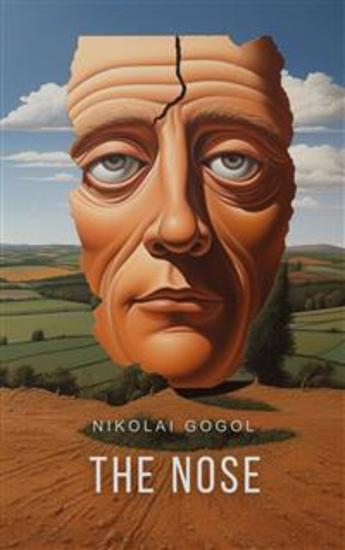
The Nose - cover

The Nose

Nikolai Gogol

Publisher: Interactive Media

  • 0
  • 0
  • 0

Summary

"The Nose" by Nikolai Gogol is a satirical short story that follows Collegiate Assessor Kovalyov, who wakes up one day to discover that his nose has inexplicably vanished. Even more bizarrely, he encounters his nose in the form of a higher-ranking official around town. The story explores themes of identity, societal absurdity, and the disconnection between one's self-image and how others perceive them. Gogol's tale is a humorous and surreal commentary on the rigidity and absurdities of social hierarchies.
Available since: 01/04/2024.
Print length: 36 pages.

Other books that might interest you

  • Character Building (Unabridged) - cover

    Character Building (Unabridged)

    Booker T. Washington

    • 0
    • 0
    • 0
    Booker T. Washington has been regarded as the leading figure in African American life, and as the man who brought his people from slavery to unfettered economic, political, and social involvement in the American mainstream. He has also been strongly criticized for advancing the cause of racial accommodation when the political agenda dictated the development of an independent black standpoint in all areas of the industrial structure. This agenda went far beyond educational reform and agrarian participation.
    Character Building first appeared in 1902. While enormous changes have occurred in all phases of African American rights and responsibilities, Booker T. Washington's broad outlines on building moral character have remained intact. Washington's book can be viewed as a Dale Carnegie volume on How to Win Friends and Influence People_black and white_as noted by the very title of the chapters: "Helping Others," "Influencing by Example," "Education that Educates," "The Gospel of Service," etc.
    For those in search of the ideological roots of black life in post-slavery times, this text will be a reminder of where the American nation has come from and, arguably, where it is going.
    Show book
  • The Adventure of the Dancing Men - cover

    The Adventure of the Dancing Men

    Arthur Conan Doyle

    • 0
    • 0
    • 0
    The Adventure of the Dancing Men, a Sherlock Holmes story written by Sir Arthur Conan Doyle, is one of 13 stories in the cycle published as The Return of Sherlock Holmes in 1905.Doyle ranked "The Adventure of the Dancing Men" third in his list of his twelve favorite Holmes stories. This is one of only two Sherlock Holmes short stories where Holmes' client dies after seeking his help. The other is "The Five Orange Pips", part of The Adventures of Sherlock Holmes.Holmes's solution to the riddle of the dancing men rests on reasoning that closely resembles that of Legrand in Poe's "The Gold Bug."The original title was "The Dancing Men," when it was published as a short story in The Strand Magazine in December 1903Famous works of the author Arthur Conan Doyle: A Study in Scarlet, The Sign of the Four, The Adventures of Sherlock Holmes, The Memoirs of Sherlock Holmes, The Hound of the Baskervilles, The Return of Sherlock Holmes, The Valley of Fear, His Last Bow, The Case-Book of Sherlock Holmes, Stories of Sherlock Holmes, The Lost World.
    Show book
  • Beyond Good and Evil - Prelude to a Philosophy of the Future - cover

    Beyond Good and Evil - Prelude...

    Friedrich Wilhelm Nietzsche

    • 0
    • 0
    • 0
    A caustic criticism of nearly every philosophic predecessor and a challenge of traditionally held views on right and wrong, Friedrich Nietzsche’s Beyond Good and Evil paved the way for modern philosophical thought. Through nearly three hundred transformative aphorisms, Nietzsche presents a worldview in which neither truth nor morality are absolutes, and where good and evil are not opposites but counterparts that stem from the same desires. This work dramatically rejects the tradition of Western thought with its notions of truth and God, good and evil. Nietzsche demonstrates that the Christian world is steeped in a false piety and infected with a "slave morality." With wit and energy, he turns from this critique to a philosophy that celebrates the present and demands that the individual impose their own "will to power" upon the world. Beyond Good and Evil was a foundational text for early twentieth-century thinkers, including philosophers, psychologists, novelists, and playwrights. Today’s readers will delight in Nietzsche’s pithy wit and irony while gaining a deeper understanding of his core ideology.
    Show book
  • To the Lighthouse - cover

    To the Lighthouse

    Virginia Woolf

    • 0
    • 0
    • 0
    This landmark work of modernist literature explores the inner lives of a typical English family while vividly exploring the nature of loss and memory. Following her celebrated masterpiece Mrs. Dalloway, Virginia Woolf continues to develop her groundbreaking stream-of-consciousness technique in To the Lighthouse. Every summer, the Ramsey family returns to the Isle of Skye for a tranquil holiday, where the imposing lighthouse seems to promise everlasting constancy. But as their idyllic holiday confronts the realities of World War I, the Ramseys must also face the inescapable nature of change.  A profound evocation of marriage, parenthood, aging, and grief, To the Lighthouse is regarded as one of the greatest novels of the twentieth century.
    Show book
  • The Haunted Man and The Ghost’s Bargain - cover

    The Haunted Man and The Ghost’s...

    Charles Dickens

    • 0
    • 0
    • 0
    Professor Redlaw, haunted by sorrowful memories, encounters a spectral double offering to erase his pain. Accepting the ghost’s bargain unravels hidden consequences, affecting those around him. Through spectral encounters and moral revelations, Dickens' tale explores the enduring power of memory, forgiveness, and the human spirit's resilience.
    Show book
  • The Lightning-Rod Man - cover

    The Lightning-Rod Man

    Herman Melville

    • 0
    • 0
    • 0
    After spending the summer of 1853 in the Berkshire Mountains, where he supposedly had a real life encounter with a lightning-rod salesman, Melville published “The Lightning-Rod Man." At the end of this short story, the lightning-rod salesman is exposed for the fraud that he is. However, that will not keep his successors from fanning out to the Middle West, where lightning storms abound and farmers were gullible. On another level, the story can be interpreted as a confrontation between Good and Evil. Through description and diction, the narrator is understood as a follower of God, someone who believes in The Almighty watching over him. On the other hand, the lightning-rod man is seen as a negative character, someone who only has faith in the product he's peddling.
    Show book