Rejoignez-nous pour un voyage dans le monde des livres!
Ajouter ce livre à l'électronique
Grey
Ecrivez un nouveau commentaire Default profile 50px
Grey
Abonnez-vous pour lire le livre complet ou lisez les premières pages gratuitement!
All characters reduced
The Prince - cover

The Prince

Niccolò Machiavelli

Traducteur Ninian Hill Thomson

Maison d'édition: Classics HQ

  • 0
  • 0
  • 0

Synopsis

Contains Active Table of Contents (HTML) and ​in the end of book include a bonus link to the free audiobook.

"The Prince" is a political treatise by the Florentine public servant and political theorist Niccolò Machiavelli. Originally called De Principatibus (About Principalities), it was written in 1513, but not published until 1532, five years after Machiavelli's death. The treatise is not representative of the work published during his lifetime, but it is the most remembered, and the work responsible for bringing "Machiavellian" into wide usage as a pejorative term. It has also been suggested by some critics that the piece is, in fact, a satire.
Disponible depuis: 07/02/2022.
Longueur d'impression: 173 pages.
D'autres livres qui pourraient vous intéresser

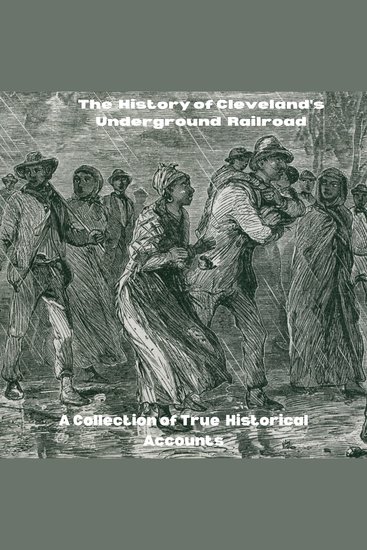
  • The History of Cleveland's Underground Railroad - A Collection of True Historical Accounts - cover

    The History of Cleveland's...

    Herbert Addison Burns

    • 0
    • 0
    • 0
    This is a collection of documented records of the Underground Railroad in Cleveland, Ohio. This audiobook has an enjoyable storybook style along with a vivid description of the political culture which set the tone for the underground railroad, in addition are the names of railroad conductors, fugitive slaves, and conflicting views within the church and the Ohio legislature in the 19th century.
    Voir livre
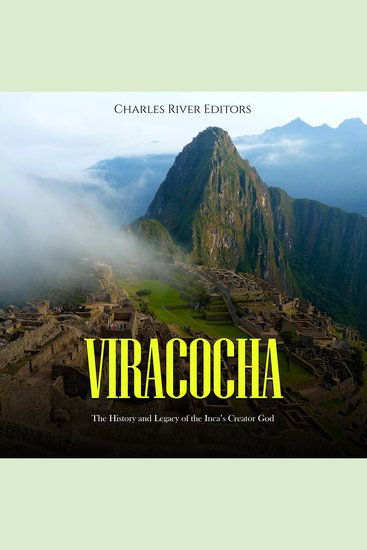
  • Viracocha: The History and Legacy of the Inca’s Creator God - cover

    Viracocha: The History and...

    Editors Charles River

    • 0
    • 0
    • 0
    Although the Inca’s oral traditions suggested that the history of the region began with their empire, the various gods and the religious ceremonies of the peoples that inhabited the Inca’s lands before their arrival were assimilated into the Inca Empire and were incorporated into Inca religion. However, under Inca rule, all those gods were to be subordinate to those gods of the Incas themselves, so as to ensure that imperial authority was clear and without dispute among all quarters of the empire.  
    	Viracocha was the primary god in the Inca pantheon as the origin and creator of all things. His son, the god Inti, or the Sun, was married to Mama Quilla, the Moon, who was also created by Viracocha. According to one myth, Inti was the father of Manco Cápac, the founder of the Inca ruling dynasty, but it was believed by some that Viracocha himself fathered Manco Cápac. In practice, the Inca centered their religious worship on Inti, and this god's High Priest was the second most important person in Inca society. The god Inti was honored at an annual celebration held each June, and the Inti Raymi festival included sacrifices, feasts and sexual abstinence. This cosmology was imposed throughout the empire, and temples to the Sun were constructed and staffed by religious officials who were allotted farmland called “lands of the Sun.” Other local cults were provided with produce from these lands as well.  
    	The main temple of Inca religion was the Coricancha or Sun Temple in Cuzco, in which was kept the great golden disk of the Sun. The disk was appropriated by the Spanish in 1571 and sent off to the Pope. While it has disappeared, perhaps lost somewhere during the tortuous route to Spain, it remains alive in the fabulous world of adventure story writers, New Age mystics and manufacturers of souvenirs. It became a major element in the iconography of the 19th century independence movement in South America.
    Voir livre
  • Ring of Fire - High-Stakes Mining in a Lowlands Wilderness - cover

    Ring of Fire - High-Stakes...

    Virginia Heffernan

    • 0
    • 0
    • 0
    A valuable discovery under the world’s second-largest temperate wetland and in the traditional lands of the Cree and Ojibway casts light on the growing conflict among resource development, environmental stewardship, and Indigenous rights
    		 
    When prospectors discovered a gigantic crescent of metal deposits under the James Bay Lowlands of northern Canada in 2007, the find touched off a mining rush, lured a major American company to spend fortunes in the remote swamp, and forced politicians to confront their legal duty to consult Indigenous Peoples about development on their traditional territories. But the multibillion-dollar Ring of Fire was all but abandoned when stakeholders failed to reach a consensus on how to develop the cache despite years of negotiations and hundreds of millions of dollars in spending. Now plans for an all-weather road to connect the region to the highway network are reigniting the fireworks.
    		 
    In this colorful tale, Virginia Heffernan draws on her bush and newsroom experiences to illustrate the complexities of resource development at a time when Indigenous rights are becoming enshrined globally. Ultimately, Heffernan strikes a hopeful note: the Ring of Fire presents an opportunity for Canada to leave behind centuries of plunder and set the global standard for responsible development of minerals critical to the green energy revolution.
    Voir livre
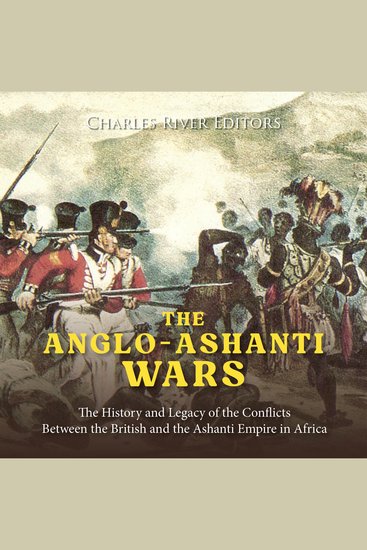
  • Anglo-Ashanti Wars The: The History and Legacy of the Conflicts Between the British and the Ashanti Empire in Africa - cover

    Anglo-Ashanti Wars The: The...

    Editors Charles River

    • 0
    • 0
    • 0
    By the mid-19th century, other European powers became interested not only in the exploration of Africa but the exploitation of it, especially once the German Empire unified after the Franco-Prussian War. This began a rush, spearheaded mainly by European commercial interests in the form of chartered companies, to penetrate the African interior and woo its leadership with guns, trinkets and alcohol, and having thus obtained their marks or seals upon spurious treaties, begin establishing boundaries of future European colonies. The ease with which this was achieved was due to the fact that, at that point, traditional African leadership was disunited, and the people had just staggered back from centuries of concussion inflicted by the slave trade. Thus, to usurp authority, to intimidate an already broken society, and to play one leader against the other was a diplomatic task so simple, much of Africa would come under European influence in a short time.  
    	Of course, there were exceptions to this rule, and for almost a century, the British in West Africa were faced with a powerful and stubborn African opponent: the Ashanti Empire. The Ashanti were formed by alliance and the conquest of the Akan people in the rainforest zone between the West African coast and the Sahel country to the north. 
    	The Ashanti fought the British in five wars over the nineteenth century, and they were the only West African people inflicting more than one defeat on the British. War in tropical West Africa was different from most of the rest of the world. The prevalence of endemic diseases like malaria typically killed half of the Europeans posted there per year; it was called “The White Man’s Grave” for a reason. A second factor was the presence of the tsetse fly that carried a disease able to kill horses quickly. Military expeditions were left to move entirely on foot - there were no carts, no wagons, no pack animals, and no cavalry. 
    Voir livre
  • Discovery of Freedom The: Book Summary & Analysis - cover

    Discovery of Freedom The: Book...

    Briefly Summaries

    • 0
    • 0
    • 0
    This is a concise summary and analysis of 
    The Discovery of Freedom, by Rose Wilder Lane.
     
    It is not the original book and is not affiliated with or endorsed by 
    Rose Wilder Lane.
    Ideal those seeking a quick and insightful overview.
     
    The Discovery of Freedom is a profound exploration of the human spirit's enduring quest for liberty. This book delves into the historical, philosophical, and cultural forces that have shaped the ideals of freedom across civilizations. With a compelling narrative, it challenges prevailing ideas about governance and individual autonomy, presenting a bold argument for the intrinsic power of human beings to achieve self-determination. This work inspires readers to reflect on the principles of personal responsibility, the role of government, and the timeless value of freedom in shaping society.
    Voir livre
  • Harry S Truman: A short biography - 5 Minutes: Short on time – long on info! - cover

    Harry S Truman: A short...

    5 Minutes, 5 Minute Biographies,...

    • 0
    • 0
    • 0
    Harry S. Truman, American president after World War II: Life and work in a short biography! Everything you need to know, brief and concise. Infotainment, education and entertainment at its best!
    Voir livre