
Join us on a literary world trip!
Add this book to bookshelf
Grey
Write a new comment Default profile 50px
Grey
Subscribe to read the full book or read the first pages for free!
All characters reduced
10 Years of Freedom - Biography - cover

10 Years of Freedom - Biography

Natascha Kampusch, Heike Gronemeier

Translator Kreuer Jill

Publisher: Dachbuch Verlag

  • 0
  • 2
  • 0

Summary

In late October 2006, one of the most spectacular kidnapping cases of the younger past had come to end, when Natascha Kampusch freed herself after being held captive in a hidden cellar (near Vienna, Austria) for more than eight years. Media companies from all over the world came to cover her life story, which has taken quite some twists since then. The result: two autobiographies, a feature film, several documentaries and hundreds of interviews – all within a decade.

"10 Years of Freedom" offers us an insight into the impact such a nightmarish captivity has on a young woman's life. It tells the story of a naive victim, that had to learn to cope with the real world after being locked away for her whole youth. The author spans a wide range of themes from her first days in freedom and the turbulent times after gaining it again to a never-ending trauma, which she will have to deal with for the rest of her life. Natascha declares that she wasn't prepared to be a public figure after all, but was suddenly confronted with a heavy and controversial media coverage (including speculations by reporters regarding Stockholm syndrome and roleplaying, along with being labelled "cellar girl" and "sex slave"). Also, wild conspiracy theories gained popularity, resulting in several trials and review boards (including police and FBI investigations). Despite everything, she found certain ways to reconnect with her family and even founded/initiated several charity projects (e.g. the creation of a children's ward in Sri Lanka or the support of PETA, an organisation for animal rights).


"Your book is remarkable. 10 Years of Freedom, I urge everyone to read it." - Piers Morgan, ITV

"It's a very powerful read." - Huw Edwards, BBC

"Very brave." - Emma Barnett, BBC
Available since: 04/25/2017.

Other books that might interest you

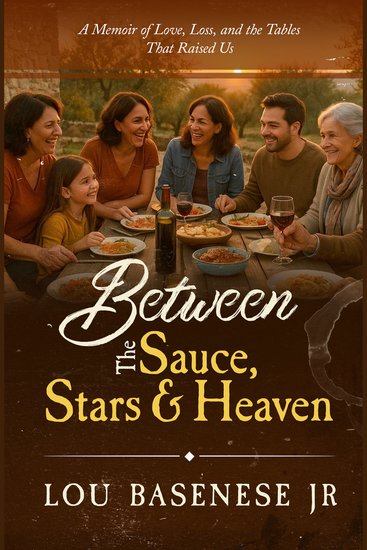
  • Between the Sauce Stars and Heaven - A Memoir of Faith Family and the Tables That Raised Us - cover

    Between the Sauce Stars and...

    Jr Lou Basenese

    • 0
    • 0
    • 0
    Between the Sauce, Stars and Heaven is a memoir flavored with faith, love, laughter, and loss—told by a man who survived 12 minutes of death and came back with a deeper purpose. 
    Raised in the tight-knit Italian-American town of Netcong, NJ, Lou Basenese shares unforgettable stories of his family—especially the wild uncles, devoted parents, and the son he lost too soon. Through meals, miracles, and moments of mischief, Lou paints a portrait of a community rooted in tradition but forever reaching toward grace. 
    Whether it’s his Uncle Angelo “pickpocketing” his dad during a porch visit, or Lou’s own journey from football captain to successful CEO, each chapter is layered with humor, heartbreak, and hard-won wisdom. 
    This audiobook invites listeners to laugh, cry, and reflect on the sacred power of family stories. A love letter to a fading way of life—and a reminder that some flavors and values never disappear.
    Show book
  • Lean on Me - A Politics of Radical Care - cover

    Lean on Me - A Politics of...

    Lynne Segal

    • 0
    • 0
    • 0
    Longtime feminist activist and writer Lynne Segal searches for hope in her own life and in the world around her, and finds it in our intimate commitments to each other and our shared collective engagements, the two being intertwined. Issues of care, intimacy, education, alongside meaningful work, and social engagement, lie at the core of our ability to understand the world and its possibilities for human flourishing. 


    Not only does our dependence on others not disappear into self-sufficient autonomy once we leave childhood behind—only to re-emerge in very old age—but ignoring human interdependence and our lifelong need for care has been part of a massive and destructive public denial that must be resisted. 


    Segal looks at our shared lifelong dependence on care and the well-being of others. In recounting from her own life the moments of motherhood, and of being on the front line of second wave feminism, Segal draws upon lessons from more than half a century of engagement in Left feminist politics, with its underlying commitment to building a more egalitarian and nurturing world. The personal and the political combine in this rallying cry to radically transform how we approach education, motherhood, and our everyday vulnerabilities of disability, aging, and enhanced needs.
    Show book
  • Martin van Buren - The Democratic 8th President of the United States - cover

    Martin van Buren - The...

    Kelly Mass

    • 0
    • 0
    • 0
    Martin Van Buren was an American attorney and statesman who acted as the United States' 8th president between 1837 to 1841. He was the ninth ruler of New York, the tenth US Secretary of State, and the 8th Vice President of the United States. 
    He was a creator of the Democratic Party. With the support of well-known leaving President Andrew Jackson and the Democratic Party's organizational strength, he won the 1836 governmental election. 
    He was the 3rd and last incumbent vice president to be chosen president till 1988. Because of the bad financial conditions surrounding the Panic of 1837, he lost his reelection quote in the year 1840 to the Whig candidate, William Henry Harrison. Van Buren rose to prominence as a senior statesman and anti-slavery activist later in life, leading the Free Soil Party ticket in the 1848 governmental election. 
    Let’s learn more about this president of the United States, who was of Dutch origin.
    Show book
  • Ludwig van Beethoven: The Life and Music of the Great Composer - cover

    Ludwig van Beethoven: The Life...

    Editors Charles River

    • 0
    • 0
    • 0
    Among all of history’s greatest musicians, few have been as admired or influential as Ludwig van Beethoven, whose name remains synonymous with composing. Works like his Fifth and Ninth symphonies remain instantly recognizable over 200 years after they were composed, and their sweeping and grandiose nature are made all the more amazing by the fact that their author was gradually going deaf and couldn’t hear music very well by the time he was composing them. Similarly, the “Moonlight Sonata” and "Für Elise" are renowned across the world and are some of the most famous piano pieces of all time. 
    At the same time, Beethoven’s work ushered in a new era in art, helping the transition from the Classical era to the Romantic era. In the 180 years since his death, Beethoven has been enshrined by modern society as one of the most esteemed classical composers in the history of civilization, but he had a profound and immediate influence on the German musical lineage that would pass through Robert Schumann, Richard Wagner, Gustav Mahler and Richard Strauss all the way to composers of the 20th and early 21st centuries. At a time when music was very much viewed as science, Beethoven was a giant in the field, and as such he was viewed as a genius. As Beethoven himself once put it, “Music is the one incorporeal entrance into the higher world of knowledge which comprehends mankind but which mankind cannot comprehend.” 
    In terms of assessing the essence of Beethoven’s era, character or musical output, no unqualified categorization is possible, for he straddled a titanic shifting of social ideologies, performance and compositional practices, intra-continental upheavals and an emergence of the championed self in all forms of civic and artistic expressions. The ideals of the Enlightenment, an intellectual tide that swept throughout the late 18th century and opened the door to a new individualism, did not remain static through his lifetime.
    Show book
  • MY JOURNEY TO GRACE: What I Learned about Jesus in the Dark - cover

    MY JOURNEY TO GRACE: What I...

    Cindy Hyles Schaap

    • 0
    • 0
    • 0
    Cindy Hyles Schaap was a sought after speaker and counselor, as well as a pastor's wife of a megachurch. All that came crashing down when her husband was arrested and sent to prison. Cindy became unwillingly and unwittingly involved in public scandal.In My Journey to Grace: What I Learned About Jesus in the Dark, the author shares her moving and intimate account of a life turned upside-down by tragedy.This book helps to answer many questions that arise when someone is faced with public or private shame.How do you go about forgiving yourself, or the other people involved?How do you begin to rebuild?How does one find strength to face the world again?Fortunately, there is hope in the transformative power of God.The book you're holding is a "behind the scenes tour." It's not a tell-all written to set the record straight or to justify decisions made. Rather it's a private glimpse of how Jesus walks people through the darkness. It's a unique view of His mercies in the face of our failures. It's a reminder that when one walks through the valley of the shadow, God is with us and He won't let us go.
    Show book
  • The River You Touch - Making a Life on Moving Water - cover

    The River You Touch - Making a...

    Chris Dombrowski

    • 0
    • 0
    • 0
    “We are matter and long to be received by an Earth that conceived us, which accepts and reconstitutes us, its children, each of us, without exception, every one. The journey is long, and then we start homeward, fathomless as to what home might make of us.”When Chris Dombrowski burst onto the literary scene with Body of Water, the book was acclaimed as “a classic” (Jim Harrison) and its author compared with John McPhee. Dombrowski begins the highly anticipated The River You Touch with a question as timely as it is profound: “What does a meaningful, mindful, sustainable inhabitance on this small planet look like in the anthropocene?”He answers this fundamental question of our time initially by listening lovingly to rivers and the land they pulse through in his adopted home of Montana. Transplants from the post-industrial Midwest, he and his partner, Mary, assemble a life based precariously on her income as a schoolteacher, his as a poet and fly-fishing guide. Before long, their first child arrives, followed soon after by two more, all “free beings in whom flourishes an essential kind of knowing […], whose capacity for wonder may be the beacon by which we see ourselves through this dark epoch.” And around the young family circles a community of friends—river-rafting guides and conservationists, climbers and wildlife biologists—who seek to cultivate a way of living in place that moves beyond the mythologized West of appropriation and extraction.Moving seamlessly from the quotidian—diapers, the mortgage, a threadbare bank account—to the metaphysical—time, memory, how to live a life of integrity—Dombrowski illuminates the experience of fatherhood with intimacy and grace. Spending time in wild places with their children, he learns that their youthful sense of wonder at the beauty and connectivity of the more-than-human world is not naivete to be shed, but rather wisdom most of us lose along the way—wisdom that is essential for the possibility of transformation.
    Show book