Join us on a literary world trip!
Add this book to bookshelf
Grey
Write a new comment Default profile 50px
Grey
Subscribe to read the full book or read the first pages for free!
All characters reduced
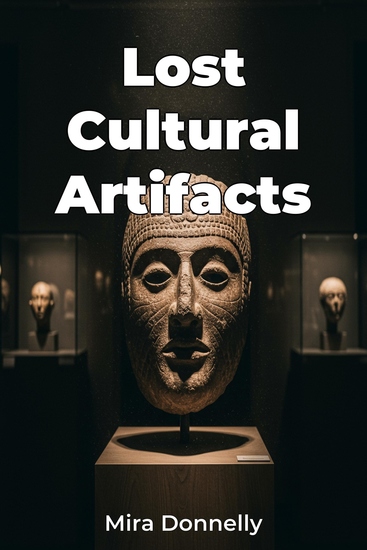
Lost Cultural Artifacts - cover

Lost Cultural Artifacts

Mira Donnelly

Translator A AI

Publisher: Publifye

  • 0
  • 0
  • 0

Summary

Lost Cultural Artifacts explores the complex world of indigenous cultural heritage, focusing on the theft and repatriation of invaluable artifacts. It delves into the profound significance these objects hold for indigenous communities, representing not just art, but a living link to their history and identity. The book highlights the urgent need to address past wrongs and foster reconciliation through the return of these cultural treasures, arguing that repatriation is essential for preserving cultural heritage and empowering indigenous communities to reclaim their narratives.

 
The book examines the historical and social context surrounding artifact theft, including the legacy of colonialism and evolving museum practices. It meticulously documents case studies of artifact displacement from various regions, illustrating the devastating impact on indigenous communities. Furthermore, it explores the legal and ethical frameworks guiding repatriation efforts, including international conventions and indigenous rights declarations.

 
Structured in four parts, Lost Cultural Artifacts begins with an overview of cultural heritage and its importance. It progresses through case studies, legal frameworks, and culminates in a discussion of practical implications for repatriation. By challenging traditional narratives and prioritizing indigenous voices, this book advocates for a more inclusive and participatory approach to cultural preservation and social justice.
Available since: 03/29/2025.
Print length: 74 pages.

Other books that might interest you

  • French Royalty - cover

    French Royalty

    Kelly Mass

    • 0
    • 0
    • 0
    This book consists of 2 titles, which are about the following topics:1 - Before the Reign of Terror, Marie Antoinette was the last queen of France. She was the penultimate kid and youngest daughter of Empress Maria Theresa and Emperor Francis I, and was born an archduchess of Austria. At the age of 14, she wed Louis-Auguste, the beneficiary evident to the French throne, and ended up being dauphine of France in May 1770. Her partner, Louis XVI, took the throne on May 10, 1774, and she ended up being queen.2 - From 768 to 800, Charlemagne, also referred to as Charles the Great, was King of the Franks, King of the Lombards, and Emperor of the Romans. Charlemagne combined many western and main Europe at the time of the Early Middle Ages. Since the fall of the Western Roman Empire 3 centuries before, he was the first acknowledged emperor to rule from western Europe. The Carolingian Empire is the name given to Charlemagne's broadening Frankish world. Antipope Paschal the Third later canonized him.
    Show book
  • Persecution of Jews in Medieval Spain The: The History of the Discrimination and Expulsion of Spanish Jews during the Reconquista and Inquisition - cover

    Persecution of Jews in Medieval...

    Editors Charles River

    • 0
    • 0
    • 0
    The term “Reconquista” is a Spanish word transferred to the English language to represent the nearly 800 years in which the Moors and Christians struggled against one another for control of the Iberian Peninsula. Although the phrase typically refers to the time when the numerous Christian kingdoms mobilized to overthrow the Islamic Caliphates set up in the peninsula, the term can additionally be used to refer to the entire situation starting in the 8th century, when Islamic civilization slowly moved out of North Africa, across the Mediterranean Sea, and into southern Iberia.  
    	Not surprisingly, three religions attempting to coexist during medieval times resulted in nearly incessant conflicts, marked by high taxation, disparate societies, rigid cultural controls, and systemic violence. Despite the odds, these three religions managed to live in a state of quasi-acceptance and peace in most of the major cities like Cordoba and Toledo, with sporadic warfare occurring on the borders between Al-Andalus and the Christian kingdoms near the Pyrenees Mountains. Muslims, Christians, and Jews would attempt to reorganize their societies several times over the centuries through warfare, always with Jews on the lower rungs and Christians and Muslims fighting it out above them.   
    	By the end of the 14th century, the distrust and prejudice against Jewish communities quickly spread to Spain. In 1391, James II of Aragon boarded the bandwagon; backed into a corner by the Roman Catholic Church, he established a law that banned Jews from Spain altogether. Jews were shunned in droves, and the remaining were given an ultimatum to either convert/revert to Catholicism or face immediate death. Yet another wave of gory pogroms ensued across the country, especially in Barcelona.
    Show book
  • Sexy Surprises at Work - 6 Erotic Stories - cover

    Sexy Surprises at Work - 6...

    Giselle Renarde

    • 0
    • 0
    • 0
    Get ready for "Sexy Surprises at Work," a sizzling anthology that unveils secret office romances, lust between fast-food workers, and a barista's blossoming love affair with an attractive coffee lover.  
    Each of the six spicy stories in this collection unveils a world of secret trysts, stolen glances, and irresistible connections. From steamy encounters to heart-pounding romance, "Sexy Surprises at Work" will keep you on the edge of your seat, eager to uncover what happens next in the lives of these daring characters. 
    So, delve into the enticing world of "Sexy Surprises at Work" and experience the thrill of passion unfolding in the workplace. Embrace the allure of these spicy tales, and let your imagination soar as these characters pursue their passions at work.
    Show book
  • Hungarian History - Hungary In World War 1 & 2 The Golden Age Of Football The Worst Inflation Ever Recorded And The Collapse Of Communism - cover

    Hungarian History - Hungary In...

    HISTORY FOREVER

    • 0
    • 0
    • 0
    ★ Did you know that Hungary once was considered one of the greatest powers in Central Europe? ★ 
    ★ Or better, did you know that Hungarians invented the Vitamin C, Safety Match and Colour Television? ★ 
    ★ GET THIS BOOK NOW AND DISCOVER WHAT IT TAKES TO BE A HUNGARIAN! ★In this book you will discover;Austria-Hungary in World War 1The Hungarian Romanian War - 1919The Hungarian Soviet RepublicThe Treaty of Trianon - 1920Hungary Joining the Axis PowersHungary Attacking the USSR - 1941The German Invasion of Hungary - 1944Hungary before the Revolution of 1956The Hungarian Revolution of 1956The Golden Age of Hungarian footballHistory of Hungarian Oil in World War 2Worst Inflation In World HistoryThe Collapse of Communism in Hungary 
    ★ GET THIS BOOK NOW AND DISCOVER WHAT IT TAKES TO BE A HUNGARIAN! ★
    Show book
  • Napoleon’s Great Escapes: The History of Napoleon’s Escapes from Egypt and Elba - cover

    Napoleon’s Great Escapes: The...

    Editors Charles River

    • 0
    • 0
    • 0
    Napoleon harbored all kinds of delusions about his time in Egypt that were not based in reality, but he definitely left a lasting legacy in the region, one he would never live to see or appreciate. By shifting the theater of operations to Africa and the Middle East, Napoleon inadvertently ensured the Europeans would fight there in the future, and the French occupation impressed upon the locals the necessity of catching up to the modern world in terms of technology. Ancient tactics could not prevail against a modern army, no matter the numbers, but while that was a lesson Napoleon consistently taught his enemies in Egypt and the Levant to their detriment, the French also sped up the occupied populations’ technological advances as well.  
    	Of all the incredible military feats Napoleon accomplished, none were more impressive than his escape from Elba and his return to France, which was literally a bloodless revolution. On February 26, 1815, Napoleon escaped from Elba, and in a desperate gamble, he landed on the French mainland with less than a thousand men and marched on Paris. 
    	What happened next was truly remarkable. An infantry regiment was sent to intercept Napoleon and his men, but Napoleon rode up to them alone and shouted, "Here I am. Kill your Emperor, if you wish." Upon seeing their once invincible leader before them, the soldiers mutinied and went over to his side en masse. Other corps soon followed, and in no time at all Napoleon found himself at the head of an army marching on Paris. The newly reinstituted Bourbon monarch fled the city, and so, with barely a shot fired, Napoleon found himself enthroned as emperor once more. In an astonishing feat of political chutzpah and military organization, within three months he had seized power anew and rebuilt his veteran forces to a strength of 200,000 men. Of these, 128,000 were assembled into the Armee du Nord, under Napoleon’s personal command.
    Show book
  • The Ancient World’s Most Influential Philosophers - cover

    The Ancient World’s Most...

    Editors Charles River

    • 0
    • 0
    • 0
    Although he is still one of history’s most famous philosophers, Confucius was in many respects an unremarkable man, and even his physical features were said to be unattractive. There is little evidence that he thought of himself as a harbinger of any kind, but shortly after his death, writings, sayings, and theories based on his life and ideas spread throughout China and even took hold of the imperial court of one of the most powerful and important dynasties, the Han (206 BCE-220 CE). It was during the Han Dynasty that Confucianism became closely tied to state affairs, and it would remain so until the fall of the last dynasty in 1912.  
    	None of Socrates’ works survived antiquity, so most of what is known about him came from the writings of his followers, most notably Plato. What is known about Socrates is that he seemed to make a career out of philosophy, and Plato was intent on following in his footsteps. Yet for all of the influence of Socrates’ life on his followers, it was Socrates’ death around 399 B.C. that truly shaped them. Plato was so embittered by Socrates’ trial in Athens that he completely soured on Athenian democracy, and Aristotle would later criticize politicians who relied on rhetoric; when Aristotle’s own life was threatened, he fled Greece and allegedly remarked, “I will not allow the Athenians to sin twice against philosophy." 
    	Alongside Pericles, Cicero was one of antiquity’s greatest politicians, and he has remained one of the most influential statesmen in history, relied upon by the Romans of his day, political philosophers like John Locke, Enlightenment thinkers like Rousseau, and America’s Founding Fathers. Thomas Jefferson credited Cicero as an inspiration for the Declaration of Independence, and John Adams asserted, "As all the ages of the world have not produced a greater statesman and philosopher united than Cicero, his authority should have great weight.”
    Show book