
Rejoignez-nous pour un voyage dans le monde des livres!
Ajouter ce livre à l'électronique
Grey
Ecrivez un nouveau commentaire Default profile 50px
Grey
Abonnez-vous pour lire le livre complet ou lisez les premières pages gratuitement!
All characters reduced
The Captive - cover

The Captive

Marcel Proust

Maison d'édition: Phoemixx Classics Ebooks

  • 0
  • 0
  • 0

Synopsis

The Captive Marcel Proust - In The Captive, Prousts narrator describes living in his mothers Paris apartment with his lover, Albertine, and subsequently falling out of love with her.The longest book I've ever read, longer than those with many more pages. I don't mean the complete Search -- I'm referring to this volume, a mere 936 pages that took me forever. If I'm honest with this impression, I should admit that I find Proust sort of stupefying most of the time. I can only read 15 pages at a time without dosing off or reaching for my phone. But every once in a while there's an image or insight that makes it all worthwhile. I mean, the book is regularly studded with the best of things I look for in books, my copy is regularly dogeared, but this installment is dense and nutso. For the most part, Marcel is with Albertine but doesn't want to be with her ("The Captive"), but once she's gone ("The Fugitive") he's obsessed with her again, madly in love, until he learns of her sudden spoiler alert. Most of the musing seems to be about whether Albertine is getting it on with women
Disponible depuis: 16/11/2021.

D'autres livres qui pourraient vous intéresser

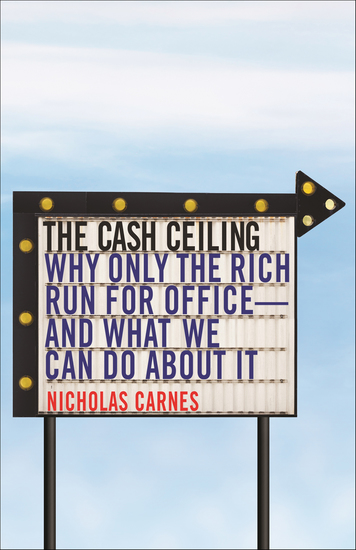
  • The Cash Ceiling - Why Only the Rich Run for Office—and What We Can Do about It - cover

    The Cash Ceiling - Why Only the...

    Nicholas Carnes

    • 0
    • 0
    • 0
    Why working-class Americans almost never become politicians, what that means for democracy, and what reformers can do about itWhy are Americans governed by the rich? Millionaires make up only three percent of the public but control all three branches of the federal government. How did this happen? What stops lower-income and working-class Americans from becoming politicians? The first book to answer these urgent questions, The Cash Ceiling provides a compelling and comprehensive account of why so few working-class people hold office—and what reformers can do about it.Using extensive data on candidates, politicians, party leaders, and voters, Nicholas Carnes debunks popular misconceptions (like the idea that workers are unelectable or unqualified to govern), identifies the factors that keep lower-class Americans off the ballot and out of political institutions, and evaluates a variety of reform proposals.In the United States, Carnes shows, elections have a built-in “cash ceiling,” a series of structural barriers that make it almost impossible for the working-class to run for public office. Elections take a serious toll on candidates, many working-class Americans simply can’t shoulder the practical burdens, and civic and political leaders often pass them over in favor of white-collar candidates. But these obstacles aren’t inevitable. Pilot programs to recruit, train, and support working-class candidates have the potential to increase the economic diversity of our governing institutions and ultimately amplify the voices of ordinary citizens.Who runs for office goes to the heart of whether we will have a democracy that is representative or not. The Cash Ceiling shows that the best hope for combating the oversized political influence of the rich might simply be to help more working-class Americans become politicians.
    Voir livre
  • Ukraine's Many Faces - Land People and Culture Revisited - cover

    Ukraine's Many Faces - Land...

    Olena Palko, Manuel Férez Gil

    • 0
    • 0
    • 0
    Russia's large-scale invasion on the 24th of February 2022 once again made Ukraine the focus of world media. Behind those headlines remain the complex developments in Ukraine's history, national identity, culture and society. Addressing readers from diverse backgrounds, this volume approaches the history of Ukraine and its people through primary sources, from the early modern period to the present. Each document is followed by an essay written by an expert on the period, and a conversational piece touching on the ongoing Russian aggression against Ukraine. In this ground-breaking collection, Ukraine's history is sensitively accounted for by scholars inviting the readers to revisit the country's history and culture.
    With a foreword by Olesya Khromeychuk.
    Voir livre
  • Austerlitz or Death - cover

    Austerlitz or Death

    Auguste Vallois

    • 0
    • 0
    • 0
    "Austerlitz or Death" is an epic historical novel by Auguste Vallois, a captain of the Imperial Guard who recounts his memories from the battlefields of Europe to the solitude of inner exile. 
    From his revolutionary youth in Lyon to the Egyptian campaign, the victories in Italy, the glory at Austerlitz, the frozen hell of Russia, and the final tragedy at Waterloo, Auguste tells the story of the Napoleonic Empire in first person and with painful clarity—not from the pages of history books, but from the blood, mud, and soul of those who built it… and watched it fall. 
    Through these pages, the reader will march alongside a man who lost everything but his honor. You will witness how a soldier is forged, how faith fades, how a sword is held even on broken knees. Each chapter is filled with emotion, introspection, fire, and silence. Every victory bears the taste of sacrifice, and every defeat, the dignity of those who never surrendered. 
    Vallois's prose is both elegant and raw, intimate and epic, heir to the great traditions of war and memory literature such as All Quiet on the Western Front or The Disasters of War. This is not the official history of Napoleon, nor the tale of grand strategists. It is the story of the anonymous men who believed in something greater than themselves… and paid the price. 
    A novel that masterfully blends epic military drama, psychological depth, and historical tragedy. Ideal for readers of war literature, historical fiction, soldier memoirs, or explorations of the human condition in times of crisis. 
    "I served the Emperor. And I do not regret it." 
    — Auguste Vallois
    Voir livre
  • Lead with Grace - Leaning into the Soft Skills of Leadership - cover

    Lead with Grace - Leaning into...

    Jessica Cabeen

    • 0
    • 0
    • 0
    Why do even great leadership books leave out the soft skills? 


    Probably because soft skills are not flashy. But soft skills are critical to graceful leadership, and you will find the stories and strategies to hone them, with this book. National Distinguished Principal and leadership advisor Jessica Cabeen understands the soft skills better than most. 


    In Lead with Grace Cabeen shows you how to seamlessly integrate authenticity, empathy, integrity, and the power of vulnerability into your daily work, turning you into someone who is leading young minds with grace and someone who will empower people around you. She helps you nurture relationships, enhance communication, manage boundaries, and provide the grace you need to effectively lean into your work, at school, home, or the office. 


    Great leaders, teachers, and parents are typically good at the hard skills: organization, guidelines, and management. Very few, though, are great at the soft skills. And even fewer really understand how to lead with grace. Now, you can be a great and graceful leader, who understands and leads with soft skills.
    Voir livre
  • The Five Indian Nations of Canada - cover

    The Five Indian Nations of Canada

    Cadwallader Colden

    • 0
    • 0
    • 0
    The History of the Five Indian Nations is a first hand account written by Cadwallader Colden. He served as the first colonial representative to the Iroquois Confederacy. Impressions he made during the service resulted in writing this book, the first one on the subject. This book brings the first information regarding the life and customs of indigenous people from the North.
    Voir livre
  • Who’s the Devil: the Other or the West? - cover

    Who’s the Devil: the Other or...

    Régis Le Sommier

    • 0
    • 0
    • 0
    “We’ve spent nine trillion dollars bombing the Middle East like mad. We’ve sown death there, including our own. And what has it gotten us? Nothing.” 
    Donald Trump, November 1, 2024. 
    
    The figure of the devil has haunted our collective consciousness since the dawn of time. He structures our societies, whether religious or secular. Sometimes, the devil has been a friend before being “demonized”. Sometimes, by force of circumstance, he has become an ally. And sometimes, the devil must be eliminated to mask or even justify the errors of our societies. 
    Thus, during the Second World War, we made a pact with Stalin to bring down a devil deemed more formidable: Hitler. In Northern Ireland, the British ended up talking with representatives of the IRA, just as the French did a few years earlier with the Algerian FLN. Recently, the Americans negotiated with the Taliban, another terrorist group, before handing over the keys to Afghanistan. Saddam Hussein, Muammar Gaddafi and Bashar al-Assad were friends of the West before the latter precipitated their downfall, even if it meant causing chaos in their countries.
    Régis Le Sommier has been a war reporter for 27 years, and has himself interviewed a number of infamous figures. His aim is to revisit the concept of the devil in the light of recent and current conflicts, in order to answer one question: shouldn’t the deleterious consequences of geopolitics conducted “in the name of good” lead us to doubt the validity of the actions taken by our governments, even today, against those they like to refer to as devils?
    Voir livre