Join us on a literary world trip!
Add this book to bookshelf
Grey
Write a new comment Default profile 50px
Grey
Subscribe to read the full book or read the first pages for free!
All characters reduced
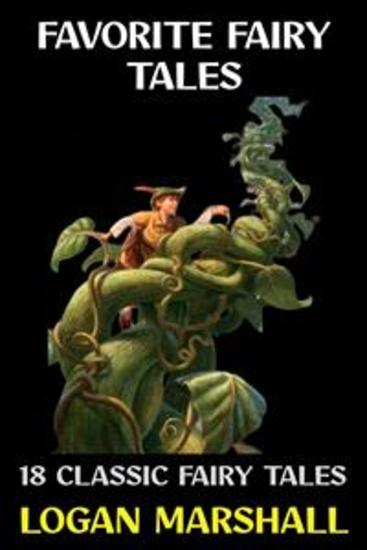
Favorite Fairy Tales - 18 Classic Fairy Tales - cover

Favorite Fairy Tales - 18 Classic Fairy Tales

Logan Marshall

Publisher: Diamond Book Publishing

  • 0
  • 0
  • 0

Summary

This is a collection of the fairy tales that children love best, told in simple language. A selection of the best and most popular fairy stories, culled from many sources and here collected and presented in most attractive form, Including Tom Thumb, The Ugly Duckling, Jack and the Beanstalk and Many More.
Available since: 03/12/2024.

Other books that might interest you

  • The Home-Maker - cover

    The Home-Maker

    Dorothy Canfield Fisher

    • 0
    • 0
    • 0
    Not Yet Available
    Show book
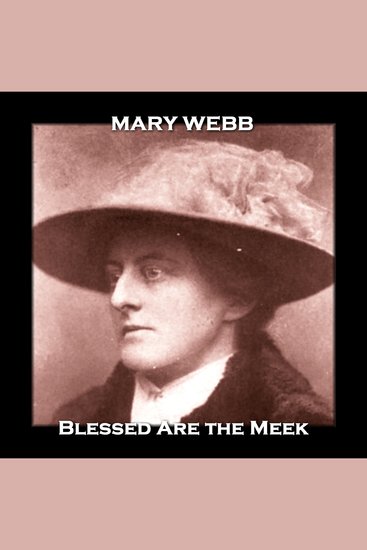
  • Blessed Are the Meek - From their pens to your ears genius in every story - cover

    Blessed Are the Meek - From...

    Mary Webb

    • 0
    • 0
    • 0
    Mary Gladys Meredith was born on 25th March 1881 at Leighton Lodge in the village of Leighton, near Shrewsbury in Shropshire.  
    Mary was home-schooled by her father before being sent to a finishing school in Southport in 1895. Her longs walks in the countryside helped her develop a heightened sense of observation and description, of both people and places, which later infused both her poetry and prose. 
    When she was 20 she developed symptoms of Graves' disease, a thyroid disorder that caused bulging protuberant eyes and throat goitre. This caused life-long ill health and was a possible contributor to her early death.  
    Mary was first published as a teenager when her brother sent to a local newspaper her poem on a recent rail accident.  Mary, who was in the habit of destroying her work was appalled though placated when she discovered that it had received some positive appreciation in readers letters. 
    1912 brought marriage to Henry Bertram Law Webb, a teacher. He supported her literary work which, in 1917, resulted in the publication of her novel ‘The Golden Arrow.’ 
    A few years later they acquired a property in London where, it was hoped, recognition of her literary talents would be more easily recognised.   
    Her 1924 novel, ‘Precious Bane’, won the Prix Femina Vie Heureuse, the prestigious French literary prize awarded by an all-female jury. 
    Most of her poetry and various other works were only published after her death. 
    By 1927 her health was deteriorating and her marriage failing.   
    Mary Webb died on 8th October 1927 at St Leonards-on-Sea, East Sussex.  She was 46.
    Show book
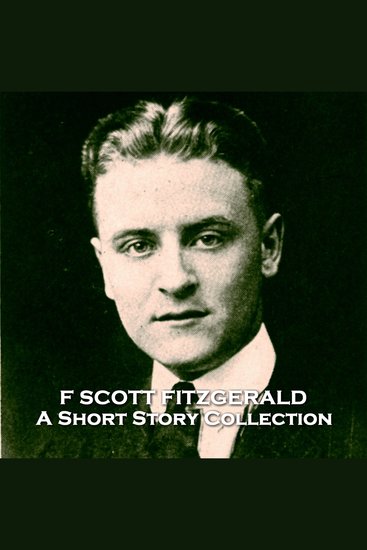
  • F Scott Fitzgerald - A Short Story Collection - A wonderful collection from the legendary American author of The Great Gatsby - cover

    F Scott Fitzgerald - A Short...

    F. Scott Fitzgerald

    • 0
    • 0
    • 0
    Francis Scott Key Fitzgerald was born on September 24th 1896 in Saint Paul, Minnesota, to an upper-middle-class family. His early years in Buffalo, New York showed him to be a boy of high intelligence and drive with a thirst for literature.  
     
    In 1908, his father was fired from Procter & Gamble, and the family returned to Minnesota. Here Fitzgerald attended St. Paul Academy, in St. Paul, until 1911. At 13 he was published in the school newspaper, it was, of all things, a detective story. In 1911, aged 15, he was sent to the prestigious Newman School, in Hackensack, New Jersey. And, after graduating in 1913, he decided to continue at Princeton University. Here he firmly dedicated himself to writing. Unfortunately his writing pursuits came at the expense of his coursework. In 1917 he dropped out to join the U.S. Army.  
     
    However this service to his country came with the very real fear that he might perish in the trenches of Western Europe with his literary dreams not yet begun. So he spent the weeks before reporting for duty at work on a novel entitled The Romantic Egotist.  Fitzgerald was assigned to Camp Sheridan, in Alabama. It was there that Fitzgerald met the love of his life; Zelda Sayre, the "golden girl," of Montgomery youth society.  
     
    The war ended before Fitzgerald could be deployed, and he moved to New York City hoping to start a career in advertising that would be lucrative enough to convince Zelda to marry him. Unable to convince her that his means were enough to support her she broke off the engagement. Fitzgerald returned to his parents in St. Paul, to revise The Romantic Egoist, now recast as This Side of Paradise. His revised novel was accepted by Scribner's and published in 1920 becoming an instant success.  
     
    It launched Fitzgerald's career as a writer and provided a steady income suitable for Zelda's ambitions. The engagement resumed and they married at St. Patrick's Cathedral in New York. Frances Scott "Scottie" Fitzgerald, their only child, was born on October 26, 1921. 
     
    Inspired by the parties he had attended visiting Long Island's north shore Fitzgerald began planning the greatest of his novels, The Great Gatsby, in 1923, wanting to produce "something new—something extraordinary and beautiful and simple and intricately patterned."  Published in April 1925, The Great Gatsby received mixed reviews and sold poorly; only 20,000 in its first year.  Today, it is considered a literary classic and one of a small circle vying for the title "Great American Novel".  
     
    Fitzgerald continued to supplement his income by writing short stories for magazines and to sell his stories and novels to Hollywood. He called this "whoring".  
     
    In February 1932, Zelda was hospitalized with schizophrenia. Fitzgerald rented a house nearby and worked on his latest book, Tender Is the Night, and finally published it in 1934.  
     
    Fitzgerald's heavy and excessive drinking had now developed into alcoholism and with recurring financial difficulties, the emotional toll of Zelda's mental illness, this meant several difficult years.  
     
    In 1937, Fitzgerald moved to Hollywood. His income improved and he began to work in the film industry. He found movies beneath his talents, but was once again in perilous financial straits, and so spent the second half of the 1930s in Hollywood, working on a triangle of short stories, scripts for MGM, and his final novel, The Love of the Last Tycoon.   
     
    In 1939, MGM ended the contract, and Fitzgerald became a writer for hire. Still an alcoholic, he now became estranged from Zelda and developed a relationship with Sheilah Graham, the Hollywood gossip columnist. They quickly became lovers.  
     
    In this last period of his life his alcoholism had left him physically wrecked. After suffering a heart attack, in Schwab's Drug Store, he was ordered to avoi
    Show book
  • The Secret Agent - cover

    The Secret Agent

    Joeseph Conrad

    • 0
    • 0
    • 0
    Just who is the Secret Agent [Delta] of a certain embassy? Just who is Mr Verloc? The proprietor of a certain shop on Brett Street? The Vice-President of a certain revolutionary committee? Forced into a corner by his superiors, he acts in desperation and disaster awaits. 
    A tale of anarchy and realism, by Joseph Conrad, first published in 1905, it is considered one of his great city novels, as well as a great novellestic study of terrorism and it's proponents. 
    Narrated by Michael Ward.
    Show book
  • Lazy Tour of Two Idle Apprentices The (Unabridged) - cover

    Lazy Tour of Two Idle...

    Charles Dickens

    • 0
    • 0
    • 0
    In autumn 1857, Charles Dickens embarked on a sightseeing trip to Cumberland with his friend, the rising star of literature Wilkie Collins. Writing together, they reported their adventures for Dickens' periodical Household Words, producing a showcase of both long-cherished and entirely novel sides of these well-loved men of letters. Boasting two ghost stories from undisputed masters of the genre, it also uniquely demonstrates their glee in caricaturing themselves and one another-Collins assumes the identity of Thomas Idle (a born-and-bred idler) and Dickens that of Francis Goodchild (laboriously idle). Through their fictional counterparts, the men relentlessly satirize Dickens' maniacal energy and Collins' idleness. The result is an exuberant diary of a journey and a rare insight into one of literature's most famed and intriguing friendships.
    Show book
  • Porch Swings Parlors & Pryin’ Eyes - Gossip Gumption and the Glories of Small-Town Life - cover

    Porch Swings Parlors & Pryin’...

    Anne Warner, Edna Ferber, Booth...

    • 0
    • 0
    • 0
    In the towns where the porch lights glow late, the screen doors creak often, and no secret stays secret for long, life unfolds with charm, chatter, and more than a touch of mischief. 
    Porch Swings, Parlors & Pryin’ Eyes invites you into parlors both prim and peculiar, where romances are whispered behind teacups, rivalries simmer at choir practice, and widows form committees with suspicious speed. Within these sixteen short stories, you’ll find aging sopranos and checker champions, tangled telegrams and moonlit deacons, poker parties gone sideways and gossip spun tighter than a handmade scarf. 
    Each tale captures the distinct rhythms of small-town American life in the late 19th and early 20th centuries—with all its humor, heartbreak, and sly subversion of social norms. These are stories not just of people, but of places—of communities that cradle, confine, and sometimes surprise those who call them home. 
    Pull up a chair, pour something sweet, and don’t be surprised if someone starts talkin’ about you next. 
    Featuring the work of renowned authors and some hidden gems of classic American fiction, including: 
    The Gay Old Dog, by Edna Ferber 
    Melinda's Humorous Story, by May McHenry 
    Friends in San Rosario, by O. Henry 
    The Associated Widows, by Katharine M. Roof 
    The Tale of the Tangled Telegram, by Wilbur D. Nesbit 
    A Village Singer, by Mary E. Wilkins Freeman 
    A New England Nun, by Mary E. Wilkins Freeman 
    The Scarf, by Madeline Yale Wynne 
    The Champion Checker-Player of Ameriky, by James Whitcomb Riley 
    How The Widow Won The Deacon, by William James Lampton 
    Evan Anderson's Poker Party, by Benjamin Stevenson 
    A Rivermouth Romance, by Thomas Bailey Aldrich 
    Not According to Schedule, by Mary Stewart Cutting 
    A Reward of Merit, by Booth Tarkington 
    Sand Flat Shadows, by Carl Sandburg 
    Mrs. Lathrop's Love Affair, by Anne Warner
    Show book