
Join us on a literary world trip!
Add this book to bookshelf
Grey
Write a new comment Default profile 50px
Grey
Subscribe to read the full book or read the first pages for free!
All characters reduced
Jill - A Flower Girl - cover

Jill - A Flower Girl

L. T. Meade

Publisher: Interactive Media

  • 0
  • 0
  • 0

Summary

"Jill: A Flower Girl" by L. T. Meade is a heartwarming story that follows the adventures of young Jill, a spirited flower girl. Set in the charming English countryside, Jill's encounters with nature, her friendships, and her blossoming curiosity lead her on a delightful journey of self-discovery. Along the way, she learns important life lessons about kindness, courage, and the beauty of the natural world. This enchanting tale captures the innocence and wonder of childhood in a captivating narrative that will resonate with readers of all ages.
Available since: 09/14/2023.
Print length: 166 pages.
Other books that might interest you

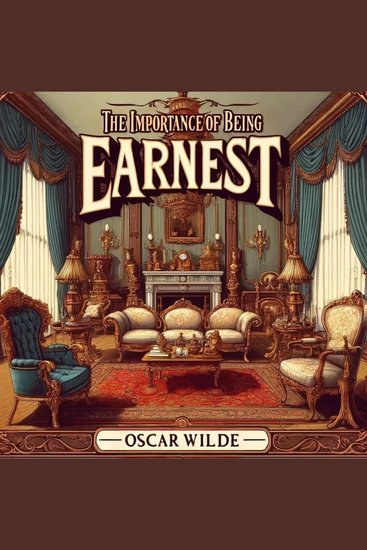
  • The Importance of Being Earnest - cover

    The Importance of Being Earnest

    Oscar Wilde

    • 0
    • 0
    • 0
    Dive into the witty and whimsical world of Oscar Wilde with "The Importance of Being Earnest" audiobook. This timeless comedic masterpiece takes listeners on a delightful journey filled with sparkling dialogue, clever wordplay, and hilariously absurd situations. 
    In this classic play, Wilde explores the themes of love, marriage, and social expectations through the lens of mistaken identities and outrageous deceptions. Set in Victorian England, the story follows the charming and eccentric characters as they navigate the complexities of romance and society's rigid norms. 
    Narrated with flair and sophistication, "The Importance of Being Earnest" captures Wilde's razor-sharp wit and keen observations of human nature, making it a joyous listening experience for audiences of all ages. 
    Perfect for theater enthusiasts, literature lovers, and anyone in need of a good laugh, this audiobook promises hours of entertainment and laughter. 
    So, if you're ready to embark on a hilarious and heartwarming journey through the whimsical world of Oscar Wilde, start listening to "The Importance of Being Earnest" today and experience the magic of this timeless classic. Start Listening to "The Importance of Being Earnest" today!
    Show book
  • Grim Tales - A pioneering volume of macabre supernatural tales - cover

    Grim Tales - A pioneering volume...

    Edith Nesbit

    • 0
    • 0
    • 0
    Edith Nesbit was born on the 15th August 1858 in Kennington, then part of Surrey.   
     
    Due to the health issues and tuberculosis of her sister Mary, Nesbit’s early life was one of constant changes of house both in England and on the continent. 
     
    At age 17, Nesbit met Hubert Bland and they married three years later―whilst she was 7 months pregnant.  Bland also kept his affair with another woman going throughout their marriage and the two children of that relationship were raised by Nesbit as well as her own three with Bland. 
     
    Together they were founder members of the Fabian Society in 1884 naming their son Fabian in its honour.  They also edited the Society's journal; ‘Today’.  Nesbit was an active lecturer and prolific writer on socialism during those years but gradually her work for them dwindled as her career as a children’s writer grew.  Her most famous success was ‘The Railway Children’ but she was also very prolific and greatly accomplished in poetry, short stories―especially her macabre ghost and supernatural stories―and novels for adults.  
     
    In February 1917, some three years after the death of Bland she married Thomas ‘the Skipper’ Tucker in Woolwich, where he was a ship's engineer on the Woolwich Ferry. 
     
    Edith Nesbit died from lung cancer on the 4th May 1924 at her house ‘The Long Boat’ at Jesson, St Mary's Bay, New Romney in Kent.  She was 65.
    Show book
  • War and Peace - Book 3: 1805 (Unabridged) - cover

    War and Peace - Book 3: 1805...

    Leo Tolstoy

    • 0
    • 0
    • 0
    War and Peace is a literary work mixed with chapters on history and philosophy by the Russian author Leo Tolstoy. It was first published serially, then published in its entirety in 1869. It is regarded as one of Tolstoy's finest literary achievements and remains an internationally praised classic of world literature.
    Book 3: 1805: Prince Vasíli was not a man who deliberately thought out his plans. Still less did he think of injuring anyone for his own advantage. He was merely a man of the world who had got on and to whom getting on had become a habit.
    Show book
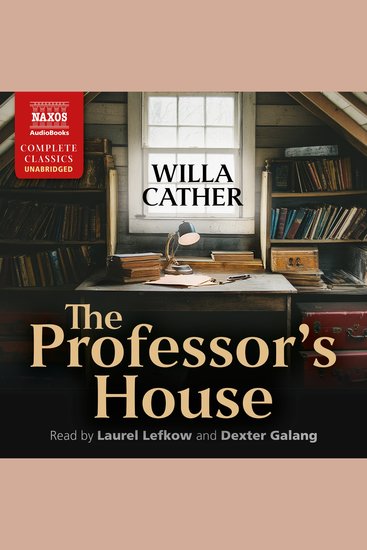
  • The Professor’s House - cover

    The Professor’s House

    Willa Cather

    • 0
    • 0
    • 0
    Professor Godfrey St. Peter, on the cusp of moving to a new home, finds himself clinging to his old study and the memories it holds. His mind is gripped by the absence of his brilliant former student, Tom Outland, and the marriages of his daughters have introduced changes that he cannot embrace. As he struggles with grief and gradually retreats from those around him, his mid-life crisis unfolds against the backdrop of a changing 1920s America. Will he embrace the future or succumb to the allure of the past? Cather’s keen exploration of human relationships and the price of progress leaves the listener pondering long after the final words have sounded.
    Show book
  • Free Air - cover

    Free Air

    Sinclair Lewis

    • 0
    • 0
    • 0
    Free Air is a 1919 novel written by Sinclair Lewis. A silent film adaptation of the novel was also released on April 30, 1922. The film starred Tom Douglas as Milt Daggett and Marjorie Seaman as Claire Boltwood.
    This cheerful little road novel, published in 1919, is about Claire Boltwood, who, in the early days of the 20th century, travels by automobile from New York City to the Pacific Northwest, where she falls in love with a nice, down-to-earth young man and gives up her snobbish Estate.
    Show book
  • The Incredulity of Father Brown - cover

    The Incredulity of Father Brown

    G. K. Chesterton

    • 0
    • 0
    • 0
    In the third of his series of Father Brown short stories G.K Chesterton is almost reticent in putting his clerical detective at the forefront of the narrative. 
    In the majority of the tales the diminutive priest makes a somewhat unremarkable entrance as almost an afterthought; a seemingly inconsequential individual whom the colourful personalities that populate the stories might easily overlook. But the beauty of Chesterton’s creation is that Father Brown in his anonymity is precisely placed to observe and penetrate both the souls and minds of men.
    Show book