Begleiten Sie uns auf eine literarische Weltreise!
Buch zum Bücherregal hinzufügen
Grey
Einen neuen Kommentar schreiben Default profile 50px
Grey
Jetzt das ganze Buch im Abo oder die ersten Seiten gratis lesen!
All characters reduced
Literal Madness - 3 Novels: Kathy Goes to Haiti My Death My Life by Pier Paolo Pasolini and Florida - cover

Literal Madness - 3 Novels: Kathy Goes to Haiti My Death My Life by Pier Paolo Pasolini and Florida

Kathy Acker

Verlag: Grove Press

  • 0
  • 1
  • 0

Beschreibung

A collection of three novels from the experimental feminist writer: “Literal Madness is Acker at her most powerful, disturbing, and provocative.” —Catherine Texier, author of Victorine 
 
Kathy Goes to Haiti, the first of three novels in Literal Madness, “speaks to us out of a delightful mock-naivete that reminds one at times of the Dick and Jane readers rewritten as manuals for politics and sex . . . At once hilarious and terrifying, [it] has all the logic of a Caribbean tour and a nightmare combined” (Los Angeles Times). 
 
My Death My Life by Pier Paolo Pasolini—wherein, among other things, the late Italian filmmaker solves his own murder, with the help of, among others, Romeo, Juliet, and the Bronté sisters—is a “scathing commentary on false values in art” (The Hartford Courant). 
 
In the haunting Florida, Acker achieves “a nearly telegraphic reduction of the Bogart-Bacall movie Key Largo to fatalistic, tough-guy essentials” (Booklist). 
 
“There’s a haunting method to Acker’s ‘madness’: a rough, raw, erudite wail against the postmodern loss of meaning and emotion.” —Kirkus Reviews
Verfügbar seit: 27.02.2018.
Drucklänge: 386 Seiten.
Weitere Bücher, die Sie mögen werden

  • Poor Tom - Living King Lear - cover

    Poor Tom - Living King Lear

    Simon Palfrey

    • 0
    • 0
    • 0
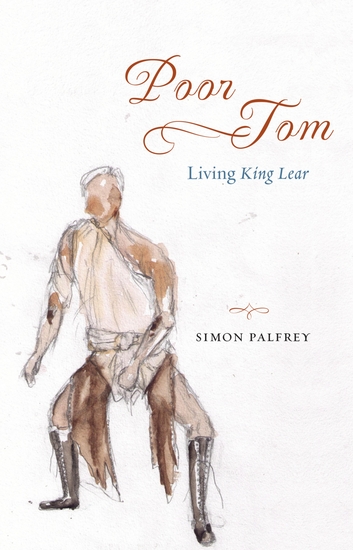
    King Lear is perhaps the most fierce and moving play ever written. And yet there is a curious puzzle at its center. The figure to whom Shakespeare gives more lines than anyone except the king—Edgar—has often seemed little more than a blank, ignored and unloved, a belated moralizer who, try as he may, can never truly speak to the play’s savaged heart. He saves his blinded father from suicide, but even this act of care is shadowed by suspicions of evasiveness and bad faith. In Poor Tom, Simon Palfrey asks us to go beyond any such received understandings—and thus to experience King Lear as never before. He argues that the part of Edgar is Shakespeare’s most radical experiment in characterization, and his most exhaustive model of both human and theatrical possibility. The key to the Edgar character is that he spends most of the play disguised, much of it as “Poor Tom of Bedlam,” and his disguises come to uncanny life. The Edgar role is always more than one person; it animates multitudes, past and present and future, and gives life to states of being beyond the normal reach of the senses—undead, or not-yet, or ghostly, or possible rather than actual. And because the Edgar role both connects and retunes all of the figures and scenes in King Lear, close attention to this particular part can shine stunning new light on how the whole play works. The ultimate message of Palfrey’s bravura analysis is the same for readers or actors or audiences as it is for the characters in the play: see and listen feelingly; pay attention, especially when it seems as though there is nothing there.
    Zum Buch
  • On Gaslighting - cover

    On Gaslighting

    Kate Abramson

    • 0
    • 0
    • 0
    "Gaslighting" is suddenly in everyone's vocabulary. It's written about, talked about, tweeted about, even sung about. It's become shorthand for being manipulated by someone who insists that up is down, hot is cold, dark is light—someone who isn't just lying about such things, but trying to drive you crazy. The term has its origins in a 1944 film in which a husband does exactly that to his wife, his crazy-making efforts symbolized by the rise and fall of the gaslights in their home. In this timely and provocative book, Kate Abramson examines gaslighting from a philosophical perspective, investigating it as a distinctive moral phenomenon. 


    Gaslighting, Abramson writes, is best understood as a form of interpersonal interaction, a particular way of fundamentally undermining someone. The gaslighter, Abramson argues, aims to make his target experience herself as incapable of reasoning, perceiving, or reacting in ways that would allow her to form appropriate beliefs, perceptions, or emotions in the first place. He seeks not only to induce in her this unmoored sense of herself but also to make it a reality. Using examples and analysis, Abramson gives an account of gaslighting and its immorality, and argues that such a discussion can help us understand other aspects of social life—from racism and sexism to the structure of interpersonal trust.
    Zum Buch
  • The Tense Tug-of-War for Global Tech Supremacy - "Elevate your Global Tech Supremacy knowledge! Dive into dynamic audio lessons for peak performance and insights" - cover

    The Tense Tug-of-War for Global...

    Orson Fenwick

    • 0
    • 0
    • 0
    The Tense Tug-of-War for Global Tech Supremacy 
    ⭐⭐ Simplified Guide & Explanations Included ⭐⭐ 
    Are you eager to advance your career and strengthen your understanding of the technology landscape that defines our future? 
    Are you in need of an all-encompassing guide that equips you with everything required to navigate the technology-driven world? 
    Your search concludes here! 
    This guide is your ultimate resource for enhancing your knowledge, honing your skills, and participating in practical exercises. With this, you're set for excellence. 
    Updated to reflect the latest developments in our technology-centric environment. 
    Key features of this enhanced guide: 
    - In-depth insights into the ongoing battle for tech dominance 
    - Comprehensive explanations of the intricacies of our technology-driven future 
    - Effective strategies for navigating the complexities of the tech industry 
    Our guide stands out thanks to its thorough coverage, which is vital for your success in understanding the nuances of this dynamic field. Concepts are explored in detail, not just brushed over. 
    Constructed with a clear layout and accessible language, our guide ensures smooth transitions between topics. Say goodbye to complicated terminology and welcome straightforward, precise, and technically sound content. 
    So, why hesitate? Click the BUY NOW button, secure your guide, and embark on your journey to mastering the technology-driven future! 
    Unlock the secrets behind our technology-driven future today!
    Zum Buch
  • The Art Of War - The Classic Work With Comprehensive Annotations From The Greatest Chinese Commentators - cover

    The Art Of War - The Classic...

    Lionel Giles, Sun Tzu

    • 0
    • 0
    • 0
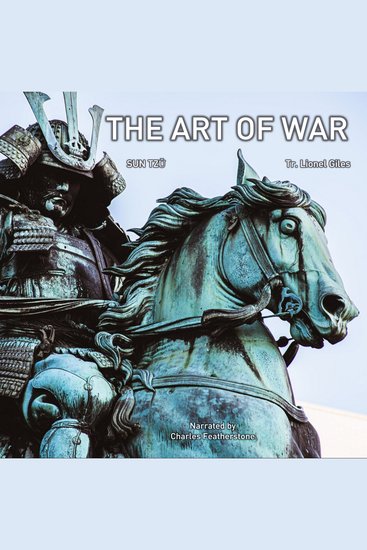
    There are many versions of this work in English, and it is included as a useful reflection once one has pondered Daoism’s key texts. The title is properly ‘'Sun Tzu's Military Method'. It was written at the time of the Dao and Zhuang Zi, several centuries before the Lieh Tzu. For fifteen hundred years, it was part of China’s canonical strategic anthology, which became known as the Seven Military Classics.In modern Anglophone culture it is often the only strategic text someone has read, supplanting and exceeding the previous dominant strategic text (von Clausewitz’s On War, 1832, tr. 1874). Leaders from Mao Zedong and Takeda Shingen to Võ Nguyên Giáp and Norman Schwarzkopf Jr. have explicitly acknowledged the book’s influence on them. This translation is notably the second major version of it in English. It follows a translation by Everard Ferguson Calthrop that Giles found deeply contemptible, as one can see from the introduction. It is important to note that most scholars do not consider the Art of War one of the classic Daoist texts. While it is a product and application of the philosophy, it is more of an exegetical monograph than a consideration of the philosophical underpinnings of Daoism. Much like the Zhuang Zi, it takes the core ideas and realizes them in specific practical situations. It does so with such certainty that many contest it as a ‘true’ Daoist work. As you will see from the discussions embedded elsewhere, the key Daoist texts value contradiction and paradox far too much to be as procedurally simple as the Art of War is.It is not clear that this criticism is fair, however. A much kinder perspective is that Daoism’s great failure is in its apparent lack of any utilitarian or social value. While Confucianism provides a balance, Sun Tzu’s work attempts to build a more practical version of Daoism than the key texts allow for.
    Zum Buch
  • Communism in Practice - Case Studies of Communist Governments and Their Societal Impact - cover

    Communism in Practice - Case...

    Arlo Holders

    • 0
    • 0
    • 0
    Communism, as an ideology and political movement, seeks to create a classless society where the means of production are owned collectively. Rooted in the works of Karl Marx and Friedrich Engels, communism advocates for the abolition of private property and aims to establish a system where wealth is distributed according to need, not individual ownership. This chapter explores the foundational principles of communism, its historical development, and its responses to capitalism and social inequality. 
    At the heart of communism lies the idea of economic equality. Marx and Engels argued that capitalism inherently exploits workers, who sell their labor for wages while capitalists profit from the value produced. The solution, according to communism, is the overthrow of capitalist systems and the establishment of a proletarian (working class) dictatorship. This revolutionary phase would transition into a classless society in which private property is abolished, and wealth is shared among all members of society. 
    The key principles of communism emphasize collective ownership, state control of resources, and the idea of class struggle. In Marxist theory, history is understood through the lens of class conflict, where different social classes—such as the bourgeoisie (capitalists) and the proletariat (workers)—are in perpetual opposition. The ultimate goal is to establish a society free of these class distinctions, where everyone has access to the same resources and opportunities.
    Zum Buch
  • Affirmations on Procrastinations Do It Now Power Cycle - No more laziness Transform yourself change to productivity master your habits effortless strength courage discipline Act instantly - cover

    Affirmations on Procrastinations...

    Think ThinkAndBloom

    • 0
    • 0
    • 0
    Have you ever tried to let go of procrastination but fail from time to time?  
    What if we can be productive by just sleeping?  
    What if there is an alternative method that is effortless?  
    Procrastination is not uncommon for human beings. Human beings procrastinate due to the fact that fears are attached to the actions we are envisioning. We put off things that we have negative feelings associated with it. It is not the actions we are fear of but the emotions that we are attaching to it. Procrastination is a self-defense mechanism. It wants to protect oneself from the negative emotions that are attached.  
    In this audiobook, we will Get rid of procrastination through affirmations be productive & do it now Have a clear mindset Rewire your brain to discipline Be a productive master Build lasting healthy habits  
    By simply listening to this audiobook, you will allow your mind to absorb positive ideas. These words will effortlessly reprogram your mind bringing positive changes in your life.
    Zum Buch