¡Acompáñanos a viajar por el mundo de los libros!
Añadir este libro a la estantería
Grey
Escribe un nuevo comentario Default profile 50px
Grey
Suscríbete para leer el libro completo o lee las primeras páginas gratis.
All characters reduced
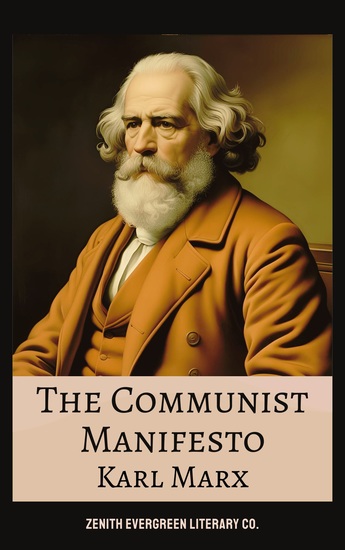
The Communist Manifesto - A Groundbreaking Vision of Class Struggle and Revolutionary Change - cover

The Communist Manifesto - A Groundbreaking Vision of Class Struggle and Revolutionary Change

Karl Marx, Zenith Evergreen Literary Co.

Editorial: Zenith Evergreen Literary Co.

  • 0
  • 0
  • 0

Sinopsis

"Workers of the world, unite!"

More than a rallying cry, The Communist Manifesto is one of the most influential political documents ever written. Authored in 1848 by Karl Marx and Friedrich Engels, this concise yet powerful work lays out the principles of communism, the critique of capitalism, and the theory of historical materialism that would shape global political ideologies for generations.

Whether you read it as a political call-to-arms or a key text in the history of ideas, The Communist Manifesto offers a clear, compelling, and provocative look at class conflict, inequality, and revolution.

💬 "Still provocative, still debated—this is essential reading for anyone interested in economics, politics, or history."

🔍 Why It's Still Widely Read:
A foundational work in political theory and philosophy

A critical read for students of economics, revolution, and ideology

Frequently referenced across the political spectrum in modern discourse

📣 Engage with One of the Most Important Works of Modern Thought.
Buy The Communist Manifesto today and explore the roots of one of history's most enduring—and controversial—movements.
Disponible desde: 17/04/2025.
Longitud de impresión: 105 páginas.


Otros libros que te pueden interesar

  • Broadcasting Vietnam - Media Public Opinion And The Rise Of The American Antiwar Movement - cover

    Broadcasting Vietnam - Media...

    Davis Truman

    • 0
    • 0
    • 0
    This audiobook is narrated by an AI Voice.   
    "Broadcasting Vietnam" offers a powerful and deeply human look at one of the most controversial wars in modern history and how it was brought into the living rooms of America. With an unflinching eye on the role of mass media, Davis Truman examines how televised images, frontline reporting, and photojournalism contributed to turning the tide of public opinion and fueling one of the most significant protest movements in U.S. history. 
    From the revolutionary leadership of Ho Chi Minh and the early days of conflict to the escalating American involvement and the devastating use of napalm and chemical weapons, this book chronicles the Vietnam War in vivid detail. Through chapters like "Napalm Girl" and "War and Mass Media," Truman highlights the undeniable impact of iconic moments that shocked a nation and galvanized a generation. 
    Combining historical analysis with cultural insight, Truman also explores the long-term consequences of the war, including its profound impact on American society, politics, and public trust. This is not just a book about war. It's a story about how information, images, and voices changed the course of history. 
    Bold, gripping, and unflinchingly honest, Broadcasting Vietnam is essential reading for anyone seeking to understand the power of media in shaping truth, perception, and resistance.
    Ver libro
  • Reclaiming Hope: Inspiring Ideas for the American Dream - Unlock success! Dive into inspiring audio lessons designed to reignite the American Dream's potential - cover

    Reclaiming Hope: Inspiring Ideas...

    Graham Sterling

    • 0
    • 0
    • 0
    "Reclaiming Hope: Inspiring Ideas for the American Dream" 
    Are you striving to advance in your career and enhance your understanding by immersing yourself in transformative ideas for the American Dream? 
    In search of a thorough guide that offers all essential insights needed to explore the American Dream's possibilities? 
    Your search is over! 
    This guide is your ultimate companion for broadening your understanding, applying innovative concepts, and engaging in enlightening exercises. With this, you're set for success. 
    Unlock new pathways for the American Dream. 
    Key features of this insightful guide: 
    - Deep explorations of transformative ideas for the American Dream 
    - Comprehensive explanations and clarity on innovative concepts 
    - Effective strategies for preparing and embracing challenges 
    Our guide stands out with its exhaustive coverage, providing the depth necessary for your empowerment and success. Ideas are not merely touched upon—they are explored with precision. 
    Please note that this guide is an independent resource, not affiliated with any official entities, crafted purely for your benefit. 
    Designed with a logical structure and clear language, our guide ensures seamless transitions between topics. Say goodbye to complex language and welcome straightforward, accurate content. 
    So, why delay? Click the BUY NOW button, secure your guide, and embark on your journey toward fulfilling the American Dream!
    Ver libro
  • Codebreakers - How Allied Intelligence Cracked Enemy Codes and the Tide - cover

    Codebreakers - How Allied...

    Sage Winters

    • 0
    • 0
    • 0
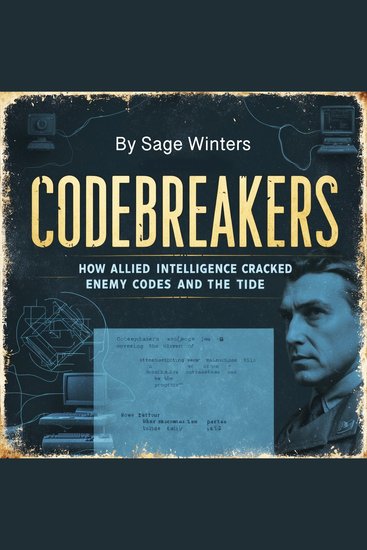
    The art of codebreaking has long been an essential aspect of warfare, serving as a hidden weapon that can change the course of history. During World War II, intelligence efforts were not only about gathering information; they were about deciphering the secrets encoded by the enemy to gain a strategic advantage. As technology evolved, so did the complexity of military ciphers, making the task of breaking enemy codes more challenging and more critical than ever. "Codebreakers: How Allied Intelligence Cracked Enemy Codes and the Tide" delves into the extraordinary efforts of Allied cryptographers, whose tireless work behind the scenes helped secure victories that shifted the balance of the war. 
      
    The importance of cryptography in World War II cannot be overstated. The ability to read an enemy’s messages before they had time to act was a decisive factor in numerous key battles and campaigns. The German Enigma machine, a sophisticated encryption device, represented the pinnacle of Nazi Germany’s efforts to protect its communications. Breaking this code was essential to the Allied success, and it was a challenge that seemed insurmountable at the time. However, a group of brilliant minds, including Alan Turing, led the charge in deciphering the Enigma cipher, providing the Allies with invaluable intelligence that allowed them to anticipate German movements, thwart attacks, and save countless lives. 
      
    At the heart of this monumental achievement was Bletchley Park, a secret British facility that became the epicenter of codebreaking during the war. Here, the brightest mathematicians, linguists, and engineers worked tirelessly, often under immense pressure, to crack the German and later the Japanese codes.
    Ver libro
  • Disaster Nationalism - The Downfall of Liberal Civilization - cover

    Disaster Nationalism - The...

    Richard Seymour

    • 0
    • 1
    • 0
    The rise of the new far right has left the world grappling with a profound misunderstanding. While the spotlight often shines on the actions of charismatic leaders, the true peril lies elsewhere. Defeating these people will not stem the tide driving them forward. They are merely the embodiment of profound forces that are rarely understood. Propelled through the vast networks of social media and fueled by far-right influencers, enthralled by images of disaster and fantasies of doom, they have emerged from a reservoir of societal despair, fear, and isolation. Within this seething cauldron, we witness not only the surge of far-right political movements but also the sparks of individual and collective violence against perceived enemies, from 'lone wolf' killers to terrifying pogroms. Should a new fascism emerge, it will coalesce from these very elements. This is disaster nationalism. 


    Richard Seymour delves deep into this alarming development in world politics, dissecting its roots, its influencers, and the threats it poses. With meticulous analysis and compelling storytelling, Seymour offers a stark warning. The battle against disaster nationalism is not just political; it is a struggle for our collective soul and the future of civilization itself. Unless we understand the deeper forces propelling the far-right resurgence, we have little chance of stopping it.
    Ver libro
  • A War Made in Russia - cover

    A War Made in Russia

    Sergei Medvedev

    • 0
    • 0
    • 0
    In this timely and incisive book, Sergei Medvedev argues that Russia's war in Ukraine was not merely a whim of Putin's obsession: rather, it was the result of two decades of authoritarian degradation and post-imperial ressentiment, a culmination of Putin's regime and of Russia's entire imperial history. Building on his prize-winning book The Return of the Russian Leviathan, Medvedev argues that it was not only Putin that started this war, but Russia itself, which, by and large, has imagined and embraced it with enthusiasm, seeking to relive its own military glory and colonial past.
    Ver libro
  • How States Think - The Rationality of Foreign Policy - cover

    How States Think - The...

    John J. Mearsheimer, Sebastian...

    • 0
    • 0
    • 0
    A groundbreaking examination of a central question in international relations: Do states act rationally? 
     
    To understand world politics, you need to understand how states think. Are states rational? Much of international relations theory assumes that they are. But many scholars believe that political leaders rarely act rationally. The issue is crucial for both the study and practice of international politics, for only if states are rational can scholars and policymakers understand and predict their behavior. 
     
    John J. Mearsheimer and Sebastian Rosato argue that rational decisions in international politics rest on credible theories about how the world works and emerge from deliberative decision‑making processes. Using these criteria, they conclude that most states are rational most of the time, even if they are not always successful. Mearsheimer and Rosato make the case for their position, examining whether past and present world leaders, including George W. Bush and Vladimir Putin, have acted rationally in the context of momentous historical events, including both world wars, the Cold War, and the post–Cold War era.  
     
    By examining this fundamental concept in a novel and comprehensive manner, Mearsheimer and Rosato show how leaders think, and how to make policy for dealing with other states.
    Ver libro