Join us on a literary world trip!
Add this book to bookshelf
Grey
Write a new comment Default profile 50px
Grey
Subscribe to read the full book or read the first pages for free!
All characters reduced
The Story of Achilles - cover

The Story of Achilles

Karl Friedrich Becker

Translator George P. Upton

Publisher: DigiCat

  • 0
  • 0
  • 0

Summary

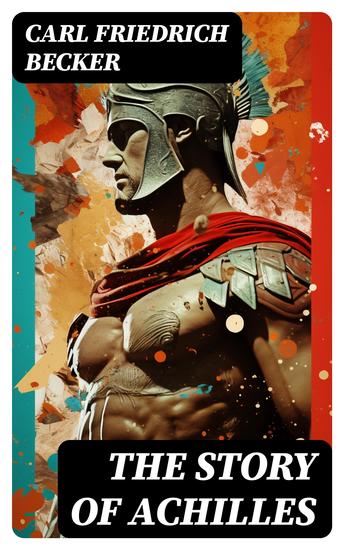
In "The Story of Achilles," Carl Friedrich Becker crafts a masterful retelling of the tragic tale of the Greek hero Achilles, set against the backdrop of the Trojan War. Drawing on classical sources while employing a lyrical and evocative prose style, Becker captures the complexities of honor, rage, and mortality that define Achilles' character. The narrative intricately weaves historical scholarship with compelling storytelling, allowing readers to appreciate not just the mythological elements but also the cultural and philosophical questions of heroism and fate prevalent in ancient Greek literature. Carl Friedrich Becker, a noted scholar and historian, was deeply influenced by his studies of classical literature and philosophy, particularly the works of Homer and Hesiod. His exploration of the interplay between mythology and human experience mirrors his own belief in the timeless relevance of ancient stories. Becker's scholarly background affords him a unique perspective, which he channels into his writing, making "The Story of Achilles" not only a fascinating narrative but also a profound meditation on the human condition. This book is highly recommended for readers seeking a rich and immersive experience in classical literature. Becker's eloquent prose invites both seasoned scholars and newcomers alike to delve into the myth of Achilles, offering fresh insights and emotional depth that resonate with contemporary themes of struggle and resilience.
Available since: 11/22/2023.
Print length: 200 pages.

Other books that might interest you

  • The Adventures of Tom Sawyer - cover

    The Adventures of Tom Sawyer

    Mark Twain

    • 0
    • 0
    • 0
    The Adventures of Tom Sawyer (also simply known as Tom Sawyer) is an 1876 novel by Mark Twain about a boy growing up along the Mississippi River. It is set in the 1840s in the town of St. Petersburg, which is based on Hannibal, Missouri, where Twain lived as a boy. In the novel, Tom Sawyer has several adventures, often with his friend Huckleberry Finn. Originally a commercial failure, the book ended up being the best-selling of Twain's works during his lifetime. Though overshadowed by its sequel, Adventures of Huckleberry Finn, the book is considered by many to be a masterpiece of American literature. It was one of the first novels to be written on a typewriter.
    Show book
  • The Beckoning Fair One - cover

    The Beckoning Fair One

    Oliver Onions

    • 0
    • 0
    • 0
    THE BECKONING FAIR ONE AND OTHER STORIES includes fifteen works by famed British author George Oliver Onions. This collection includes his famous ghost story novella THE BECKONING FAIR ONE, in which a struggling writer rents a remote house, only have his sanity gradually destroyed by a mysterious feminine spirit.
    Show book
  • The Scarlet Plague - cover

    The Scarlet Plague

    Jack London

    • 0
    • 0
    • 0
    A grandfather tells his grandchildren of a previous world, one before a global pandemic wipes out nearly all mankind. Raw and melancholy, The Scarlet Plague is Jack London’s apocalyptic story about how one civilization rose and fell. Originally published in 1912 by London Magazine.
    Show book
  • The Pavilion - From the dark mind of Nesbit comes the dark force of nature - cover

    The Pavilion - From the dark...

    Edith Nesbit

    • 0
    • 0
    • 0
    Edith Nesbit was born on the 15th August 1858 in Kennington, then part of Surrey.   
     
    Due to the health issues and tuberculosis of her sister Mary, Nesbit’s early life was one of constant changes of house both in England and on the continent. 
     
    At age 17, Nesbit met Hubert Bland and they married three years later―whilst she was 7 months pregnant.  Bland also kept his affair with another woman going throughout their marriage and the two children of that relationship were raised by Nesbit as well as her own three with Bland. 
     
    Together they were founder members of the Fabian Society in 1884 naming their son Fabian in its honour.  They also edited the Society's journal; ‘Today’.  Nesbit was an active lecturer and prolific writer on socialism during those years but gradually her work for them dwindled as her career as a children’s writer grew.  Her most famous success was ‘The Railway Children’ but she was also very prolific and greatly accomplished in poetry, short stories―especially her macabre ghost and supernatural stories―and novels for adults.  
     
    In February 1917, some three years after the death of Bland she married Thomas ‘the Skipper’ Tucker in Woolwich, where he was a ship's engineer on the Woolwich Ferry. 
     
    Edith Nesbit died from lung cancer on the 4th May 1924 at her house ‘The Long Boat’ at Jesson, St Mary's Bay, New Romney in Kent.  She was 65.
    Show book
  • Rilla of Ingleside - cover

    Rilla of Ingleside

    L. M. Montgomery

    • 0
    • 0
    • 0
    "Rilla is Anne and Gilbert Blythe’s youngest daughter, an excitable 15-year-old who is unaware of how the world works, and is only interested in having fun. But the world is on the brink of a global war, and soon Rilla’s family and life are turned upside down, as several of her brothers enlist in the army and are sent to fight overseas.The book follows Rilla’s life through the duration of World War I, as she grows up quickly from the responsibilities put on young women in this time. She adopts an orphaned child and raises him, runs the local Junior Red Cross, falls in love with a soldier just before he deploys, and even assists in the elopement of a soldier to his beloved.This novel captures the anxiety of living with one’s family away at war, as well as captures the unique perspective of a woman’s life at home during the First World War (and is the only Canadian novel that shows this perspective written by a contemporary of the war). Through the sadness and bleak moments brought to the world in this war, and the loss that the Blythes face, there is yet again hope to be found in the love of the families and neighbors of Ingleside."
    Show book
  • Brightness Falls - From their pens to your ears genius in every story - cover

    Brightness Falls - From their...

    Mary Butts

    • 0
    • 0
    • 0
    Mary Frances Butts was born on 13th December 1890 in Poole, Dorset. 
    Her early years were spent at Salterns, an 18th-century house overlooking Poole Harbour.  Sadly in 1905 her father died, and she was sent for boarding at St Leonard's school for girls in St Andrews. 
    Her mother remarried and, from 1909, Mary studied at Westfield College in London, and here, first became aware of her bisexual feelings.  She was sent down for organising a trip to Epsom races and only completed her degree in 1914 when she graduated from the London School of Economics.  By then Mary had become an admirer of the occultist Aleister Crowley and she was given a co-authorship credit on his ‘Magick (Book 4)’. 
    In 1916, she began the diary which would now detail her future life and be a constant reference point for her observations and her absorbing experiences. 
    During World War I, she was doing social work for the London County Council in Hackney Wick, and involved in a lesbian relationship.  Life changed after meeting the modernist poet, John Rodker and they married in 1918. 
    In 1921 she spent 3 months at Aleister Crowley's Abbey of Thelema in Sicily; she found the practices dreadful and also acquired a drug habit.  Mary now spent time writing in Dorset, including her celebrated book of short stories ‘Speed the Plough’ which saw fully develop her unique Modernist prose style. 
    Europe now beckoned and several years were spent in Paris befriending many artists and writing further extraordinary stories.   
    She was continually sought after by literary magazines and also published several short story collections as books. Although a Modernist writer she worked in other genres but is essentially only known for her short stories.  Mary was deeply committed to nature conservation and wrote several pamphlets attacking the growing pollution of the countryside. 
    In 1927, she divorced and the following year her novel ‘Armed with Madness’ was published.  A further marriage followed in 1930 and time was spent attempting to settle in London and Newcastle before setting up home on the western tip of Cornwall.  By 1934 the marriage had failed. 
    Mary Butts died on 5th March 1937, at the West Cornwall Hospital, Penzance, after an operation for a perforated gastric ulcer. She was 46.
    Show book