Begleiten Sie uns auf eine literarische Weltreise!
Buch zum Bücherregal hinzufügen
Grey
Einen neuen Kommentar schreiben Default profile 50px
Grey
Jetzt das ganze Buch im Abo oder die ersten Seiten gratis lesen!
All characters reduced
English Satires - A Tapestry of English Satirical Brilliance - cover

English Satires - A Tapestry of English Satirical Brilliance

Jonathan Swift, Daniel Defoe, John Dryden, Robert Burns, William Makepeace Thackeray, Robert Browning, Oliver Goldsmith, Geoffrey Chaucer, Alexander Pope, William Dunbar Dunbar, Lord Byron

Verlag: Good Press

  • 0
  • 0
  • 0

Beschreibung

English Satires is an essential collection that encapsulates the biting wit and social commentary that have defined British literary satire. This anthology traverses a rich terrain of historical contexts and poetic styles, encompassing the ironic prose of Jonathan Swift, the biting critiques of society by Daniel Defoe, and the poignant verses of Robert Browning. Each piece captures the spirit of its time while contributing to an overarching narrative of critique and reflection on human folly and institutional vice. The dynamic between the humorous and the serious, the poetic and the prosaic, creates a tapestry of literary brilliance, offering a bouquet of standout satirical works that challenge and delight in equal measure. The collection brings together titans of British literature whose varied backgrounds weave a complex fabric of cultural and historical narratives. Figures like Geoffrey Chaucer and Alexander Pope lend a medieval and Enlightenment perspective, respectively, showcasing the evolution of satire as a tool for social critique. The inclusion of pioneering voices from the Romantic period, such as Byron, further enriches the dialogue between eras, while the Scottish voice of Robert Burns introduces a regional flair to the English-dominated canon. Together, these authors lend a richness and diversity to the themes of morality, politics, and society. English Satires offers readers a unique opportunity to immerse themselves in the complexities of the British satirical tradition. In this single volume, the diversity of voices and styles provides a comprehensive exploration of the nuanced discourse of satire. Students of literature and avid readers alike will find the anthology both enlightening and entertaining, a perfect blend of educational value and literary enjoyment. As the compilation sparks a conversation between time periods and perspectives, it fosters a deeper understanding of the multifaceted nature of satire and its enduring impact on culture and society.
Verfügbar seit: 12.08.2023.
Drucklänge: 236 Seiten.

Weitere Bücher, die Sie mögen werden

  • There Is No Blue - cover

    There Is No Blue

    Martha Baillie

    • 0
    • 0
    • 0
    WINNER OF THE HILARY WESTON WRITERS' TRUST PRIZE FOR NONFICTION 
    THE GLOBE AND MAIL: BOOKS TO READ IN FALL 2023 
    THE GLOBE AND MAIL BEST 100 BOOKS OF 2023 
    CBC BOOKS BEST CANADIAN NONFICTION OF 2023 
    Martha Baillie’s richly layered response to her mother’s passing, her father's life, and her sister’s suicide is an exploration of how the body, the rooms we inhabit, and our languages offer the psyche a home, if only for a time.  
    Three essays, three deaths. The first is the death of the author’s mother, a protracted disappearance, leaving space for thoughtfulness and ritual: the washing of her body, the making of a death mask. The second considers the author’s father, his remoteness, his charm, a lacuna at the centre of the family even before his death, earlier than her mother’s. And then, the shocking death of the author’s sister, a visual artist and writer living with a diagnosis of schizophrenia, who writes three reasons to die on her bedroom wall and then takes her life. 
    "Martha Baillie’s novels are thrillingly, joyously singular, that rare combination of sui generis and just plain generous. That There Is No Blue, her memoir, is all of those things too, is no surprise; still, she has gone somewhere extraordinary. This triptych of essays, which exquisitely unfolds the “disobedient tale” of the lives and deaths of her mother, her father, and her sister, is a meditation on the mystery and wonder of grief and art making and home and memory itself. It made me think of kintsugi, the Japanese art of repair, in which the mending is not hidden but featured and beautifully illuminated. Baillie’s variety of attention, carved out of language, is tenderness, is love." – Maud Casey, author of City of Incurable Women 
    "This is a stunning memoir, intense and meticulous in its observations of family life. Baillie subtly interrogates and conveys the devastating mistranslations that take place in childhood, the antagonism and porousness of siblings,  and the tragedy of schizophrenia as it unfolds.  I couldn’t put it down." – Dr. Lisa Appignanesi, author of Mad, Bad and Sad and Everyday Madness 
    "Exquisite." – Souvankham Thammavongsa, author of How to Pronounce Knife 
    "I am grateful for this profound meditation on family and loss.” – Charlie Kaufman, filmmaker 
    "This strange, unsettling memoir of outer life and inner life and their bizarre twining captures the author’s identity by way of her mother’s death, her sister’s failing battle with mental illness, and the mysterious figure of her father.  It combines anguished guilt, deep tenderness, and bemused affection in highly evocative, often disturbing prose.  Its brave honesty is amplified by a persistent lyricism; its undercurrent of fear is uplifted by a surprising, resilient hopefulness.  It is both a plea for exoneration and an act of exoneration, an authentic meditation on the terrible difficulty of being human." – Andrew Solomon, author of The Noonday Demon
    Zum Buch
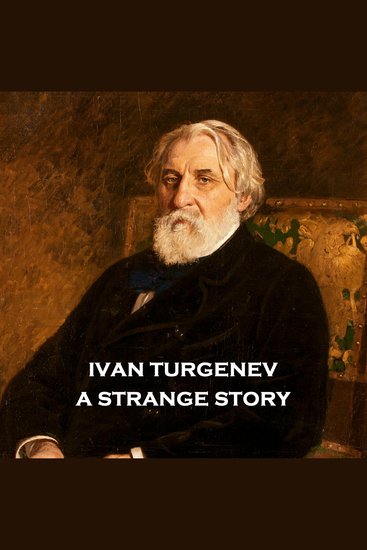
  • A Strange Story - Turgenev brings us a woman with countless options at her feet choosing to turn her back on society and go down a radically different path - cover

    A Strange Story - Turgenev...

    Ivan Turgenev

    • 0
    • 0
    • 0
    Ivan Sergeyevich Turgenev was born on 9th November 1818 in Oryol, Russia to parents from the nobility.  He and his two brothers were raised by their mother on the family estate.  Surrounded by foreign governesses he became fluent in French, German, and English.  Their father spent little time with them and this undoubtedly had an effect on him and his brothers.  When he was nine the family moved to Moscow to give their children a better education. 
     
    Turgenev studied for a year at the University of Moscow and then at the University of St Petersburg to study Classics, Russian literature, and philology.  During that time his father died from kidney stone disease.  In 1838 Turgenev studied philosophy and history at the University of Berlin for 3 years before returning to St Petersburg for his master's. 
     
    He started his career with the Russian Civil Service and it was only in 1852, after several earlier publications, that he made his name with his short story collection, ‘A Sportsman's Sketches’, based on his observations of peasant life and nature. 
      
    That same year he wrote an obituary for Nikolai Gogol: "Gogol is dead!... What Russian heart is not shaken by those three words?... He is gone, that man whom we now have the right (the bitter right, given to us by death) to call great."  The St Petersburg censor banned publication but the Moscow censor allowed it.  He was dismissed but Turgenev was held responsible and imprisoned for a month, and then exiled to his country estate.  
     
    Along with many other intellectuals Turgenev left Russia and settled in Paris in 1854.  During this period he wrote his finest stories and four novels.  
     
    Alexander II ascended the Russian throne in 1855, and the political climate relaxed.  Turgenev returned home.  
     
    ‘Fathers and Sons’, Turgenev's most famous and enduring novel, appeared in 1862. Its leading character is considered the first ‘Bolshevik’ in Russian literature. But the hostile reaction prompted Turgenev's decision to again leave Russia.  
     
    His health declined during his later years.  In January 1883, an aggressive malignant tumor was removed but by then it had metastasized in his upper spinal cord, causing him intense pain in his final few months of life.  
     
    Ivan Turgenev died on 3rd September 1883 of a spinal abscess, a complication of the metastatic liposarcoma, in his house near Paris.  He was buried in St Petersburg.  
     
    In this tale a young girl, Sophia, endures difficult circumstances before several years later becoming the companion of a devout, but pitifully poor, vagrant holy man wandering the countryside.
    Zum Buch
  • The Role of Women in Ancient Egypt - Queens Priestesses and Everyday Life - cover

    The Role of Women in Ancient...

    Omar Khalil

    • 0
    • 0
    • 0
    Women in Ancient Egypt held a unique and significant position within the broader social and cultural framework of their civilization. Unlike in many ancient societies, Egyptian women enjoyed a considerable amount of rights and freedoms, especially when compared to their contemporaries in other parts of the world. The role of women in Egyptian society was largely defined by a combination of legal rights, religious significance, and familial responsibilities, with many women being able to exercise substantial influence in both public and private spheres. 
    Socially, women in Ancient Egypt were often portrayed as equals to men, and their contributions to society were highly valued. While men generally dominated the spheres of politics, military, and high-ranking religious offices, women were not excluded from positions of authority, especially within the royal family and the religious hierarchy. For example, queens, priestesses, and high-ranking women could wield political power and influence in matters of state and governance. However, their roles were primarily centered around the family and domestic life. Marriage and motherhood were central to a woman’s identity, and women were expected to oversee the household and care for children. 
    In terms of legal rights, women in Ancient Egypt were granted many protections and privileges. They had the ability to own property, enter into contracts, and even initiate divorce if necessary. This level of autonomy was relatively rare in the ancient world, where women were often considered the property of their fathers or husbands. Egyptian women also had the right to inherit property, and they could pass on property to their children, ensuring that their lineage could maintain wealth and status. These legal rights enabled women to participate in economic transactions, manage estates, and even become wealthy landowners in some cases.
    Zum Buch
  • The Endless Search for More - A Collection of Riveting True Stories on Money Matters - cover

    The Endless Search for More - A...

    John Mucai

    • 0
    • 0
    • 0
    A collection of true stories that revolve around our continuous search for “more.” And while this trait is essential for the long-term sustainability of humanity, John Mucai suggests that we must always strive to appropriately calibrate our desires. And more importantly, adopt a problem-solving mindset in our never-ending quest for “more.” 
    Zum Buch
  • Aristotle’s Metaphysical and Scientific Masterpieces - Metaphysics On Sense and the Sensible On Life and Death & On Breathing - cover

    Aristotle’s Metaphysical and...

    Aristotle

    • 0
    • 0
    • 0
    What if you could grasp the hidden principles guiding reality, perception, and the forces of life itself—all in one volume? 
    This curated anthology features four of Aristotle’s groundbreaking works, bridging his metaphysical insights with his scientific explorations. Adapted for today’s reader, these texts illuminate the nature of existence, the role of perception, the essence of life and death, and the vital act of breathing—offering a unified understanding of our world’s complexities. 
    What You’ll Discover in This Modern Anthology:Core metaphysical theories that shaped Western thoughtThe importance of our senses in deciphering realityPhilosophical perspectives on life, death, and the essence of beingAncient wisdom that resonates with modern scientific inquiries 
    Imagine a single resource that harmonizes the spiritual and physical dimensions of life, guiding you toward deeper truth and practical understanding. Aristotle’s Masterpieces continue to challenge, inspire, and inform seekers of knowledge worldwide. 
    Embark on a journey that spans the tangible and the transcendent. Get your copy now and immerse yourself in the brilliance of Aristotle’s vision.
    Zum Buch
  • Eastern Inferno - The Journals of a German Panzerjäger on the Eastern Front 1941–43 - cover

    Eastern Inferno - The Journals...

    Christine Alexander, Mason Kunze

    • 0
    • 0
    • 0
    This book presents the remarkable personal journals of German soldier Hans Roth. Writing as events transpired, he recorded the mystery and tension as the Germans deployed on the Soviet frontier in June 1941. In these journals, battles are described in "you are there" detail, as Roth wrote privately, as if to keep himself sane, knowing that his honest accounts of the horrors in the East could never pass through Wehrmacht censors. When the Soviet counteroffensive of winter 1942 begins, his unit is stationed alongside the Italian 8th Army, and his observations of its collapse, as opposed to the reaction of the German troops sent to stiffen its front, are of special fascination. 


    Roth's three journals were discovered many years after his disappearance, tucked away in the home of his brother, with whom he was known to have had a deep bond. After his brother's death, his family discovered them and quickly sent them to Rosel, Roth's wife. In time, Rosel handed down the journals to Erika, Roth's only daughter, who had immigrated to America. Hans Roth was doubtlessly working on a fourth journal before he was reported missing in action in July 1944 during the battle known as the Destruction of Army Group Center. Although Roth's ultimate fate remains unknown, what he did leave behind is an incredible firsthand account of the horrific war the Germans waged in Russia.
    Zum Buch