¡Acompáñanos a viajar por el mundo de los libros!
Añadir este libro a la estantería
Grey
Escribe un nuevo comentario Default profile 50px
Grey
Suscríbete para leer el libro completo o lee las primeras páginas gratis.
All characters reduced
Human Nature and Conduct - An Introduction to Social Psychology - cover

Human Nature and Conduct - An Introduction to Social Psychology

John Dewey

Editorial: Interactive Media

  • 0
  • 0
  • 0

Sinopsis

"Human Nature and Conduct: An Introduction to Social Psychology" by John Dewey is a thought-provoking exploration of human behavior and its connection to social dynamics. In this influential work, Dewey examines the complex relationship between human nature, individual conduct, and the social forces that shape human behavior. The book begins by questioning traditional views of human nature and behavior, challenging the notion of fixed and predetermined human characteristics. Dewey argues that human nature is not static but is influenced by social, cultural, and environmental factors. He emphasizes that individuals are not isolated beings but are deeply connected to the social contexts in which they exist.
Disponible desde: 06/07/2023.
Longitud de impresión: 208 páginas.

Otros libros que te pueden interesar

  • Wicked Hampton County - cover

    Wicked Hampton County

    Michael DeWitt Jr.

    • 0
    • 0
    • 0
    The Darker Side of Hampton County 


    Hampton County is a rural county in South Carolina with a long and storied history, but it has a shady side. Author Michael DeWitt details the corruption, murders, and crimes that remained in the memories of locals for years.
    Ver libro
  • The Prince - A guide to understanding power With detailed chapter-by-chapter insights - cover

    The Prince - A guide to...

    Niccolò Machiavelli

    • 0
    • 0
    • 0
    🔥 The Prince by Niccolò Machiavelli 
    The ultimate guide to understanding power. 
     With detailed chapter-by-chapter insights. 
    The world is not built for the weak. 
     Behind every great conquest, every successful career, every life that leaves a mark… lies an uncomfortable truth: 
     Power is not given. It’s taken. It’s defended. It’s built, day after day. 
    The Prince is not just a book of history. 
     It’s a ruthless, timeless manual—a roadmap for anyone who wants to understand the unwritten rules of leadership, control, and survival in a competitive world. 
     This edition, enhanced with chapter-by-chapter explanations, won’t just let you hear Machiavelli’s words—you’ll truly understand them. 
     You’ll learn how to think like a leader. How to make tough decisions. How to avoid being crushed by circumstances—and how to master them. 
     And how to build a power that lasts, even when the world around you falls apart. 
    This is not an audiobook for those looking for easy answers. 
     It’s for those who are ready to take control of their own destiny.
    Ver libro
  • Olmecs - One of the Earliest Mesoamerican Civilizations We Know - cover

    Olmecs - One of the Earliest...

    Kelly Mass

    • 0
    • 0
    • 0
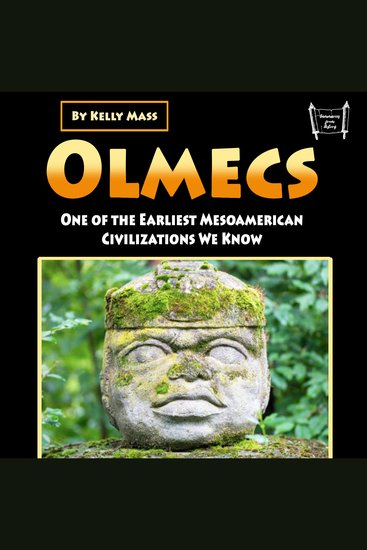
    The Olmecs are often regarded as the first significant civilization in Mesoamerica, a region that includes parts of modern-day Mexico and Central America. They emerged in the tropical lowlands of what is now the Mexican states of Veracruz and Tabasco, following a gradual development in the Soconusco region. It is believed that the Olmecs were influenced by neighboring cultures, particularly the Mokaya and Mixe–Zoque tribes, who inhabited the areas around them. These early interactions may have played a role in shaping Olmec society, laying the foundation for their eventual rise as one of the most influential cultures in Mesoamerican history. 
    The Olmecs flourished during the formative period of Mesoamerican civilization, which lasted from approximately 1500 BCE to 400 BCE. The early phase of Olmec culture began around 1600 BCE, with the establishment of their first major center at San Lorenzo Tenochtitlán, located in the southeastern Veracruz region near the coast. While pre-Olmec cultures had been developing in the region since around 2500 BCE, it was by 1600 BCE that the Olmecs began to solidify their cultural and political dominance in the region. They are considered the earliest of the Mesoamerican civilizations, and their cultural achievements and innovations would influence many of the civilizations that followed, including the Maya, Zapotec, and Aztec.
    Ver libro
  • Helmut Schmidt: A short biography - 5 Minutes: Short on time - long on info! - cover

    Helmut Schmidt: A short...

    5 Minutes, 5 Minute Biographies,...

    • 0
    • 0
    • 0
    Helmut Schmidt, legendary German chancellor: Life and works in a short biography! Everything you need to know, brief and concise. Infotainment, education and entertainment at its best!
    Ver libro
  • Voices of Famous Inventors - cover

    Voices of Famous Inventors

    Thomas Edison, Thomas Watson,...

    • 0
    • 0
    • 0
    Thomas Alva Edison (February 11, 1847 – October 18, 1931) was an American inventor and businessman. He developed many devices that greatly influenced life around the world, including the phonograph, motion picture camera, and a long-lasting, practical electric light bulb. Dubbed "The Wizard of Menlo Park", he was one of the first inventors to apply the principles of mass production and large-scale teamwork to the process of invention, and because of that, he is often credited with the creation of the first industrial research laboratory. The following, from 1908, is a commemoration at the New York Electrical Show of the 50th anniversary of the first Atlantic cable. Thomas Augustus Watson (January 18, 1854 – December 13, 1934) was as a bookkeeper and a carpenter before becoming an assistant to Alexander Graham Bell, aiding in the the invention of the telephone in 1876. He is best known because his name was one of the first words spoken over the telephone. "Mr. Watson, come here, I want to see you," were the first words Bell said using the new invention, according to Bell's laboratory notebook. Guglielmo Marconi (25 April 1874 – 20 July 1937) was an Italian inventor, known for his pioneering work on long distance radio transmission and radio telegraph system. Marconi shared the 1909 Nobel Prize in Physics with Karl Ferdinand Braun "in recognition of their contributions to the development of wireless telegraphy". As an entrepreneur, businessman, and founder of the The Wireless Telegraph & Signal Company in Britain in 1897, Marconi succeeded in making a commercial success of radio by innovating and building on the work of previous experimenters and physicists. The following is from a talk he gave in 1935 about how he received the first transatlantic message by wireless telegraphy.
    Ver libro
  • Breaking Your Bubble - Return to Your Natural Design by Integrating Ancient Wisdom and Modern Science for True Health - cover

    Breaking Your Bubble - Return to...

    Razvan Balotescu MD

    • 0
    • 0
    • 0
    REALIGN YOUR LIFESTYLE TO YOUR NATURAL DESIGN 
    Break the fast-expanding bubble created by today’s new culture. Your modern lifestyle, enforced by the toxic cultural bubble, does not match your natural, inherited design and even acts against it. 
    The rapid progress of modern science and technology has provided us with incredible capabilities, yet it has also brought us more ways to harm ourselves. The toxicity of the bubble comes only in part from unnatural, artificial, harmful chemicals in our food and environment. Worse, it encourages us to replace healthy, good habits with new, harmful ones. 
    This mismatch between our lifestyle and our design, which humanity did not see until a few decades ago, is damaging our physical and mental health. It creates weakness and unnecessary suffering. It is the root cause of most chronic diseases today, which are increasing rapidly, even in the young. From the water we drink and the way we eat to how we give birth nowadays, many things have changed for the worse. 
    Aided by technological advances, our culture is resetting the values of previous generations and disconnecting us from who we are, from nature, and from our ancestors' wisdom. This greatly amplifies our self-destructive, natural human inclination to abuse and damage ourselves and others. But it doesn’t need to be this way anymore. 
    I provide step-by-step instructions on how to successfully detox and achieve true, complete health—physical, mental, and spiritual. I explain why so many modern diets work temporarily but fail to succeed long-term and show you how to overcome this issue.  
    Only you can harness your almost unlimited inner resources to steer yourself out of the damaging bubble and onto the road of health and purpose. Are you ready to break your bubble?
    Ver libro