Rejoignez-nous pour un voyage dans le monde des livres!
Ajouter ce livre à l'électronique
Grey
Ecrivez un nouveau commentaire Default profile 50px
Grey
Abonnez-vous pour lire le livre complet ou lisez les premières pages gratuitement!
All characters reduced
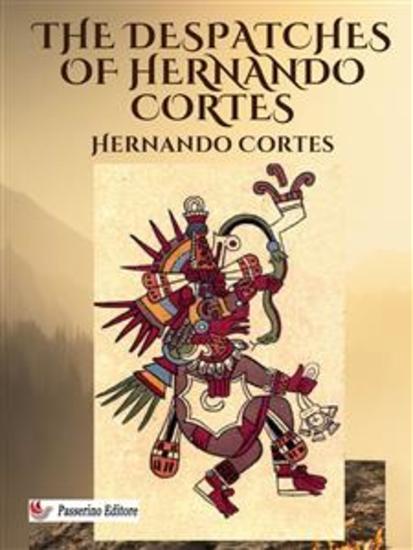
The Despatches of Hernando Cortes - cover

The Despatches of Hernando Cortes

Hernán Cortés

Maison d'édition: Passerino

  • 0
  • 0
  • 0

Synopsis

Hernán Cortés was a Spanish conquistador who played a crucial role in the Spanish colonization of the Americas. He was born in 1485 in Medellín, a town in what is now Extremadura, Spain. Cortés is best known for his conquest of the Aztec Empire in Mexico.

In 1519, Cortés led an expedition to Mexico with the intention of exploring and establishing colonies. Upon arriving, he defied the orders of the Governor of Cuba, who had instructed him to explore the coast, and instead decided to conquer the rich and powerful Aztec Empire ruled by Montezuma II.

Cortés and his small army of around 500 men arrived in the capital city of Tenochtitlán (present-day Mexico City) and formed alliances with indigenous groups who were enemies of the Aztecs. With the help of these allies and a combination of military tactics, diplomacy, and superior weaponry, Cortés managed to overthrow the Aztec Empire and capture Montezuma II.

However, Cortés's conquest was not without challenges. In 1520, the Aztecs rebelled against the Spanish, forcing Cortés and his forces to flee the city in an event known as the "Noche Triste" (Sad Night). They eventually regrouped, laid siege to Tenochtitlán, and successfully captured it in 1521, marking the end of Aztec dominance in the region.

After the conquest, Cortés became the governor of New Spain, which encompassed much of present-day Mexico and Central America. He ruled for several years, implementing policies that favored Spanish settlers and exploiting the region's resources for the benefit of the Spanish crown.

Cortés returned to Spain in 1528 and was granted the title of Marqués del Valle de Oaxaca (Marquis of the Valley of Oaxaca) by the Spanish king. However, his later years were marked by legal disputes and struggles to maintain his position and wealth.

Hernán Cortés is remembered as one of the most important figures in the history of Spanish exploration and conquest. His conquest of the Aztec Empire led to the establishment of Spanish control over Mexico and laid the foundation for the colonization of other parts of the Americas by the Spanish Empire. However, his actions also resulted in the devastation and decline of indigenous cultures and populations.
Disponible depuis: 06/07/2023.
D'autres livres qui pourraient vous intéresser

  • The Six Gosvami's Of Vrndavana - Sections From The Yoga Library - cover

    The Six Gosvami's Of Vrndavana -...

    B.H. Mangalniloy Maharaj

    • 0
    • 0
    • 0
    The Six Goswamis of Vrindavan was a group of scholars and devotees who lived in Vrindavan during the 16th century. The group consisted of Rupa Goswami, Sanatana Goswami, Jiva Goswami, Gopal Bhatta Goswami, Raghunatha Bhatta Goswami, and Raghunatha Dasa Goswami. They were instrumental in the development of the Gaudiya Vaishnavism tradition and the spread of the Bhakti yoga movement. They were known for their scholarship, devotion, and austere lifestyle, and were revered by the people of Vrindavan and beyond. 
     
    The Six Goswamis of Vrindavan left a lasting impact on the development of Hinduism, particularly the Gaudiya Vaishnavism tradition. They wrote extensively on the philosophy, theology, and practices of Bhakti, and their works continue to be studied and revered by scholars and devotees alike. Their teachings emphasized the importance of devotion to Krishna as the ultimate path to liberation, and their writings provide insight into the practices and rituals of Bhakti, as well as the historical and cultural context of the Bhakti movement. The legacy of the Six Goswamis of Vrindavan continues to inspire and guide those who seek a deeper understanding of the path of devotion. 
     
    With selections from The Yoga Library. Narrated by Emmy-nominated actor and lifelong yogi Sripad Jagannatha Das
    Voir livre
  • Division of the Roman Empire The: The History of the Conflicts that Split the Western Roman Empire and Eastern Roman Empire in the 4th Century - cover

    Division of the Roman Empire...

    Editors Charles River

    • 0
    • 0
    • 0
    Rome’s Imperial Crisis has been difficult for historians to summarize, which is why, despite being one of the most intriguing periods in Roman history, it is often overlooked by people who have chosen to focus on the more cohesive periods before and after it. Even though he is best remembered for his religious reforms and what his (mostly Christian) admirers described as his spiritual enlightenment, Constantine was also an able and effective ruler in his own right. Rising to power in a period of decline and confusion for the Roman Empire, he gave it a new and unexpected lease on life by repelling the repeated invasions of the Germanic tribes on the Northern and Eastern borders of the Roman domains, even going so far as to re-expand the frontier into parts of Trajan’s old conquest of Dacia (modern Romania), which had been abandoned as strategically untenable.  
    	However, it can be argued that despite his military successes – the most notable of which occurred fighting for supremacy against other Romans – Constantine may well have set the stage for the ultimate collapse of the Roman Empire as it had existed up until that point. It was Constantine who first decided that Rome, exposed and vulnerable near the gathering masses of barbarians moving into Germania and Gaul, was a strategically unsafe base for the empire, and thus he expanded the city of New Rome on the Dardanelles Straits, creating what eventually became Constantinople. By moving the political, administrative, and military capital of the empire from Rome to the East, as well as the imperial court with all its attendant followers, Constantine laid the groundwork for the eventual schism which saw the two parts of the Roman Empire become two entirely separate entities, go their own way, and eventually collapse piecemeal under repeated waves of invasion.
    Voir livre
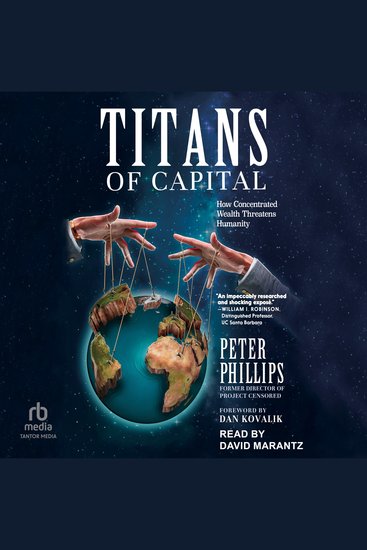
  • Titans of Capital - How Concentrated Wealth Threatens Humanity - cover

    Titans of Capital - How...

    Peter Phillips, Dan Kovalik

    • 0
    • 0
    • 0
    A fascinating examination of the rapid concentration of global capital, with chapters that focus on China and Russia. 


    In Titans of Capital, Peter Phillips, a political sociologist, poses three key research questions: To what extent do the wealthy influence—or even dominate—decision making that affects all of us in society? Who are the most powerful people? And how does the accumulation of capital work? 


    Networks of wealthy individuals have evolved since the COVID-19 pandemic, and Titans of Capital shows how the financial investments of transnational elites threaten human rights and the future of the planet. Phillips warns that while continued concentration of global capital increases the profits enjoyed by the global economy's "Titans,", it also increases global inequality, starvation, and civil unrest, threatening the lives of the hundreds of millions of people living in extreme poverty. It is imperative to ask how we can reverse the concentration of Titan wealth and revitalize grassroots democracy unbridled by extreme wealth. Identifying 117 global Titans by name and exposing the networks and interests that unite them provides listeners opposed to militarism and committed to economic equality with crucial tools to directly engage the power elite who endanger life on earth.
    Voir livre
  • Lead Learn Grow - Steps to Becoming a Stronger Guide - cover

    Lead Learn Grow - Steps to...

    Caleb David

    • 0
    • 0
    • 0
    Effective leadership is a journey of continuous learning and personal growth. In Lead, Learn, Grow, readers will discover how to evolve as leaders while empowering others to reach their potential. This book explores the interconnectedness of leadership, mentorship, and growth, offering strategies for developing skills, fostering collaboration, and overcoming obstacles. Packed with practical tips and thought-provoking exercises, this book is an invaluable resource for leaders seeking to refine their abilities, build strong teams, and inspire success.
    Voir livre
  • Manipulation - How to Master the Art of Persuading Others - cover

    Manipulation - How to Master the...

    Jeffrey Gomez

    • 0
    • 0
    • 0
    Influencing and persuading other people to do something you want them to do, whether that’s good for them or only good for you, is an art. Saying the right things, emanating the right attitude and charisma, and using subtle body language to make others like you or be more inclined to do something…this is what it all comes down to. You will learn some of the following things:Justified and unjustified reasoning behind manipulation and influencing techniquesNumerous roles people play when trying to encourage another to do or say somethingHow Neuro Linguistic Programming and hypnosis can be involved in influencing others and controlling yourselfHow to develop a better sense of what people want and what they are willing to do under the right pressureMethods to influence others more yourselfStudies that help you identify and counteract non-beneficial means other people use to manipulate you 
    Are you interested then? Then don’t wait and start listening, so you don’t have to stay ignorant of these common practices. Save yourself the time and learn from what worked for the author. Buy this audiobook now!
    Voir livre
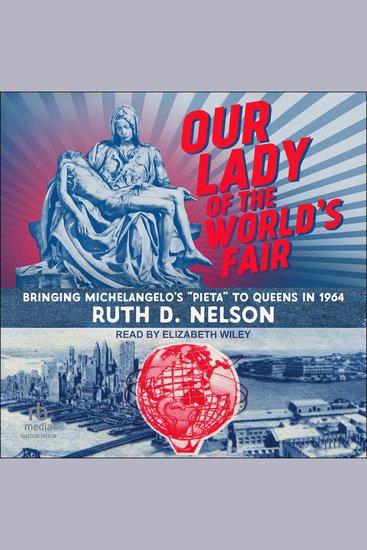
  • Our Lady of the World's Fair - Bringing Michelangelo's "Pieta" to Queens in 1964 - cover

    Our Lady of the World's Fair -...

    Ruth D. Nelson

    • 0
    • 0
    • 0
    Driven by different motives, Robert Moses and Francis Cardinal Spellman had the same vision: to display Michelangelo's masterpiece, the Pietà, in the Vatican's pavilion at the 1964 World's Fair in New York City. 


    As Ruth D. Nelson gracefully showcases, Moses believed this blockbuster would guarantee the fair's financial success. At the same time, Spellman, Archbishop of New York and the spiritual leader of Cold War America's Catholic community, hoped that at a time of domestic strife and global conflict, the Pietà's presence would have a positive spiritual impact on the nation. Although the fair did not turn out to be the financial bonanza that Moses expected, the Pietà drew record crowds of the faithful, art lovers, and the curious. 


    Nelson's fascinating uncovering of the intensive planning that went into designing the pavilion, transporting the art piece across the Atlantic, and coordinating Pope Paul VI's visit to New York in 1965—the first papal visit to the Western Hemisphere—demonstrates the sheer scale and opportunity of the two men's endeavors. Our Lady of the World's Fair depicts the skepticism and fierce criticism that faced the two New York power brokers. Rather than letting the negative weigh them down, they united and called on every resource at their disposal to make this unlikely cultural coup possible.
    Voir livre