Join us on a literary world trip!
Add this book to bookshelf
Grey
Write a new comment Default profile 50px
Grey
Subscribe to read the full book or read the first pages for free!
All characters reduced
Moby-Dick or The Whale - cover

Moby-Dick or The Whale

Herman Melville

Publisher: Memorable Classics eBooks

  • 0
  • 0
  • 0

Summary

Moby-Dick or, The Whale by Herman Melville is an 1851 novel by American writer Herman Melville. The book is the sailor Ishmael's narrative of the obsessive quest of Ahab, captain of the whaling ship Pequod, for revenge against Moby Dick, the giant white sperm whale that on the ship's previous voyage bit off Ahab's leg at the knee.

A contribution to the literature of the American Renaissance, Moby-Dick was published to mixed reviews, was a commercial failure, and was out of print at the time of the author's death in 1891. Its reputation as a "Great American Novel" was established only in the 20th century, after the 1919 centennial of its author's birth. William Faulkner said he wished he had written the book himself, and D. H. Lawrence called it "one of the strangest and most wonderful books in the world" and "the greatest book of the sea ever written". Its opening sentence, "Call me Ishmael", is among world literature's most famous.

Melville began writing Moby-Dick in February 1850 and finished 18 months later, a year after he had anticipated. Melville drew on his experience as a common sailor from 1841 to 1844, including several years on whalers, and on wide reading in whaling literature. The white whale is modeled on a notoriously hard-to-catch albino whale Mocha Dick, and the book's ending is based on the sinking of the whaleship Essex in 1820.

The detailed and realistic descriptions of whale hunting and of extracting whale oil, as well as life aboard ship among a culturally diverse crew, are mixed with exploration of class and social status, good and evil, and the existence of God. The book's literary influences include Shakespeare and the Bible. In addition to narrative prose, Melville uses styles and literary devices ranging from songs, poetry, and catalogs to Shakespearean stage directions, soliloquies, and asides.

In August 1850, with the manuscript perhaps half finished, he met Nathaniel Hawthorne and was deeply impressed by his Mosses from an Old Manse, which he compared to Shakespeare in its cosmic ambitions. This encounter may have inspired him to revise and deepen Moby-Dick, which is dedicated to Hawthorne, "in token of my admiration for his genius".
Available since: 06/02/2022.

Other books that might interest you

  • 101 Amazing Food Jokes - British Narration Edition - cover

    101 Amazing Food Jokes - British...

    Jack Goldstein

    • 0
    • 0
    • 0
    This side-splitting collection of 101 of the best food jokes you have ever heard pasta be Jack Goldstein's funniest audiobook yet! The master of comedy has prepared a sumptuous banquet of hilarity that will have the whole family laughing. Organised into categories so you have a food joke for every course, this is an ideal addition to any budding comedian's bookshelf. Bon appetit!
    Show book
  • Switchling - cover

    Switchling

    S G Fessel

    • 0
    • 0
    • 0
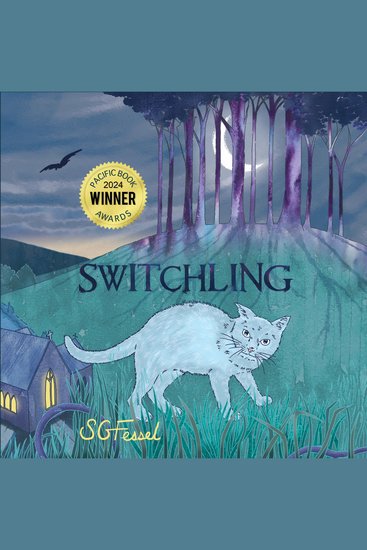
    Winner of 'Best New Fiction' in the Pacific Book Awards! 
    Beth, a shy only-child, finds life in the English village of Ferrehaven boring and uneventful. Her main worry is that her cat Gravel is being bullied and she doesn’t know why. 
    When Beth learns the astonishing reason, life becomes much more exciting and dangerous! Guided by a mysterious game that seems to know her dreams, Beth must help Gravel lift the magical curse that has made him an outcast among cats. 
    Together, Beth and Gravel embark on a quest to find a silver castle, created in the time of King Henry VIII, and uncover truths that challenge their understanding of reality. Along the way they encounter the enigmatic Beam Reapers who restore the moon’s lost rays and an ancient conflict dividing Ferrehaven. 
    Beth and Gravel navigate through perilous challenges, forge unexpected friendships and learn to understand the nature of being human and animal. 
    Switchling captures the essence of young adult fantasy adventure with its rich storytelling and dynamic characters. Talented actor Emily Bevan, (Lockwood and Co: The Creeping Shadow; The Empty Grave) brings to life this immersive journey filled with magic, courage, and the power of connection. 
    Winner of ‘Best New Fiction’ in the Pacific Book Awards; First-Placed Winner, International Firebird Book Awards, Finalist in the Page Turner Awards.
    Show book
  • Millie Fleur's Poison Garden - cover

    Millie Fleur's Poison Garden

    Christy Mandin

    • 0
    • 0
    • 0
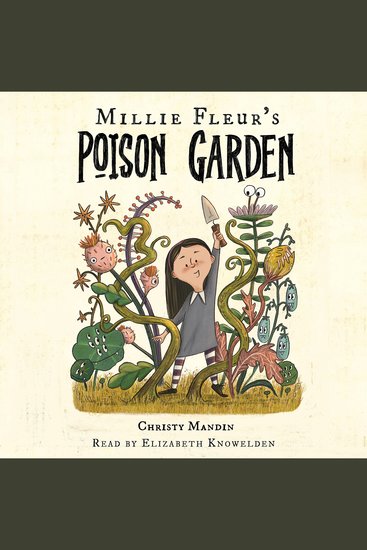
    Wednesday Addams meets The Curious Garden in this delightfully peculiar story about finding joy in being wonderfully weird.Garden Glen is a very bland place. Every house and every garden looks exactly like the other. That is... until Millie Fleur La Fae comes to town.Up on a scruffy hill, beside a ramschackle house, Millie Fleur plants her marvelously strange garden, filled with Sneezing Stickyweed, Fanged Fairymoss, and Grumpy Gilliflower. Millie Fleur finds it enchanting, but the townspeople of Garden Glen call it poison! But Millie Fleur is proud of her beloved little garden. So if some townspeople want to be sticks in the mud, she'll take matters into her own hands and find the kindred spirits who appreciate everything the garden has to offer.Millie Fleur's Poison Garden is a reminder to embrace everything that makes us wonderfully weird. Perfect for readers of The Creepy Carrots and fans of the Addams Family movies.
    Show book
  • The Snowdrop Fairy and the Rainbow Unicorn - cover

    The Snowdrop Fairy and the...

    Sandra Steinbach

    • 0
    • 0
    • 0
    Filled with friendship, courage and the magic of believing in yourself, The Snowdrop Fairy and the Rainbow Unicorn is the perfect read for bedtime snuggles, storytime fun or any time your little one wants to escape into a magical world. 
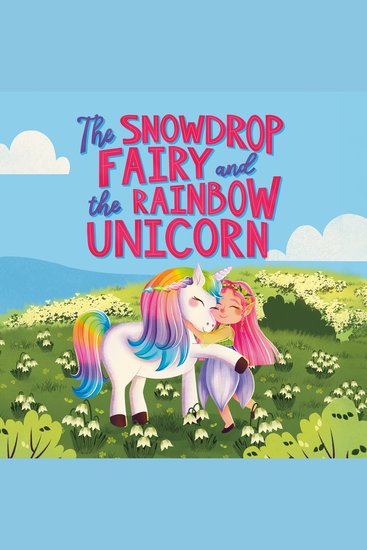
    Flora, the little fairy, is training to become the new keeper of snowdrops – special flowers that bring spring to the world. Without them, winter will never end! But there’s one tiny problem: Flora would rather play with her rainbow unicorn friend Yuna than learn how to grow the flowers. 
    Mrs Winterbloom, Flora’s teacher and the current keeper, does her best to prepare the little fairy for her important role. But when Flora’s big moment arrives, she realises she’s unprepared – and spring is nowhere in sight. With Yuna’s encouragement, the two set off on a journey to end winter. 
    Will the two friends find a way to bring back spring, and can Flora make the snowdrops bloom? 
    Find out and join Flora on this heartwarming adventure.
    Show book
  • Havoc in Heaven - cover

    Havoc in Heaven

    Cheng’en Wu

    • 0
    • 0
    • 0
    The Monkey King visited the Eastern Ocean Dragon King's palace and took away the Divine Treasure to serve as his own weapon. The Dragon King sued him to Heaven. The Jade Emperor approved Gold Star's idea to pacify the Monkey King by giving him an empty title. The Monkey King felt insulted and returned to his tribe with great anger, proclaiming himself the Great Sage Equal to Heaven. Gold Star again suggested pacification, so the Jade Emperor granted the monkey his desired title and appointed him Supervisor of the Orchard of Immortal Peaches. When the monkey discovered he had not been invited to the Grand Peach Banquet hosted by Queen Mother, he was so outraged that he wrecked the banquet. The Jade Emperor sent a heavenly army to capture the monkey. After a long and hard battle, the monkey was finally captured by Erlang and sent to the Taoist Master's furnace to be burned. However, the monkey was still alive and even gained refined powers. He kicked his way out of the furnace, wrecked the Jade Emperor's throne room, and escaped.
    Show book
  • The Efficient Inventive (Often Annoying) Melvil Dewey - cover

    The Efficient Inventive (Often...

    Alexis O'Neill

    • 0
    • 0
    • 0
    Melvil Dewey loved order (Organize mother’s jelly jars), efficiency (Why spell his name Melville when Melvil has fewer letters and sounds the same?), and keeping records (Height! Weight! Earnings!).  
     
    Melvil also loved books and numbers and decimals. When he realized every library organized their books differently (Size! Title! Color!), he wondered if he could invent a system all libraries could use to ORGANIZE them EFFICIENTLY. 
     
    A rat-a-tat speaker, Melvil was a persistent (and noisy) advocate for FREE public libraries. And he made enemies along the way as he pushed for changes. (Like his battle to establish the first library school with WOMEN as students.) Through it all he was EFFICIENT, INVENTIVE, and often ANNOYING as  
    he made big changes in the world of public libraries—changes still found in the libraries of today!
    Show book