Junte-se a nós em uma viagem ao mundo dos livros!
Adicionar este livro à prateleira
Grey
Deixe um novo comentário Default profile 50px
Grey
Assine para ler o livro completo ou leia as primeiras páginas de graça!
All characters reduced
Men and Things - Exploring Human Existence through Philosophical Reflections - cover
LER

Men and Things - Exploring Human Existence through Philosophical Reflections

Henry A. Atkinson

Editora: Good Press

  • 0
  • 0
  • 0

Sinopse

In 'Men and Things,' Henry A. Atkinson deftly weaves a rich tapestry of character-driven narratives that probe the intricate relationships between individuals and their environments. The book's prose balances a lyrical quality with sharp realism, capturing the complexities of human behavior in a rapidly changing world. Within this literary framework, Atkinson explores profound themes of identity, belonging, and the existential struggles faced by his characters, reflecting a society at the cusp of modernity and industrialization. His attention to detail and vivid imagery invites readers into a nuanced visualization of the human condition amidst the backdrop of late 19th-century America. Henry A. Atkinson, an astute observer of social dynamics, draws upon his own experiences growing up during a time marked by both cultural upheaval and innovation. His background in sociology provides a solid foundation for the explorations found within 'Men and Things,' revealing an author deeply engaged with the zeitgeist of his era. Atkinson's keen insights into human psychology and social structures position him as a significant voice in American literature. This book is recommended for readers interested in character studies and social commentary, as Atkinson's work resonates with timeless questions of agency and connection. 'Men and Things' is not merely a collection of stories; it is an invitation to reflect on our place within the intertwining web of life.
Disponível desde: 29/10/2023.
Comprimento de impressão: 166 páginas.

Outros livros que poderiam interessá-lo

  • The Insider - How the Kiplinger Newsletter Bridged Washington and Wall Street - cover

    The Insider - How the Kiplinger...

    Rob Wells

    • 0
    • 0
    • 0
    When Willard M. Kiplinger launched the groundbreaking Kiplinger Washington Letter in 1923, he left the sidelines of traditional journalism to strike out on his own. With a specialized knowledge of finance and close connections to top Washington officials, Kiplinger was uniquely positioned to tell deeper truths about the intersections between government and business. With careful reporting and insider access, he delivered perceptive analysis and forecasts of business, economic, and political news to busy business executives, and the newsletter's readership grew exponentially over the coming decades. 


    More than just a pioneering business journalist, Kiplinger emerged as a quiet but powerful link between the worlds of Presidents Hoover and Roosevelt, and used his Letter to play a little-known but influential role in the New Deal. Part journalism history, part biography, and part democratic chronicle, The Insider offers a well-written and deeply researched portrayal of how Kiplinger not only developed a widely read newsletter that launched a business publishing empire but also how he forged a new role for the journalist as political actor.
    Ver livro
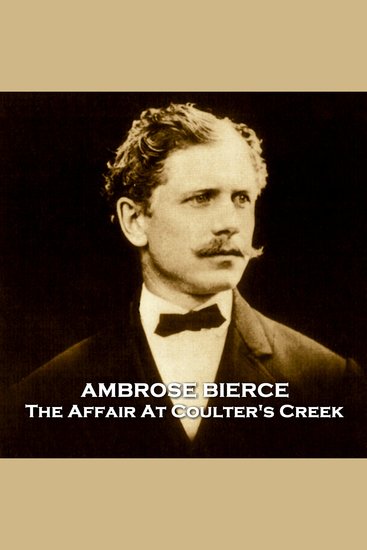
  • The Affair At Coulter's Creek - From their pens to your ears genius in every story - cover

    The Affair At Coulter's Creek -...

    Ambrose Bierce

    • 0
    • 0
    • 0
    Ambrose Gwinnett Bierce was born on 24th June 1842 at Horse Cave Creek in Meigs County, Ohio. His parents were poor but they introduced him to literature at an early age, instilling in him a deep appreciation of books, the written word and the elegance of language.  
    Growing up in Koscuisko County, Indiana poverty and religion were defining features of his childhood, and he would later describe his parents as “unwashed savages” and fanatically religious, showing him little affection but always quick to punish. He came to resent religion, and his introduction to literature appears to be their only positive effect. 
    At age 15 Bierce left home to become a printer’s devil, mixing ink and fetching type at The Northern Indian, a small Ohio paper. Falsely accused of theft he returned to his farm and spent time sending out work in the hopes of being published. 
    His Uncle Lucius advised he be sent to the Kentucky Military Institute. A year later he was commissioned as an Officer.  As the Civil War started Bierce enlisted in the 9th Indiana Infantry Regiment.  
    In April 1862 Bierce fought at the Battle of Shiloh, an experience which, though terrifying, became the source of several short stories. Two years later he sustained a serious head wound and was off duty for several months. He was discharged in early 1865.  
    A later expedition to inspect military outposts across the Great Plains took him all the way to San Francisco. He remained there to become involved with publishing and editing and to marry, Mary Ellen on Christmas Day 1871.  They had a child, Day, the following year.  
    In 1872 the family moved to England for 3 years where he wrote for Fun magazine. His son, Leigh, was born, and first book, ‘The Fiend’s Delight’, was published.  
    They returned to San Francisco and to work for a number of papers where he gained admiration for his crime reporting. In 1887 he began a column at the William Randolph Hearst’s San Francisco Examiner.  
    Bierce’s marriage fell apart when he discovered compromising letters to his wife from a secret admirer. The following year, 1889 his son Day committed suicide, depressed by romantic rejection. 
    In 1891 Bierce wrote and published the collection of 26 short stories which included ‘An Occurrence at Owl Creek Bridge’.  Success and further works including poetry followed.  
    Bierce with Hearst’s resources helped uncover a financial plot by a railroad to turn 130 million dollars of loans into a handout. Confronted by the railroad and asked to name his price Bierce answered “my price is $130 million dollars. If, when you are ready to pay, I happen to be out of town, you may hand it over to my friend, the Treasurer of the United States”.  
    He now began his first foray as a fabulist, publishing ‘Fantastic Fables’ in 1899.  But tragedy again struck two years later when his second son Leigh died of pneumonia relating to his alcoholism.  
    He continued to write short stories and poetry and also published ‘The Devil’s Dictionary’.  
    At the age of 71, in 1913 Bierce departed from Washington, D.C., for a tour of the battlefields where he had fought during the civil war. At the city of Chihuahua he wrote his last known communication, a letter to a friend. It’s closing words were “as to me, I leave here tomorrow for an unknown destination,” Ambrose Bierce then vanished without trace.
    Ver livro
  • From Skepticism to Faith: A Journey to Christ - Embark on a transformative journey to Christ with our powerful audio lessons and boost your faith today! - cover

    From Skepticism to Faith: A...

    Thane Wilder

    • 0
    • 0
    • 0
    From Skepticism to Faith: A Journey to Christ:  
    ⭐⭐ Simplified Audio Guide & Explanations ⭐⭐ 
    Are you seeking to deepen your faith and understanding of Christ through transformative moments and experiences? 
    Looking for a comprehensive guide that provides all necessary elements to discover Christ? 
    Your search ends here! 
    This guide serves as your definitive companion for deepening your relationship with Christ, applying your newfound insights, and engaging in meaningful reflection. With this, you're geared for spiritual growth. 
    Updated for the latest faith-inspiring narratives. 
    Key features of this enriched guide: 
    - Profound insights about discovering Christ 
    - Detailed explanations of transformative moments and experiences 
    - Fruitful strategies for spiritual preparation and growth 
    Our guide distinguishes itself through comprehensive coverage, which is essential for your spiritual journey. Concepts aren't merely skimmed; they are delved into with precision. 
    Please note that this guide is not affiliated with any official religious entity and is purely an independent resource for your benefit. 
    Designed with a clear structure and easy-to-understand language, our guide ensures smooth transitions between topics. Say goodbye to dense theological jargon and welcome clear, precise, and spiritually enriching content. 
    So, why wait? Click the BUY NOW button, secure your guide, and begin your journey to discovering Christ today!
    Ver livro
  • Hide And Seek - From their pens to your ears genius in every story - cover

    Hide And Seek - From their pens...

    Fyodor Sologub

    • 0
    • 0
    • 0
    Fyodor Kuzmich Teternikov was born on 1st March 1863 in St. Petersburg into the family of a poor tailor.  When his father died of tuberculosis in 1867, his illiterate mother was forced to become a servant in the home of an aristocrat, where Sologub and his younger sister grew up.  
    Seeing how difficult his mother's life was, Sologub was determined to rescue her from it, and after graduating from the St. Petersburg Teachers' Institute in 1882 he took his mother and sister with him to his first teaching post in Kresttsy.  It was here he began his literary career in 1884 with his poem ‘The Fox and the Hedgehog’ under the name Te-rnikov. 
    It would be another decade before he could escape his various jobs to move to Moscow and begin his literary career on what would be his most famous novel, ‘The Petty Demon’.  It was now suggested that he use a pseudonym and so Sologub became his new identity. 
    In 1896 he published a book of poems, a collection of short stories, and his first novel, ‘Bad Dreams’, which is considered one of the first decadent Russian novels. 
    In 1905 ‘The Petty Demon’, was published, initially in serial form. But life was still difficult unrewarding jobs, little time to write and a small, cramped apartment lightened only by gatherings of friends, poets and writers. 
    By the October Revolution his work was becoming popular and with the novel of ‘The Petty Demon’, finally published as a book, he now had a growing income. 
    His sister's tuberculosis could now be more easily treated with treatments in proper sanitoria, even as far away as Finland, but in June 1907 she passed. 
    He returned to St. Petersburg and retired.  The following year he married the translator Anastasia Chebotarevskaya who reordered his life.  A big new apartment was rented, small gilt chairs were bought, and the walls of the large cold office were decorated with paintings. 
    Sologub continued to write and publish poems, plays, and translations and in 1914 he started a magazine, Writers' Journals, but the outbreak of World War I put an end to it.  
    The October Revolution, with publishing under Bolshevik control, ensured he now had no outlets for his writing and could only lecture. 
    His wife’s suicide in September 1921, mainly due to deprivation and uncertainty, as they prepared for a new life abroad, grieved him for the rest of his life. 
    In May 1927 Sologub became seriously ill, and by summer he could leave his bed only rarely.  
    After a long struggle, Fyodor Sologub died on 5th December 1927 in Leningrad.  He was 64.
    Ver livro
  • Know about "giordano bruno" - a friar philosopher mathematician astronomer & occultist - cover

    Know about "giordano bruno" - a...

    Saurabh Singh Chauhan

    • 0
    • 0
    • 0
    This is small copy of introduction of the book: Giordano Bruno was a 16th-century Italian friar, philosopher, mathematician, astronomer, and occultist. He is best known for his cosmological theories, which anticipated the Copernican model of the universe and held that the stars are distant suns surrounded by their own planets. Bruno's ideas were considered heretical by the Catholic Church, and he was burned at the stake in Rome in 1600. 
    Bruno was born in Nola, Italy, in 1548. He joined the Dominican Order at the age of 15, but he soon became disillusioned with the Church's teachings. He left the Order in 1572 and began to travel throughout Europe, teaching his ideas about cosmology and philosophy. 
    In 1576, Bruno published his book On the Shadows of the Ideas, in which he outlined his cosmological theories. He argued that the universe is infinite and that it contains many inhabited worlds. He also rejected the Aristotelian view of the universe as a finite sphere centered on the Earth.  
    Bruno's ideas were controversial from the start. He was accused of heresy by the Catholic Church and forced to flee Geneva in 1583. He then spent several years in France, where he was protected by King Henry III. However, after Henry's death in 1589, Bruno was forced to flee again. 
    In 1591, Bruno returned to Italy. He was arrested in Venice in 1592 and extradited to Rome. He was put on trial for heresy and found guilty. On February 17, 1600, Bruno was burned at the stake in Campo de' Fiori. 
    Despite his execution, Bruno's ideas had a profound influence on later thinkers. His work helped to pave the way for the scientific revolution of the 17th century.
    Ver livro
  • "My Husband's Trying to Kill Me!" - A True Story of Money Marriage and Murderous Intent - cover

    "My Husband's Trying to Kill...

    Jim Schutze

    • 0
    • 0
    • 0
    From an award-winning journalist, this "grippingly suspenseful true-crime tale details the foiling of a wealthy Texan's plot to have his wife murdered" (Publishers Weekly). 


    To the world, Linda DeSilva's marriage to Robert Edelman was perfect. He was her college boyfriend turned wealthy and successful husband, and the father of her children. But what friends and family didn't know was that the Texas real estate tycoon who set her up with a luxurious life in Dallas was also her abuser. When she asked him for a divorce, the violence against her only escalated, until the shocking moment she learned her husband had hired an assassin to take her life. 


    From acclaimed journalist and author Jim Schutze, "My Husband's Trying to Kill Me!" is the riveting true-crime account of how Linda DeSilva worked with the FBI to trap her husband before he could act on his murderous intentions—and how the sting operation nearly got her killed instead. A shocking and sensational story of a wife and mother's escape from the marriage that went from American dream to every woman's worst nightmare. 


    Contains mature themes.
    Ver livro