
Unisciti a noi in un viaggio nel mondo dei libri!
Aggiungi questo libro allo scaffale
Grey
Scrivi un nuovo commento Default profile 50px
Grey
Iscriviti per leggere l'intero libro o leggi le prime pagine gratuitamente!
All characters reduced
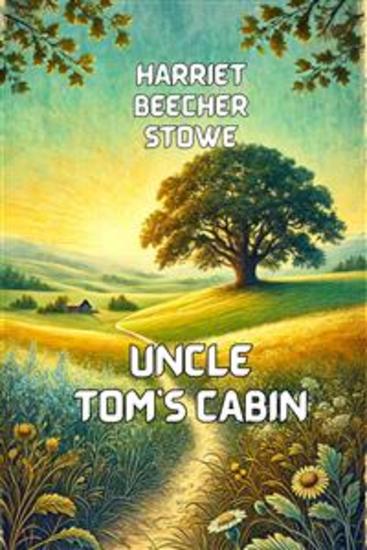
Uncle Tom's Cabin(Illustrated) - cover

Uncle Tom's Cabin(Illustrated)

Harriet Beecher-Stowe

Casa editrice: Swish

  • 0
  • 0
  • 0

Sinossi

Illustrated Edition with 20 beautiful illustrations depicting key scenes from the novel
	Includes Summary, Character List, and Author Biography

Step into the pages of Uncle Tom's Cabin, Harriet Beecher Stowe's monumental work that shook the foundations of America and became a powerful force in the fight against slavery. This illustrated edition brings the unforgettable journey of Uncle Tom to life with 20 carefully crafted illustrations, immersing readers in the heart-wrenching moments of this classic tale.
Uncle Tom's Cabin tells the story of Uncle Tom, a kind and devout man whose faith never falters, even in the face of unbearable cruelty. As he is sold from one owner to another, his encounters with fellow slaves—like the courageous Eliza and the angelic Eva—shine a light on both the horrors of slavery and the strength of the human spirit. Through vivid characters like the villainous Simon Legree and the conflicted Augustine St. Clare, Stowe paints a powerful picture of moral dilemmas, sacrifice, and hope.
More than just a novel, Uncle Tom's Cabin became a symbol of the abolitionist movement, forever changing how people viewed slavery. With its moving story and newly added illustrations, this edition allows both new and returning readers to experience the story in a deeper, more engaging way. This special edition also features a comprehensive summary, a detailed list of key characters, and a biography of the author, offering readers a complete guide to fully appreciate this literary masterpiece.
Rediscover this historic novel that continues to inspire and resonate with readers today, now brought to life with enhanced visuals and essential context.
 
Disponibile da: 02/11/2024.
Altri libri che potrebbero interessarti

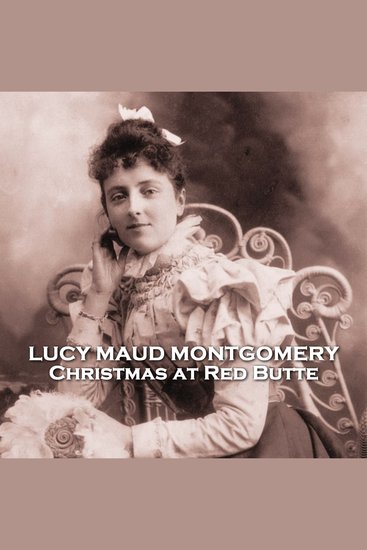
  • Christmas at Red Butte - From their pens to your ears genius in every story - cover

    Christmas at Red Butte - From...

    Lucy Ward Montgomery

    • 0
    • 0
    • 0
    The bookshelves of American literature are incredible collections that have gathered together centuries of very talented authors.  From this continent their fame spread and whilst among their number many are now forgotten or neglected their talents endure.  Among them is Lucy Ward Montgomery.
    Mostra libro
  • Lazarus - cover

    Lazarus

    Leonid Andreyev

    • 0
    • 0
    • 0
    "When Lazarus rose from the grave, after three days and nights in the mysterious thraldom of death, and returned alive to his home, it was a long time before anyone noticed the evil peculiarities in him that were later to make his very name terrible."    One of Andreyev's best-known short stories, "Lazarus" follows the Eastern Orthodox tradition that Lazarus never smiled again, and it explores what happened to the biblical figure after his resurrection from the dead. The unsettling coldness that exudes from the man who cheated death cannot be denied by anyone who meets him. As his notoriety increases, few can resist the chance of an audience with the man who has seen beyond the realms of life, but be they urchin or Emperor, none can stand to be in the presence of Lazarus for long.     "Lazarus", first published in Russian in 1906, deals with themes of faith, mortality and the human condition. This recording is based on a translation by Thomas Seltzer.
    Mostra libro
  • Billy Budd - cover

    Billy Budd

    Herman Melville

    • 0
    • 0
    • 0
    "Billy Budd" is a novella written by Herman Melville, completed shortly before his death in 1891. It tells the story of Billy Budd, a handsome and popular sailor who becomes embroiled in a conflict with his ship's master-at-arms, John Claggart, on board a British naval vessel during the late 18th century. The novella explores themes of innocence, morality, justice, and the inherent conflict between good and evil.The narrative centers around the character of Billy Budd, a young and virtuous sailor admired by his peers for his exceptional charm and simplicity. However, his life takes a dramatic turn when he is falsely accused of inciting mutiny by Claggart, a malevolent and envious officer. The novella delves into the psychological dynamics between the two characters and the moral dilemmas faced by the ship's captain, Captain Vere, as he grapples with the decision of how to handle the situation."Billy Budd" explores the clash between absolute goodness and institutional authority, with Melville examining the complexities and ambiguities of human nature. The novella raises profound questions about the nature of justice, the corrupting influence of power, and the struggle to maintain one's moral integrity in a society driven by hierarchy and oppression.Melville's writing in "Billy Budd" is characterized by his rich prose, nuanced characterization, and philosophical inquiries. The novella incorporates nautical terminology and imagery, drawing on Melville's own experiences as a sailor, and employs a multi-layered narrative that invites readers to contemplate deeper moral and existential questions.
    Mostra libro
  • Little Wars (Unabridged) - cover

    Little Wars (Unabridged)

    H. G. Wells

    • 0
    • 0
    • 0
    Little Wars is a set of rules for playing with toy soldiers, written by English novelist H. G. Wells in 1913. The book, which had a full title of Little Wars: a game for boys from twelve years of age to one hundred and fifty and for that more intelligent sort of girl who likes boys' games and books, provided simple rules for miniature wargaming. Although first printed in 1913.
    Mostra libro
  • The Time Machine The Lost Manuscript - Stories For Everyone - cover

    The Time Machine The Lost...

    H.G. Wells

    • 0
    • 0
    • 0
    Herbert George Wells was an English writer. Prolific in many genres, he wrote dozens of novels, short stories, and works of social commentary, history, satire, biography, and autobiography. His work also included two books on recreational war games. Wells is now best remembered for his science fiction novels and is often called the "father of science fiction", along with Jules Verne. 
     
    During his own lifetime, however, he was most prominent as a forward-looking, even prophetic social critic who devoted his literary talents to the development of a progressive vision on a global scale. A futurist, he wrote a number of utopian works and foresaw the advent of aircraft, tanks, space travel, nuclear weapons, satellite television, and something resembling the World Wide Web. His science fiction imagined time travel, alien invasion, invisibility, and biological engineering.  
     
    Wells's earliest specialized training was in biology, and his thinking on ethical matters took place in a specifically and fundamentally Darwinian context. He was also an outspoken Socialist from a young age, often (but not always, as at the beginning of the First World War) sympathizing with pacifist views. His later works became increasingly political and didactic, and he wrote little science fiction, while he sometimes indicated on official documents that his profession was that of a journalist. Novels such as Kipps and The History of Mr. Polly, which describe lower-middle-class life, led to the suggestion that he was a worthy successor to Charles Dickens, but Wells described a range of social strata and even attempted a diagnosis of English society as a whole.
    Mostra libro
  • The Story of B24 - From their pens to your ears genius in every story - cover

    The Story of B24 - From their...

    Arthur Conan Doyle

    • 0
    • 0
    • 0
    Arthur Conan Doyle was born in Edinburgh, Scotland on 22nd May 1859.  His childhood was blighted by his father’s heavy drinking which for some years broke up the family. Fortunately, wealthy uncles were willing to support them by paying for education and clothing.  
    He was accepted at the University of Edinburgh to study medicine and also began to write short stories the first, ‘The Haunted Grange of Goresthorpe’, was published in Blackwood’s Magazine.  Despite several other stories and some articles in the British Medical Journal his medical studies took priority. 
    When these finished he was appointed as Doctor on the Greenland whaler ‘Hope of Peterhead’ in 1880 and then, after graduation, as ship’s surgeon on the SS Mayumba on its voyage to West Africa. 
    1882 saw a move to Plymouth and his own independent practice. With few patients he resumed writing and completed his first novel, ‘The Mystery of Cloomber’, although most of his output was short stories based on his experiences at sea.  
    He married Louisa Hawkins in 1885. However, two years later he met and fell in love with Jean Elizabeth Leckie, though they remained platonic out of respect for, and loyalty to, his wife. 
    His literary career suddenly burst into life in November 1886 with ‘A Study In Scarlet’, the first of the fabulously successful Sherlock Holmes stories.  
    With two children to support he now revisited his haphazard commercial arrangements and curtailed everything save for commissions from the Strand Magazine.  
    As a sportsman he was remarkably proficient. He was goalkeeper for Portsmouth Association Football Club and played ten first-class cricket matches for the Marylebone Cricket Club as well as captain of the Crowborough Beacon Golf Club in East Sussex.  
    In 1891 tired of writing Holmes stories, he began a series of historical novels and even went so far as to apparently kill off Holmes in a lethal brawl with his arch-nemesis Moriarty. 
    Despite heavy and sustained criticism he continued to write in support of the Boer War, a fact he thought contributed to his knighthood in 1902.  The following year to great relief and acclaim he brought Sherlock Holmes back from the dead in his first outing for a decade. 
    Sadly, his wife Louisa died from TB in 1906 and, a year later, he at last married Jean.  
    During the War and for several years after family deaths had left him depressed. In a search for solace and answers he alighted upon spiritualism and, such was his interest, that he wrote several books on the subject. 
    On 7th July 1930 Conan Doyle was discovered in the hall of Windlesham Manor, his house in East Sussex, clutching his chest dying of a heart attack.  He was 71.
    Mostra libro