Join us on a literary world trip!
Add this book to bookshelf
Grey
Write a new comment Default profile 50px
Grey
Subscribe to read the full book or read the first pages for free!
All characters reduced
The Treasure of the Lake - cover

The Treasure of the Lake

H. Rider Haggard

Publisher: Open Road Media

  • 0
  • 1
  • 0

Summary

Gentleman adventurer Allan Quartermain discovers a strange African village in this 1926 novel by the author of King Solomon’s Mines.An Englishman living in South Africa, Allan Quartermain has spent his life exploring the mysteries of the Dark Continent. When he hears the legend of a lost tribe ruled by a magical priestess, he goes in search of a remote holy lake surrounded by tall cliffs. Together with his companion Hans, Allan discovers a land and a people even more peculiar than the legend describes. Published posthumously in 1926, The Treasure of the Lake is one of the last Allan Quartermain novels written by H. Rider Haggard. Set in the Victorian era, it is a quintessential tale of colonial adventure.
Available since: 01/01/2022.
Print length: 596 pages.
Other books that might interest you

  • The Bucket Rider - A poor man seeks compassion but is found wanting - cover

    The Bucket Rider - A poor man...

    Franz Kafka

    • 0
    • 0
    • 0
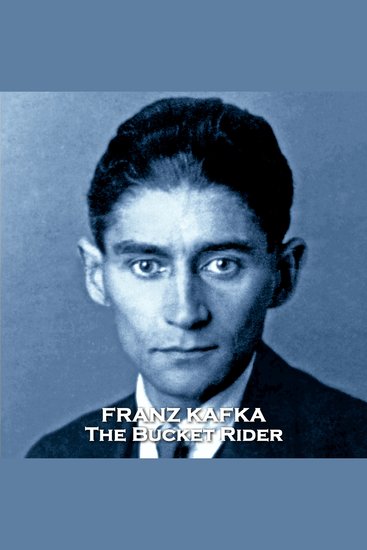
    Franz Kafka was born on 3rd July 1883 in Prague, then in Bohemia, the eldest of 6, into a middle-class Jewish family. 
     
    Life for the young Kafka and his passion for literature was often made an ordeal by his over-bearing and domineering entrepreneur of a father.   
     
    In 1889 Kafka was sent to the Deutsche Knabenschule, an elementary school in Prague. His father would only allow him to be educated in German-speaking schools and even went so far as to limit visits to the synagogue to four a year. 
     
    In 1901 he graduated from the classics-oriented Altstädter Gymnasium. Kafka did well there and across a large range of subjects.  He now enrolled at the Charles Ferdinand University, to study chemistry, but quickly switched to law for which he obtained his degree in June 1906 and then performed the mandatory year of unpaid service as clerk at the civil and criminal courts. 
     
    A job at an Italian insurance company left him little time to write and after a year he took another job with the Worker's Accident Insurance Institute for the Kingdom of Bohemia where he stayed until ill health led to his resignation in 1922. 
     
    Although he saw work as a means to pay the bills and to allow him time to write, he received several promotions and was noted as a good employee. 
     
    By 1917 Kafka was suffering from tuberculosis, which required frequent periods of convalescence. Interspersed with this, were several intense affairs before he settled in Berlin with Dora Diamant, a 25-year-old kindergarten teacher who herself having left the ghetto now influenced Kafka's interest in the book of Jewish law, the Talmud. 
     
    Kafka’s on-going health was littered with problems. Apart from TB there were several other ailments, including migraines, insomnia, boils, depression, all usually brought on by excessive stresses and strains. He attempted to counteract all of this by naturopathic treatments, a vegetarian diet and consuming large quantities of unpasteurized milk. 
     
    His tuberculosis still worsened. He returned to Prague, where he died on 3rd June 1924. He was 40. 
     
    His literary works are few in number but towering in influence.  His masterpieces include ‘The Trial’, ‘The Metamorphosis’ as well as a number of short stories which reveal facets of humankind that truthfully could only be born from Kafka’s brain and pen.
    Show book
  • The Merchant of Venice - cover

    The Merchant of Venice

    William Shakespeare

    • 0
    • 0
    • 0
    Step into the rich, dynamic world of Shakespeare's The Merchant of
    Venice like never before with this immersive digital audiobook. Whether
    you're a longtime fan or new to the Bard's work, this masterful production brings every character and plot twist to life with powerful narration and vibrant performances. Experience the wit, drama, and heart of this timeless classic anywhere you go—perfect for commutes, workouts, or quiet evenings.
     
    Discover the unforgettable story of justice, mercy, and revenge through
    Shylock’s iconic speeches, Portia’s brilliance, and the complex relationships that make The Merchant of Venice one of Shakespeare’s most enduring plays. The audiobook format allows you to enjoy every layer of meaning and nuance with the ease and convenience of digital access.
    Show book
  • The Diary of a God - From their pens to your ears genius in every story - cover

    The Diary of a God - From their...

    Barry Pain

    • 0
    • 0
    • 0
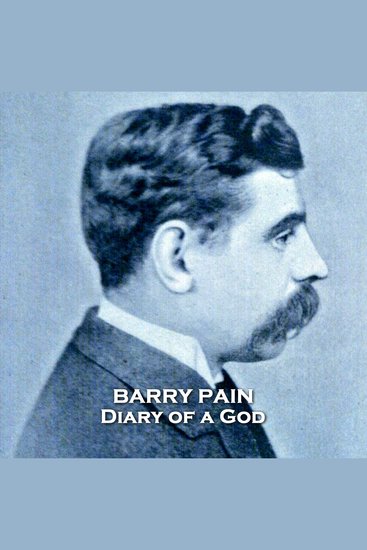
    Barry Eric Odell Pain was born at 3 Sydney Street in Cambridge on 28th September 1864. He was one of 4 children. 
    He was educated at Sedbergh School and then Corpus Christi College, Cambridge where he read classics and contributed to and edited Granta. 
    Four years of service as an Army coach followed before he moved to London. In 1889, Cornhill Magazine published his short story ‘The Hundred Gates’.  This opened the way for Pain to advance his literary career on several fronts. He became a contributor to Punch and The Speaker, as well as joining the staff of both the Daily Chronicle and Black and White.  
    In 1897 he succeeded Jerome K Jerome as editor of To-Day but still contributed regularly, until 1928, to the Windsor Magazine. 
    It is often said that Pain was discovered by Robert Louis Stevenson, who compared his work to that of Guy de Maupassant.  It’s an apt comparison. Pain was also a master of disturbing prose but able to inject parody and light comedy into many of his works.  A simple premise could in his hands suddenly expand into a world very real but somehow emotionally fraught and on the very edge of darkness as many of these short stories demonstrate.   
    Despite applying his talents to several genres and forms today Pain is more readily thought of, especially during the first decade of the 20th Century, as perhaps the leading British humorist of his day.  These stories reveal a darker side and beg to differ. 
    Barry Pain died on 5th May 1928 in Bushey, Hertfordshire.
    Show book
  • Berenice - cover

    Berenice

    Edgar Allan Poe

    • 0
    • 0
    • 0
    Title: Berenice 
    Author: Edgar Allan Poe 
    Narrator: Jonathan Dunne 
    Original Publication: 1835 
    Public Domain: Yes 
    Series Placement: Number 20 in the Timeless Terrors series 
    Description: 
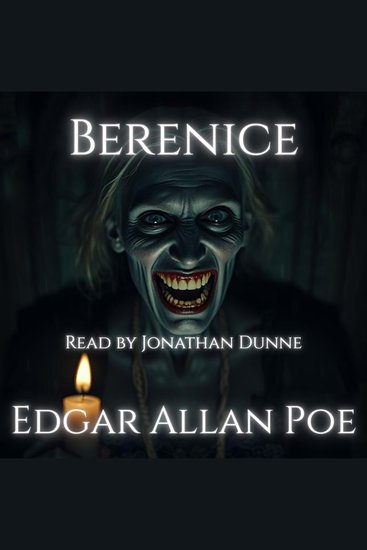
    Berenice by Edgar Allan Poe is a haunting Gothic tale of obsession, decay, and psychological terror. The story follows Egaeus, a man consumed by a morbid fixation on his cousin Berenice, whose physical beauty fades under the grip of illness. Poe’s narrative explores madness, mortality, and the horrifying consequences of human obsession. 
    Narrated by Amazon bestselling horror author Jonathan Dunne, this recording captures the story’s chilling atmosphere, blending suspense, dread, and macabre elegance. While the text is in the public domain, this performance is an original work and copyright © 2025 Jonathan Dunne. 
    This audiobook is part of Timeless Terrors, a dedicated series bringing classic horror back to life — stories from the great masters of the macabre, narrated afresh to haunt a new generation. 
    Listeners should be prepared for an unsettling journey into the darker corners of the human mind, the obsession with beauty, and the terrifying consequences of unchecked fixation.
    Show book
  • Very Old Folk The (Unabridged) - cover

    Very Old Folk The (Unabridged)

    H. P. Lovecraft

    • 0
    • 0
    • 0
    It is a recording of a dream, where the protagonist is a Roman military official in the Vascon country near Pompelo. The countryside is, every year, ravaged by terrible hill people who kidnap citizens and perform cruel rituals at a Sabbath. The narrator wishes to lead a military expedition to crush these hill folk, as a feeling of approaching evil has enveloped the countryside, due to a riot between the citizens and the hill people. These hill folk came to trade, yet some of these are killed and later, no disappearances occur before the time of the Sabbath. The incursion is guided by a local-born son of Roman parents. As the Romans approach the seat of the Sabbath rituals, something terrible attacks them and in an instant, horrible things come to pass: "He had killed himself when the horses screamed... He, who had been born and lived all his life in that region, and knew what men whispered about the hills. All the torches now began to dim, and the cries of frightened legionaries mingled with the unceasing screams of the tethered horses. The air grew perceptibly colder, more suddenly so than is usual at November's brink, and seemed stirred by terrible undulations which I could not help connecting with the beating of huge wings." The story ends with the narrator waking up and claiming that "it was the most vivid dream in years, drawing upon wells of the subconscious long untouched and forgotten".
    Show book
  • To Build a Fire - cover

    To Build a Fire

    Jack London

    • 0
    • 0
    • 0
    In the frozen wilderness of the Yukon, the line between survival and surrender is razor-thin. Jack London's To Build a Fire is more than a story; it is a stark, unforgettable confrontation with the raw power of nature and the frailty of human pride.
    Here, the biting cold isn't just a setting—it's an unyielding adversary, testing the limits of determination and the cost of hubris. The tale whispers of isolation so profound that silence becomes deafening, and of choices so crucial that a single misstep can spell the difference between life and death.
    Through prose as sharp as the frostbitten air, London paints a brutal, awe-inspiring portrait of man versus nature. Yet beneath the surface lies something deeper: an exploration of the delicate balance between human ingenuity and the primal forces of the wild. To Build a Fire dares readers to reflect on their own resilience—and their vulnerability—when faced with an indifferent universe.
    This is a story not merely to read, but to experience: a chilling reminder that nature does not forgive, and survival is earned one breath at a time.
    Show book