Rejoignez-nous pour un voyage dans le monde des livres!
Ajouter ce livre à l'électronique
Grey
Ecrivez un nouveau commentaire Default profile 50px
Grey
Abonnez-vous pour lire le livre complet ou lisez les premières pages gratuitement!
All characters reduced
Summary of Build the Life You Want By Arthur C Brooks and Oprah Winfrey - The Art and Science of Getting Happier - cover

Summary of Build the Life You Want By Arthur C Brooks and Oprah Winfrey - The Art and Science of Getting Happier

GP SUMMARY

Maison d'édition: BookRix

  • 0
  • 0
  • 0

Synopsis

DISCLAIMER
This book does not in any capacity mean to replace the original book but to serve as a vast summary of the original book.
 
Summary of Build the Life You Want By Arthur C. Brooks and Oprah Winfrey: The Art and Science of Getting Happier
 
IN THIS SUMMARIZED BOOK, YOU WILL GET:
 

- Chapter astute outline of the main contents.
- Fast & simple understanding of the content analysis.
- Exceptionally summarized content that you may skip in the original book 
Arthur C. Brooks and Oprah Winfrey's book, Build the Life You Want, offers a roadmap for achieving greater happiness, regardless of challenging circumstances. Drawing on scientific research and personal experience, they guide readers through emotional self-management techniques to build the four pillars of happiness: family, friendship, work, and faith. The book provides practical advice and wisdom from personal experiences and the experiences of others.
 
Disponible depuis: 18/09/2023.
Longueur d'impression: 21 pages.
D'autres livres qui pourraient vous intéresser

  • History of Ideology - Beyond AI Capitalism - cover

    History of Ideology - Beyond AI...

    Ylia Callan

    • 0
    • 0
    • 0
    This audiobook is narrated by an AI Voice.   
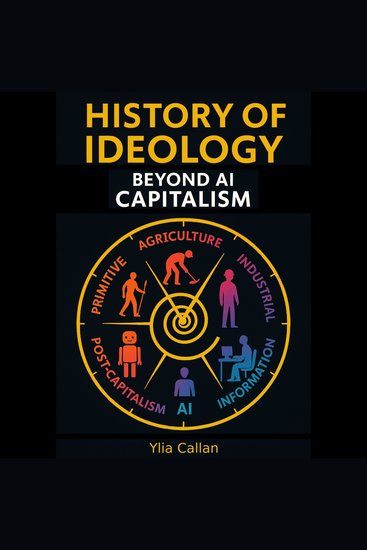
    The History of Ideology: Beyond AI Capitalism, takes listeners on a sweeping journey through humanity’s economic evolution - from primitive tribes and feudal empires to industrial capitalism and the rise of global markets. As AI and automation erase millions of jobs, the foundations of our economic system begin to crumble. 
    But this is not a story of collapse - it is a story of possibility. We explore universal basic income, platform cooperatives, data trusts and regenerative economies as the pillars of a new system designed for human flourishing and planetary health. 
    This audiobook is part history, part manifesto and part roadmap for the future. It will challenge your assumptions, inspire your imagination and help you see why the end of capitalism can be the beginning of something better.
    Voir livre
  • Cure Emotional Pain Coaching Session & Meditations Heal your past Transform your life - power of love & acceptance psychological pain distress first aid kit ease your life shift your reality - cover

    Cure Emotional Pain Coaching...

    ThinkAndBloom

    • 0
    • 0
    • 0
    Emotional pains are the distress from triggers through people's events and circumstances. It is a very uncomfortable state. Sometimes the pains are overwhelming. It could also lead to physical pain such as insomnia, fatigue, stomach ache, etc.  
    Emotional pains are like cycles. They continue the loop if we do not consciously break them. Sometimes you engage yourself in addictive behaviors in order to escape the emotional pains. Letting go of the cycle and developing a new coping mechanism will help you to shift the whole painful spectrum.  
    When you suffer emotionally, you need tools to help you ease the pain. You give space and room to transform and heal. You take care of yourself so that you are not going into a downward spiral. You give compassion to your emotions and understand yourself in a healthy way. 
    In this course, we will be your personal coach guiding you to relieve your stress and anxieties. We go through deep sessions to heal your emotions and transform them into a positive one. We completely accept and love ourselves as who we are  
    In this course, we will Completely accept as who you are Heal your emotions Shift your reality Relief stress and anxieties Love yourself through sleep Deep session to transform Align your emotions to positive thinking Embrace your lessonsAnd much more  
    Through coaching sessions and meditations, we dive deep into the core of the emotion. We transform emotion into positivity. We channel the energies into acceptance. Through sleep, we talk to the subconscious and tune our emotional state into love.
    Voir livre
  • Bottom Shelf: How a Forgotten Brand of Bourbon Saved One Man's Life - cover

    Bottom Shelf: How a Forgotten...

    Fred Minnick

    • 0
    • 0
    • 0
    A forgotten bottle. A buried legacy. And one man determined to uncover the truth about his favorite bourbon.
     
    Before he became one of the most influential voices in American whiskey, Fred Minnick was a combat veteran wrestling with the invisible wounds of war. What started as a quiet exploration of taste and ritual soon became something more―a way to calm his mind, reconnect with his senses, and slowly rebuild a life.
     
    Today, Fred's palate shapes the industry. His reviews move markets, his instincts set trends. So when he casually named a dusty 1969 bottle of Old Crow as his all-time favorite in an interview, the response was seismic: prices soared from $40 to $3,000 almost overnight. But behind the buzz was a deeper mystery. Once revered by presidents, poets, and distillers alike, Old Crow had been stripped of its legacy and banished to the bottom shelf. Why was one of bourbon's most iconic brands abandoned―and what really happened to the whiskey itself?
     
    Part memoir, part whiskey-world investigation, Bottom Shelf unearths the forgotten history of America's most misunderstood bourbon―and reveals how one man's search for flavor became a fight to rediscover meaning, purpose, and truth in a world full of half-truths and tall tales.
    Voir livre
  • First Bull Run: The History of the Civil War’s First Major Battle - cover

    First Bull Run: The History of...

    Jonathan Gianos-Steinberg

    • 0
    • 0
    • 0
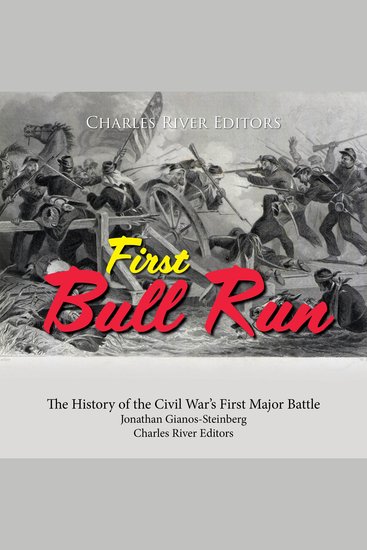
    After the Battle of Fort Sumter in April 1861 ignited the Civil War, many in the North expected a relatively quick victory, including President Abraham Lincoln. While that seems naïve in hindsight, given the knowledge that the war lasted over four years, these expectations seemed entirely realistic at the time due to the Union’s overwhelming economic advantages over the South. At the start of the war, the Union had a population of over 22 million, whereas the South had a population of 9 million, nearly 4 million of whom were slaves. Union states contained 90% of the manufacturing capacity of the country and 97% of the weapon manufacturing capacity. Union states also possessed over 70% of the total railroads in the pre-war United States at the start of the war, and the Union also controlled 80% of the shipbuilding capacity of the pre-war United States. 
    McDowell’s strategy during the First Battle of Bull Run was grand, and in many ways it was the forerunner of a tactic Robert E. Lee, Stonewall Jackson and James Longstreet executed brilliantly on nearly the same field during the Second Battle of Bull Run in August 1862. McDowell’s plan called for parts of his army to pin down General P.G.T. Beauregard’s Confederate soldiers in front while marching another wing of his army around the flank and into the enemy’s rear, rolling up the line. McDowell assumed the Confederates would be forced to abandon Manassas Junction and fall back to the next defensible line, the Rappahannock River. In July 1861, however, this proved far too difficult for his inexperienced troops to carry out effectively. 
    As the first major land battle of the Civil War, the First Battle of Bull Run made history in several ways. The two sides fought near the railroad junction at Manassas on July 21, 1861, just 25 miles away from Washington, which was close enough for many civilians from the nation’s capital to come and watch what they expected to be a rout of Confederate forces.
    Voir livre
  • The Art of Egyptian Papyrus - Writing and Illustrations in Ancient Times - cover

    The Art of Egyptian Papyrus -...

    Omar Khalil

    • 0
    • 0
    • 0
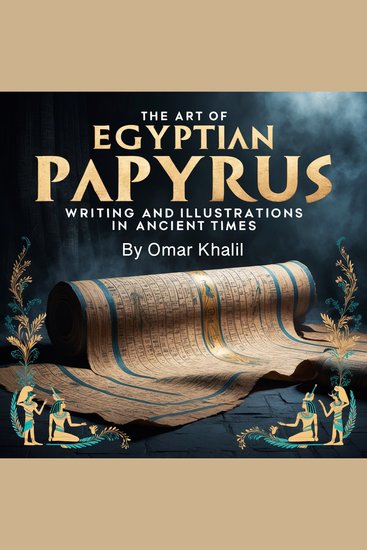
    Papyrus, one of the most important inventions of ancient Egypt, was central to the development of writing and documentation in the ancient world. The history of papyrus dates back to the early dynastic periods of Egypt, around 3000 BCE, when the first examples of papyrus usage were recorded. This plant, which grew abundantly along the Nile River, was harvested for its stalks, which were then processed into sheets that served as a writing surface. The creation of papyrus revolutionized communication in the ancient world, providing a portable, durable, and practical alternative to other materials like stone or clay tablets. 
    The origins of papyrus as a writing material can be traced to the need for a flexible and lightweight medium that could be used for documentation, record-keeping, and artistic purposes. Ancient Egyptians discovered that the inner pith of the papyrus plant could be cut into strips and laid in a crisscross pattern, pressed together, and dried to form sheets. These sheets were then smoothed and polished, making them suitable for inscribing with hieroglyphs, hieratic script, or later, the demotic script. Over time, the process of papyrus production became more refined, and its use spread to neighboring regions, influencing other ancient civilizations. 
    Early uses of papyrus were predominantly for religious and administrative purposes. Royal decrees, religious texts, and tomb inscriptions were often written on papyrus scrolls. As Egyptian society advanced, the role of papyrus expanded to include personal letters, legal documents, and works of literature, cementing its place as the primary medium for writing in the ancient world. The papyrus scroll became the preferred format for long documents, with scrolls of varying lengths used to record everything from medical texts to astronomical observations.
    Voir livre
  • Radical Politics - On the Causes of Contemporary Emancipation - cover

    Radical Politics - On the Causes...

    Peter D. Thomas

    • 0
    • 0
    • 0
    The last twenty years have witnessed a proliferation of radical social and political movements around the world. From the International Women's Strike and Occupy, to #BlackLivesMatter and direct action against the climate emergency, a series of common questions have re-emerged as immediate and practical challenges. How should radical political movements relate to the state? What makes emancipatory politics fundamentally different from both technocratic and populist models of "politics as usual"? Which forms of organization are most likely to deepen and extend the dynamics that led to the emergence of these movements in the first place? 


    To investigate the goal, nature, method, and organizational forms of radical political engagement against the neoliberal consensus, Peter D. Thomas draws on the work of Antonio Gramsci, the Italian Communist Party leader and political theorist best known for his ideas about hegemony. Offering a new reading of Gramsci, Thomas contends that hegemony is a process of differentiation in which political culture is always changing, and always with the goal of moving toward expanded freedom. Over the course of the book, Thomas looks at the way in which various theorists have approached the dilemma of how to engage productively in radical politics and explains why hegemony is a method of doing politics rather than an end goal.
    Voir livre