Rejoignez-nous pour un voyage dans le monde des livres!
Ajouter ce livre à l'électronique
Grey
Ecrivez un nouveau commentaire Default profile 50px
Grey
Abonnez-vous pour lire le livre complet ou lisez les premières pages gratuitement!
All characters reduced
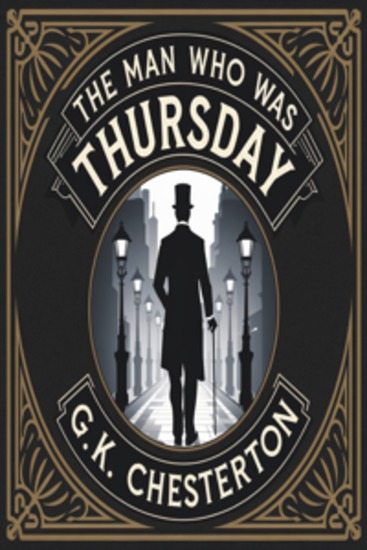
The Man Who Was Thursday (illustrated) - cover

The Man Who Was Thursday (illustrated)

G.K. Chesterton

Maison d'édition: Swish

  • 0
  • 0
  • 0

Synopsis

The Man Who Was Thursday" by G.K. Chesterton is a thrilling blend of mystery, philosophy, and adventure. Published in 1908, this literary masterpiece follows Gabriel Syme, a poet-turned-detective, as he infiltrates a secret council of anarchists, each named after a day of the week. Beneath its gripping plot lies a profound exploration of chaos, order, and the human condition. With its witty prose, unexpected twists, and enduring themes, Chesterton’s "Nightmare" remains a timeless classic that challenges the imagination and intellect.Perfect for readers who love thought-provoking fiction, intriguing characters, and philosophical undertones.
Disponible depuis: 14/12/2024.
D'autres livres qui pourraient vous intéresser

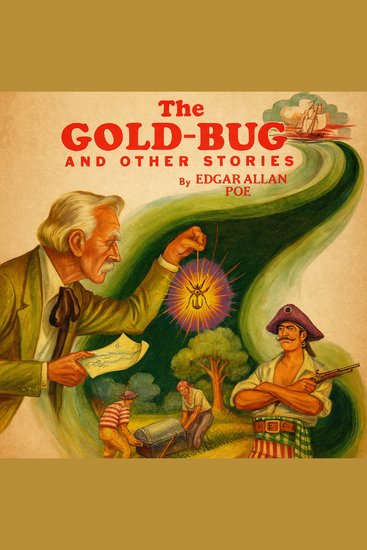
  • The Gold-Bug and Other Tales - cover

    The Gold-Bug and Other Tales

    Edgar Allan Poe

    • 0
    • 0
    • 0
    Step into the haunting world of Edgar Allan Poe with The Gold-Bug and Other Tales, brought to life in the rich narration of Kevin Waites. From the thrilling treasure hunt of “The Gold-Bug” to chilling masterpieces like “The Tell-Tale Heart” and “The Fall of the House of Usher,” this collection showcases Poe’s genius for mystery, suspense, and psychological horror. Waites’ evocative performance captures the tension, darkness, and drama of each tale, immersing listeners in cryptic codes, Gothic settings, and unforgettable characters. Perfect for lovers of classic literature and atmospheric storytelling, this audiobook offers both adventure and terror in the voice of one of America’s greatest literary masters.
    Voir livre
  • After the Theatre - cover

    After the Theatre

    Anton Chekhov

    • 0
    • 0
    • 0
    After Nadya, a 16 year old girl, returns home from seeing a play, she is happily consumed with its plot of unrequited love. To Nadya, unrequited love is the most interesting type of love, as love is boring if everyone is happy.
    Quickly, Nadya's thoughts turn to her two suitors, Gorny and Guzdev. Although they have both declared their love for her, she, more than anything, wants to believe that they do not love her. Trying to emulate the unrequited love from the play, she writes a letter to Gorny, like the heroine in the play, to create tension. But then she wonders if she should instead write to Guzdev, or perhaps both!
    Voir livre
  • Young Man on a Bicycle and The Goldini Bath - cover

    Young Man on a Bicycle and The...

    Victor Canning

    • 0
    • 0
    • 0
    Victor Canning’s light-hearted and cleverly plotted novella set on the beautiful French Riviera 
     
    Young Paul Ashcroft has travelled to the beautiful French Riviera. His goal: to make a lot of money. His methods: more than questionable. Following his motto ‘the world owes me a living’, he steals and swindles – using what he needs for himself and passing on the rest to those less fortunate. 
     
    After coming across the beautiful Villa Triton, he disguises himself as M. Durobat, a middle-aged Frenchman, to inspect the villa and to pawn the owner’s ornaments and paintings. At the local Casino, he becomes acquainted with the rich ladies of the resort. As he steals their jewellery, he blames the robberies on 'Gringo the Greek', a small crook he knew a long time ago.  
     
    But just as Paul's schemes and tricks start to be fruitful and he falls in love with the intriguing Elise Benoit, the real Gringo the Greek appears on the scene, ready to take on the cunning thief who has been blaming him all this time… 
    Praise for Victor Canning: 
     
    ‘Quite delightful … with an atmosphere of quiet contentment and humour that cannot fail to charm’ Daily Telegraph 
     
    ‘What counts for most in the story … is his mounting pleasure in vagabondage and the English scene’ The Times 
     
    ‘A paean to the beauties of the English countryside and the lovable oddities of the English character’ New York Times 
     
    ‘His delight at the beauties of the countryside and his mild astonishment at the strange ways of men are infectious’ Daily Telegraph 
     
    ‘A swift-moving novel, joyous, happy and incurably optimistic’ Evening Standard
    Voir livre
  • Flying Inn The (Unabridged) - cover

    Flying Inn The (Unabridged)

    G.K. Chesterton

    • 0
    • 0
    • 0
    An exuberant man as well as a prolific and gifted writer, G. K. Chesterton (1874-1936) was a man with very strong opinions - and extremely capable of defending them. In this hilarious, satirical romp, Chesterton demonstrates his intense distrust of power and "progressives," railing against Prohibition, vegetarianism, theosophy, and other "dreary and oppressive" forces of modernity. In a spirited response to the government's attempt to curtail alcohol sales, Humphrey Pump (called Hump) a pub owner in the fishing village of Pebblewick takes to the road in a donkey cart. Accompanied by Captain Patrick Dalroy, a crimson-haired giant with a tendency to burst into song, Hump provisions the cart with a cask of good rum, a giant round of cheese, and the signpost from his pub, The Flying Inn. Together, the two men extend good cheer to an increasingly restless populace as they attempt to evade Prohibition. In a journey that becomes a rollicking madcap adventure, the two travel round England, encountering revolution, romance, and a cast of memorable characters. Sure to receive an enthusiastic welcome from Chesterton fans, this new edition of an old classic will also appeal to anyone who enjoys a humorous, well-crafted tale.
    Voir livre
  • Fathers and Sons - cover

    Fathers and Sons

    Ivan Turgenev

    • 0
    • 0
    • 0
    "Fathers and Sons" is not only a portrait of individual characters but also a reflection of the broader societal changes taking place in 19th-century Russia. Turgenev's narrative captures the tension between traditional aristocratic values and the rise of revolutionary ideas that would shape the course of Russian history. He offers a poignant critique of both generations, showcasing their strengths, weaknesses, and their struggle to adapt to the shifting dynamics of a changing world. With its lyrical prose, nuanced characterizations, and profound exploration of social and philosophical themes, "Fathers and Sons" is a timeless masterpiece that resonates with readers across generations. Turgenev's insightful portrayal of the human condition, the complexities of familial bonds, and the clash of ideas and ideologies make this novel a compelling and thought-provoking work of literature.
    Voir livre
  • A Profitable Weakness - From their pens to your ears genius in every story - cover

    A Profitable Weakness - From...

    George Gissing

    • 0
    • 0
    • 0
    George Robert Gissing was born on November 22nd, 1857 in Wakefield, Yorkshire.  
    He was educated at Back Lane School in Wakefield. Gissing loved school. He was enthusiastic with a thirst for learning and always diligent.  By the age of ten he was reading Dickens, a lifelong hero. 
    In 1872 Gissing won a scholarship to Owens College. Whilst there Gissing worked hard but remained solitary. Unfortunately, he had run short of funds and stole from his fellow students. He was arrested, prosecuted, found guilty, expelled and sentenced to a month's hard labour in 1876. 
    On release he decided to start over.  In September 1876 he travelled to the United States. Here he wrote short stories for the Chicago Tribune and other newspapers. On his return home he was ready for novels. 
    Gissing self-published his first novel but it failed to sell.  His second was acquired but never published. His writing career was static.  Something had to change.  And it did. 
    By 1884 The Unclassed was published.  Now everything he wrote was published. Both Isabel Clarendon and Demos appeared in 1886. He mined the lives of the working class as diligently as any capitalist. 
    In 1889 Gissing used the proceeds from the sale of The Nether World to go to Italy. This trip formed the basis for his 1890 work The Emancipated. 
    Gissing's works began to command higher payments. New Grub Street (1891) brought a fee of £250.  
    Short stories followed and in 1895, three novellas were published; Eve's Ransom, The Paying Guest and Sleeping Fires. Gissing was careful to keep up with the changing attitudes of his audience.  
    Unfortunately, he was also diagnosed as suffering from emphysema. The last years of his life were spent as a semi-invalid in France but he continued to write. 1899; The Crown of Life. Our Friend the Charlatan appeared in 1901, followed two years later by The Private Papers of Henry Ryecroft. 
    George Robert Gissing died aged 46 on December 28th, 1903 after catching a chill on a winter walk.
    Voir livre