Unisciti a noi in un viaggio nel mondo dei libri!
Aggiungi questo libro allo scaffale
Grey
Scrivi un nuovo commento Default profile 50px
Grey
Iscriviti per leggere l'intero libro o leggi le prime pagine gratuitamente!
All characters reduced
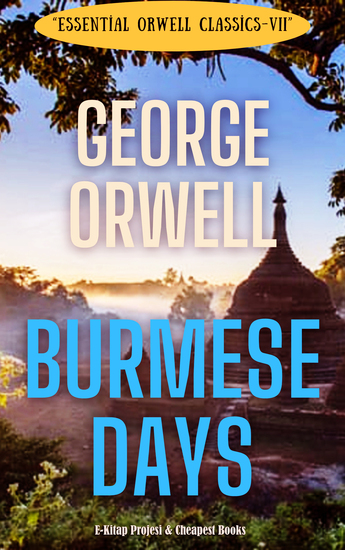
Burmese Days - cover

Burmese Days

George Orwell

Casa editrice: E-Kitap Projesi & Cheapest Books

  • 0
  • 0
  • 0

Sinossi

Burmese Days is the first novel by English writer George Orwell, published in 1934. Set in British Burma during the waning days of Empire, when Burma was ruled from Delhi as part of British India, it is "a portrait of the dark side of the British Raj." At the centre of the novel is John Flory, "the lone and lacking individual trapped within a bigger system that is undermining the better side of human nature." The novel describes "both indigenous corruption and imperial bigotry" in a society where, "after all, natives were natives-interesting, no doubt, but finally...an inferior people".

Burmese Days was first published "further afield," in the United States, because of concerns that it might be potentially libelous; that the real provincial town of Katha had been described too realistically; and that some of its fictional characters were based too closely on identifiable people. A British edition, with altered names, appeared a year later. Nonetheless, Orwell's harsh portrayal of colonial society was felt by "some old Burma hands" to have "rather let the side down". In a letter from 1946, Orwell wrote, "I dare say it's unfair in some ways and inaccurate in some details, but much of it is simply reporting what I have seen".

Book Summary:

Burmese Days is set in 1920s imperial Burma, in the fictional district of Kyauktada, based on Kathar (formerly spelled Katha), a town where Orwell served. Like the fictional town, it is the head of a branch railway line above Mandalay on the Ayeyarwady (Irrawaddy) River. As the story opens, U Po Kyin, a corrupt Burmese magistrate, is planning to destroy the reputation of the Indian, Dr Veraswami. The doctor hopes for help from his friend John Flory who, as a pukka sahib (European white man), has higher prestige. Dr Veraswami also desires election to the town's European Club, of which Flory is a member, expecting that good standing among the Europeans will protect him from U Po Kyin's intrigues. U Po Kyin begins a campaign to persuade the Europeans that the doctor holds anti-British opinions in the belief that anonymous letters with false stories about the doctor "will work wonders". He even sends a threatening letter to Flory.

John Flory, a jaded 35-year-old teak merchant with a birthmark on his face in the shape of a ragged crescent, spends three weeks of every month acquiring jungle timber. Friendless among his fellow Europeans and unmarried, but with a Burmese mistress, he has become disillusioned with life in an expatriate community centred round the local European Club in a remote provincial town. At the same time, he has become so embedded in Burma that it is impossible for him to leave and return to England. Flory has one good friend, the Indian, Dr Veraswami, whom he often visits for what the Doctor delightedly calls "cultured conversation". But when Flory dismisses the British as mere moneymakers, living a lie, "the lie that we're here to uplift our poor black brothers instead of to rob them," he provokes consternation in the doctor, who defends the British as the efficient administrators of an unrivalled empire. Toward his mistress, Flory is emotionally ambivalent: "On the one hand, Flory loves Burma and craves a partner who will share his passion, which the other local Europeans find incomprehensible; on the other hand, for essentially racist reasons, Flory feels that only a European woman is acceptable as a partner".
Disponibile da: 26/11/2023.
Lunghezza di stampa: 400 pagine.

Altri libri che potrebbero interessarti

  • Selected Short Stories - by F Scott Fitzgerald - cover

    Selected Short Stories - by F...

    F. Scott Fitzgerald

    • 0
    • 0
    • 0
    Selected Short Stories is a collection of some of F. Scott Fitzgerald's most memorable and thought-provoking works. Published in 1931, the collection includes several of his best-known stories, such as "The Diamond as Big as the Ritz," "Bernice Bobs Her Hair," and "The Curious Case of Benjamin Button." These stories explore themes of social class, love, loss, and the search for meaning in a rapidly changing world. Fitzgerald's writing style is characterized by its elegance, wit, and poetic language, making his stories both engaging and thought-provoking. 
     
    One of the recurring themes in Fitzgerald's stories is the tension between the individual and society. In many of his stories, the characters are struggling to find their place in a society that values wealth, status, and conformity. This is particularly evident in "Bernice Bobs Her Hair," in which the protagonist, Bernice, must decide whether to conform to the expectations of her wealthy cousin or to follow her own desires. Similarly, in "The Curious Case of Benjamin Button," the protagonist must come to terms with his unusual condition, which sets him apart from the rest of society. 
     
    Another important theme in Fitzgerald's stories is the fleeting nature of happiness and the inevitability of change. Many of his characters are searching for love, success, or fulfillment, but find that these things are elusive and ultimately fleeting. This is particularly evident in "The Diamond as Big as the Ritz," in which the protagonist discovers a hidden mountain of diamonds, only to realize that his wealth is meaningless in the face of the vastness of the universe. Fitzgerald's stories remind us that life is both beautiful and fragile and that the pursuit of happiness can be both exhilarating and heartbreaking. 
    Overall, Selected Short Stories is a testament to Fitzgerald's talent as a writer and his ability to capture the spirit of his time.
    Mostra libro
  • Tom Thumb - Story Time Episode 62 (Unabridged) - cover

    Tom Thumb - Story Time Episode...

    Brothers Grimm

    • 0
    • 0
    • 0
    Parents are poor and want to leave Tom Thumb in forest. But Tom Thumb is clever and marks his way by stones. Second time he is unsuccessful - he has only bread-crumbs and birds eat them. Tom Thumb finds a Giant and a beautiful princess in his entrapment, and is determined to free the princess.
    Mostra libro
  • After the Funeral - From their pens to your ears genius in every story - cover

    After the Funeral - From their...

    Mary Butts

    • 0
    • 0
    • 0
    Mary Frances Butts was born on 13th December 1890 in Poole, Dorset. 
    Her early years were spent at Salterns, an 18th-century house overlooking Poole Harbour.  Sadly in 1905 her father died, and she was sent for boarding at St Leonard's school for girls in St Andrews. 
    Her mother remarried and, from 1909, Mary studied at Westfield College in London, and here, first became aware of her bisexual feelings.  She was sent down for organising a trip to Epsom races and only completed her degree in 1914 when she graduated from the London School of Economics.  By then Mary had become an admirer of the occultist Aleister Crowley and she was given a co-authorship credit on his ‘Magick (Book 4)’. 
    In 1916, she began the diary which would now detail her future life and be a constant reference point for her observations and her absorbing experiences. 
    During World War I, she was doing social work for the London County Council in Hackney Wick, and involved in a lesbian relationship.  Life changed after meeting the modernist poet, John Rodker and they married in 1918. 
    In 1921 she spent 3 months at Aleister Crowley's Abbey of Thelema in Sicily; she found the practices dreadful and also acquired a drug habit.  Mary now spent time writing in Dorset, including her celebrated book of short stories ‘Speed the Plough’ which saw fully develop her unique Modernist prose style. 
    Europe now beckoned and several years were spent in Paris befriending many artists and writing further extraordinary stories.   
    She was continually sought after by literary magazines and also published several short story collections as books. Although a Modernist writer she worked in other genres but is essentially only known for her short stories.  Mary was deeply committed to nature conservation and wrote several pamphlets attacking the growing pollution of the countryside. 
    In 1927, she divorced and the following year her novel ‘Armed with Madness’ was published.  A further marriage followed in 1930 and time was spent attempting to settle in London and Newcastle before setting up home on the western tip of Cornwall.  By 1934 the marriage had failed. 
    Mary Butts died on 5th March 1937, at the West Cornwall Hospital, Penzance, after an operation for a perforated gastric ulcer. She was 46.
    Mostra libro
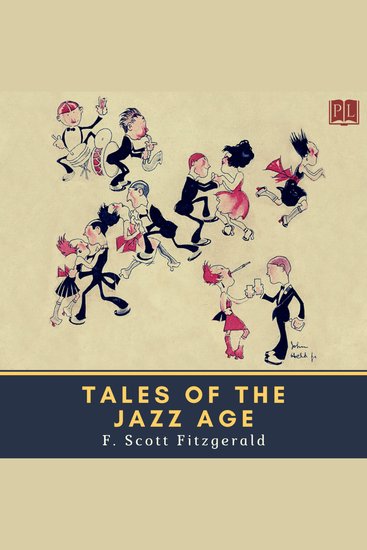
  • Tales of the Jazz Age - cover

    Tales of the Jazz Age

    F. Scott Fitzgerald

    • 0
    • 0
    • 0
    Tales of the Jazz Age (1922) is a collection of eleven short stories by F. Scott Fitzgerald. Divided into three separate parts, according to subject matter, it includes one of his better-known short stories, The Curious Case of Benjamin Button. All of the stories had been published earlier, independently, in either Metropolitan Magazine, The Saturday Evening Post, Smart Set, Collier's, the Chicago Sunday Tribune, or Vanity Fair.
    Included in this collection:
    1. The Jelly-Bean
    2. The Camel's Back
    3. May Day
    4. Porcelain and Pink
    5. The Diamond as Big as the Ritz
    6. The Curious Case of Benjamin Button
    7. Tarquin of Cheapside
    8. "O Russet Witch!"
    9. The Lees of Happiness
    10. Mr. Icky
    11. Jemina
    Mostra libro
  • The Masque of the Red Death - cover

    The Masque of the Red Death

    Edgar Allan Poe

    • 0
    • 0
    • 0
    Step into the eerie and haunting world of Edgar Allan Poe with "The Masque of the Red Death," the first part of an Edgar Allan Poe short story collection, narrated by Jake Urry. In this chilling tale, Prince Prospero and his courtiers attempt to escape a deadly plague by secluding themselves in a lavish abbey. Their sense of security is shattered when a mysterious figure cloaked in red appears during their masquerade ball, reminding them that death cannot be escaped. 
    Jake Urry's narration brings the suspense and gothic horror of Poe's story to life, making this audiobook an immersive experience. Perfect for both long-time fans and newcomers to Poe's work, this recording captures the dark, atmospheric essence of "The Masque of the Red Death," delivering a truly unforgettable listening experience.
    Mostra libro
  • Henry James - A Short Story Collection - American born British author James was nominated for a Nobel Prize three times here we have an amazing short story collection of his - cover

    Henry James - A Short Story...

    Henry James

    • 0
    • 0
    • 0
    Henry James was born 15th April 1843 in New York City. 
     
    His youth was spent travelling with his family receiving what was an "extraordinarily haphazard and promiscuous" education as they journeyed through London, Paris, Geneva, Boulogne-sur-Mer and Newport, Rhode Island, according to the father's current interests and publishing ventures. James studied primarily with tutors and only briefly attended schools.    
     
    Undoubtedly the quality of his writing has ensured his name is enshrined in the American literary tradition.  
     
    James was a committed Anglophile and spent most of his adult life as an expatriate in Europe.  Many of his novels juxtapose the Old World with the New World. Classics such as ‘The Portrait of a Lady’, ‘Daisy Miller’ and ‘The Ambassadors’, display the entanglement between American and European cultures and mentalities. They highlight the differences between the two worlds through following the experiences of American expatriates in Europe.  
     
    A prolific author he was able to easily move across genres to create vivid and totally real worlds and situations and to offer sophisticated observations of human relations as well as realistic, social criticism. 
    As a critic James was unafraid to venture into reviews and essays of those other literary giants around him.  These together with his short stories and, of course, classic novels, make Henry James an author to be not only admired but read, and read often.  
     
    In 1915 Henry James became a British citizen. 
     
    On 28th February 1916, at the age of 72, Henry James died in Chelsea, London. 
     
    He was nominated for the Nobel Prize in Literature in 1911, 1912 and 1916. He never won.
    Mostra libro