Join us on a literary world trip!
Add this book to bookshelf
Grey
Write a new comment Default profile 50px
Grey
Subscribe to read the full book or read the first pages for free!
All characters reduced
The Thanksgiving Storybook - Over 60 Holiday Tales & Poems - cover

The Thanksgiving Storybook - Over 60 Holiday Tales & Poems

George Eliot, Louisa May Alcott, Nathaniel Hawthorne, Harriet Beecher Stowe, Andrew Lang, Eleanor H. Porter, O. Henry, Eugene Field, Edward Everett Hale, Horatio Alger, Susan Coolidge, Alfred Henry Lewis, Mary Jane Holmes, Hezekiah Butterworth, Sarah Orne Jewett, Charlotte Perkins Gilman, Lucy Maud Montgomery, Alice Whieldon, Amy Ella Blanchard, Olive Thorne Miller, C. A. Stephens, Alfred Gatty, Ida Hamilton Munsell, Isabel Gordon Curtis, Fannie Wilder Brown, Annie Hamilton Donnell, Edna Payson Brett, Pauline Shackleford Colyar, H. R. Schoolcraft, Rose Terry Cooke, Nora Perry, Cornelius Mathews

Publisher: DigiCat

  • 0
  • 0
  • 0

Summary

The Thanksgiving Storybook is a monumental collection that encapsulates the gratitude and familial warmth traditionally associated with this beloved American holiday. This anthology stretches across various literary styles and genres, from heartfelt narratives and poignant poetry to whimsical fables, capturing the multifaceted essence of Thanksgiving. Readers will encounter stories that navigate the intricate themes of family, community, and resilience, resonating with contemporary audiences while maintaining a timeless charm. The inclusion of both revered classics and lesser-known gems ensures a diverse tapestry of voices and experiences that enrich the collection. The distinguished array of authors featured in The Thanksgiving Storybook includes literary giants such as Louisa May Alcott, Nathaniel Hawthorne, and Charlotte Perkins Gilman, alongside other influential voices from the 19th and early 20th centuries. These contributors offer unique insights into the traditions and societal nuances of their eras, providing readers with both historical context and universal truths. The anthology aligns with pivotal cultural and literary movements, such as the sentimental and reformative literature of the time, revealing how Thanksgiving serves as both a backdrop and a catalyst for broader discussions on morality, community, and identity. For readers and scholars alike, The Thanksgiving Storybook offers a rare opportunity to immerse oneself in a rich and varied literary landscape. The collection's breadth of insights, coupled with its emphasis on gratitude and communal ties, promises to educate and engage. It invites readers to reflect on the intertwining of personal and cultural narratives that define the Thanksgiving tradition, fostering a dialogue between the diverse authors' works that persists beyond the page. This anthology is an invaluable resource for anyone seeking to deepen their understanding of this quintessentially American holiday through the lens of literary excellence.
Available since: 05/17/2022.
Print length: 900 pages.


Other books that might interest you

  • Villages and Illnesses - A Cultivation Short Story - cover

    Villages and Illnesses - A...

    Tao Wong

    • 0
    • 0
    • 0
    Expectation conceals the truth.  
    Noblewoman and cultivator Li Yao is called to a small village to investigate a mysterious illness that has drained residents of their chi. Accompanying her are her suitors Xiang An and Shen Wei, both more trouble than they're worth in Li Yao's eyes.  
    Perhaps not all is as it seems. In the village and her suitors.  
    This is a short story set in the A Thousand Li universe. Does not need to be read to follow the main series.
    Show book
  • Blood - From their pens to your ears genius in every story - cover

    Blood - From their pens to your...

    Hanns Heinz Ewers

    • 0
    • 0
    • 0
    Hanns Heinz Ewers was born on 3rd November 1871 in Düsseldorf, Germany. 
    His first published poem was at 17 on the death, after a reign of only 99 days, of the German Emperor Frederick III. 
    A stint in the German military was cut short after only 44 days because of his myopia.  Writing was to be the way forward for him with a book of satiric verse published in 1901. At the same time he co-founded a literary vaudeville troupe that toured central and eastern Europe before censors and expenses forced its closure.  An inveterate traveller he was in South America when the Great War enveloped Europe and he relocated to New York. 
    From here his story darkens. Although by now a successful and admired author he was arrested in the U S in 1918 as a German Agent on the pretext of his travels and a falsified Swiss passport. Interned, he was released in 1921 and returned to Germany.  He claimed only to be raising money for the German Red Cross. 
    His literary fame is decidedly easier to clarify. His novels beginning with ‘The Sorcerer’s Apprentice’ in 1910 are dark, they bristle with evil intent and are littered with characters who have a dubious moral compass and yet, along with his short stories, are brazen, brilliant feats of literary narrative. 
    He also wrote and published plays, fairy tales, opera librettos, critical essays and lectured for many years on ‘The Religion of Satan’ and was one of the first to write scripts for the cinema, which he considered a legitimate art form. 
    As the Weimar republic began its chaotic death throes Ewers became attracted to the rising Nazi Party.  At first he was warmly received despite disagreeing with its anti-semitism (his most famed literary character had a Jewish mistress) and he was even commissioned by Hitler to write a biography of the Nazi martyr Horst Wessel.  This together with his own homosexuality culminated with his works being banned in 1934 and his assets and property seized.  It took him many years to have the ban lifted.  This association rightfully clouds his personal reputation but has meant his literary contributions are also overlooked and neglected. 
    Hanns Heinz Ewers died of tuberculosis on 12th June 1943 in his Berlin apartment.
    Show book
  • For Now: One Hundred 100-Word Stories - cover

    For Now: One Hundred 100-Word...

    John Sheirer

    • 0
    • 0
    • 0
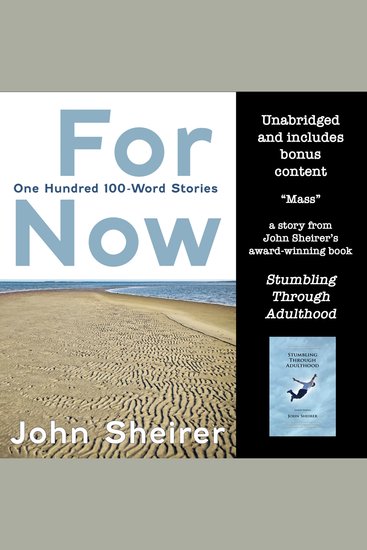
    John Sheirer’s Stumbling Through Adulthood: Linked Stories showed his immense skill for traditional-length short stories. For Now: One Hundred 100-Word Stories shows equal facility with the microfiction form. These stories range from gentle humor so light it might float off the page in a soft breeze to dense, powerful tales that threaten to sink through the book’s cover and bore directly into the earth’s molten core. “Here, in these finely wrought tales, is a universal current of humanity that connects us all.” – Robert Scotellaro, author of Ways to Read the World. “Unsettling in their precise focus, Sheirer’s brief and crystalline works sharpen the reader’s awareness of the irrevocable. – Gina Barreca, author of They Used to Call Me Snow White, but I Drifted. “With so many big stories in such compact spaces, John Sheirer will titillate and delight you.” – Joshua Michael Stewart, author of Love Something and Break Every String. Sheirer (pronounced Shy-er) narrates his own stories for this audiobook. BONUS MATERIAL: Voice artist Amanda Elgie reads Sheirer's story "Mass" from his award-winning book of longer stories, Stumbling Through Adulthood.
    Show book
  • 3 Stories - Set During Pandemics - A trio of classic tales perfect for a commute walk or quiet night in - cover

    3 Stories - Set During Pandemics...

    Edgar Allan Poe, Fred M. White,...

    • 0
    • 0
    • 0
    There is something about the number 3.    
     
    The Ancient Greeks believed 3 was the perfect number, and in China 3 has always been a lucky number, and they know a thing or two.   
     
    Most religions also have 3 this and 3 that and, of course, in these more modern times, three’s a crowd may be too many, except when it’s a ménage à trois.  It seems good things usually come in threes. 
     
    Whatever history and culture says WE think 3, a hat-trick of stories, is a great number to explore themes and literary avenues that classic authors were so adept at creating. 
     
    From their pens to your your ears. 
     
    01 - 3 Stories - Set During Pandemics 
    02 - The Masque of the Red Death by Edgar Allan Poe 
    03 - The Dust of Death by Fred M White 
    04 - The Unparallelled Invasion by Jack London
    Show book
  • A Lesson on a Tortoise - From their pens to your ears genius in every story - cover

    A Lesson on a Tortoise - From...

    D H Lawrence

    • 0
    • 0
    • 0
    David Herbert Lawrence was born on the 11th September 1885 in Eastwood, Nottinghamshire, a coal mining town where the reality of a harsh life was only useful as experiences for future literary works. 
    He was educated at Beauvale Board School and became the first local boy to receive a scholarship to attend Nottingham High School. After 3 years he became a junior clerk in Haywood’s surgical appliances factory. He was also attempting a literary career which, in the short term, led to a teacher training position in Eastwood and later a teaching qualification from University College, Nottingham.  
    Lawrence’s first efforts were poems, short stories and a draft of ‘The White Peacock’. Moving to London and a teaching position in Croydon his writing attracted the attention of Ford Madox Ford, editor of The English Review, and he commissioned him to write ‘Odour of Chrysanthemums’.  
    Wanting to write full-time he now began work on what would become ‘Sons and Lovers.   
    In 1912 he met the older and married mother-of-three Frieda Weekley. They eloped to Germany and here Lawrence could see for himself the growing tensions with France.  So keen was his interest that he was arrested and accused of being a British spy.  
    In early 1914 Frieda obtained her divorce and they returned to Britain to be married just days before the outbreak of war. Owing to her German parentage, and his own public dislike of militarism and violence, the couple were treated with contempt and suspicion throughout the war years.  
    Despite this he continued to write but his reputation in England was so tarnished and, mirrored by his own disdain for the country, he and Frieda left England in November 1919, first for Europe and then America via Ceylon and Australia. 
    They bought a ranch in Taos, New Mexico and visited Mexico several times. The third visit in March 1925 caused a near fatal attack of malaria. To convalesce they moved to Florence. Here he continued work on ‘Lady Chatterley’s Lover’ which for many years would cause controversy. A renewed interest in oil painting resulted in an exhibition in 1929 which was raided by the police and several works were confiscated.  
    D H Lawrence died of complications arising from a bout of tuberculosis on the 2nd of March 1930 in Vence, France.  He was 44.
    Show book
  • A Slip of the Pen - From their pens to your ears genius in every story - cover

    A Slip of the Pen - From their...

    Amy Levy

    • 0
    • 0
    • 0
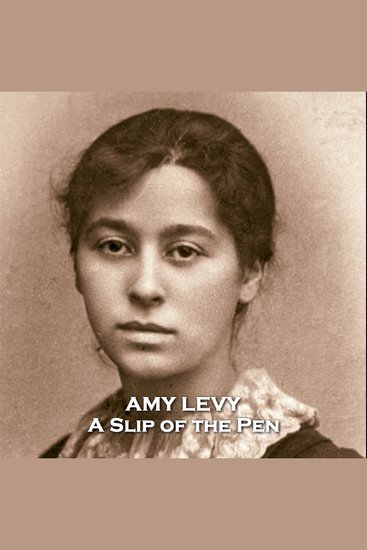
    Amy Levy was born in London, England in 1861, the second of seven in a fairly wealthy Anglo-Jewish family. The children read and participated in secular literary activities and became firmly integrated into Victorian life. 
    Her education was at Brighton High School, Brighton, before studies at Newnham College, Cambridge; she was the first Jewish student when she arrived in 1879, but left after four terms. 
    Amy’s writing career began early; her poem ‘Ida Grey’ appeared when she was only fourteen. Her acclaimed short stories ‘Cohen of Trinity’ and ‘Wise in Their Generation,’ were published by Oscar Wilde in his magazine ‘Women's World’. 
    Her poetic writings reveal feminist concerns; ‘Xantippe and Other Verses’, from 1881 includes a poem in the voice of Socrates's wife. ‘A Minor Poet and Other Verse’ from 1884 comprises of dramatic monologues and lyric poems. 
    In 1886, Amy began a series of essays on Jewish culture and literature for the Jewish Chronicle, including ‘The Ghetto at Florence’, ‘The Jew in Fiction’, ‘Jewish Humour’ and ‘Jewish Children’. 
    That same year while travelling in Florence she met the writer Vernon Lee. It is generally assumed they fell in love and this inspired the poem ‘To Vernon Lee’. 
    Her first novel ‘Romance of a Shop’, written in 1888 is based on four sisters who experience the pleasures and hardships of running a London business during the 1880s. This was followed by Reuben Sachs (also 1888) and concerned with Jewish identity and mores in the England of her time and was somewhat controversial. 
    Her final book of poems, ‘A London Plane-Tree’ from 1889, shows the beginnings of the influence of French symbolism. 
    Despite many friendships and an active life, Amy suffered for many years with serious depressions and this, together with her growing deafness, led her to commit suicide by inhaling carbon monoxide on September 10th, 1889. She was 27.
    Show book