¡Acompáñanos a viajar por el mundo de los libros!
Añadir este libro a la estantería
Grey
Escribe un nuevo comentario Default profile 50px
Grey
Suscríbete para leer el libro completo o lee las primeras páginas gratis.
All characters reduced
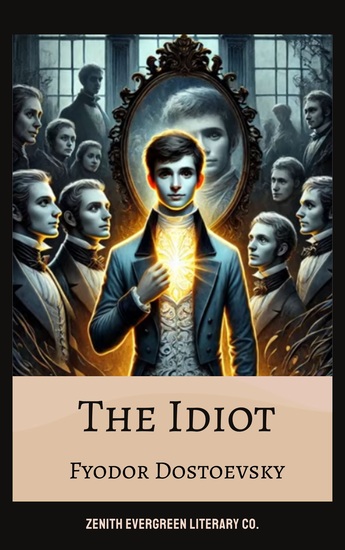
The Idiot - A Psychological Masterpiece of Innocence and Tragedy by Fyodor Dostoevsky - cover

The Idiot - A Psychological Masterpiece of Innocence and Tragedy by Fyodor Dostoevsky

Fyodor Dostoevsky, Zenith Evergreen Literary Co.

Editorial: Zenith Evergreen Literary Co.

  • 0
  • 0
  • 0

Sinopsis

🧠 "What happens when a man too good for this world steps into its darkest corners?"
Welcome to the poignant, profound, and powerful world of The Idiot, where purity collides with corruption, and love battles pride. 💔✨

Meet Prince Lev Myshkin, a man of unwavering honesty and childlike goodness. Returning to Russian society after years of treatment for epilepsy, he's immediately drawn into a web of romance, betrayal, and tragic misunderstandings. 💫💣

Set in the glittering yet morally decaying aristocracy of 19th-century Russia, The Idiot is a psychological drama that dissects the human soul with surgical precision. Dostoevsky challenges the very meaning of sanity, morality, and goodness in a society that mistakes virtue for madness.

🌪️ Intense relationships, philosophical depth, and heart-wrenching twists await you in this timeless classic. Perfect for fans of deep character studies, emotional fiction, and Russian literature, this is more than just a novel—it's a revelation.

👉 Buy now and discover why this Dostoevsky classic still resonates through the ages! 🕰️💡
Disponible desde: 14/04/2025.
Longitud de impresión: 720 páginas.
Otros libros que te pueden interesar

  • A Legend - From their pens to your ears genius in every story - cover

    A Legend - From their pens to...

    Alexander Kuprin

    • 0
    • 0
    • 0
    Alexander Kuprin was born in Narovchat, Penza in Russia on 7th September 1870. 
    At 3 his Father died and he and mother moved to Moscow. By 10 he was enrolled at the Second Moscow Military High School and there his interest in literature began. The Alexander Military Academy followed and two years later he was a sub-lieutenant and posted to an Infantry Regiment for a further four years. 
    Despite his duties he was a now a keen writer and published his first short story at this time. His military duties also garnered him experiences for his breakthrough work ‘The Duel’.  Leaving the military he left for Kiev to work for local newspapers.  He continued to publish both stories and novels and by 1901 he was in St Petersburg becoming part of a group that included Chekhov, Ivan Bunin, Maxim Gorky and Leonid Andreyev.  
    In the years that followed further controversial works and acclaim followed.  His comments on the regime meant he was also put under secret police surveillance.   
    As World War I erupted, Kuprin opened a military hospital but was then given command of an infantry company in Finland. He was soon discharged on grounds of ill health.  
    The October Revolution saw him praise Lenin, but he warned that the Bolsheviks threatened Russian culture and might cause further widespread suffering to the peasants.  As Civil War raged he took his family to Helsinki and then on to Paris. 
    Exile saw his talents decline further and his succumbing to alcoholism. He became lonely and withdrawn. The family's poverty increased his malaise.   
    In May 1937, the Kuprin’s returned to Moscow.  He now saw his work published but wrote almost nothing new.  In 1938 his health rapidly deteriorated.  Already suffering from a kidney problems and sclerosis, he had now developed cancer of the oesophagus.  
    Alexander Kuprin died on 25th August 1938.
    Ver libro
  • Better Angel - cover

    Better Angel

    Richard Meeker

    • 0
    • 0
    • 0
    ""Better Angel" is a novel by Forman Brown, initially published in 1933 under the pseudonym Richard Meeker. Later, it was republished as "Torment" in 1951. This early novel offers a portrayal of a gay lifestyle without condemnation. In fact, Christopher Carey hailed it as the ""first homosexual novel with a truly happy ending"".    The title of the novel alludes to Shakespeare's Sonnet 144, which includes the line: "the better angel is a man right fair". This poem has been interpreted as having a homosexual subtext12.    The plot follows the journey of Kurt Gray, whose experiences mirror those of the author, Forman Brown. Kurt's life unfolds from his adolescent years in central Michigan to adulthood as a musician and composer. His story encompasses solitude, religious awakening, same-sex relationships, and intellectual exploration. The love affair between Kurt and another man, Derry, forms a central theme, along with their relationship with a third man named Tony. Notably, Brown based these characters on real individuals, including himself and his long-time lover, Harry Burnett.    Despite its initial lack of critical attention, "Better Angel" remains a significant work. It resurfaced in 1987 under its original title, with an introduction by Hubert Kennedy. Brown, who had used a pseudonym to protect his writing career and family, provided an epilogue for the 1990 reprint, explaining his reasons for anonymity.    This novel stands as a testament to the courage of early LGBTQ+ literature and offers a glimpse into the complexities of identity, love, and acceptance during a time when such themes were often silenced"
    Ver libro
  • Prince and the Pauper The - Audiobook - cover

    Prince and the Pauper The -...

    Mark Twain, Classic Audiobooks,...

    • 0
    • 0
    • 0
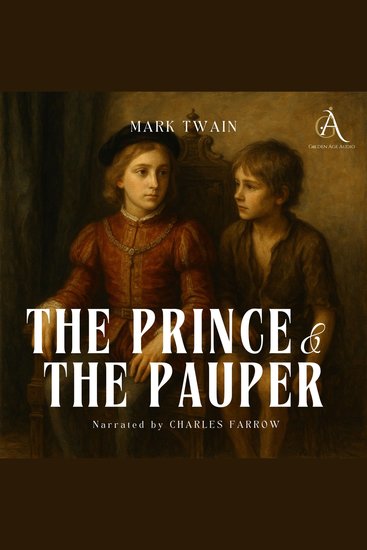
    Set in 16th-century England, The Prince and the Pauper tells the story of two boys who are identical in appearance but born into very different worlds. Tom Canty, a poor boy from a destitute London family, and Prince Edward, heir to the English throne, meet by chance and decide to switch clothes as a joke. But when fate traps them in each other's roles, they must navigate the harsh realities of their new lives.As the prince experiences life among the poor and Tom is thrown into the rigid world of royalty, both boys gain empathy, wisdom, and a deeper understanding of justice. Twain blends adventure, satire, and social commentary to craft a timeless tale about identity, inequality, and the human spirit.
    Ver libro
  • The Black Tulip - cover

    The Black Tulip

    Alexandre Dumas

    • 0
    • 0
    • 0
    "The Black Tulip" is a historical novel and a work of Romantic poetry written by Alexandre Dumas, père, first published in 1850. The story unfolds in 1672 during the time of tulip mania in the Netherlands. Dumas' last major historical novel is a tale of romantic love, jealousy and obsession, interweaving historical events surrounding the brutal murders of two Dutch statesman in 1672 with the phenomenon of tulipomania that gripped seventeenth-century Holland.
    Ver libro
  • The Premature Burial - cover

    The Premature Burial

    Edgar Allen Poe

    • 0
    • 0
    • 0
    Claustrophobia, a frightful time to be sure. But being buried alive? One of the worst terrors to happen, and yet it does. A horrific reading of a classic tale by Edgar Allen Poe, and his look on, arguably, the worst way to die!
    Ver libro
  • War and Peace - Second Epilogue (Unabridged) - cover

    War and Peace - Second Epilogue...

    Leo Tolstoy

    • 0
    • 0
    • 0
    War and Peace is a literary work mixed with chapters on history and philosophy by the Russian author Leo Tolstoy. It was first published serially, then published in its entirety in 1869. It is regarded as one of Tolstoy's finest literary achievements and remains an internationally praised classic of world literature.
    Second Epilogue: History is the life of nations and of humanity. To seize and put into words, to describe directly the life of humanity or even of a single nation, appears impossible. The ancient historians all employed one and the same method to describe and seize the apparently elusive the life of a people. They described the activity of individuals who ruled the people, and regarded the activity of those men as representing the activity of the whole nation.
    Ver libro