Begleiten Sie uns auf eine literarische Weltreise!
Buch zum Bücherregal hinzufügen
Grey
Einen neuen Kommentar schreiben Default profile 50px
Grey
Jetzt das ganze Buch im Abo oder die ersten Seiten gratis lesen!
All characters reduced
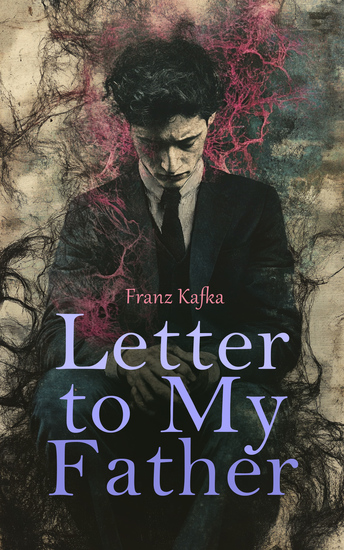
Letter to My Father - cover

Letter to My Father

Franz Kafka

Verlag: e-artnow

  • 0
  • 0
  • 0

Beschreibung

In "Letter to My Father," Franz Kafka presents a poignant and introspective exploration of familial relationships, psychological conflict, and the burdens of parental expectation. Written in a confessional style, this deeply personal letter unfolds Kafka's fraught connection with his authoritarian father, Hermann, and reveals the profound impact this relationship has had on his identity and creative output. The text embodies Kafka's characteristic blend of existential inquiry and surreal narrative, encapsulating his struggles with guilt, alienation, and the quest for self-understanding amidst the complexities of family dynamics. Franz Kafka, a pivotal figure in 20th-century literature, faced many personal demons that informed his writing. Growing up in a Jewish family in Prague under the shadow of a domineering father, Kafka's own experiences of repression, anxiety, and the search for autonomy permeate this letter. The correspondence was penned in 1919, an era marked by social upheaval, reflecting Kafka's internal conflicts and his quest for reconciliation with his past while acknowledging the indelible impact of his upbringing. This book serves as an essential read for those interested in psychological literature, modern existentialism, and autobiographical narrative. Kafka's nuanced reflections on family tensions foster greater empathy and insight into the complexities of parental influence, making "Letter to My Father" a powerful examination that resonates with anyone grappling with similar issues.
Verfügbar seit: 17.01.2025.
Drucklänge: 43 Seiten.

Weitere Bücher, die Sie mögen werden

  • Scotland Today and Yesterday - Witness to a Changing Nation - cover

    Scotland Today and Yesterday -...

    John MacKay

    • 0
    • 0
    • 0
    This book is the story of a changing Scotland as it was heard and seen by the people of Scotland. We all may have our ideas about where we are headed as nation and a society, but none of us knows. That makes what lies ahead so fascinating. Just like what's gone before. JOHN MacKAY
    
    John MacKay is one of Scotland's best known broadcasters. His career as a reporter, anchor and presenter has spanned from the Thatcher Years to the Independence Referendum and beyond. MacKay has been witness to the major stories in the country's recent past.
    There have been the tragedies of Lockerbie, Dunblane and Clutha; sporting triumphs and tears; the opening of the new Scottish Parliament; the drama of parliamentary elections and referendums; interviews with Prime Ministers and First Ministers; and the death of Donald Dewar.
    From being in a room with a grizzly bear to trying to calm an irate – and topless – Alex Salmond, MacKay's career has been nothing if not varied. Using archive scripts, interview transcripts, recollections and personal diaries, he tells the story of one of the most tumultuous periods in Scotland's peacetime history.
    Zum Buch
  • Who Is a Worthy Mother? - An Intimate History of Adoption - cover

    Who Is a Worthy Mother? - An...

    Rebecca Wellington

    • 0
    • 0
    • 0
    Nearly every person in the United States is affected by adoption. In the wake of the U.S. Supreme Court's overturning of Roe v. Wade, the renewed debate over women's reproductive rights places an even greater emphasis on adoption. Wellington's timely—and deeply researched—account amplifies previously marginalized voices and exposes the social and racial biases embedded in the United States' adoption industry. 


    The history of adoption is rarely told from an adoptee's perspective. Wellington remedies this gap by framing the chronicle of adoption in America using her own life story. As she reckons with the pain and unanswered questions of her own experience, she explores broader issues surrounding adoption in the United States, including changing legal policies, sterilization and compulsory relinquishment programs, forced assimilation of babies of color and Indigenous babies adopted into white families, and other liabilities. 


    According to Wellington, US adoption practices in America are shrouded in secrecy, for they frequently cast shame on unmarried women, women struggling with fertility, and "illegitimate" babies and children. As the United States once again finds itself embroiled in heated disputes over women's bodily autonomy Wellington's book offers a unique and much-needed frame of reference.
    Zum Buch
  • Bedtime Stories For Adults - Perfect classic literature to listen to before bed - cover

    Bedtime Stories For Adults -...

    Oscar Wilde

    • 0
    • 0
    • 0
    As a child being read to was one of the greatest joys imaginable.  A loved one would start a tale whilst you were all cosy warm in bed with the lights nodding off.  Anything could happen but sleep would come and dreams would start and all was good with the world.  Adults too long for reassurance, for comfort, for calm.  Sometimes they may get that.  But with classic authors such as Oscar Wilde, O Henry, Saki, Rabindranath Tagore and many others they may not.  Expect the unexpected. 
     
    1 - Bedtime Stories for Adults  - An Introduction 
    2 - Kabuliwallah by Rabindranath Tagore 
    3 - Springtime a la Carte by O Henry 
    4 - Kew Gardens by Virginia Woolf 
    5 - Speed by Sinclair Lewis 
    6 - Tobermory by Saki 
    7 - The Ransom of Red Chief by O Henry 
    8 - The Selfish Giant by Oscar Wilde 
    9 - The Burglar's Christmas by Willa Cather 
    10 - Transients in Arcadia by O Henry 
    11 - An Angel in Disguise by T S Arthur 
    12 - The Skylight Room by O Henry 
    13 - The Magic Shop by H G Wells 
    14 - The Gift of the Magi by O Henry 
    15 - The Happy Prince by Oscar Wilde 
    16 - The Great Good Place by Henry James
    Zum Buch
  • Before the Law - From their pens to your ears genius in every story - cover

    Before the Law - From their pens...

    Franz Kafka

    • 0
    • 0
    • 0
    Franz Kafka was born on 3rd July 1883 in Prague, then in Bohemia, the eldest of 6, into a middle-class Jewish family. 
    Life for the young Kafka and his passion for literature was often made an ordeal by his over-bearing and domineering entrepreneur of a father.   
    In 1889 Kafka was sent to the Deutsche Knabenschule, an elementary school in Prague. His father would only allow him to be educated in German-speaking schools and even went so far as to limit visits to the synagogue to four a year. 
    In 1901 he graduated from the classics-oriented Altstädter Gymnasium. Kafka did well there and across a large range of subjects.  He now enrolled at the Charles Ferdinand University, to study chemistry, but quickly switched to law for which he obtained his degree in June 1906 and then performed the mandatory year of unpaid service as clerk at the civil and criminal courts. 
    A job at an Italian insurance company left him little time to write and after a year he took another job with the Worker's Accident Insurance Institute for the Kingdom of Bohemia where he stayed until ill health led to his resignation in 1922. 
    Although he saw work as a means to pay the bills and to allow him time to write, he received several promotions and was noted as a good employee. 
    By 1917 Kafka was suffering from tuberculosis, which required frequent periods of convalescence. Interspersed with this, were several intense affairs before he settled in Berlin with Dora Diamant, a 25-year-old kindergarten teacher who herself having left the ghetto now influenced Kafka's interest in the book of Jewish law, the Talmud. 
     
     
    Kafka’s on-going health was littered with problems. Apart from TB there were several other ailments, including migraines, insomnia, boils, depression, all usually brought on by excessive stresses and strains. He attempted to counteract all of this by naturopathic treatments, a vegetarian diet and consuming large quantities of unpasteurized milk. 
    His tuberculosis still worsened. He returned to Prague, where he died on 3rd June 1924. He was 40.
    Zum Buch
  • Bad Henry - The Murderous Rampage of ‘The Taco Bell Strangler’ - cover

    Bad Henry - The Murderous...

    Ron Chepesiuk

    • 0
    • 0
    • 0
    Henry Louis Wallace terrorized Charlotte, North Carolina, from May 1992 to March 1994. 


    Wallace preyed on lower economic class Black women between seventeen and thirty-five years old. He knew most of his victims, some through his job at Taco Bell, and gained their trust with his friendly demeanor and gentle nature—concealing a monster fueled by drug abuse and rage against women. 


    A rarity in that he was an African American serial killer, his murderous rampage spurred controversy throughout the city. Community members accused local police of ignoring the murders because of the victims' race. The ensuing investigation became the largest in North Carolina’s history. 


    Wallace was eventually found guilty and convicted of nine counts of murder, but he admitted to more killings while incarcerated; he is potentially responsible for anywhere from twenty to ninety deaths of Black women. Wallace continues to appeal and awaits his execution at Central Prison in Raleigh. 


    BAD HENRY: The Murderous Rampage of 'The Taco Bell Strangler' by Ron Chepesiuk offers valuable insight into the psychology of serial killers and sheds light on issues surrounding race and policing.
    Zum Buch
  • The Deep State - A History of Secret Agendas and Shadow Governments - cover

    The Deep State - A History of...

    Ian Fitzgerald

    • 0
    • 0
    • 0
    Beneath the outward appearance of legitimate government and accountable officials there lurk hidden agendas, shadowy personalities and special interest groups seeking to seize control of the nation for their own ends. These 'states within a state', unfettered by legal norms and unworried by public opinion, are known as 'deep states'. 
     
    In this fascinating account, Ian Fitzgerald examines what a deep state really is and how they have emerged in various places across the world and throughout history. Ranging from the police state of East Germany in the 1950s to the narco states of Latin America in the 1970s to the institutional corruption of 21st century Nigeria, he explores the many ways people have sought to seize the apparatus of power for themselves while remaining out of sight. 
     
    Now the subject of modern conspiracy theories the world over as a worrying trend toward unelected power emerges, this book is more timely than ever, and helps separate fact from fiction.
    Zum Buch