¡Acompáñanos a viajar por el mundo de los libros!
Añadir este libro a la estantería
Grey
Escribe un nuevo comentario Default profile 50px
Grey
Suscríbete para leer el libro completo o lee las primeras páginas gratis.
All characters reduced
Our New World - A Journey to People and Places Building the Future Today - cover

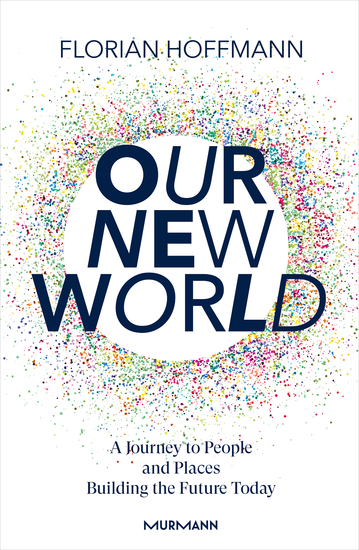
Our New World - A Journey to People and Places Building the Future Today

Florian Hoffmann

Editorial: Murmann Publishers GmbH

  • 0
  • 0
  • 0

Sinopsis

The pandemic, the climate crisis, work – today's world isn't short of challenges. Social injustice. And technology that is slowly but steadily creeping into every aspect of our lives. But what if the answers to the big questions aren't found in simplistic technocracy or a mood of the-end-is-nigh?

Florian Hoffmann is a founder and social entrepreneur. For years, he has been talking to, and working with, people around the world who, like himself, want to make a contribution to a more sustainable, fairer and positive future.

In Our New World (Die Neue Welt), he takes the reader on an expedition to the places and people that have already arrived in this future: young entrepreneurs, innovators, founders and leaders who are courageously shaping a better world.

Florian Hoffmann demonstrates the huge potential for creating a better future today. He visits places and people around the world, where courage and imagination have already paved the way for the world of tomorrow. Beacons for the way ahead, these role models encourage readers to take their own steps into the New World. Many are breaking down the border between earning money and making a positive contribution, and are asking, more generally: What impact can I have, now and in the future? How can my success offer others new chances?

The journalist Saba is fighting for girls' and women's right in Pakistan. Niall dumps his high-flying job to find a solution for microplastics pollutions. Lily wants to inspire people to take up life-long learning – and develops scenarios for what future jobs might look like. These are some of the many diverse voices who believe in a better future.
Disponible desde: 07/07/2022.
Longitud de impresión: 220 páginas.
Otros libros que te pueden interesar

  • Socrates’ Children - An Introduction to Philosophy from the 100 Greatest Philosophers: Volume II: Medieval Philosophers - cover

    Socrates’ Children - An...

    Peter Kreeft

    • 0
    • 0
    • 0
    Peter Kreeft, esteemed philosophy professor and author of over eighty books, has taught college philosophy for sixty years. Throughout those decades, he yearned for a beginner's philosophy text that was clear, accessible, enjoyable, and exciting (perhaps even funny). Finding none that met those criteria, he eventually decided to write it himself.  In this four-volume series, Kreeft delivers, with his characteristic wit and clarity, an introduction to philosophy via the hundred greatest philosophers of all time. Socrates’ Children examines the big ideas of four major eras―ancient, medieval, modern, and contemporary―and immerses the reader in the “great conversation,” the ongoing dialogue among the great thinkers of history, including the most influential philosopher of all: Socrates, the father of Western philosophy. Volume II: Medieval Philosophers studies the transformation of philosophy that came about due to an unprecedented figure―Jesus Christ―and considers the philosophers of the great monotheistic religions of Judaism, Christianity, and Islam as they sought to marry the Greek philosophical tradition with divine revelation. 
    Ver libro
  • The France Alphabet - cover

    The France Alphabet

    David Lawday

    • 0
    • 0
    • 0
    The France Alphabet is a wry, informative handbook for the discerning international traveller on how to handle the French. It offers essential A-Z insights into France and its ways through a snap alphabetic look at characters, traditions and historical events that together get to the essence of who the French are. France's best known writers and thinkers over the centuries come under the handbook's microscope with a light, challenging touch, as do world figures like Napoleon and Joan of Arc as well as France's role in high fashion, sex and the art of staying slim. For newcomers to France, indeed also for those already acquainted with its ways, The France Alphabet gives fresh insider counsel on how to discuss these things, some extremely touchy, when in French company. Each A-Z feature, from A is for Art, through R is for Revolution to Z is for Zola is the selection of English author David Lawday, who has long made France his home and has a French wife. Each one - with a brisk commentary and matching cartoon - epitomizes what it is that helps make the French the way they are.
    Ver libro
  • The Qing Dynasty - The Last Imperial Dynasty - cover

    The Qing Dynasty - The Last...

    Jun Liu

    • 0
    • 0
    • 0
    The Qing Dynasty, the last imperial dynasty of China, was established in 1644 by the Manchu people, an ethnic group from the northeast of China. The rise of the Qing Dynasty was a result of a combination of military conquest, strategic alliances, and a deep understanding of Chinese traditions. The Manchus, initially a small tribe in what is today known as Manchuria, were able to capitalize on the weakening Ming Dynasty and internal strife within China. This chapter will explore how the Manchu rulers successfully expanded their power and established one of the longest and most influential dynasties in Chinese history. 
    The Manchu people, led by the ambitious and skilled leader Nurhaci, had been unified under his banner in the early 17th century. Nurhaci’s military campaigns in Manchuria helped create a strong foundation for what would later become the Qing Dynasty. After his death in 1626, his son, Hong Taiji, continued to build on his father’s legacy, consolidating power and forming alliances with various Chinese factions. Hong Taiji's strategic foresight helped prepare the Manchus for a successful invasion of China. In 1636, he formally declared the establishment of the Qing Dynasty, marking the official beginning of their imperial rule. 
    By the early 1640s, the Ming Dynasty was in a state of disarray. The empire was plagued by corruption, peasant uprisings, and economic instability. The most notable rebellion was the Li Zicheng-led peasant revolt, which culminated in the fall of the Ming capital, Beijing, in 1644. In this moment of vulnerability, the Manchus, under the leadership of Emperor Shunzhi, seized the opportunity to invade China. The Qing forces entered Beijing and effectively replaced the fallen Ming dynasty, marking the beginning of the Qing rule over China.
    Ver libro
  • Ancient Greece’s Most Important Islands: The History of Crete Rhodes and Sicily in Antiquity - cover

    Ancient Greece’s Most Important...

    Editors Charles River

    • 0
    • 0
    • 0
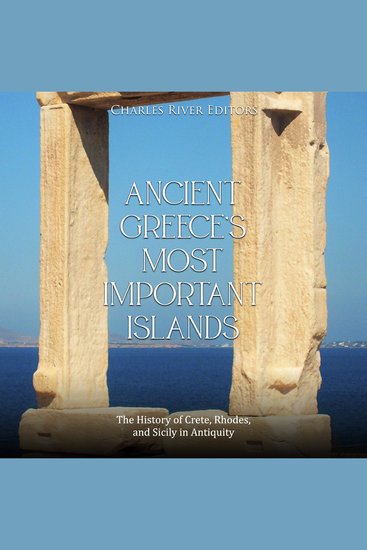
    Nearly 2,500 years after the Golden Age of Athens, people across the world today continue to be fascinated by the ancient Greeks, but who did the Ancient Greeks look up to? The answer to that question can be found in Homer’s The Odyssey, in which Odysseus makes note of “a great town there, Cnossus, where Minos reigned.” It was perhaps the earliest reference to the Minoan civilization, a mysterious ancient civilization that historians and archaeologists still puzzle over, but a civilization that renowned historian Will Durant described as "the first link in the European chain.” Nearly 2,000 years before Homer wrote his epic poems, the Minoan civilization was centered on the island of Crete, a location that required the Minoans to be a regional sea power. And indeed they were, stretching across the Aegean Sea from about 2700-1500 BCE with trade routes extending all the way to Egypt. 
    In the Archaic and Classical periods, Rhodes often stood as a prime exemplar of the highs and lows of its fellow Greek cities, and as the largest island of the Dodecanese, Rhodes’ history is largely in line with that of the rest of those islands. Rhodes would reach the zenith of its power in the Hellenistic period following the death of Alexander the Great in 323 BCE. Even as the rest of the city-states waned compared to the much larger kingdoms of Alexander’s successors in Egypt and Asia, Rhodes would come to the forefront as a main power in the Greek world, standing toe-to-toe with these Hellenistic kingdoms.  
    It was during the Classical era that, especially under the tyrants (dictators) of the Greek city of Syracuse, Sicily came the closest to being governed as a single, unified, and independent state. In time, it came to challenge the powerful trade empire of Carthage, a former Phoenician colony in North Africa, and it vied with the cities and kingdoms of mainland Greece for primacy in the Greek world.
    Ver libro
  • Activating the Common Good - Reclaiming Control of Our Collective Well-Being - cover

    Activating the Common Good -...

    Peter Block

    • 0
    • 0
    • 0
    A powerful, inspiring, and achievable vision of a society based on cooperation and community instead of competition and commodification. 
     
    This book counters the dominant and destructive story that we are polarized, violent, selfish, and destined to consume everything in sight. That is not who we are. 
     
    The challenge, Peter Block says, is that we are suffering under an economic theology that is based on scarcity, self-interest, competition, and infinite growth. We're told we can purchase and outsource all that matters. Block calls this the "business perspective narrative." It dominates not only the economy but also architecture, faith communities, journalism, arts, neighborhoods, and much more. 
     
    Block offers an antidote:  the "common good narrative." It embodies the belief that we are basically communal and cooperative. And that we have the capacity to communally produce what we care most about: raising a child, safety, livelihood, health, and a clean and sustainable environment. 
     
    This book describes how shifts to the common good perspective could transform many areas, fostering journalism that reports on what works, architecture that designs habitable spaces creating connection, faith collectives that build community, a market that is restrained and local, and leadership and activism that build social capital by creating trust among citizens. With these shifts, we would fundamentally change the world we live in for the better.
    Ver libro
  • Counting: Humans History and the Infinite Lives of Numbers - cover

    Counting: Humans History and the...

    Benjamin Wardhaugh

    • 0
    • 0
    • 0
    WHAT DOES IT MEAN TO COUNT? WHY ARE HUMANS THE ONLY SPECIES ON EARTH THAT CAN DO IT? WHERE DID COUNTING COME FROM? HOW HAS IT SHAPED SOCIETIES ALONG THE WAY? AND WHY DOES IT MATTER? 
    Counting is an innovative, erudite, world-wrapping journey through humanity’s marvellous ability to impose numbers on things. Acclaimed historian and mathematician Benjamin Wardhaugh draws on stories from the Stone Age to cyberspace in pursuit of the elusive, fascinating, endlessly diverse history of human counting. 
    Starting with the roots of counting in human brains, bodies and environments, Wardhaugh tours us around the world and through time while exploring the different flavours of counting that have developed over millennia. We meet the makers of bead necklaces in ancient South Africa, the inventors of writing in the world ’ s first metropolis, and the ‘counter culture’ of classical Athens. We see counting used – and changed – by Indian scholars, Chinese peasants and Papuan shopkeepers; we meet the distinctive numerate agendas of Mayan kings, US governments and Korean vloggers. 
    Weaving these stories together, Wardhaugh shows how cultures have shaped counting, and how counting has shaped culture, in a rich tapestry spanning thousands of years. This is the vast story of human attempts to find some order in an unruly world; or, perhaps, to impose on a reluctant world the order that humans find within themselves. It is a history as wide, deep and tangled as that of humanity itself 
    This best non-fiction book by Wardhaugh is a deep dive into the philosophy and technology behind counting. His teaching style and comprehensive study of mathematics make this book a standout in its genre. 
    For fans of David Spiegelhalter (The Art of Uncertainty), Cat Bohannon (Eve), Rory Stewart (The Marches), Anne Applebaum (Autocracy, Inc), and Peter Frankopan (The New Silk Roads). 
    HarperCollins 2024
    Ver libro