¡Acompáñanos a viajar por el mundo de los libros!
Añadir este libro a la estantería
Grey
Escribe un nuevo comentario Default profile 50px
Grey
Suscríbete para leer el libro completo o lee las primeras páginas gratis.
All characters reduced
The Age Of Innocence(Illustrated) - cover

The Age Of Innocence(Illustrated)

Edith Wharton

Editorial: Micheal Smith

  • 0
  • 0
  • 0

Sinopsis

Special Illustrated Edition: Features 20 beautiful Images that bring the story's opulent settings and intricate social engagements to life.
	Exclusive Bonus Content: Includes a comprehensive summary, an in-depth character list, and a unique biography of Edith Wharton, enriching your reading experience.
	Cultural Touchstone: Experience one of the greatest novels of the twentieth century, now enhanced with visual artistry for a modern audience.

Step into a world of stifling conventions and exquisite social maneuvering with this sumptuous Illustrated Edition of Edith Wharton's Pulitzer Prize-winning novel, "The Age of Innocence." Immerse yourself in the grandeur of 1870s New York society, a time when the rules of love and marriage were as intricate and unyielding as the corsets and top hats adorning its players.
This edition offers a rare treat: twenty stunning illustrations that capture the essence of the characters' lives and the opulence of their world, making the drama of old New York leap off the page. From the hushed drawing rooms of the city's aristocracy to the whispered scandals in its moonlit gardens, each image is a window into the soul of the novel.
But the beauty of this book is more than illustration-deep. Alongside the visual feast, you'll find a concise summary that distills the novel's complex narrative into a digestible form, ensuring that you grasp every nuance of Wharton's masterwork. Delve deeper with a detailed list of characters, providing insight into the social web that ensnares them. Finally, explore the life of Edith Wharton herself in a specially crafted biography that sheds light on her inspirations and the experiences that led to the creation of this timeless tale.
"The Age of Innocence" is not merely a book but an exploration of societal norms, a study of the human heart, and a work of art that continues to resonate with readers a century after its first publication. Whether you're a lifelong fan or discovering Wharton's work for the first time, this Illustrated Edition is an essential addition to your literary collection. It is an invitation to wander the gaslit streets of a bygone era, a ticket to the opera of Old New York, and a glimpse into the hearts and minds that lived, loved, and were inevitably constrained by the age of innocence.

 
Disponible desde: 12/01/2024.

Otros libros que te pueden interesar

  • The Man Who Loved Islands - cover

    The Man Who Loved Islands

    D H Lawrence

    • 0
    • 0
    • 0
    'The Man Who Loved Islands' is a haunting story of a man who tries to control his life by making his world ever smaller by moving to increasingly smaller islands. Each one proves to be beyond his ability to control either other people or his sexual desire and finally the last island conquers him. The story can even be seen as a metaphor of man's inexorable march to death when we are all finally alone.
    Ver libro
  • Alexander Pushkin - A Short Story Collection - Born in Moscow with African roots Pushkin is considered by many to be the founder of modern Russian literature - cover

    Alexander Pushkin - A Short...

    Alexander Puschkin

    • 0
    • 0
    • 0
    Alexander Sergeyevich Pushkin was born on 26th May 1799 in Moscow into a family of Russian nobility. 
     
    Raised by nursemaids and French tutors in French he learnt Russian only via the household staff. 
     
    He graduated from the prestigious Imperial Lyceum, near St Petersburg and plunged into the vibrant and raucous intellectual youth culture of what was then the capital of the Russian Empire.  
     
    In 1820, he published his first long poem, ‘Ruslan and Ludmila’, with much controversy about both subject and style.  Pushkin was heavily influenced by the French Enlightenment and gravitated, with other literary radicals, towards social reform angering the Government. 
     
    His early literary work and reputation was poetic and written as he travelled around the Empire or engaged himself in various rebellions against the Ottoman Empire.  A clash with his own government after his poem, ‘Ode to Liberty’, was found among the belongings of the Decembrist Uprising rebels meant two years of internal exile at his mother's rural estate.  His friends and family continually petitioned for his release, sending letters and meeting with Tsar Alexander I and then Tsar Nicholas I.   
     
    In 1825, whilst at his Mother’s estate, Pushkin wrote his most famous play, the drama ‘Boris Godunov’.  
     
    Upon meeting with Tsar Nicholas I, Pushkin obtained his release and began work as the Tsar's Titular Counsel of the National Archives.  However, because of the earlier problems the tsar retained control of everything Pushkin published, and he was banned from travelling at will. 
     
    Around 1828, Pushkin met the 16-year-old Natalia Goncharova, one of the most talked-about beauties of Moscow.  After much hesitation, Natalia accepted his marriage proposal after she received assurances that the government had no intentions to persecute the libertarian poet.  When the Tsar gave Pushkin the lowest court title, Gentleman of the Chamber, he became enraged, feeling that the Tsar intended to humiliate him. 
     
    In the year 1831, during Pushkin's growing literary influence, he met Nikolai Gogol.  Recognising his gifts Pushkin supported him and published his short stories in his own magazine ‘The Contemporary’. 
     
    By the autumn of 1836, Pushkin was falling into greater and greater debt and facing scandalous rumours that his wife was having an affair.  
     
    In January 1837, Pushkin sent a ‘highly insulting letter’ to his wife’s pursuer, Georges-Charles de Heeckeren d'Anthès.  The only answer could be a challenge to a duel. 
     
    It took place on 27th January.  D'Anthès fired first, critically wounding Pushkin; the bullet entered at his hip and penetrated his abdomen.  Two days later Alexander Pushkin died of peritonitis.  He was 37. 
     
    1 - Alexander Pushkin - A Short Story Collection - An Introduction 
    2 - The Queen of Spades by Alexander Pushkin 
    3 - The Blizzard by Alexander Pushkin 
    4 - The Stationmaster by Alexander Pushkin 
    5 - The Shot by Alexander Pushkin 
    6 - The Coffin Maker by Alexander Pushkin 
     -  
     -  
     -  
    1 - Cornwall - A Short Story Collection - An Introduction 
    2 - Malachi's Cove by Anthony Trollope 
    3 - Ligeia by Edgar Allan Poe 
    4 - The Screaming Skull by F Marion Crawford 
    5 - The Haunted Church by Frederick Cowles 
    6 - The Limping Ghost by Frederick Cowles 
    7 - In the Mist by Mary E Penn 
    8 - The Botathen Ghost from Footprints of Former Men in Far Cornwall by the Reverend R S Hawker 
    9 - Room For One by Frederick Cowles 
    10 - Colonel Benyon's Entanglement by Mary Elizabeth Braddon 
    11 - Christmas Eve at a Cornish Manor House by Clara Venn
    Ver libro
  • Death at 830 - From their pens to your ears genius in every story - cover

    Death at 830 - From their pens...

    Christopher St. John Sprigg

    • 0
    • 0
    • 0
    The bookshelves of British literature are incredible collections that have gathered together centuries of very talented authors.  From these Isles their fame spread and whilst among their number many are now forgotten or neglected their talents endure.  Among them is Christopher St John Sprigg.
    Ver libro
  • None of That - cover

    None of That

    D H Lawrence

    • 0
    • 0
    • 0
    'None of That' concerns  itself with the nature of desire. The man in the story is no more than an animal with base instincts but is attractive to women. The woman looks for something deeper, with  imagination but in the end is brought down by the more instinctive man. Lawrence again seems to be saying that a woman cannot exist beyond the control of a man, however crude and can only bring unhappiness on herself if she tries to live on her own terms.
    Ver libro
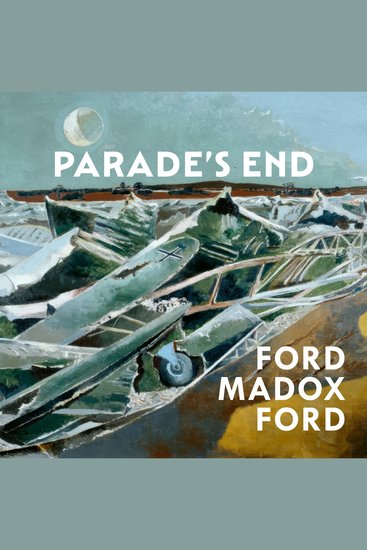
  • Parade's End - The Complete Tetralogy - cover

    Parade's End - The Complete...

    Ford Madox

    • 0
    • 0
    • 0
    There is a hard brightness overlying the emotion and the human suffering and the human passions… Mr. Ford achieves not only what is probably his own best work but what is certainly one of the ablest of recent English novels. — The New York Times, 1924  
    There are not many English novels which deserve to be called great: Parade's End is one of them. — W. H. Auden  
    Ford Madox Ford's Parade's End tetralogy, written in the aftermath of World War I, was originally published in four parts in the 1920s: Some Do Not…; No More Parades; A Man Could Stand Up —; and Last Post. Highlighting the tension between traditional values and a rapidly changing social order in a world embroiled in war, the story details Tietjens' turmoils in both his personal life and on the warfront—and what follows when some of those struggles become one and the same.  
    Unique among other war fiction of the time, Parade's End privileges not the conflict of the Great War itself, but the impact the war had on its participants and upon society writ large. With it's publication, Ford hoped to contribute to the obviating of all future wars. 
    Parade's End is often referred to as one of the greatest 20th century novels, and one of the best depictions of war in literature. The 2012 television adaptation, written by Tom Stoppard (Shakespeare in Love), directed by Susanna White (Andor) and starring Benedict Cumberbatch and Rebecca Hall, was nominated for two Primetime Emmy Awards and seven BAFTA Television Awards.
    Ver libro
  • A Christmas Carol - cover

    A Christmas Carol

    Charles Dickens

    • 0
    • 0
    • 0
    This is a brand new recording of Charles Dickens’ timeless story, A Christmas Carol. 
     Ebenezer Scrooge is mean and unpleasant. He dislikes people and Christmas especially but on this particular Christmas Eve he’s visited by the ghost of his business partner Jacob Marley and the spirits of Christmas Past, Present, and Yet to Come. As Ebenezer sees the effects he’s had on people’s lives, he is transformed.  
    Ver libro