Dark Truths - A Poetry Book
Dylan Allens
Publisher: Imagination Books
Summary
Dark Truths - A Poetry Book A collection of darkly tinged poems to touch the soul and spirit, focusing on love, life, guilt and every emotion inbetween.
Publisher: Imagination Books
Dark Truths - A Poetry Book A collection of darkly tinged poems to touch the soul and spirit, focusing on love, life, guilt and every emotion inbetween.
Book of Poetry - Was written to awaken and bring back to life poetry within our society! There are many poems of a variety of topics that will amaze and stun. This book contains love, romance, life journey, religion, heartbreak, and even hatred. It is guaranteed to open your mind's eye!Show book
Redemption is only ever partial. Ray makes mistakes in his life yet at the last he tries to make some sort of restitution. In this novel, there is fake mysticism, empty promises, infidelity, lost chances and examples of how in extremis people can surprise and surpass themselves. There are also contrasting examples of how returning to one's past can end up - Jan is destroyed by hers, whereas Ray finds renewed purpose and enduring loyalties in his.Show book
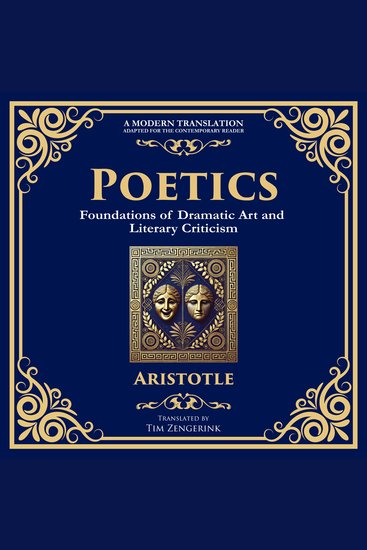
What if you could master the art of storytelling, understand the essence of great drama, and unlock the timeless secrets behind compelling narratives? Poetics brings you Aristotle’s groundbreaking exploration of storytelling, carefully translated and adapted for the modern reader. Written over two thousand years ago, Poetics is the cornerstone of literary theory and dramatic structure. Aristotle examines the elements that make stories resonate—plot, character, conflict, and catharsis—revealing what separates a great story from a forgettable one. His insights continue to influence writers, filmmakers, playwrights, and creators across the world. This is not just an ancient text—it’s a practical guide to understanding the foundations of storytelling and how to create narratives that captivate audiences. Whether you’re a writer, filmmaker, student, or lover of literature, Aristotle’s teachings offer essential tools for mastering your craft and appreciating great works of art. What You’ll Discover in This Modern Translation: - Aristotle’s principles for crafting compelling stories with powerful structure, plot, and themes. - How characters and their struggles create emotional impact and drive engaging narratives. - The emotional power of drama and how stories can move and transform their audience. - Aristotle’s insights in clear, modern language that makes his teachings practical and relevant for today. Imagine having the knowledge to craft engaging stories, understand the mechanics of dramatic tension, and appreciate the art behind great literature and film. This modern translation of Poetics delivers Aristotle’s insights in a practical format, empowering you to master the art of storytelling. Get your copy today and begin your journey toward mastering the foundations of storytelling with Aristotle’s timeless wisdom.Show book
John Donne was born on the 22nd January 1572 in London, into a Roman Catholic family when Catholicism was illegal in England, and there was turbulence and unrest with both state and church throughout much of Europe. His father, also named John, died when he was four, and his mother, Elizabeth Haywood, married a wealthy widower, ensuring the family were looked after. He received a good education at both Oxford and Cambridge but was unable to obtain a degree without taking the oath of supremacy, which as a Catholic he refused to do. During the 1590s, Donne wrote a wide range of verses, including both erotic and sacred poems, creating two major volumes of work. His strong vivacious and sensual style fusing intellect and passion, as well as inventive use of subtle argument and syntax, provided a new radical perspective that reached beyond his contemporaries, and continued to chime and charm poetry lovers throughout the ages. Difficult to believe that with this enormous talent, Donne lived in poverty for many years, exacerbated by his secret marriage to Anne Moore, which meant no dowry, and they having twelve children. Later he served in Parliament and became Dean of St Paul's in 1621, noted for his learned and charismatic sermons. John Donne died in London on the 31st March 1631, but leaves an enormous legacy of many splendid influential poems. He was known as the founder of the Metaphysical Movement and is widely regarded as one of Britain's best-loved poets.Show book
Bridges: Rivers of traffic.Bridges are all about us now in the modern world."I have have written this Poem 'BRIDGES - Rivers of Traffic. ::Bridges are all about us now in the modern world, but have been around for a long time.They've been getting built since ancient times, to ford rivers and cross continents by making roads AND rivers navigable.There are so many different types of bridges that span the waterways of our worldwide Cities.From the popular Suspension bridges - like the Golden gate bridge in 'frisco mentioned, to Cantilevers, beams, trusses, arches which are also very popular, tied-arches, and cable support bridges.They have personas of their own in their Grand ways and designs.This poem also includes Chapter 2 about the fabled Finn McCool who built the Giant causeway steps on Staffa scotland,as a Bridge to Ireland. It was written about by Mendelsohn in his Overture 'The Hebrides'.** To see more Poems by the same Author please follow the link below:https://www.amazon.com/-/e/B00SG40RM8**If you enjoy reading this Poem, can you Please leave your feedback, many thanks.To contact the Author: Please add me Mike Miko on Facebook & then message me, thanks.https://www.facebook.com/mike.cco1 I will then contact the Author your behalf.or on Twitter: miko_1_dollar ~ Tumblr : ccobesInstagram: wild_poetrys / / wild.poetry.webs TikTok: @wild_poetrys // charliechaplinsofficeWebsite: www.wild-poetry.comFacebook: WOW https://www.facebook.com/wow.facthttps://www.facebook.com/New.Poets.CornerShow book
Poems exploring our most fragile points of connection to lovers and family, to the living and the dead, and to oneself, one's own life's work--with the care and wisdom of one who knows these roads.'Silently / pulling for itself, / the will wants the body to // give it what it wants,' Sexton writes in 'Between the Car and the Sea,' at once a description of a carís body propelling her onward, and of the poet herself, the one behind the wheel of this masterful fourth collection. In an extraordinary act of volition, the author does not stop at the trope of ambition, but powers instead toward the urgent concerns of the will, and intention.Show book