¡Acompáñanos a viajar por el mundo de los libros!
Añadir este libro a la estantería
Grey
Escribe un nuevo comentario Default profile 50px
Grey
Suscríbete para leer el libro completo o lee las primeras páginas gratis.
All characters reduced
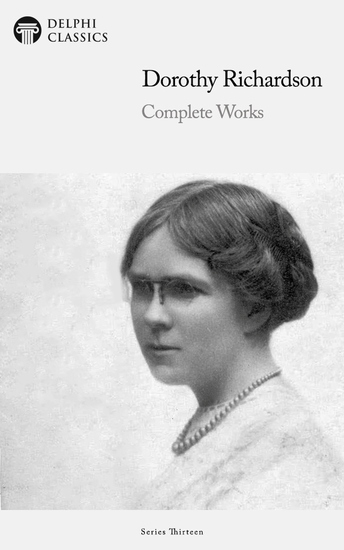
Delphi Complete Works of Dorothy Richardson Illustrated - cover

Delphi Complete Works of Dorothy Richardson Illustrated

Dorothy Richardson

Editorial: Delphi Publishing Ltd

  • 0
  • 0
  • 0

Sinopsis

The English novelist Dorothy M. Richardson was a modernist pioneer of stream-of-consciousness fiction. Her novel sequence ‘Pilgrimage’ is an extraordinarily sensitive story, portrayed cinematically through the eyes of Miriam Henderson, an attractive and mystical New Woman. The unfinished 13-volume novel is now considered a significant work of literary modernism, exploring new formal methods to represent feminine consciousness. For the first time in publishing history, this eBook presents Richardson’s complete fictional works, with numerous illustrations, rare texts, detailed introductions and the usual Delphi bonus material. (Version 1)
 
* Beautifully illustrated with images relating to Richardson’s life and works* Concise introductions to the novels and other texts* All 13 novels, with individual contents tables* Features rare works appearing for the first time in digital publishing* Images of how the books were first published, giving your eReader a taste of the original texts* Excellent formatting of the texts* The complete short stories * Rare poems from periodicals, available in no other collection* Easily locate the poems or short stories you want to read* Explore Richardson’s non-fiction * Includes Richardson’s rare autobiographical pieces – available in no other collection* Special criticism section, with essays by Sinclair, Woolf and Lawrence, evaluating Richardson’s contribution to literature* Ordering of texts into chronological order and genres
 
CONTENTS:
 
PilgrimagePointed Roofs (1915)Backwater (1916)Honeycomb (1917)The Tunnel (1918)Interim (1919)Deadlock (1921)Revolving Lights (1923)The Trap (1925)Oberland (1927)Dawn’s Left Hand (1931)Clear Horizon (1935)Dimple Hill (1938)March Moonlight (1967)
 
The Short StoriesThe Short Stories of Dorothy Richardson
 
The PoetryThe Poems of Dorothy Richardson
 
The Non-FictionThe Quakers: Past and Present (1914)Gleanings from the Works of George Fox (1914)About Punctuation (1924)John Austen and the Inseparables (1930)
 
The Autobiographical PiecesAutobiographical Sketches
 
The CriticismThe Novels of Dorothy Richardson (1918) by May SinclairReview of ‘The Tunnel’ (1919) by Virginia WoolfThe Future of the Novel (1923) by D. H. Lawrence
 
Please visit www.delphiclassics.com to browse through our range of exciting titles or to purchase this eBook as a Parts Edition of individual eBooks
Disponible desde: 29/05/2023.
Longitud de impresión: 1151 páginas.


Otros libros que te pueden interesar

  • Tarzan of the Apes - cover

    Tarzan of the Apes

    Edgar Rice Burroughs

    • 0
    • 0
    • 0
    Tarzan of the Apes is the thrilling origin story of one of the most iconic characters in literary history. 
    When English aristocrats John and Alice Clayton are marooned on the African coast, their newborn son is orphaned in the heart of the jungle. Raised by a tribe of great apes, the boy grows into a powerful, intelligent, and instinct-driven man—one who will come to be known as Tarzan. Straddling the worlds of civilization and savagery, Tarzan’s journey is one of identity, survival, and discovery, as he uncovers his noble birthright and must choose where he truly belongs. 
    Packed with wild adventure, deep emotional stakes, and timeless questions of nature versus nurture, Tarzan of the Apes launched a cultural phenomenon and remains a gripping tale of heroism and human potential. 
    This new narration by Veronica Saretsky brings Burroughs’ lush jungle world to life with clarity, drama, and emotional depth.
    Ver libro
  • A Thing That Glistened - From their pens to your ears genius in every story - cover

    A Thing That Glistened - From...

    Frank R Stockton

    • 0
    • 0
    • 0
    Frank Richard Stockton was born in Philadelphia on 5th April 1834.  
    His father, a Methodist minister, discouraged Stockton’s literary career from an early age.  Feeling unable to go against those wishes it was for many years that Stockton’s income was maintained as a wood engraver.   
    His first work was published in 1867 and his first collection only appeared in 1870.  Despite this late arrival Stockton’s innovative and often far-fetched stories, with a gentle ‘poking fun’ humour were very popular.  Like his contemporary Mark Twain he avoided the scolding, hectoring and moral tones of many other authors and instead gently teased and cajoled his reader to open their eyes to the ills, the greed and the ambitions of the world around them.  His sci-fi stories in particular were far-seeing and inventive including a tale of negative gravity and a bloodless Anglo-US war won by technological feats.  
    Perhaps his most enduring tale though is ‘The Lady, or the Tiger?’ from 1882.  A condemned man is given a choice of being eaten alive or marrying his princess lover.  But he has to choose which door each is behind. 
    Frank R Stockton died in Washington, DC, on 20th April 1902, of a cerebral haemorrhage.  He is buried at The Woodlands in Philadelphia.
    Ver libro
  • Emperor's New Clothes The - Story Time Episode 66 (Unabridged) - cover

    Emperor's New Clothes The -...

    Hans Christian Andersen

    • 0
    • 0
    • 0
    "The Emperor's New Clothes" (Danish: Kejserens nye Klæder) is a short tale written by Danish author Hans Christian Andersen, about two weavers who promise an emperor a new suit of clothes that they say is invisible to those who are unfit for their positions, stupid, or incompetent. When the emperor parades before his subjects in his new clothes, no one dares to say that they don't see any suit of clothes on him for fear that they will be seen as "unfit for their positions, stupid, or incompetent". Finally, a child cries out, "But he isn't wearing anything at all!" The tale has been translated into over 100 languages.
    Ver libro
  • The Cats of Ulthar - From their pens to your ears genius in every story - cover

    The Cats of Ulthar - From their...

    HP Lovecraft

    • 0
    • 0
    • 0
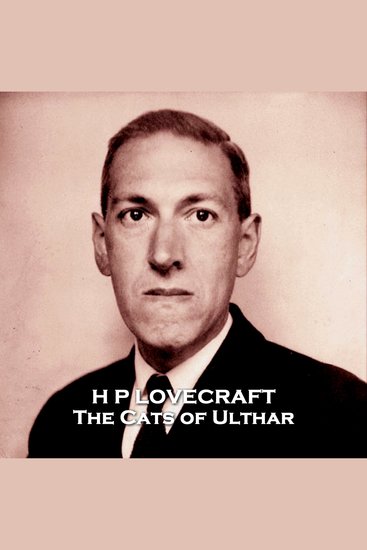
    Howard Phillips Lovecraft is among the greatest American masters of fantasy and the supernatural.  
    Born in 1890, a native of Providence, Rhode Island, his health was uncertain from childhood and he led a sheltered early life. His semi-invalidism enabled him to read omnivorously, and as a shy imaginative child he began to invent what would in his adult life become a whole macabre fantastic world of his own, peopled by creatures out of his own weird imagination.  
    As an adult he was retiring, almost a recluse. Tall, thin and pale, but with bright alert eyes, he was much given to wandering his native city in the dark hours of the night, and he became a devoted student of its antiquities.  
    Although he began to write early he had nothing published until he was in his twenties. He set many of his stories around the imaginary town of Arkham, and invented an entire mythology of his own, its core being the demoniac cult of Cthulhu, based on the lore or legend that the world was at one time inhabited by another race who, in practising black magic, lost their foothold or were expelled, yet live on outside, ever ready to take possession of this earth again. 
    Since his early death in 1937 his stories have continued to attract attention and praise from an ever-growing audience.
    Ver libro
  • Browdean Farm - From their pens to your ears genius in every story - cover

    Browdean Farm - From their pens...

    A M Burrage

    • 0
    • 0
    • 0
    Alfred McLelland Burrage was born in Hillingdon, Middlesex on 1st July, 1889. His father and uncle were both writers, primarily of boy’s fiction, and by age 16 AM Burrage had joined them.  The young man had ambitions to write for the adult market too.  The money was better and so was his writing. 
    From 1890 to 1914, prior to the mainstream appeal of cinema and radio the printed word, mainly in magazines, was the foremost mass entertainment.  AM Burrage quickly became a master of the market publishing his stories regularly across a number of publications. 
    By the start of the Great War Burrage was well established but in 1916 he was conscripted to fight on the Western Front. He continued to write during these years documenting his experiences in the classic book War is War by Ex-Private X. 
    For the remainder of his life Burrage was rarely printed in book form but continued to write and be published on a prodigious scale in magazines and newspapers.  In this volume we concentrate on his supernatural stories which are, by common consent, some of the best ever written.  Succinct yet full of character each reveals a twist and a flavour that is unsettling…..sometimes menacing….always disturbing.
    Ver libro
  • A Legend - From their pens to your ears genius in every story - cover

    A Legend - From their pens to...

    Alexander Kuprin

    • 0
    • 0
    • 0
    Alexander Kuprin was born in Narovchat, Penza in Russia on 7th September 1870. 
    At 3 his Father died and he and mother moved to Moscow. By 10 he was enrolled at the Second Moscow Military High School and there his interest in literature began. The Alexander Military Academy followed and two years later he was a sub-lieutenant and posted to an Infantry Regiment for a further four years. 
    Despite his duties he was a now a keen writer and published his first short story at this time. His military duties also garnered him experiences for his breakthrough work ‘The Duel’.  Leaving the military he left for Kiev to work for local newspapers.  He continued to publish both stories and novels and by 1901 he was in St Petersburg becoming part of a group that included Chekhov, Ivan Bunin, Maxim Gorky and Leonid Andreyev.  
    In the years that followed further controversial works and acclaim followed.  His comments on the regime meant he was also put under secret police surveillance.   
    As World War I erupted, Kuprin opened a military hospital but was then given command of an infantry company in Finland. He was soon discharged on grounds of ill health.  
    The October Revolution saw him praise Lenin, but he warned that the Bolsheviks threatened Russian culture and might cause further widespread suffering to the peasants.  As Civil War raged he took his family to Helsinki and then on to Paris. 
    Exile saw his talents decline further and his succumbing to alcoholism. He became lonely and withdrawn. The family's poverty increased his malaise.   
    In May 1937, the Kuprin’s returned to Moscow.  He now saw his work published but wrote almost nothing new.  In 1938 his health rapidly deteriorated.  Already suffering from a kidney problems and sclerosis, he had now developed cancer of the oesophagus.  
    Alexander Kuprin died on 25th August 1938.
    Ver libro