Join us on a literary world trip!
Add this book to bookshelf
Grey
Write a new comment Default profile 50px
Grey
Subscribe to read the full book or read the first pages for free!
All characters reduced
Robinson Crusoe - cover

Robinson Crusoe

Daniel Defoe

Publisher: epf

  • 0
  • 0
  • 0

Summary

Despite its simple narrative style, Robinson Crusoe was well received in the literary world and is often credited as marking the beginning of realistic fiction as a literary genre. It is generally seen as a contender for the first English novel. Before the end of 1719, the book had already run through four editions, and it has gone on to become one of the most widely published books in history, spawning so many imitations, not only in literature but also in film, television, and radio, that its name is used to define a genre, the Robinsonade.
Available since: 07/07/2022.
Other books that might interest you

  • Guy Gibson: The Life and Legacy of the Royal Air Force’s Most Distinguished Bomber Pilot during World War II - cover

    Guy Gibson: The Life and Legacy...

    Editors Charles River

    • 0
    • 0
    • 0
    Given the RAF’s importance, it should come as no surprise that some of the pilots ranked among Britain’s most recognized war heroes, and Guy Gibson remains one of the most famous and highly decorated British soldiers in World War II. His exploits in the RAF as the leader of the audacious raid to blow up German dams in May 1943 remain renowned, and for generations of British boys after the war, he served as the benchmark of a legendary hero. His tragic death at the young age of 26 only served to deepen his mythology, but his war record was impressive even before his most famous missions, with three operational tours of duty under his belt. 
    The mythmaking aside, Gibson was a complex and controversial character, probably caused, in part, by a turbulent and disrupted upbringing. Although his bravery, self-sacrifice, and leadership in battle were undeniable and highly impressive, he could be demanding and difficult to get along with. It is probably fair to say he was not universally loved by the crews and service personnel who served alongside him, and he after the Dam Busters raid, he embarked on a months-long tour of the United States and Canada that many (including Air Officer Commanding Bomber Commander Arthur “Bomber” Harris) felt had gone to his head slightly. After the raid and the fame, he drifted somewhat, having been forbidden from flying in further operations (which he bypassed in the end). He wrote a book about his exploits as a bomber pilot, Enemy Coast Ahead, and was interviewed on radio programs. He flirted with politics, applying for and succeeding in becoming the Conservative Party’s prospective candidate for Macclesfield in 1944 before withdrawing, claiming the war still required his attention. After D-Day on June 6, 1944, Gibson seemed to feel an urgent need to get back into operations for fear of missing out.
    Show book
  • The Long Tail of Trauma - A Memoir - cover

    The Long Tail of Trauma - A Memoir

    Elizabeth Wilcox

    • 0
    • 0
    • 0
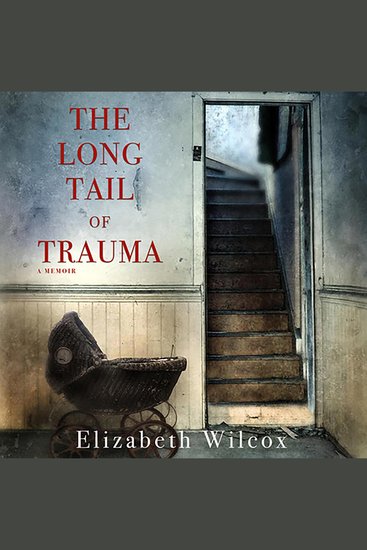
    This is a story of mothers. This is a story of daughters. This is a story of the trauma we carry and the trauma we tend to. So begins this multigenerational memoir that explores the author's maternal history of repeated trauma, separation, adverse childhood experiences (ACES) and their impact on mental health. Set against a twenty-year dialogue with her mother Barbara who suffers from long undiagnosed PTSD, author Elizabeth Wilcox opens her maternal history with the birth of her illegitimate grandmother Violet to a German house servant outside London in 1904. With her mother's encouragement, Wilcox goes on to trace the lives of Violet and her mother Barbara, both of whom are deeply impacted by maternal separation and the complex trauma they have endured because of war.  Through a dual timeline that is both present day and historic, Wilcox weaves together the documented and imagined voices of the women who precede her. The historic narrative begins with young Violet who endures multiple separations: from her mother until the age of six, from her German Jewish stepfather during WWI at the age of ten, and from her own three-year-old daughter Barbara when her family escapes without her from Holland during Hitler's invasion. Later put on a train to Wales with her eighteen-month-old brother Neville during Operation Pied Piper, Barbara also tragically endures an itinerant childhood of foster homes, boarding schools and abuse.  In this compelling work, Wilcox deftly weaves the psychological findings she uncovers as a journalist and writer in the field of early childhood education and mental health, providing greater understanding of the impact of adverse childhood experiences on adult wellbeing and mental health. Through her mother Barbara who has successfully raised seven children despite her difficult past, Wilcox also shows what it means to parent with intention, forgiveness and unconditional love.
    Show book
  • Havoc-06 - A Combat Controller on Operations - cover

    Havoc-06 - A Combat Controller...

    Troy Knight

    • 0
    • 0
    • 0
    I received a target indication from one of the rear team members and observed movement coming from the left of the area of engagement. I then saw them, two enemy fighters moving to a new position. I must have let rip about twenty rounds and not one of the rounds hit them. I had missed completely! 
     
    “You shit shot,” swearing at myself under my breath. My teeth were clenched and I was pissed off at my own incapability with a rifle, however, I realised I had a primarily role to play and that was as the Platoon JTAC. 
     
    Havoc-06 is the call sign of former Australian Combat Controller, Troy Knight. As a Royal Australian Air Force Airfield Defence Guard, Troy had not found the military adventure he sought; combat operations. His thirst for overseas deployment saw him privately contract his services in Iraq and South East Asia, but when he got whiff that the Australian Defence Force was raising a new defence capability, he couldn’t help but want to be part of it. 
     
    The new Defence capability, termed the ‘Special Tactics Project,’ would see Troy undertaking the gruelling Commando Selection course and passing, making him one of Australia’s first Combat Controllers attached to the Australian Army 2nd Commando Regiment. 
     
    As a member of the Special Forces unit, Troy’s lifelong dream of taking part in combat operations would come to fruition, but the reality of his dream would also play havoc on his life. 
     
    Havoc-06 is the untold story of the Australian Combat Controller, but it is also Troy’s personal story and one that will resonate with so many.
    Show book
  • The Moving Finger - An detective story that brings mystery and revelation by occult means - cover

    The Moving Finger - An detective...

    Rose Champion de Crespigny

    • 0
    • 0
    • 0
    Annie Rose Charlotte Key was born on 9th November 1859 in Kensington, London. 
     
    With a privileged background—her father was an admiral, her mother a Lady, Rose began her creative life as a painter before a stab at writing local history settled her into popular fiction. 
     
    Her works were solidly written and often described as having a ‘certain graceful facility’. 
     
    Her marriage to Philip Augustus Champion de Crespigny in 1878 resulted in a family of 4 children and a name of status. 
     
    Rose was a leading member of the Ridley Art Club, the Lyceum Club in Piccadilly, and of the British College of Psychic Science.  Victorian society had a particular fascination with spiritualism and in ‘The Moving Finger’ Rose uses the theme as a background to introduce her popular occult detective Norton Vyse into her series of short stories.  
     
    Rose Champion de Crespigny died on 10th February 1935.  She was 75.
    Show book
  • Women in American History - cover

    Women in American History

    Grace Humphrey

    • 0
    • 0
    • 0
    Discover the untold stories of the women who helped shape a nation. Women in American History by Grace Humphrey offers an inspiring look into the lives of extraordinary women from America’s earliest days through the 19th century. From Pocahontas, who forged an unlikely bond between Native Americans and English settlers, to Sacajawea, whose guidance proved pivotal to the Lewis and Clark Expedition, these accounts highlight courage, vision, and perseverance. 
    You’ll meet Anne Hutchinson, who fought for religious freedom, Betsy Ross, whose needle stitched the first American flag, Molly Pitcher, who took up arms on the battlefield, and Martha Washington, whose strength supported a revolutionary leader. Each chapter celebrates these remarkable women as more than historical footnotes—they are icons of determination who left an enduring impact on the American story. 
    Narrated by Kris Keppeler, this audiobook is a tribute to the often-overlooked women who played vital roles in shaping America’s legacy.
    Show book
  • Thomas Henry Lyon - Architect and aesthete – his life and work - cover

    Thomas Henry Lyon - Architect...

    Michael Yelton

    • 0
    • 0
    • 0
    Thomas Henry Lyon (1869–1953) was an important architect whose work has often been ignored, because he did not take up the Modernist ideas of many of his contemporaries. His work was also almost entirely concentrated in either Cambridge or the edge of Dartmoor. His contribution to the inter-War development of the Colleges of Cambridge was immense and often overlooked: this book seeks to restore his reputation.
    
     
    The book restores to public consciousness the extensive architectural work carried out by Lyon, particularly in Cambridge, and does not gloss over the disaster of a church in Wembley which had to be closed after less than 30 years. It also looks at the important work he carried out in South Australia in the pre-1914 age, as well as his masterly reconstruction and furnishing of Sidney Sussex College chapel, which established his reputation. It has been extensively researched in archives across England, but particularly in those of the Colleges of Cambridge.
    Show book